
How does the selection of jet washing equipment impact the effectiveness of surface cleaning?
The selection of jet washing equipment directly affects how effectively dirt, oil, stains and biological growth are removed, while also determining the risk of damaging the surface. Matching the machine’s pressure, water flow, temperature, nozzle and access equipment to the material and contamination produces more consistent results with less water, time and unnecessary abrasion.
The selection of jet washing equipment directly determines the cleaning result, working speed and risk of surface damage. Pressure, water flow, temperature, nozzle design, cleaning attachments and access equipment must be matched to both the surface material and the type of contamination. Using excessive pressure or an unsuitable attachment can erode coatings, drive water into joints or leave uneven marks, while correctly specified equipment removes contamination more consistently with less water, time and disruption.
Pressure controls the force applied to the surface. Higher pressure can be appropriate for robust concrete, some masonry and heavily soiled industrial areas, but it is not automatically the most effective setting. Delicate façades, painted surfaces, render, pointing, cladding and older materials may be damaged by excessive impact. The operator should select a working pressure that breaks the bond between the contamination and the surface without removing the substrate, coating or joint material beneath it.
Pressure is only one part of machine performance. Water flow affects how quickly loosened dirt is carried away. A machine with suitable flow can rinse away slurry, oils and residues efficiently, reducing the need to repeatedly pass over the same area. A high-pressure, low-flow approach may provide strong impact but leave loosened contamination and cleaning products behind. Conversely, greater flow without suitable control can increase water use and create additional runoff. The correct balance depends on the surface, the contamination and the available drainage or recovery arrangements.
Water temperature influences how different contaminants respond. Cold-water equipment can be effective for dust, loose soil, algae and general dirt. Heated water is often more suitable for oil, grease, traffic film and some industrial residues because heat softens or emulsifies the contaminant before rinsing. Steam cleaning uses lower water volumes and high heat, making it useful where controlled cleaning or reduced saturation is important. Temperature must still be managed carefully around paint, sealants, plastics, membranes and other heat-sensitive materials.
Nozzle selection changes the shape, concentration and coverage of the water jet. A narrow jet concentrates force into a small area and may be useful for localised contamination on a suitable, robust substrate. It can also leave lines, etching or visible differences if used incorrectly. Fan-pattern nozzles spread the impact across a wider area and are generally more controllable for larger surfaces. Rotating or specialised nozzles can improve cleaning on hard-wearing surfaces, but they require an appropriate distance, movement speed and operating pressure to avoid creating circular marks or uneven finishes.
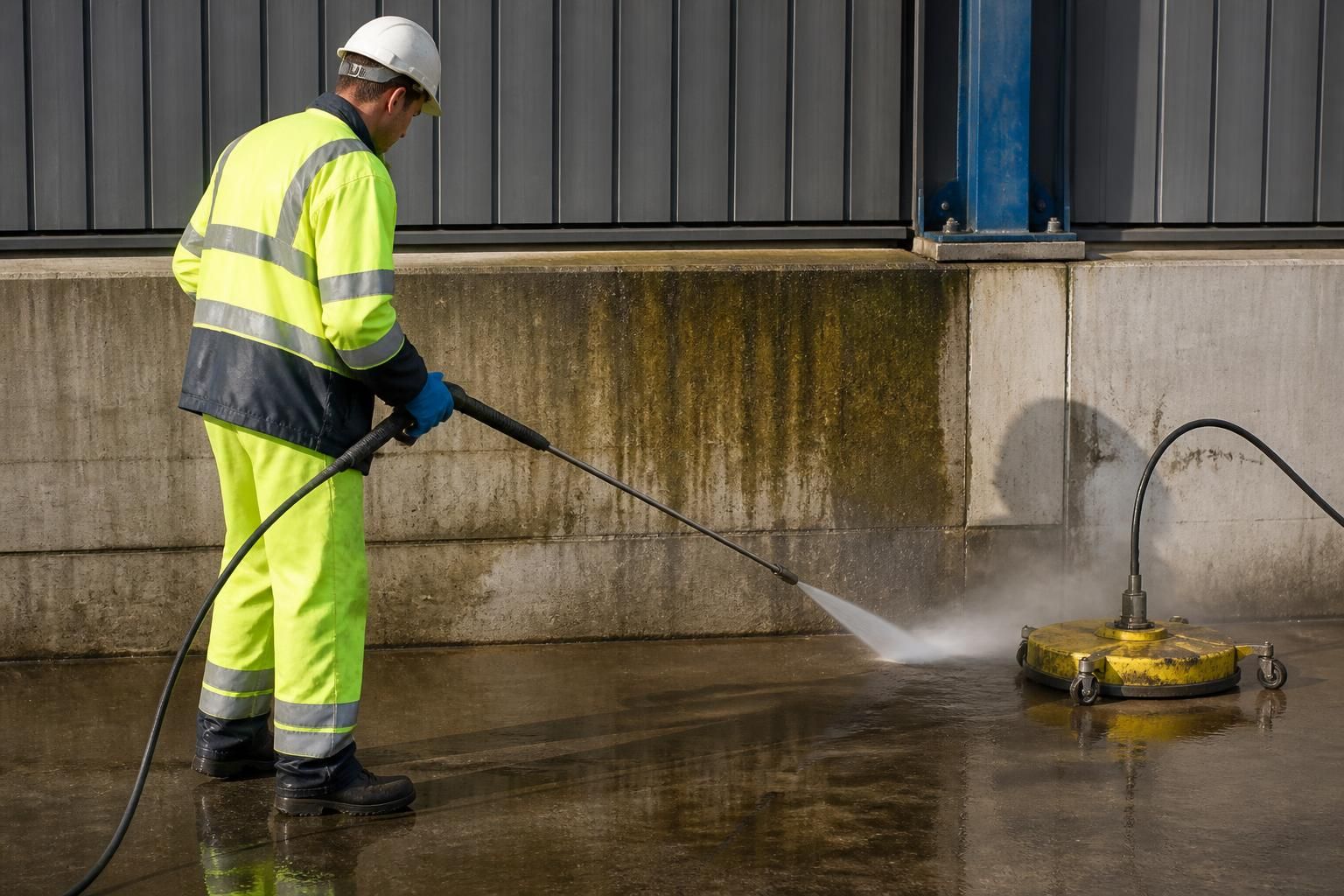
For broad, level areas such as concrete yards, car parks and warehouse floors, a surface-cleaning attachment can produce a more even finish than a hand-held lance. Its enclosed rotating jets help control spray and reduce striping when the attachment is moved consistently. This equipment is not suitable for every material: uneven paving, fragile coatings and surfaces with open joints may require a lower-impact method or controlled lance work instead. Selecting the attachment according to the surface profile is as important as selecting the pressure washer itself.
Equipment choice must also reflect the contamination being removed. Organic growth may require a controlled pre-treatment and gentle rinsing rather than aggressive blasting. Oil and grease may need heated water, a compatible detergent and suitable recovery of the resulting wastewater. Cement residue, paint, rust staining and construction deposits can require different treatments again. A jet washer alone does not solve every cleaning problem; the machine, nozzle, cleaning agent, dwell time and rinsing method work together.
Access equipment affects both cleaning quality and safety. Telescopic lances, mobile platforms, powered access equipment and other approved systems allow operators to maintain a suitable working distance and angle on façades, roofs and high-level cladding. Working too far away can reduce cleaning force and encourage operators to increase pressure unnecessarily. Working too close can concentrate the jet and increase the likelihood of surface damage. Stable access also helps produce consistent passes instead of irregular cleaning caused by awkward positioning.
For larger commercial and industrial sites, equipment may need to support wastewater control as well as cleaning. Vacuum recovery systems, drain protection, bunding and collection equipment can help prevent contaminated water entering surface water drainage. This is particularly relevant where runoff may contain oil, chemicals, paint particles, silt or biological material. In these situations, the most effective equipment specification is the one that delivers the required finish while allowing the wash water to be managed responsibly.
Before full cleaning begins, the surface should be assessed for its material, age, condition, coatings, joints, drainage and previous repairs. A discreet test area helps establish a suitable combination of pressure, flow, temperature, nozzle, distance and movement speed. The test should be checked after rinsing and drying where possible, since some marks or moisture-related effects are not immediately visible. The final method can then be adjusted before work extends across the whole area.
Machine condition also affects performance. Worn nozzles may produce an uneven spray pattern, restricted hoses can reduce flow, and poorly maintained pumps can make pressure inconsistent. Regular inspection of hoses, connections, trigger systems, gauges and attachments helps ensure that the selected settings are being delivered in practice. Operators should also use clean water and compatible detergents, since blocked filters or unsuitable products can reduce efficiency and affect the surface finish.
The best equipment is therefore not necessarily the most powerful machine. It is the combination that provides sufficient cleaning energy, suitable coverage and controlled rinsing for the specific site. Matching the equipment to the substrate reduces repeat passes, water consumption, disruption and the likelihood of remedial work. For commercial and industrial cleaning, this methodical selection process produces a more uniform result while protecting façades, paving, roofs, cladding and other maintained surfaces.
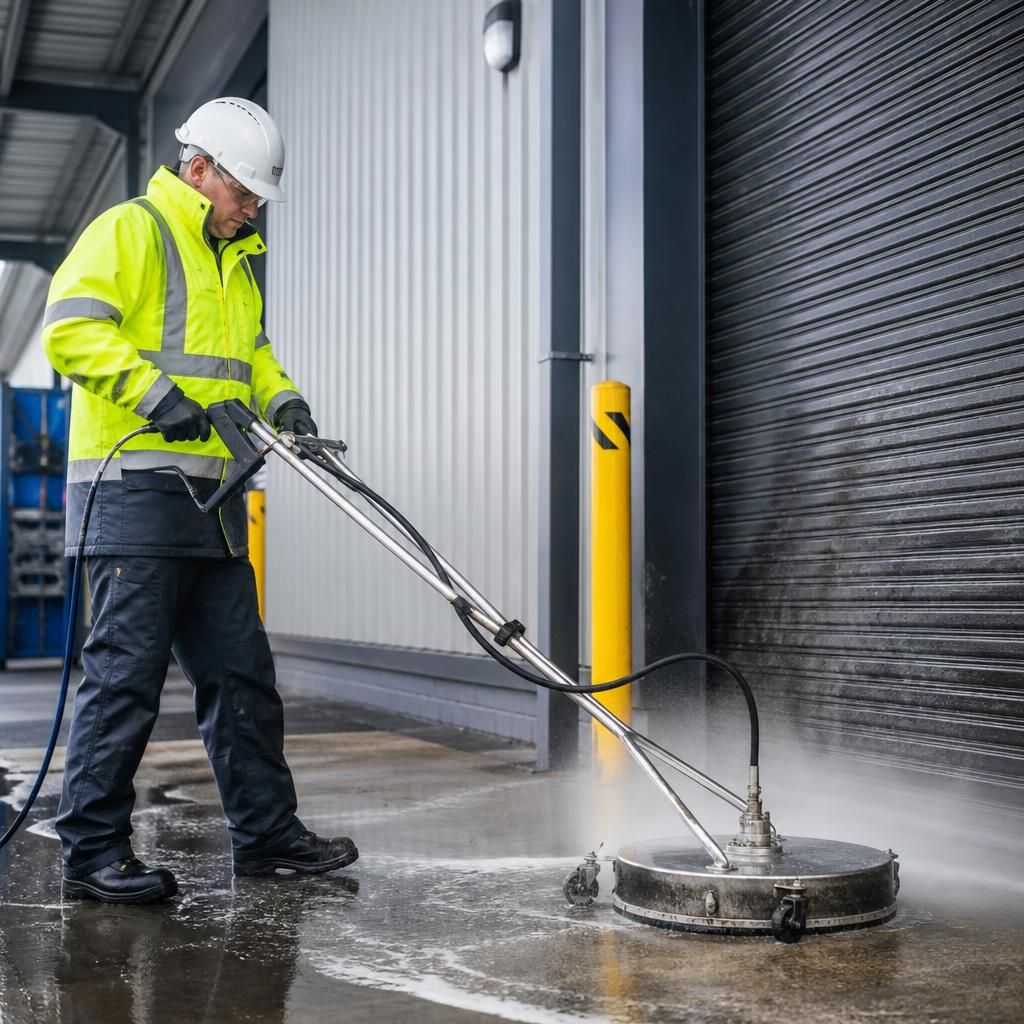
The most effective jet washing equipment is selected for the surface and contamination, rather than chosen solely for maximum pressure. For example, a surface-cleaning attachment can provide an even finish on robust concrete, while a lower-pressure lance, controlled rinse or steam-cleaning method may be more appropriate for painted cladding, render, pointing or older masonry. Before work starts, a discreet test area helps confirm the correct pressure, water flow, temperature, nozzle, distance and movement speed. This reduces repeat passes and helps remove grime thoroughly without etching, lifting coatings or forcing water into joints.
Discuss the Right Jet Washing Equipment for Your Surfaces
Discuss your surface, contamination and access requirements with Encanto Exterior Cleaning so we can recommend the appropriate jet washing equipment and cleaning method. Contact our team to arrange a site assessment for your commercial or industrial premises.