
How does the industrial jet washing process work to prevent surface damage?
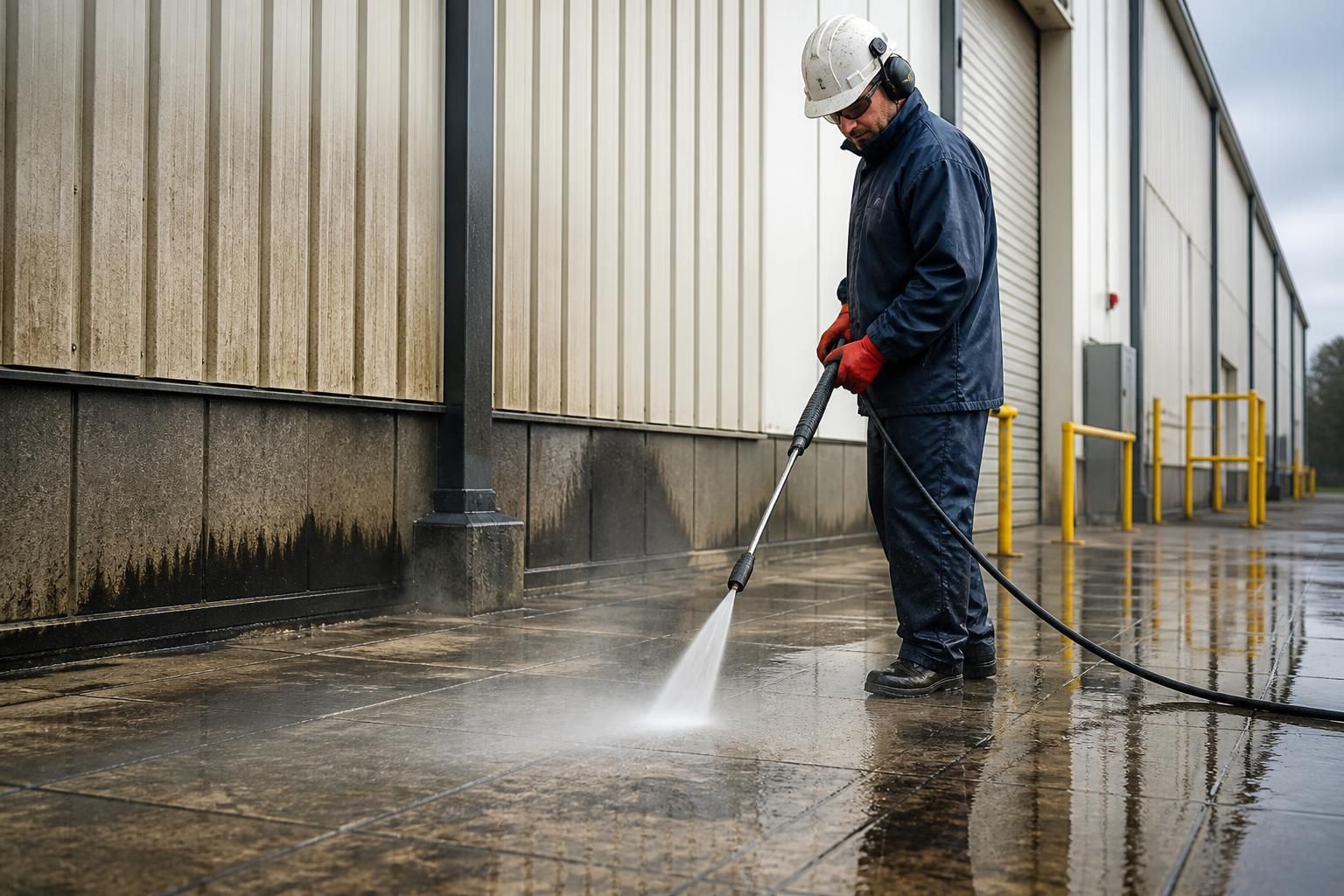
The industrial jet washing process prevents surface damage by assessing the material first, then selecting suitable water pressure, temperature, nozzle type and cleaning method. Operators begin with a controlled test area and adjust the equipment and technique to remove contamination without eroding, cracking or lifting the underlying surface.
Industrial jet washing prevents surface damage by matching the cleaning method to the material and contamination before full-scale work begins. The operator assesses the substrate, selects suitable pressure, water flow, temperature, nozzle and cleaning distance, then tests the method in an inconspicuous area. This controlled approach removes dirt, coatings and biological growth without unnecessarily eroding, cracking, etching or lifting the underlying surface.
Pressure is only one part of the process. A high-pressure system can be used safely on robust surfaces when it is correctly adjusted, while a lower-pressure method may still cause damage if the nozzle is too close, the spray is concentrated or the operator remains over one area for too long. Experienced operatives therefore control the complete cleaning system rather than relying on pressure alone.
The process normally includes the following stages:
- Site and surface assessment: The team identifies the material, its condition and the type of contamination present. Concrete, brickwork, stone, render, metal cladding, painted surfaces, block paving and roofing materials all respond differently to water pressure and heat. Existing cracks, open joints, corrosion, loose coatings, failed sealant and previous repairs are recorded because these areas may require a gentler method or separate protection.
- Contamination assessment: Oil, traffic film, algae, moss, cement residue, chewing gum, rust staining and graffiti do not respond in the same way. The operator considers whether agitation, detergent, steam, hot water or controlled rinsing will remove the contamination with less force. Softening a deposit first can reduce the pressure and dwell time needed during rinsing.
- Selection of equipment and settings: The equipment is configured for the surface and task. Nozzle type affects the shape and concentration of the water jet, while the spray angle, flow rate, temperature and working distance influence the force delivered to the substrate. A wider fan pattern generally distributes impact over a larger area, whereas a narrow jet is reserved for suitable applications and used with particular care.
- Protection and preparation: Vulnerable fixtures, doors, vents, electrical equipment, landscaping and adjacent surfaces are protected before cleaning. Openings and damaged joints are checked so that water is not driven behind cladding, into a building or beneath a surface layer. Drainage routes and runoff controls are also considered, particularly where oils, sediment or cleaning products may be present.
- Controlled test cleaning: A small test area is cleaned using the proposed settings. The operator checks whether the contamination is being removed, whether the surface colour or texture is changing and whether joints, coatings or aggregate are being disturbed. The method is adjusted if necessary before it is applied across the wider area.
- Systematic cleaning: Cleaning is carried out in manageable sections, usually working in a consistent direction and keeping the nozzle moving. Maintaining a suitable distance and avoiding prolonged spray on one point helps prevent striping, surface marking and uneven wear. Overlapping passes are controlled so that the finished appearance remains consistent without repeatedly treating the same area.
- Rinsing and inspection: Residue and loosened material are rinsed away using a setting appropriate to the surface. The cleaned area is inspected for remaining contamination, water penetration, coating failure or other defects. Further treatment is only applied where needed, rather than repeatedly increasing pressure across the entire surface.
Surface condition is as important as surface type. Sound concrete may tolerate a more robust cleaning method than weathered concrete with exposed aggregate or weakened edges. Similarly, brickwork with open mortar joints, aged render, friable stone and painted cladding may be damaged by a setting that would be suitable for an intact industrial floor. When a surface is already deteriorated, cleaning can reveal existing defects; this is why inspection and test cleaning are essential before work proceeds.
Operators also control the angle of application. Direct, concentrated impact can force water into joints, cracks and laps, so the spray is directed in a way that cleans the face of the material without driving water behind it. On façades and cladding, the sequence is planned to manage runoff and prevent dirty water from streaking areas that have already been cleaned. Roofs and elevated surfaces require additional care because water can enter beneath tiles, membranes, flashings or fragile coatings.
Detergents and specialist treatments can reduce the mechanical action required, but they must be compatible with the substrate and used according to the relevant safety and environmental controls. A suitable treatment may loosen oil, biological growth or graffiti residue before rinsing. Incorrect chemicals, excessive dwell time or inadequate rinsing can discolour surfaces, attack coatings or leave deposits, so product selection and application are part of damage prevention rather than an afterthought.
Temperature is also selected according to the material and contamination. Hot water or steam can be effective against grease, chewing gum and certain deposits, but heat may soften coatings, affect sealants or damage heat-sensitive materials. The operator balances temperature with pressure, flow and cleaning time, using the least aggressive combination that achieves the required result.
Good practice includes continuous observation during the work. Operators look for changes in colour, texture, gloss, aggregate exposure, joint integrity and coating adhesion. They also monitor runoff, equipment performance and nearby surfaces. If the substrate reacts unexpectedly, the work is paused and the method is reassessed rather than forcing the original setting to continue.
After cleaning, the surface is checked against the agreed requirement and any areas needing specialist repair or further treatment are identified. Jet washing cannot correct structural defects, failed pointing, delamination or severely degraded coatings, and attempting to remove every mark through greater pressure may make those defects worse. Where appropriate, the cleaning findings are reported so that maintenance or repair can be planned separately.
For commercial and industrial sites, preventing damage also depends on competent operators, maintained equipment and a method statement tailored to the location. Access arrangements, exclusion zones, electrical risks, water management and protection of neighbouring property must be addressed alongside the cleaning technique. This combination of material assessment, controlled equipment settings, test cleaning and ongoing inspection allows industrial jet washing to deliver a clean, even result while preserving the service life and appearance of the surface.
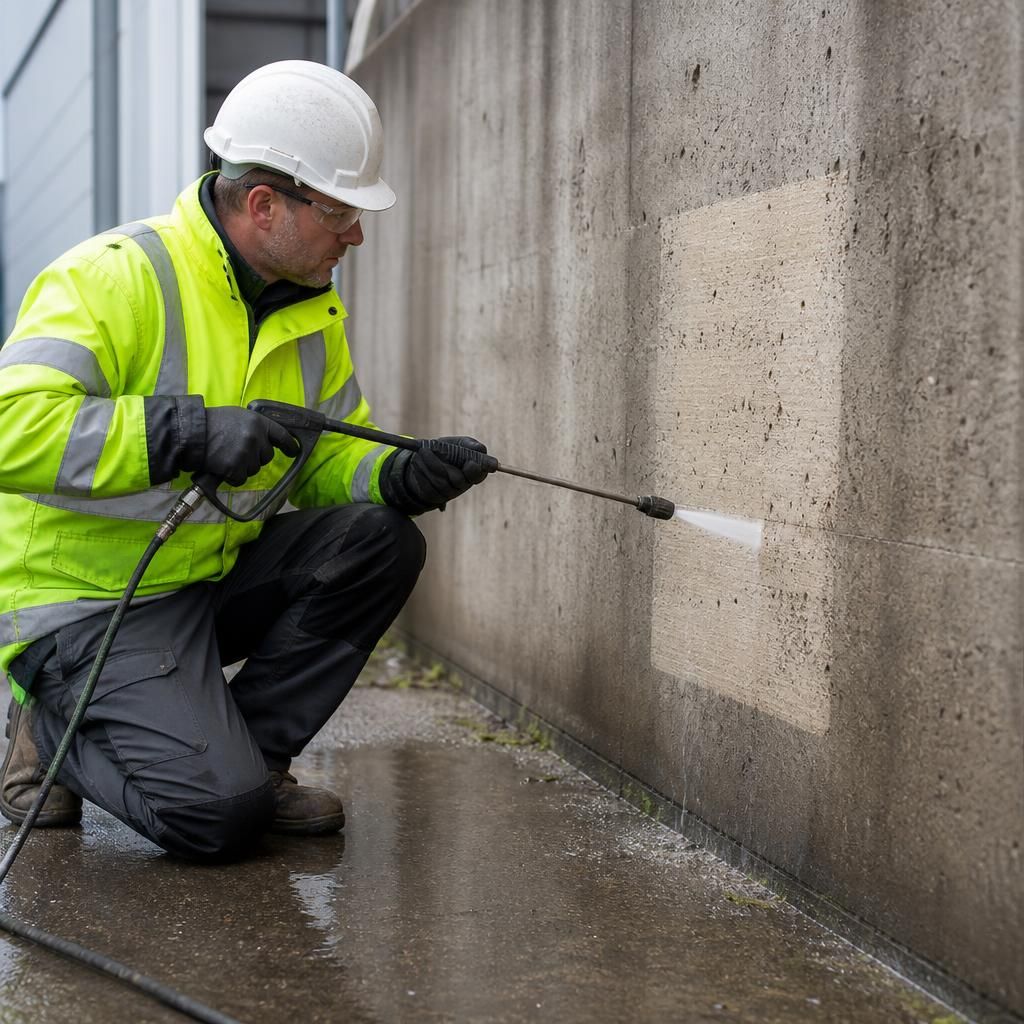
Preventing surface damage starts with a controlled test clean. Before treating the full area, the operative applies the proposed pressure, nozzle, temperature and cleaning distance to an inconspicuous section. The result is checked for changes to colour, texture, coating adhesion, mortar joints and exposed aggregate.
If the test shows marking, lifting or excessive wear, the method is adjusted before work continues. A wider spray pattern, greater working distance, lower pressure, reduced temperature or a suitable detergent may provide the required clean with less mechanical force. This approach is particularly important for weathered concrete, aged brickwork, painted cladding, render, roofing materials and surfaces with existing defects.
Arrange a Surface-Safe Industrial Jet Washing Assessment
Arrange a surface-safe industrial jet washing assessment so we can identify the substrate, contamination and any vulnerable areas before recommending suitable equipment and cleaning settings. Contact Encanto Exterior Cleaning to discuss your site and agree a controlled approach.