
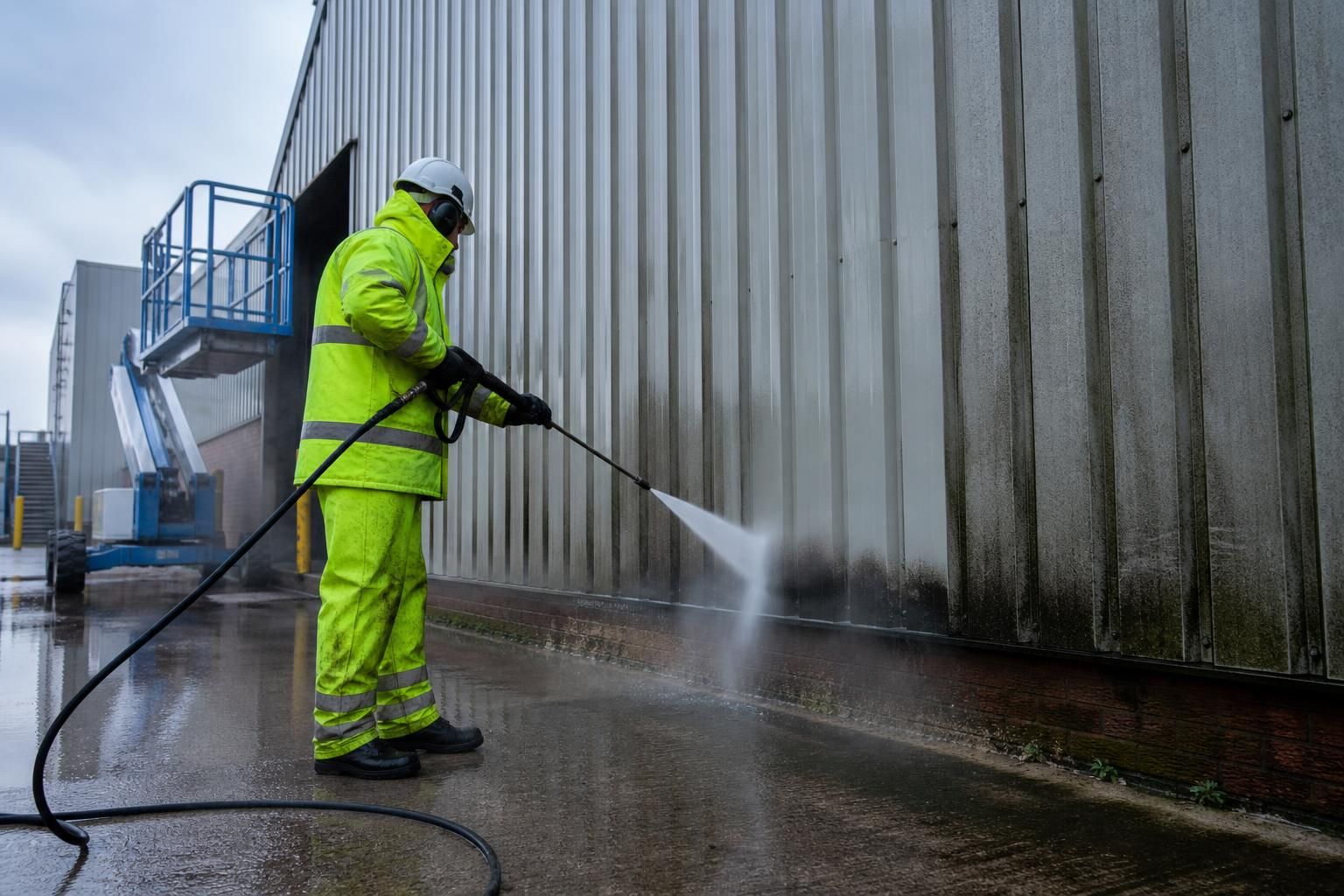
How do industrial jet washing techniques differ for various surfaces?
Industrial jet washing techniques vary according to each surface’s hardness, porosity, coating and condition. Concrete may tolerate higher pressure, while brick, cladding, roofs and painted surfaces usually require lower pressure, controlled water flow, suitable detergents and, where necessary, hot water or steam to remove contamination without causing damage.
Industrial jet washing techniques must be adapted to the surface being cleaned. The correct method depends on the material’s hardness, porosity, condition, coating, contamination and location, as well as the available drainage and access. Pressure, water flow, nozzle selection, temperature, cleaning chemicals and operator distance are adjusted together to remove dirt effectively without dislodging mortar, stripping coatings, etching finishes or forcing water into the building.
Pressure is only one part of the cleaning method. A powerful jet is not automatically the most effective option. Increasing pressure can shorten cleaning time on robust concrete, but it can also cause permanent damage to softer or coated surfaces. In many cases, controlled water flow, a wider spray pattern, suitable detergent and additional dwell time provide better results than simply using more pressure.
Concrete and reinforced concrete
Concrete generally tolerates more intensive jet washing than most façade materials, particularly when it is sound, uncoated and in good condition. It is commonly cleaned to remove traffic film, oil residues, algae, moss, tyre marks, chewing gum and general soiling from yards, loading areas, car parks, service roads and industrial floors.
- Higher-pressure cleaning may be suitable for sound concrete, but the operator must first check for cracks, spalling, exposed aggregate, weak joints and previous surface repairs.
- A rotary surface cleaner can help produce an even finish on large horizontal areas and reduce streaking compared with using a lance alone.
- Oil, grease and embedded traffic deposits may require a degreasing product, hot water or steam rather than additional pressure.
- Damaged joints and cracks should not be aggressively blasted, as water can widen defects or enter the substrate.
- Wastewater containing oil, sediment or cleaning chemicals must be controlled and disposed of in accordance with site and environmental requirements.
Concrete can also show a visible difference between cleaned and uncleaned sections. A test area is therefore useful where appearance is important, especially on decorative, coloured or previously sealed concrete.
Brickwork and masonry
Brick and masonry are more vulnerable to damage because they are porous and may have weathered joints. The cleaning method must remove surface contamination without eroding the brick face or washing out the mortar. Older buildings require particular care because the pointing may be softer than the brick, and historic masonry may not tolerate conventional high-pressure cleaning.
- Use a lower-pressure, wider spray where possible, keeping the nozzle at a controlled distance and avoiding concentrated blasting into joints.
- Remove loose material carefully before washing so that unstable brick faces or pointing are not made worse.
- Algae, atmospheric grime and organic growth may respond to a suitable biocide or detergent with controlled rinsing.
- Paint, carbon deposits and heavy staining may need a specialist cleaning approach rather than a standard jet wash.
- Inspect for cracked bricks, open joints, previous repairs and moisture-sensitive areas before work begins.
Water can migrate through porous masonry, so cleaning should be planned around vulnerable openings, internal finishes and occupied areas. Where a building is old, listed or architecturally significant, the proposed method should be tested and agreed before full-scale cleaning.
Metal cladding and profiled panels
Metal cladding is often cleaned to remove airborne pollution, dust, bird fouling, algae and general industrial deposits. The surface may be galvanised, coated, painted or finished with a factory-applied system, and each finish has different tolerance to pressure and chemicals.
- Use controlled pressure and avoid directing the jet into panel laps, fixings, seals, vents and service penetrations.
- Clean from the upper sections downwards where appropriate, while preventing dirty runoff from drying on areas that have already been treated.
- Use a compatible detergent for grease or atmospheric staining, following the coating manufacturer’s guidance where available.
- Avoid harsh chemicals or abrasive action that could dull the finish, remove protective coatings or accelerate corrosion.
- Check for loose panels, failed sealant, damaged coatings and corrosion before introducing water.
Cladding often benefits from a soft-washing or low-pressure approach with chemical treatment and a controlled rinse. On tall elevations, access planning is as important as the cleaning method because water pressure, hose routing, overspray and runoff must be managed around neighbouring property and building occupants.
Painted, rendered and coated surfaces
Painted render, external insulation systems and other coated façades can be damaged by concentrated pressure. The risk is higher where the coating is chalking, blistered, flaking or poorly bonded. Jet washing should not be used to conceal a failure in the coating system or substrate.
A low-pressure pre-wet, compatible detergent and gentle rinse are often more appropriate than aggressive cleaning. Operators should test for colour transfer, coating failure and uneven weathering in an inconspicuous location. If the coating begins to lift or the render shows exposed aggregate, cleaning should stop so that the specification can be reviewed.
Roofs and roof-mounted materials
Roof cleaning varies considerably according to the covering. Concrete tiles, clay tiles, metal roofing, fibre cement and coated systems each have different risks. A roof may appear robust while still being vulnerable to displaced tiles, damaged laps, water ingress or loss of protective finish.
- Assess the roof covering, pitch, age, access route, fragile areas and condition of flashings before work starts.
- Use the least aggressive method that will achieve the required result, particularly on older tiles and coated metal roofs.
- Control the direction of the water so it does not drive moisture beneath laps, tiles, ridge elements or flashing.
- Use suitable access equipment and fall-protection measures rather than relying on unsafe movement across the roof.
- Collect or control moss, silt and debris so that gutters, downpipes and surface-water systems do not become blocked.
Some roofs are better suited to low-pressure cleaning, soft washing or steam cleaning than conventional high-pressure jetting. The correct approach depends on whether the objective is to remove loose organic growth, treat staining or strip a firmly bonded deposit.
Tarmac, asphalt and bituminous surfaces
Car parks, access roads and service yards made from tarmac or asphalt can usually be cleaned with controlled pressure, but excessive force may loosen aggregate, expose the binder or damage repaired areas. Oil and fuel contamination often requires a compatible degreaser and hot water, followed by effective recovery of the wastewater.
Particular care is needed around worn edges, pothole repairs, expansion joints, road markings and areas where the surface has softened in warm conditions. A surface cleaner can improve consistency on broad areas, while a lance may be needed around kerbs, drainage channels, barriers and other obstructions.
Block paving, concrete paving and hard landscaping
Paving can tolerate jet washing when the blocks or slabs are sound, but high pressure may remove jointing sand, damage aged surfaces or spread contamination into adjacent areas. Cleaning should be followed by inspection of joints and, where specified, replacement of jointing material once the surface has dried.
Porous paving and natural stone need a carefully selected pressure and detergent. Some stones can be etched or discoloured by acidic products, while others may show shading if water or chemical treatment is applied unevenly. The surface should be tested first, and runoff should be prevented from carrying loosened sediment into drainage systems.
Glass, windows and delicate architectural finishes
Glass and delicate finishes should not be treated like concrete or paving. Abrasive particles, unsuitable chemicals and excessive pressure can scratch glass, damage seals or mark frames and surrounding panels. Cleaning should use an appropriate low-pressure method, clean water or compatible detergent, and controlled rinsing. Any existing chips, failed seals or damaged coatings should be recorded before cleaning.
How the method is selected
A competent industrial cleaning assessment normally considers the following points before equipment is operated:
- Identify the substrate and any coating, sealant, repair or treatment already present.
- Determine whether the contamination is loose, biological, greasy, mineral, paint-based or embedded.
- Inspect for defects such as cracks, corrosion, open joints, delamination, failed seals and unstable finishes.
- Select the least aggressive combination of pressure, flow, temperature, nozzle, chemical and dwell time likely to produce the required result.
- Carry out a test clean in a representative area and check both the immediate appearance and any visible surface change.
- Plan access, overspray control, drainage, wastewater recovery and protection for vehicles, pedestrians, plant and building entrances.
- Agree the finish standard, including whether the requirement is general presentation cleaning, preparation for painting or removal of a specific contaminant.
Why hot water, steam and detergents may be used
Hot water can help dissolve grease, oil and some organic deposits, reducing the need for excessive pressure. Steam uses lower water volumes and can be useful for sensitive areas or detailed cleaning, although it is not suitable for every coating or substrate. Detergents and biocides can improve the treatment of organic growth and atmospheric soiling, but they must be compatible with the surface and applied according to the product’s safety and environmental requirements.
Chemicals should never be selected solely because they produce a fast visual result. The operator must consider staining, corrosion, nearby vegetation, drainage, occupants and the possibility of chemical residue. Rinsing and wastewater management form part of the cleaning specification, not an optional final step.
Practical conclusion
Concrete and sound paving may accept more intensive jet washing, whereas brick, render, cladding, roofs, painted finishes and delicate materials generally require lower pressure, greater distance, controlled flow and more reliance on heat or compatible cleaning agents. Surface testing, defect inspection and runoff control are essential on every industrial project. Selecting the method by material and contamination type protects the asset while delivering a consistent, presentable finish.
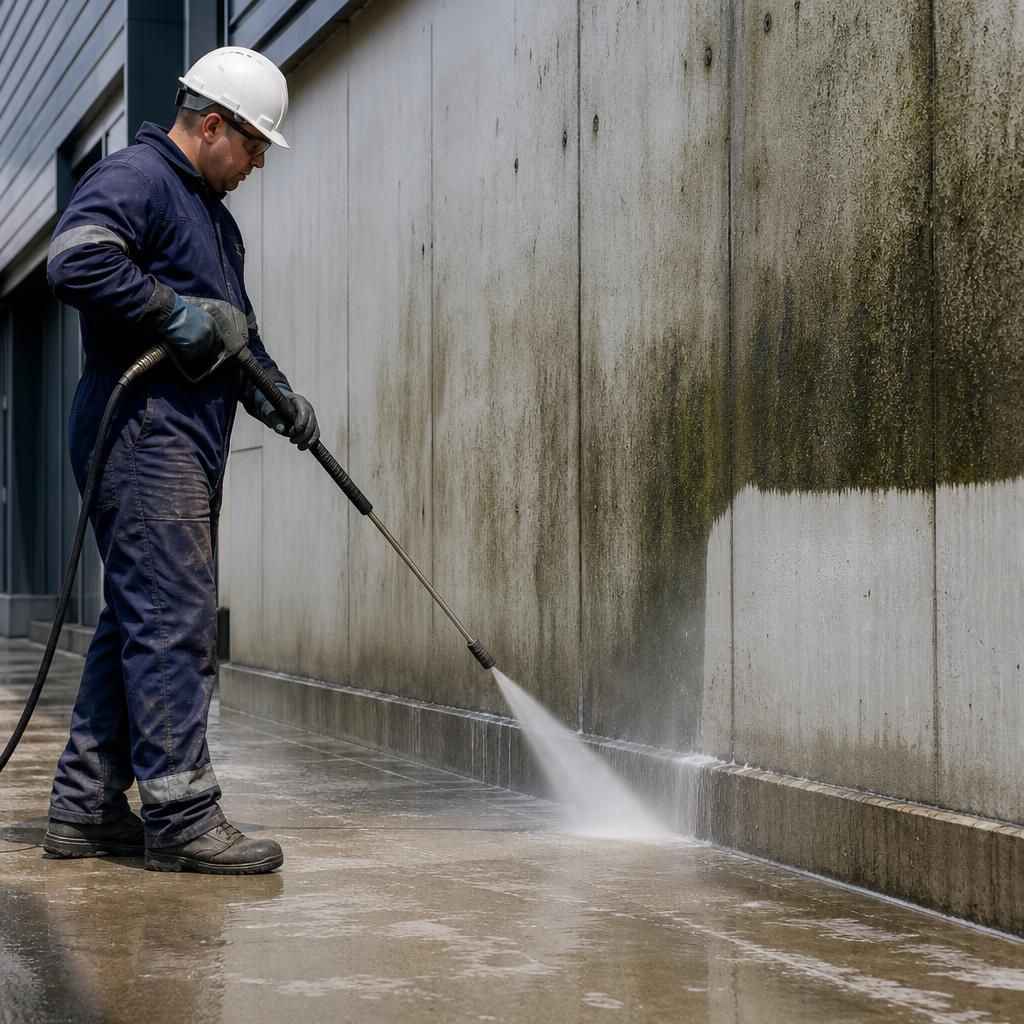
Industrial jet washing techniques differ by surface because pressure, water temperature, nozzle type and cleaning products must match the material and its condition. Sound concrete may tolerate more intensive cleaning, while brickwork, cladding, painted render, roofing and glass generally need lower pressure and greater control.
The safest method is to use the least aggressive combination that removes the contamination effectively. Before full cleaning, the operator should inspect for cracks, open joints, corrosion, failed coatings and weak repairs, then carry out a test clean in a discreet area. This confirms whether the surface, finish and surrounding materials respond as expected before work continues.
- Use higher controlled pressure only where the substrate is sound and able to withstand it.
- Use wider spray patterns, greater nozzle distance and compatible detergents on porous, coated or delicate surfaces.
- Choose hot water or steam for grease and embedded organic deposits where extra pressure could cause damage.
- Protect openings, seals, drainage systems and nearby property from water penetration and contaminated runoff.