
What types of surfaces can be effectively cleaned using hot water jet washing?
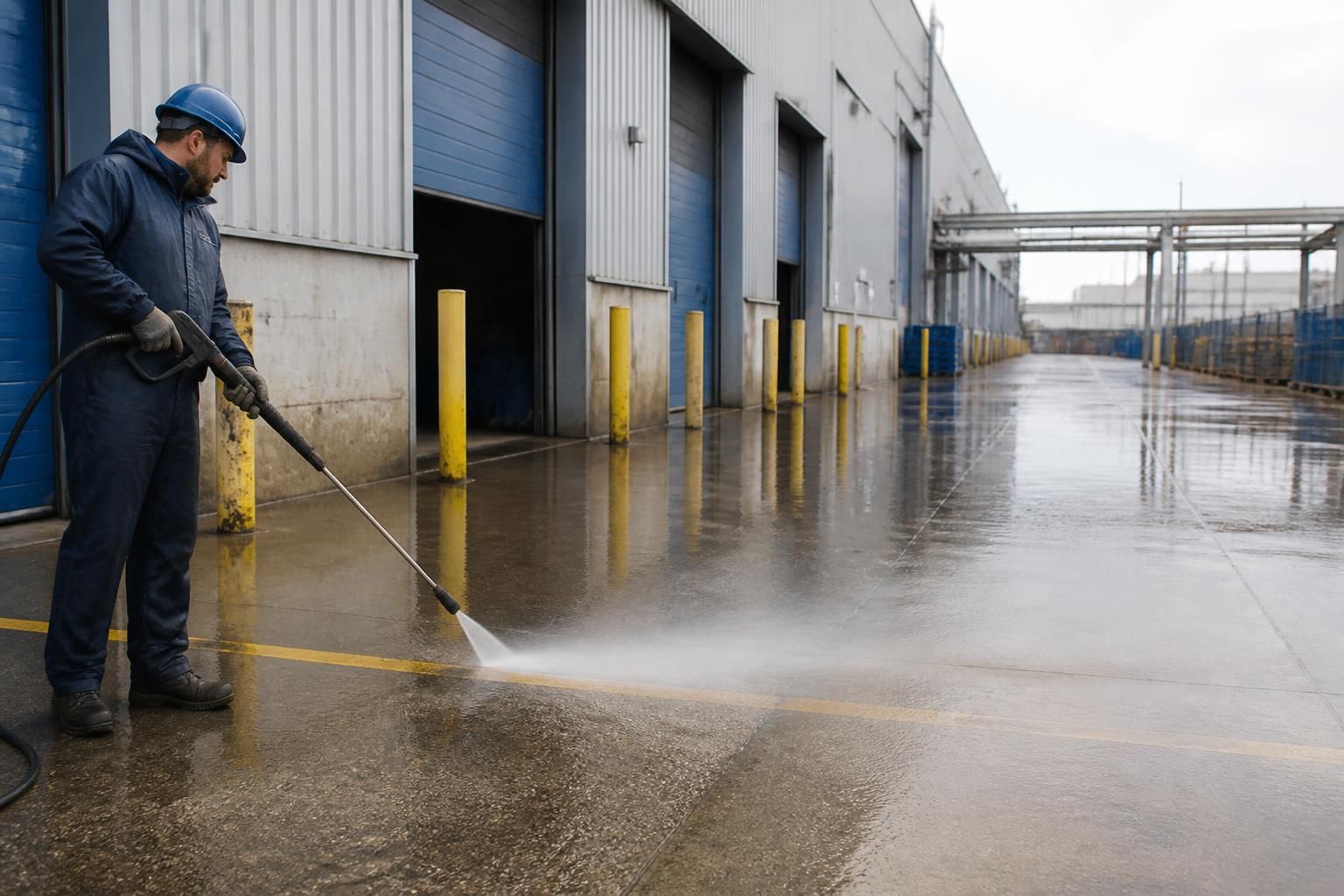
Hot water jet washing effectively cleans durable surfaces such as concrete, block paving, brickwork, stone, tarmac, cladding, metalwork, roofs, loading bays, car parks and industrial machinery. The heat helps remove oil, grease, ingrained dirt, algae and other residues, but pressure and temperature must be adjusted to suit the material so coatings, joints and delicate finishes are not damaged.
Hot water jet washing is effective on most robust, non-porous and semi-porous surfaces found around commercial and industrial premises. The heated water helps break down oil, grease, food residues, traffic film, algae, moss and ingrained dirt more efficiently than cold water alone. Commonly suitable surfaces include concrete, block paving, brickwork, natural stone, tarmac, external cladding, metalwork, roofs, loading bays, car parks, plant equipment and industrial machinery. The pressure, temperature, nozzle and cleaning method must always be matched to the material and its condition.
Concrete and reinforced concrete
Concrete is one of the most suitable surfaces for hot water jet washing. It can be cleaned to remove oil deposits, diesel staining, rubber marks, mud, algae, moss, food waste and general foot or vehicle traffic. Hot water is particularly useful on loading areas, warehouse floors, service yards, ramps, walkways and car parks where greasy residues have bonded to the surface.
Sound concrete can usually tolerate substantial cleaning pressure, although older or damaged areas require more care. Excessive pressure may expose aggregate, enlarge cracks or remove weakened surface material. Joints, drainage channels and expansion gaps should also be inspected before cleaning, as debris and wash water can be displaced into these areas.
Block paving and concrete paving
Hot water jet washing can restore the appearance of block paving, concrete slabs and other hard landscaping by removing dirt, algae, moss, weeds and vehicle-related contamination. It is suitable for commercial entrances, pedestrian areas, courtyards, service roads and external paved areas.
Care is needed around loose blocks, damaged edges and jointing sand. A rotary surface cleaner can help produce a more even result on larger areas and reduce uncontrolled spray. Where jointing material is removed during cleaning, the surface may need re-sanding after it has dried. Oil or chemical staining may require a suitable pre-treatment rather than pressure alone.
Brickwork and masonry
Well-maintained engineering brick, dense brickwork and robust masonry can often be cleaned effectively with hot water. The process can remove atmospheric soiling, algae, grease, soot and deposits from walls, boundary structures, loading areas and industrial buildings.
Brickwork is variable, however, and older, soft or friable bricks may be damaged by high pressure or excessive heat. Mortar joints can also erode if the lance is held too close or directed repeatedly at one point. A test area should be completed first so that the cleaning method can be adjusted to the brick type, mortar condition and level of contamination.
Natural and manufactured stone
Many robust stone surfaces, including granite, some sandstone, dense limestone and manufactured paving products, can be cleaned with controlled hot water jet washing. Typical applications include steps, paving, retaining walls, plinths, forecourts and external building features affected by algae, dirt, grease or atmospheric staining.
Stone is not uniform, so the method must reflect its porosity, finish and age. Polished, highly absorbent, friable or previously repaired stone may be unsuitable for aggressive jetting. Hot water may be beneficial for organic growth and oily contamination, but it does not remove every stain without the use of an appropriate, material-safe cleaning agent. Testing helps identify whether the surface will change colour, shed particles or show variations after cleaning.
Tarmac and asphalt
Sound tarmac and asphalt can be cleaned to remove mud, algae, traffic film, rubber deposits, oil and other surface contamination. This is useful for car parks, access roads, yards, pedestrian routes and areas around fuel or delivery operations.
Excessive heat or pressure can soften, disturb or mark aged asphalt, particularly during warm weather or where the binder is already deteriorated. Cleaning should therefore be controlled, with particular attention to loose aggregate, potholes, repaired sections and edges. Oil contamination that has penetrated deeply may lighten rather than disappear completely, and damaged tarmac may need repair rather than more intensive washing.
External cladding and coated panels
Metal cladding, composite panels and certain coated façade systems can be cleaned with hot water to remove dust, traffic film, bird fouling, algae and greasy deposits. This can be suitable for warehouses, factories, retail units, offices and other large commercial buildings.
Cladding requires a lower-impact approach than a concrete yard. The condition of the coating, joints, seals, fixings and insulation system should be considered before work begins. Strong pressure can force water behind panels or damage aged coatings, while unsuitable detergents may affect the finish. Hot water is often used at controlled pressure with a suitable lance, soft brush or low-pressure application method for façade cleaning.
Metalwork, shutters and external fixtures
Robust unpainted or suitably coated metalwork, security shutters, gates, railings, frameworks, vehicle barriers and external plant can often be cleaned effectively. Hot water helps loosen grease, oil, soot, bird deposits and industrial grime from surfaces that are difficult to clean with cold water.
Operators must identify the metal and coating before cleaning. Bare steel may require prompt drying and corrosion protection, while painted, galvanised or powder-coated finishes can be damaged by excessive pressure or incompatible chemicals. Electrical housings, control panels, bearings, seals and other water-sensitive components should be isolated or protected.
Roofs and roof-mounted areas
Suitable roof surfaces may include robust metal roofing, some coated systems, concrete roof tiles and other hard-wearing materials. Hot water can help remove moss, algae, bird fouling, oily deposits and general atmospheric contamination from commercial and industrial roofs.
Roof cleaning involves more than selecting the correct temperature and pressure. The roof covering, membrane, laps, seals, drainage outlets and underlying structure must be assessed first. Fragile tiles, aged coatings and single-ply membranes may require a softer method, such as low-pressure cleaning or a specialist treatment. Safe access, edge protection and control of falling debris and contaminated water are also essential.
Loading bays, service yards and car parks
Loading bays, service yards and car parks commonly benefit from hot water jet washing because they combine hard surfaces with heavy contamination. Hot water is effective against oil, grease, tyre marks, food residues, mud, algae and spill-related deposits on concrete, paving and sound asphalt.
These areas should be assessed for drainage, surface-water discharge and the presence of hazardous substances before cleaning. Contaminated runoff may require collection, filtration or controlled disposal rather than discharge into a surface-water drain. Where vehicles, pedestrians or deliveries use the area, the cleaning plan should include suitable segregation, drying time and safe reinstatement.
Industrial machinery and plant
Many types of external industrial machinery, production equipment, refuse containers, trailers, agricultural equipment and plant can be cleaned with hot water. The heat helps dissolve lubricants, grease, hydraulic residues, carbon deposits and food or process contamination.
Machinery cleaning must be planned around sensitive components. Motors, switches, sensors, bearings, electrical connections, vents and hydraulic seals may need to be covered or excluded from direct spray. Equipment should be isolated in accordance with site procedures, and any residues containing oils, chemicals or process materials must be captured and handled correctly. Hot water cleaning is not automatically suitable simply because a machine has a metal exterior.
Surfaces requiring additional caution
Some materials are unsuitable for standard high-pressure hot water cleaning or require a modified technique. These include soft or weathered brick, fragile stone, timber, painted surfaces with failing adhesion, delicate render, asphalt in poor condition, certain membranes, plastics that may deform, and surfaces with loose coatings or unsealed joints. Glass, signage, insulation and electronic equipment also need specialist treatment or protection.
On these surfaces, a lower pressure, reduced temperature, wider spray pattern, soft brush, steam-cleaning method or approved detergent may be more appropriate. The aim is to remove contamination without stripping coatings, opening joints, driving water into the substrate or creating a new repair requirement.
How suitability is assessed
Before cleaning, the surface should be assessed for material type, age, porosity, coating, damage, previous repairs and the nature of the contamination. A small test patch helps confirm the appropriate pressure, temperature, nozzle distance and cleaning agent. It also shows whether staining is on the surface or has penetrated the material.
Hot water jet washing is most effective when the cleaning method is matched to the surface rather than applied uniformly across an entire site. Appropriate controls may include pre-treatment for oil or biological growth, reduced pressure for façades, recovery of contaminated wastewater, protection of fixtures and a final inspection. This approach produces a cleaner result while reducing the risk of surface damage, water ingress and avoidable maintenance.
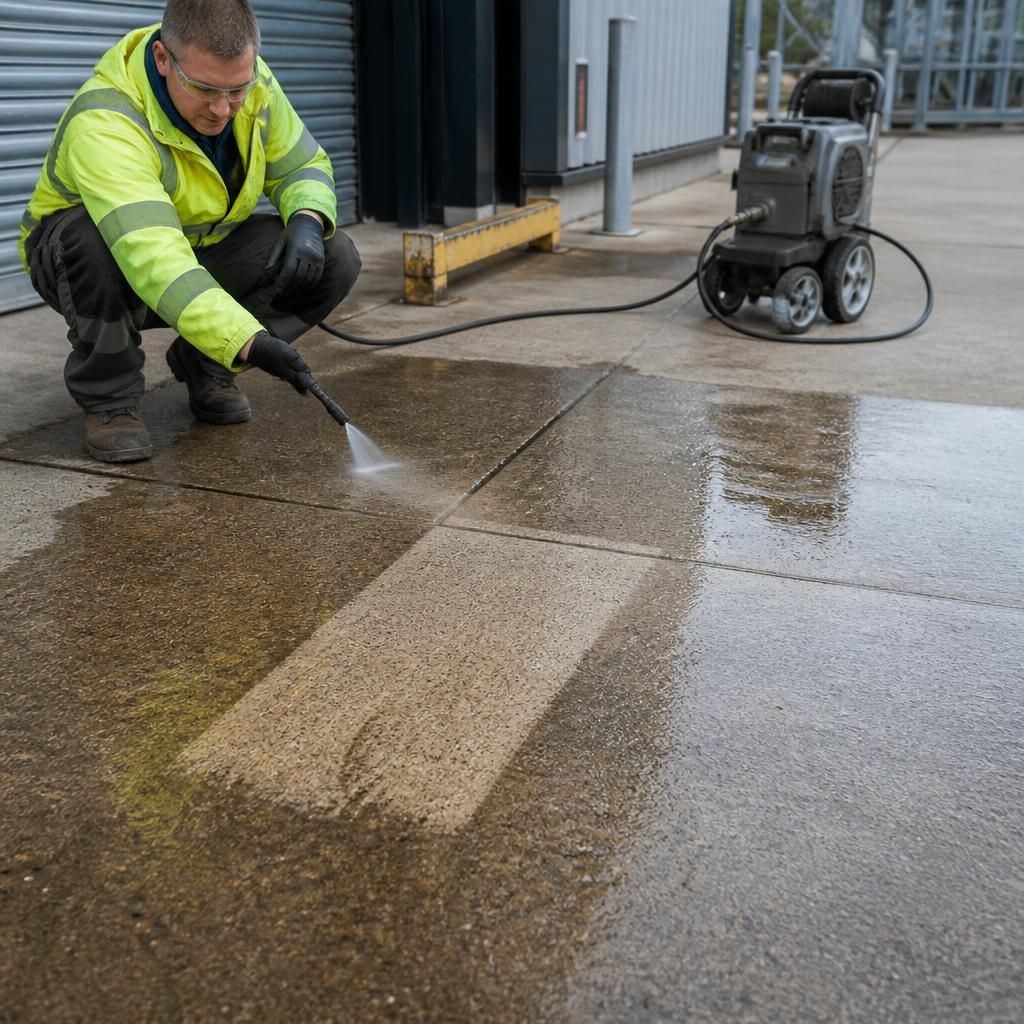
Hot water jet washing is effective only when the temperature, pressure and nozzle are matched to the surface. A controlled test area helps confirm whether concrete, paving, cladding, masonry or machinery can withstand the proposed method without damaging coatings, joints or vulnerable components.
The test also shows whether contamination is sitting on the surface or has penetrated the material. Where standard jet washing is too aggressive, the cleaning method can be adjusted using lower pressure, a wider spray pattern, a soft brush, steam or a material-safe treatment.