
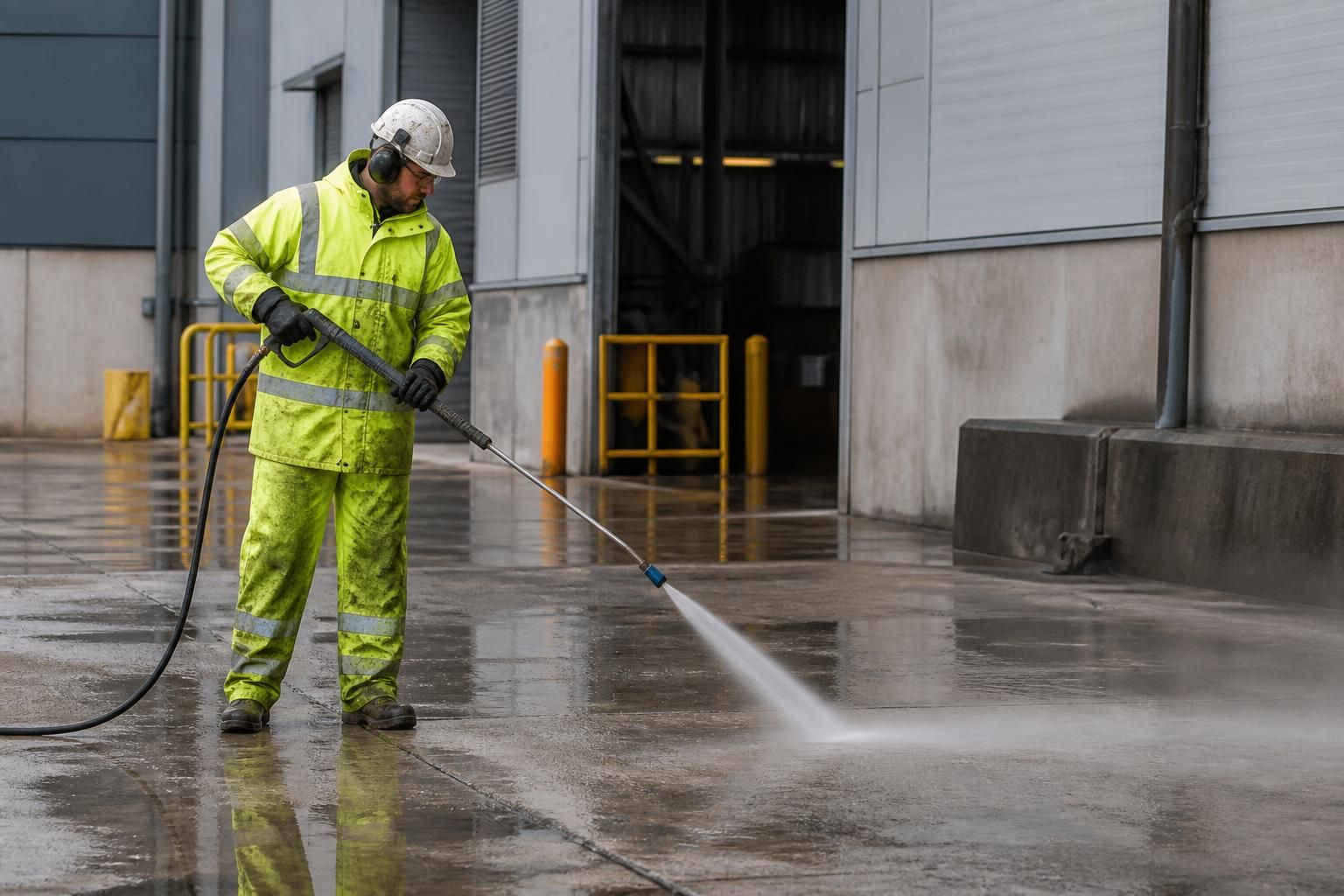
What types of surfaces and materials are best suited for hot water jet washing in industrial settings?
Hot water jet washing is best suited to durable, heat-resistant industrial surfaces such as concrete, block paving, brickwork, stainless steel, painted or coated metal, cladding and hard-wearing resin floors. The heated water helps break down oil, grease, fuel residue and ingrained grime, but pressure, temperature and any detergents must be adjusted to suit the material and coating.
Hot water jet washing is best suited to durable, heat-resistant industrial surfaces that can tolerate controlled water pressure, such as concrete, block paving, brickwork, stainless steel, coated metal, external cladding and hard-wearing resin floors. The heat helps loosen oil, grease, fuel residue, food deposits and ingrained grime, while the pressure removes the softened contamination. Settings must still be adjusted to the material, surface condition, coating and drainage arrangements.
Concrete and reinforced concrete are among the most suitable surfaces for hot water jet washing. Concrete yards, loading bays, warehouse floors, service areas, ramps, plant platforms and car parks can accumulate oils, hydraulic fluid, rubber deposits and general traffic grime. Heated water breaks down oily contamination more effectively than cold water alone, helping to reduce the need for aggressive chemical treatment. Sound concrete generally tolerates substantial cleaning pressure, although damaged, cracked or friable areas require a lower setting to prevent further surface loss.
Block paving, concrete paving slabs and other manufactured paving are also well suited when the joints and individual units are in sound condition. Hot water can remove vehicle fluids, organic growth, dirt and ground-in deposits from pedestrian areas, access roads and loading zones. Care is needed around loose blocks, failed pointing and jointing sand. A controlled technique helps avoid dislodging the paving or washing out joint material, particularly where the surface has already been weakened by vehicle movements or frost.
Brickwork and engineering brick can usually be cleaned effectively with heated water, especially on industrial buildings, boundary walls, hardstandings and service structures. Engineering brick is generally more resistant to intensive cleaning than softer or older decorative brick. Pressure should be reduced for aged, porous, weathered or damaged brickwork, as excessive force can erode the face of the brick and disturb mortar joints. A small test area is advisable before treating a whole façade.
Stainless steel and other robust metalwork are suitable for hot water cleaning where grease, oil, soot and handling residues have accumulated. This includes machinery casings, storage areas, steel frames, handrails, tanks and external plant. Stainless steel normally responds well, but the cleaning process should avoid abrasive tools and unsuitable chemicals that could mark the finish or encourage corrosion. Carbon steel, galvanised steel and aluminium need more specific assessment because heat, pressure and chemical choice can affect protective coatings or exposed metal.
Painted, powder-coated and protective-coated metal may be cleaned with hot water when the coating is properly bonded and in good condition. The temperature and pressure should be kept within a level that removes contamination without lifting edges, opening defects or damaging the coating. Particular care is required around chipped paint, rusted sections, sealant joints, labels and electrical housings. Hot water is not a substitute for preparing a failing coating; loose paint and corrosion may need to be removed using a separate preparation method.
Industrial cladding, including many coated metal and composite panel systems, can often be cleaned using a controlled hot water process. Heated water is useful for removing traffic film, grease, bird fouling and atmospheric deposits from warehouses, factories and commercial elevations. The method must account for the cladding profile, lap joints, seals, insulation system and drainage paths. Water should not be directed into panel joints, vents or openings, and a lower-pressure approach is normally preferable to protect the finish.
Resin, polyurethane and other hard-wearing industrial floors can be suitable for hot water jet washing where the flooring system has been installed for heavy-duty use. Workshops, food production areas, warehouses and plant rooms may benefit from heated water because it helps release grease and sticky residues from textured surfaces. The floor manufacturer’s guidance should be checked first, particularly for thin coatings, decorative finishes, exposed aggregate, expansion joints and areas where water could penetrate below the system.
Natural stone and asphalt require more caution. Dense stone such as granite may withstand controlled hot water cleaning, while softer or more porous stone can suffer from surface erosion, staining or thermal stress. Asphalt and bituminous surfaces can soften under excessive heat, especially in warm weather or where the binder is aged. These materials are not automatically unsuitable, but they need a measured temperature, appropriate pressure and a test clean before larger areas are treated.
Materials that are generally less suitable for routine hot water jet washing include untreated timber, delicate masonry, friable render, damaged coatings, some plastics, rubber membranes and surfaces containing heat-sensitive adhesives or sealants. Heat can soften, distort or discolour these materials, while high pressure can cause gouging, lifting or water penetration. Roof membranes, insulated panels and composite materials should be assessed as complete systems rather than judged only by their visible outer surface.
Suitability depends on more than the material name. The assessment should consider:
- the age, condition, porosity and previous repairs of the surface;
- the type of contamination, including oil, grease, biological growth, soot, cement residue or traffic film;
- the strength and condition of coatings, paint, sealants, joints and protective treatments;
- nearby electrical equipment, ventilation openings, stored goods and sensitive plant;
- where the wash water and loosened contaminants will drain; and
- whether the surface can dry safely without trapping moisture beneath a coating or in a joint.
A professional cleaning process begins with a visual inspection and, where appropriate, a test patch in an inconspicuous area. The operator can then select a suitable temperature, pressure, nozzle and working distance for the surface. Detergent is not always required, but where it is used it must be compatible with the material and managed so that contaminated runoff does not enter unsuitable drains or surrounding ground.
In practical terms, hot water jet washing is most effective on robust industrial surfaces with contamination that responds to heat, particularly oil and grease. Concrete, sound paving, engineering brick, stainless steel, suitable coated metal, cladding and heavy-duty resin flooring are common applications. Softer, damaged, porous or heat-sensitive materials can still sometimes be cleaned, but they require a lower-impact method, closer assessment and clear controls to prevent cosmetic or structural damage.
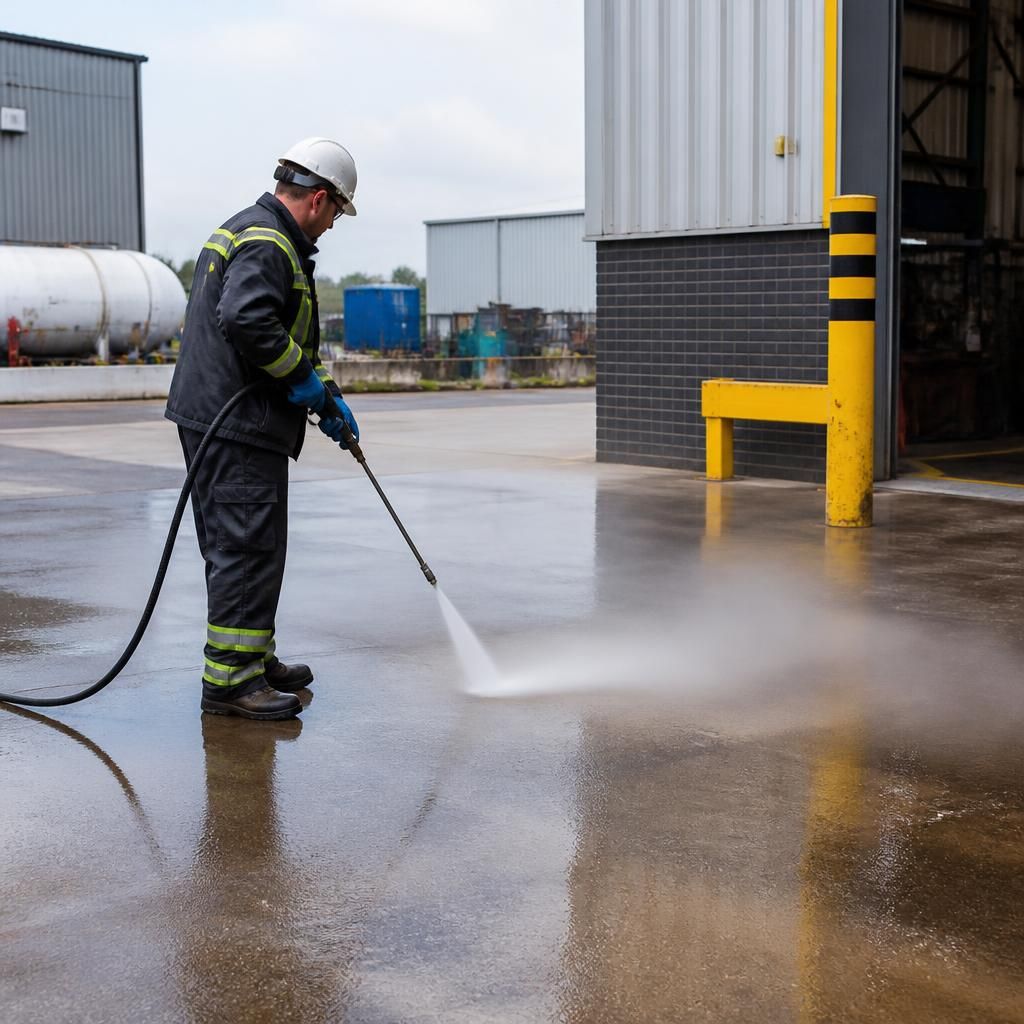
Hot water jet washing is particularly effective on sound concrete and industrial paving because heat loosens oil, grease, hydraulic fluid and traffic film before controlled pressure lifts the residue from the surface. This makes it suitable for loading bays, warehouse floors, ramps, service yards and car parks where cold water may leave oily contamination behind.
Surface condition still determines the correct cleaning method. Cracks, friable concrete, loose paving joints and damaged coatings require reduced pressure and careful nozzle control. A test area should be checked first, with wash water contained and directed to suitable drainage so that loosened oil and sediment are not allowed to enter surface water systems.
Discuss Your Industrial Surface Cleaning Requirements
Discuss your industrial surface cleaning requirements with our team to confirm whether hot water jet washing is suitable for your materials, coatings and contamination. We can help plan an appropriate cleaning method, access arrangements and runoff controls for your site.