
What safety precautions should be taken when using hot water jet washing for industrial cleaning?
Hot water jet washing for industrial cleaning requires a documented risk assessment, trained operators, suitable PPE and controlled exclusion zones. Operators should inspect the equipment, use the correct pressure and temperature for the surface, manage hoses and drainage safely, and follow the manufacturer’s instructions for hot water, fuel, electrical and chemical hazards.
Hot water jet washing for industrial cleaning should only be carried out following a documented risk assessment, with trained operators, correctly maintained equipment, suitable personal protective equipment and a controlled work area. The assessment must consider hot water, high-pressure injection, electrical and fuel hazards, cleaning chemicals, work at height, traffic, drainage, nearby people and the condition of the surface being cleaned.
Plan the work before starting. Identify the surfaces, contaminants, required pressure and temperature, access arrangements, water supply, drainage and any nearby hazards. Consider whether the work is taking place near pedestrians, vehicles, machinery, electrical installations, combustible materials or occupied premises. The method statement should set out the equipment to be used, operator responsibilities, exclusion arrangements, emergency procedures and how wastewater will be contained or discharged lawfully.
Operators should be trained and competent in the specific hot water pressure-washing equipment being used. Training should cover safe start-up and shutdown, lance and trigger control, hose management, pressure and temperature selection, chemical handling, fault reporting and first aid for injection injuries or burns. Equipment must not be used by people who have not been instructed in its operation, even if they have previous experience with other pressure washers.
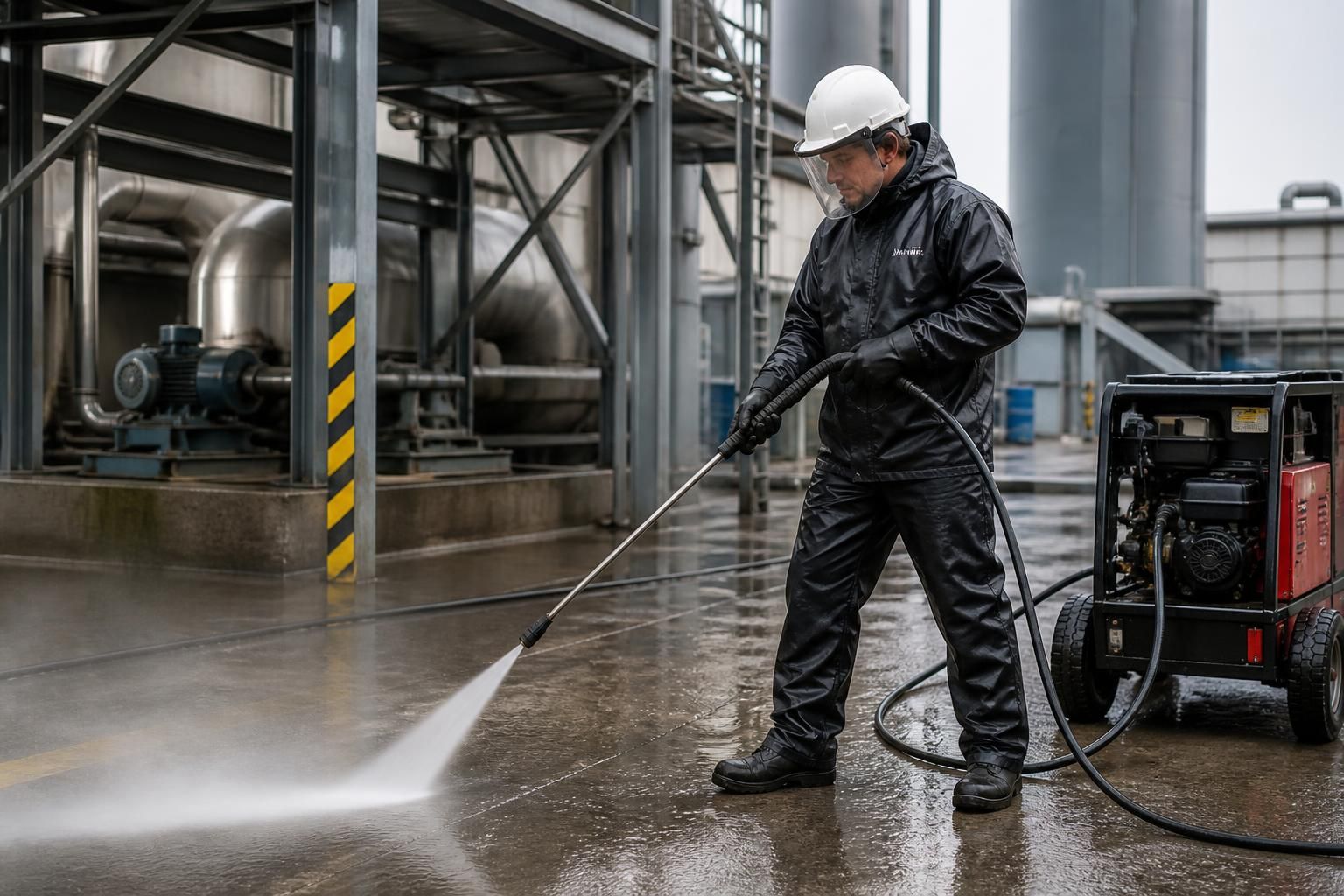
Wear task-appropriate PPE. This normally includes waterproof protective clothing, suitable gloves, safety footwear with slip-resistant soles, eye protection and hearing protection where noise levels require it. A face shield may be appropriate where there is a significant risk of splashback or flying debris. Respiratory protection may be necessary for certain chemicals or contaminants, but it must be selected through the risk assessment and used under an appropriate respiratory protective equipment programme. PPE must be compatible with hot water, detergents and the work being performed; it is not a substitute for controlling the hazard at source.
Inspect the pressure washer, burner, lance, trigger gun, nozzles, hoses, couplings and safety devices before use. Look for damaged outer coverings, exposed reinforcement, leaks, loose fittings, blocked nozzles and signs of overheating. Check that the pressure rating of every hose and attachment is suitable for the machine. Confirm that guards are fitted, emergency stops and automatic shutdown systems operate correctly, and that the manufacturer’s instructions are available. Defective equipment should be isolated, labelled and reported rather than repaired informally or used until it fails.
Control the pressure and temperature. Use the lowest effective settings for the surface and contaminant, and select the correct nozzle and spray pattern. Excessive pressure or heat can damage coatings, mortar joints, sealants, membranes, cladding finishes and fragile components. Operators should maintain a stable stance, hold the lance securely with both hands where appropriate, and never point the jet at another person, themselves, live electrical equipment or an unprotected opening.
High-pressure water can penetrate skin and cause a serious injection injury even when the wound appears small. Never use hands, feet or clothing to search for a leak, clear a nozzle or redirect the spray. Release pressure before disconnecting hoses, changing attachments or carrying out any adjustment. If a jet causes an injury, obtain urgent medical attention and explain that it may be a high-pressure injection injury; do not treat it as a minor cut or burn.
Establish an exclusion zone. Use barriers, signs and a banksman or spotter where necessary to keep pedestrians, visitors and other workers away from the spray, rebound, debris and wet surfaces. Coordinate the work with the site operator and control vehicle movements in car parks, loading areas and construction environments. Do not rely solely on warning signs in busy areas. Stop work if people, animals or unauthorised vehicles enter the controlled zone.
Manage hoses carefully to prevent trips, vehicle damage and sudden movement. Route them away from walkways, protect crossings with suitable ramps where they cannot be avoided, and keep couplings out of standing water where this could create an additional hazard. Do not leave a pressurised lance unattended. Shut down the machine and isolate the water and energy supplies during breaks, relocation or maintenance.
Control hot water, steam and fuel hazards. The lance, hose, fittings and cleaned surfaces may remain hot after spraying, creating a risk of burns. Warn others, avoid contact with heated components and allow equipment to cool before inspection or storage. Keep fuel, gas cylinders and combustible materials away from hot surfaces and ignition sources. Operate combustion-powered equipment only where ventilation is adequate, and prevent exhaust gases from entering buildings, confined spaces or air intakes. Carbon monoxide exposure is a particular concern when fuel-burning equipment is used indoors or in poorly ventilated areas.
Electrical safety is essential when water is used around powered equipment. Use equipment suitable for the environment, protect supplies from water and mechanical damage, and ensure electrical connections, plugs and extension arrangements are appropriate and inspected. Keep electrical components away from spray and pooling water. Isolation, inspection and maintenance should be carried out by a competent person, in line with the Electricity at Work Regulations where they apply. Do not use damaged cables or attempt makeshift repairs.
Handle detergents and other chemicals under COSHH controls. Read the safety data sheet, confirm the correct dilution and application method, and provide suitable gloves, eye protection and ventilation. Never mix products unless the manufacturer specifically permits it, as incompatible chemicals can release harmful gases or generate dangerous reactions. Store products securely, label secondary containers and prevent detergent or contaminated runoff from entering surface-water drains.
Slips, trips and falls are common secondary hazards. Plan how water will drain, use wet-floor signage and barriers, and remove silt, grease and debris before the area is reopened. Keep people away from unstable deposits and check that the cleaned surface is safe to walk or drive on. Where work is carried out above ground, follow the hierarchy for work at height by using suitable fixed access or collective protection where practicable. Harnesses, platforms, lifting equipment and access machinery must be selected, inspected and used by trained personnel, with rescue arrangements in place.
Industrial cleaning may disturb mould, bird fouling, sewage residues, lead-based coatings, asbestos-containing materials, oils or other hazardous contamination. Identify these risks before cleaning begins. Do not use jet washing where it could spread hazardous fibres or biological contamination without specialist controls. Use appropriate containment, hygiene procedures, waste handling and decontamination arrangements, and prevent contaminated spray from reaching workers, neighbouring premises or drainage systems.
Follow safe operating and emergency procedures. Start the machine in accordance with the manufacturer’s instructions, check the spray pattern in a controlled area and stop immediately if there is abnormal noise, vibration, pressure loss, overheating, smoke, a fuel leak or a damaged hose. Make sure operators know the location of first-aid supplies, fire extinguishers, emergency isolation points and site contacts. Report burns, injection injuries, chemical exposure, slips and near misses so controls can be reviewed.
Before leaving the area, shut down and isolate the equipment, release residual pressure, secure hoses and store attachments safely. Inspect the work zone for remaining hazards, collect debris and manage wastewater in accordance with the site’s drainage and environmental requirements. Keeping inspection records, training evidence, maintenance documentation and risk assessments provides a clear basis for demonstrating that hot water jet washing has been planned and controlled in line with relevant UK workplace safety requirements, including PUWER, COSHH and work-at-height controls where applicable.
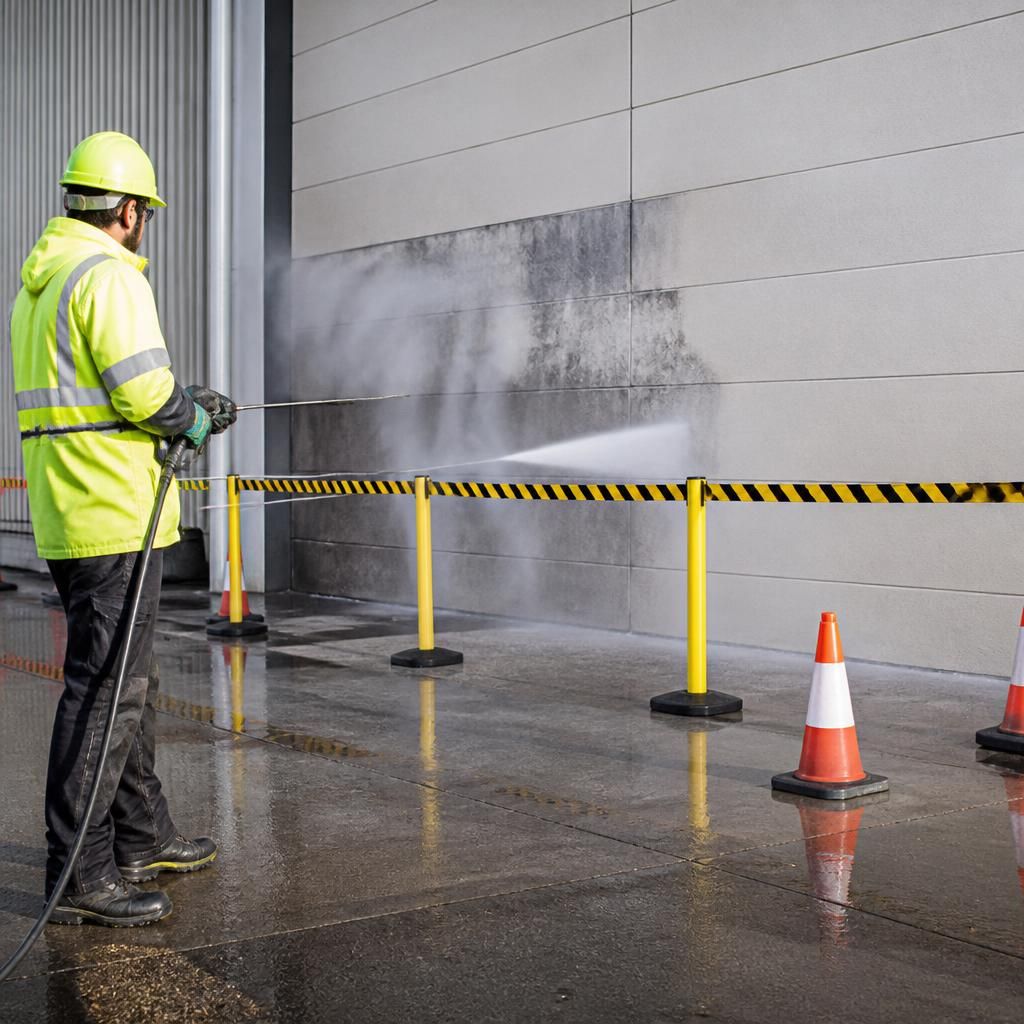
Exclusion zones are a critical safety control during hot water jet washing because the jet can cause serious injury, while rebound, loosened debris and contaminated spray can affect people beyond the area being cleaned.
Use suitable barriers and clear warning signs to separate the work area from pedestrians, vehicles, machinery and occupied premises. In busy industrial locations, a trained spotter or banksman may also be needed to monitor access and coordinate vehicle movements. Do not rely on signs alone, and stop work immediately if an unauthorised person or vehicle enters the controlled zone.
The boundary should account for spray direction, wind, splashback, surface debris and drainage. Keep the lance under control, never leave pressurised equipment unattended, and isolate the machine before moving barriers, clearing obstructions or changing attachments.