
What safety measures should be followed when utilising industrial hot water jet washing equipment?
Industrial hot water jet washing equipment should be operated only by trained personnel using suitable personal protective equipment (PPE), pre-use checks and controlled working practices. Operators must manage hot water, high-pressure spray, electrical and fuel systems, access equipment, drainage and nearby people in accordance with the manufacturer’s instructions and site risk assessment.
Industrial hot water jet washing equipment must be operated by trained, authorised personnel using suitable personal protective equipment (PPE), documented pre-use checks and a site-specific risk assessment. Safe operation requires control of hot water, high-pressure spray, electrical and fuel systems, cleaning chemicals, drainage, access equipment and nearby people. The manufacturer’s instructions and the requirements of the worksite should always take priority.
Complete a site-specific risk assessment before work begins. Identify the surfaces to be cleaned, the operating pressure and water temperature, potential contaminants, access arrangements, drainage routes and any risks to employees, visitors, vehicles or the public. The assessment should also consider overhead and underground services, fragile materials, confined areas, traffic movements, weather conditions, noise, fumes and the possibility of contaminated run-off entering drains or watercourses.
Where the work involves hazardous substances, the relevant Control of Substances Hazardous to Health (COSHH) assessment should be completed. If ladders, mobile towers, MEWPs or other access equipment are required, plan the work in line with the applicable work-at-height controls. Equipment used for lifting people or materials must be suitable, inspected and operated by competent personnel.
Use trained and competent operators. High-pressure hot water cleaning is not suitable for untrained or unsupervised personnel. Operators should understand how to start, use and shut down the specific machine, adjust controls safely, recognise faults and respond to an emergency. Training should cover pressure reaction forces, hot-water hazards, nozzle selection, chemical handling, hose management, surface limitations and safe positioning.
Operators should be familiar with the equipment manual and any site rules. They should not bypass guards, interlocks, pressure controls or emergency-stop devices, and should never alter the machine beyond the manufacturer’s specified settings. Refresher training is appropriate when equipment changes, when new cleaning chemicals are introduced or when an operator has not used the system for an extended period.
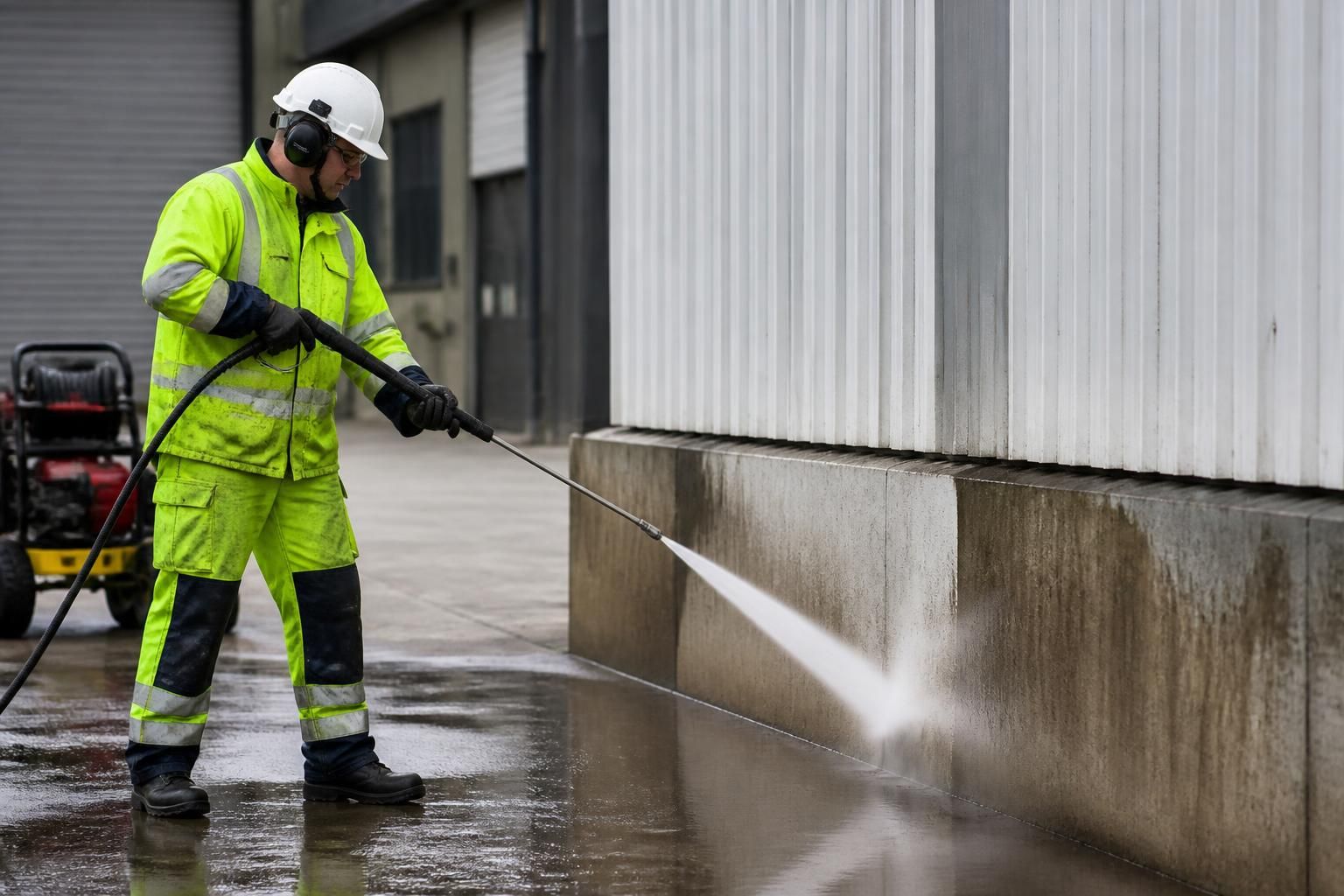
Wear task-appropriate PPE. The precise selection depends on the equipment, temperature, pressure, substances being removed and the risk assessment. Typical protection may include:
- Water-resistant protective clothing or coveralls suitable for hot-water work.
- Protective gloves that provide thermal, chemical and mechanical protection without reducing safe control of the lance.
- Safety footwear with slip-resistant soles and suitable toe and penetration protection.
- Eye protection, with a face shield where there is a significant risk of splash, rebound or flying debris.
- Hearing protection where noise levels require it.
- Respiratory protective equipment where the cleaning process may create hazardous mist, dust or vapour and where the risk assessment identifies it as necessary.
- High-visibility clothing when working around vehicles, plant or public areas.
PPE should be compatible with the work and kept in good condition. Wet or damaged gloves, split footwear and contaminated clothing should be replaced or cleaned appropriately. PPE is the final layer of protection; it does not replace guarding, exclusion zones, safe operating distances or suitable ventilation.
Carry out pre-use checks. Inspect the machine, lance, trigger, nozzles, hoses, couplings and electrical leads before connecting or starting the equipment. Check for cuts, abrasions, bulges, exposed reinforcement, loose fittings, damaged insulation, leaks or signs of overheating. Confirm that safety devices, pressure gauges, temperature controls and emergency stops are present and functioning.
Check that the water supply is adequate and that filters, fuel levels and ventilation arrangements meet the manufacturer’s requirements. Do not use a machine that has a damaged hose, leaking connection, defective trigger or unreliable safety control. Isolate the equipment and report the fault rather than attempting an improvised repair during the cleaning operation.
Control the hot-water and pressure hazards. Hot water can cause serious burns, while a high-pressure jet can penetrate skin, damage eyes and cause severe tissue injury even when the wound appears small. Never point the lance at yourself or another person, and do not use the spray to clean clothing, footwear or skin. Keep hands away from the nozzle and never try to stop a leak with a hand or foot.
Hold the lance securely with both hands where the equipment design requires this, and position your body to resist kickback. Start at a safe distance and increase the cleaning effect gradually rather than immediately placing the nozzle close to the surface. Use the lowest effective pressure and temperature for the material being cleaned. Never leave the trigger locked open or leave a live lance unattended.
Release pressure before changing nozzles, disconnecting hoses, clearing blockages or carrying out adjustments. Shut down the machine, isolate its energy sources and follow the manufacturer’s depressurisation procedure. Treat the lance as live until pressure has been positively released.
Establish an exclusion zone. Keep workers, visitors, members of the public and unprotected property away from the spray, rebound and contaminated splash. Use barriers, cones, warning signs and a banksman where necessary. The exclusion area should account for the direction of spray, wind, overspray, flying debris and vehicle movements rather than only the immediate area in front of the nozzle.
Control access to the work area throughout the operation. On commercial or industrial sites, coordinate with the client so that pedestrians, deliveries, forklifts and other contractors do not enter the zone unexpectedly. Use a second person to monitor access where visibility is restricted or the work takes place near public routes.
Manage electrical, fuel and combustion risks. Keep electrical connections, plugs and control units away from standing water and protect them with suitable residual current protection where required. Do not operate electrical equipment with wet hands or damaged leads, and route cables where they cannot be crushed, cut or create a trip hazard.
Fuel-powered machines require adequate ventilation to prevent the build-up of exhaust gases, particularly in enclosed or partially enclosed areas. Never use combustion equipment in a confined space without a properly assessed ventilation and monitoring arrangement. Store and refuel fuel containers safely, stop the machine before refuelling, keep ignition sources away and clean up spills promptly. Allow hot components to cool where necessary before handling or transporting the equipment.
Prevent slips, trips and uncontrolled run-off. High-pressure cleaning produces large volumes of water and can make surfaces extremely slippery. Route hoses neatly, protect crossings and keep walkways clear. Remove silt, oil and loosened debris promptly, and provide suitable lighting where visibility is reduced.
Plan drainage before starting. Use drain covers, bunding, wet vacuums, collection systems or other controls where required to prevent contaminated water, detergents, oils, paint residues or biological material entering surface-water drains and watercourses. Dispose of collected waste and wastewater in accordance with the site’s environmental procedures and applicable requirements. Do not assume that a nearby drain is suitable for discharge.
Use chemicals correctly. Select detergents and degreasers that are suitable for the surface and the machine. Follow the product label and safety data sheet for dilution, PPE, storage, first aid and disposal. Never mix chemicals unless the manufacturer specifically permits it, and avoid creating unnecessary aerosols by using controlled application methods. Chemical residues can make surfaces more hazardous and may react with hot water, metals, coatings or existing contaminants.
Protect surfaces and nearby equipment. Hot water and high pressure can strip coatings, damage sealants, force water behind cladding or masonry, break fragile glazing and affect electrical components. Test an inconspicuous area first and confirm the appropriate pressure, temperature, nozzle and working distance. Shield vents, sockets, control panels, door thresholds and other vulnerable openings. Stop immediately if the surface begins to erode, delaminate, crack or change colour unexpectedly.
Take additional precautions when cleaning roofs, façades, elevated structures or areas near open edges. Use suitable access equipment, edge protection and fall-prevention measures rather than relying on the reaction force of the lance for stability. Do not overreach, climb on unsuitable objects or operate from an unstable platform. Where falling spray or debris could affect people below, establish a controlled area at ground level.
Maintain safe communication and emergency arrangements. Agree hand signals or radio communication where machine noise prevents normal conversation. Everyone involved should know how to stop the equipment, raise the alarm, summon first aid and report an incident. A high-pressure injection injury requires urgent medical assessment, even if the wound is small or appears superficial. Burns, eye exposure, electrical contact and inhalation of fumes should be dealt with under the site’s emergency procedures and the relevant safety data sheet.
After cleaning, shut down and isolate the machine, release residual pressure, allow hot components to cool and secure the lance and hoses. Inspect the equipment for damage, clean it in accordance with the manufacturer’s instructions and store it where it cannot be accessed or damaged by unauthorised people. Record defects, maintenance needs, incidents and any changes required to the risk assessment before the equipment is used again.
These controls should be applied together: competent operators, suitable PPE, sound equipment, controlled access, proper drainage, safe chemical use and effective supervision. If the conditions change or the risks cannot be controlled, stop the work and reassess the method before continuing.
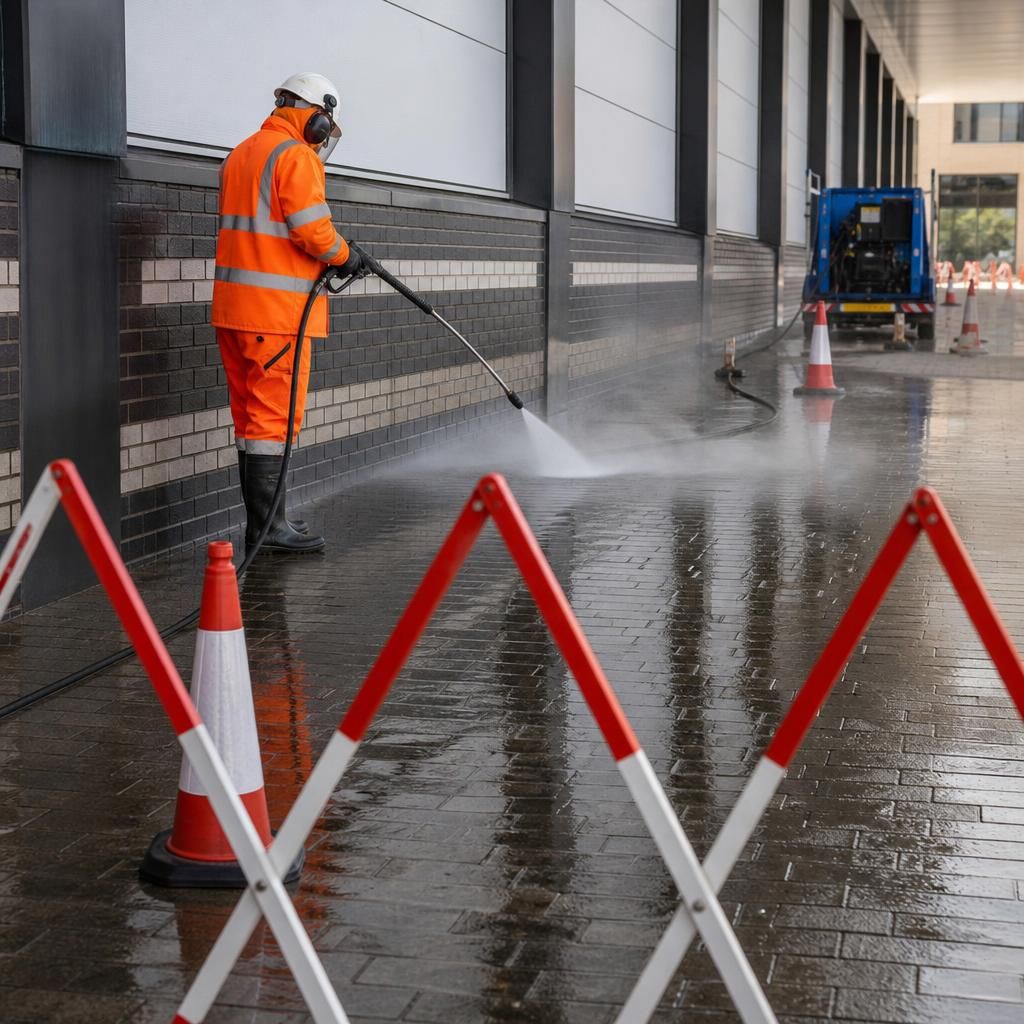
A controlled exclusion zone is essential when using industrial hot water jet washing equipment because the spray, rebound, loosened debris and contaminated splash can injure people outside the operator’s immediate work area. Use barriers, warning signs and suitable supervision to keep employees, visitors, vehicles and other contractors clear of the cleaning operation.
The zone should cover the likely spray direction, overspray and access routes, not just the area directly in front of the lance. Coordinate with the site team to manage pedestrians, deliveries and plant, and use a banksman where visibility is restricted. If the work area cannot be kept clear, stop the operation and reassess the controls before continuing.