
What equipment is required for industrial hot water jet washing?
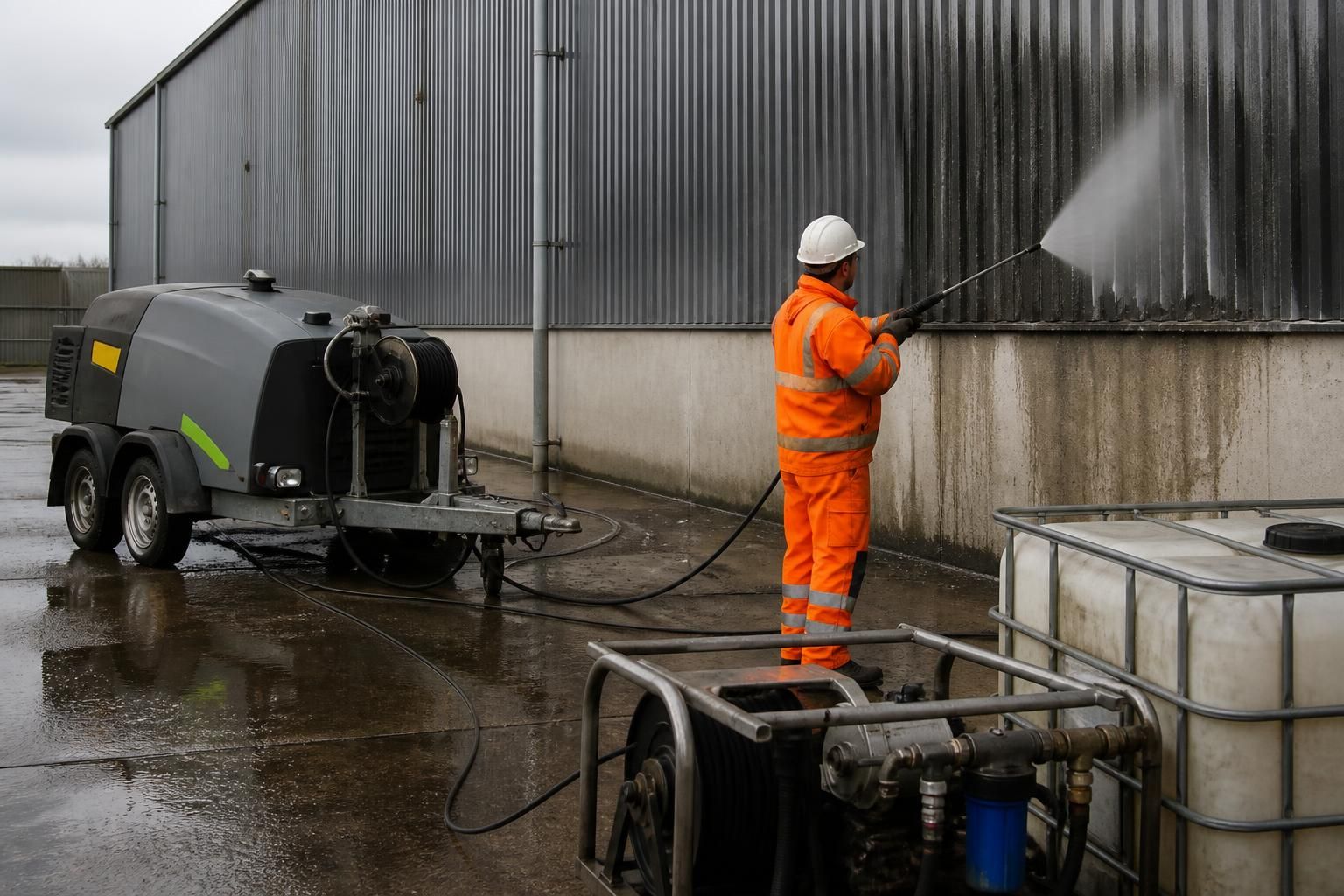
Industrial hot water jet washing requires a heated pressure washer with suitable pressure and flow, along with compatible hoses, lances, nozzles and detergents. Depending on the site, the setup may also include water tanks, wastewater recovery equipment, filtration, and access equipment such as mobile elevated work platforms.
Industrial hot water jet washing requires a heated pressure washer matched to the required pressure, water flow and temperature, together with compatible hoses, guns, lances, nozzles and cleaning accessories. Depending on the site and the work being carried out, the setup may also need a water tank, detergent dosing system, wastewater recovery equipment, filtration, electrical supplies and access equipment such as a mobile elevated work platform.
Heated pressure washer
The central item is a commercial or industrial hot water pressure washer. Unlike a cold-water unit, it incorporates a burner or other heating system to raise the water temperature before it reaches the lance. The machine should be selected according to the type of contamination, the surface being cleaned, the available water and power supplies, and the expected duration of the work.
Pressure determines the force available to remove bonded contamination, while water flow affects how quickly loosened dirt, oil and detergent can be rinsed away. Higher output is not automatically better: excessive pressure or heat can damage coatings, joints, sealants, masonry and other sensitive materials. A competent contractor will set the machine to provide effective cleaning without unnecessarily stressing the surface.
Industrial machines may use diesel, gas or electrical heating systems. The choice depends on site restrictions, ventilation, fuel storage, noise requirements and whether indoor work is involved. Combustion equipment must not be operated in areas where exhaust gases could accumulate. Electrical equipment must be suitable for the working environment and protected against water ingress.
Water supply and tanks
A reliable water supply is essential for maintaining consistent cleaning performance. Where the site supply is unsuitable, restricted or too far from the work area, a clean-water tank can provide a controlled source. Tanks, inlet hoses and filtration should be suitable for the machine and protected from contamination.
A break tank or other backflow protection may be required when connecting equipment to a mains supply. The connection method must comply with site rules and relevant water regulations. If the work involves long hose runs, multiple operators or extended cleaning periods, the water delivery system should be assessed in advance so that the machine does not run dry or suffer reduced performance.
Hoses, guns, lances and nozzles
High-pressure hoses must be rated for the machine’s operating pressure and hot-water temperature. They should be inspected for cuts, abrasion, damaged couplings and signs of ageing before use. Hoses need to be routed to avoid trip hazards, sharp edges, vehicle movements and excessive bending.
The trigger gun, lance and couplings must also be compatible with hot-water operation. Different lances can improve reach, control and operator posture, particularly when cleaning façades, roofs, plant or large paved areas. Insulated handles and suitable protective covers help reduce heat exposure during prolonged use.
Nozzles control the spray pattern and cleaning effect. Fan nozzles are commonly used for general surface cleaning, while rotary or dirt-blasting nozzles can provide a more concentrated action on robust materials. Low-pressure or chemical-application nozzles are used where detergent needs to be applied before rinsing. The nozzle must be selected for the equipment and surface; an unsuitable or obstructed nozzle can alter the pressure and create an unsafe spray pattern.
Detergent and chemical dosing equipment
Hot water can remove many oils, grease deposits and traffic films without chemical treatment, but some industrial contamination requires a compatible detergent or degreaser. A built-in injector, downstream dosing system or separate chemical application equipment may be used to apply the product at the correct concentration.
Cleaning chemicals should be selected for the contaminant and substrate, with the manufacturer’s instructions and the site’s COSHH assessment followed. Storage containers, dosing lines and couplings must be compatible with the product. Detergent should be applied only where it can be controlled, rinsed away and recovered appropriately, particularly near drains, watercourses, planted areas and sensitive surfaces.
Surface-cleaning accessories
Additional attachments can improve consistency and reduce overspray on extensive areas. These may include enclosed rotary surface cleaners for concrete, loading bays and car parks; telescopic lances for elevated façades; gutter and drain-cleaning tools; pipe and duct cleaning equipment; and specialist brushes for cladding or delicate finishes.
Enclosed surface cleaners are useful where spray control is important, but they still need to be matched to the surface and machine output. Brushes, soft-wash attachments and reduced-pressure tools may be more appropriate for coated panels, painted surfaces, rendered façades or aged masonry. Test cleaning should be carried out where the substrate, coating or previous repair is uncertain.
Wastewater recovery and filtration
Industrial jet washing produces contaminated water containing soil, oil, detergents, paint residue, silt or other materials removed from the surface. On many commercial and industrial sites, this water must be prevented from entering surface-water drains or escaping beyond the work area.
Useful equipment may include drain covers, bunds, temporary barriers, wet vacuums, sump pumps, wastewater recovery units, settlement tanks, oil-water separators and filtration systems. The correct arrangement depends on the contaminant and the site drainage plan. Recovered water must be stored, treated or disposed of through an appropriate route; it should not be discharged simply because it appears clear.
Access equipment
Cleaning at height may require a mobile elevated work platform, scaffold, tower, roof access system, telescopic equipment or a suitable rope-access arrangement. The choice depends on the building, ground conditions, reach, obstruction levels and the required working position.
Access equipment must be suitable for use around water and high-pressure spray. Operators need the correct training and authorisation, while the work should be planned around rescue arrangements, exclusion zones, overhead hazards, fragile roofs and falling-object risks. Long-reach equipment may reduce the need to work at height, but it still requires control of the spray and awareness of people, vehicles and building openings below.
Electrical supplies, lighting and site controls
Industrial equipment may require a suitable electrical supply, generator or distribution system. Leads, plugs and temporary supplies should be protected from water and mechanical damage, and residual-current protection should be used where appropriate. For enclosed areas or low-light conditions, suitable task lighting may be needed, positioned so that it does not create glare or become exposed to spray.
Barriers, warning signs and exclusion zones are practical parts of the equipment setup. They help separate the cleaning operation from pedestrians, vehicles, production areas and other contractors. On active sites, additional items such as hose ramps, traffic management equipment and radio communication may be necessary.
Personal protective equipment
Hot water and high-pressure spray require appropriate personal protective equipment, including waterproof protective clothing, gloves suited to hot-water work, eye and face protection, safety footwear and hearing protection where noise levels require it. Respiratory protection may be necessary when chemicals, aerosols or contaminated deposits present an inhalation risk. PPE does not replace guarding, safe distances, correct pressure settings or proper work planning.
How the equipment is specified
Before selecting the setup, assess the surface material, contamination, cleaning height, water and power availability, drainage arrangements, access restrictions and environmental controls. The equipment should then be configured so that the pressure, flow, heat, nozzle and detergent are appropriate for the task. Operators should inspect and test the system before full production cleaning, monitor the surface during the work and stop if damage, uncontrolled runoff or equipment faults occur.
For larger sites, the most effective arrangement is often a combination of heated pressure-washing equipment, controlled detergent application, specialist surface attachments and wastewater recovery. This provides the cleaning power required for industrial deposits while maintaining control over the substrate, surrounding area and waste stream.
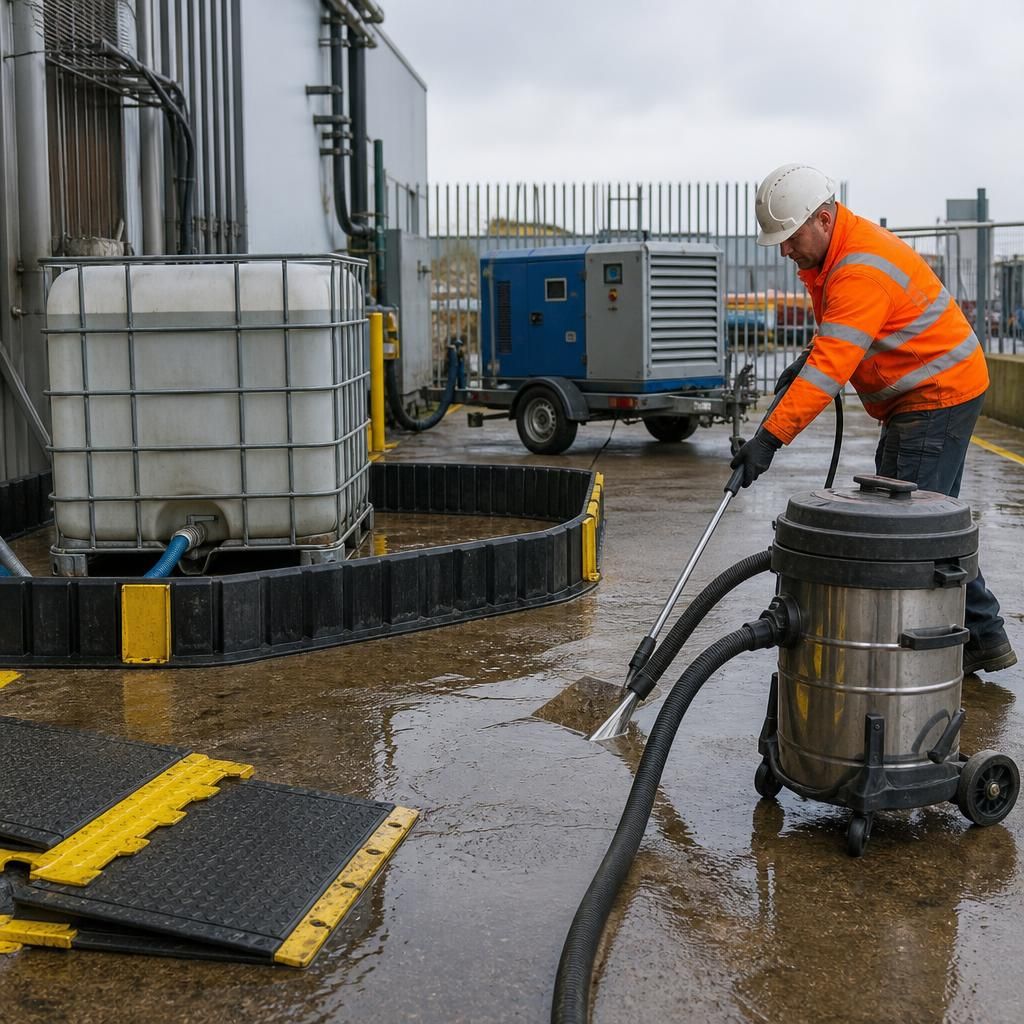
Wastewater recovery equipment is often essential for industrial hot water jet washing because the runoff can contain oil, detergents, silt, paint residue and other contaminants. Drain covers, bunds and temporary barriers help contain the water, while wet vacuums, sump pumps, settlement tanks and filtration units allow it to be collected and managed safely.
The correct setup depends on the surface being cleaned, the substances removed and the site drainage arrangements. Recovered water should be stored, treated or disposed of through an approved route rather than allowed to enter surface-water drains or nearby ground. Planning this equipment before work begins helps prevent pollution, protects the site and keeps the cleaning operation compliant with environmental controls.
Discuss your industrial hot water jet washing requirements
If you need help specifying the right equipment for an industrial hot water jet washing project, discuss your requirements with our team. We can assess the surfaces, contamination, access, water supply and wastewater controls before work begins.