
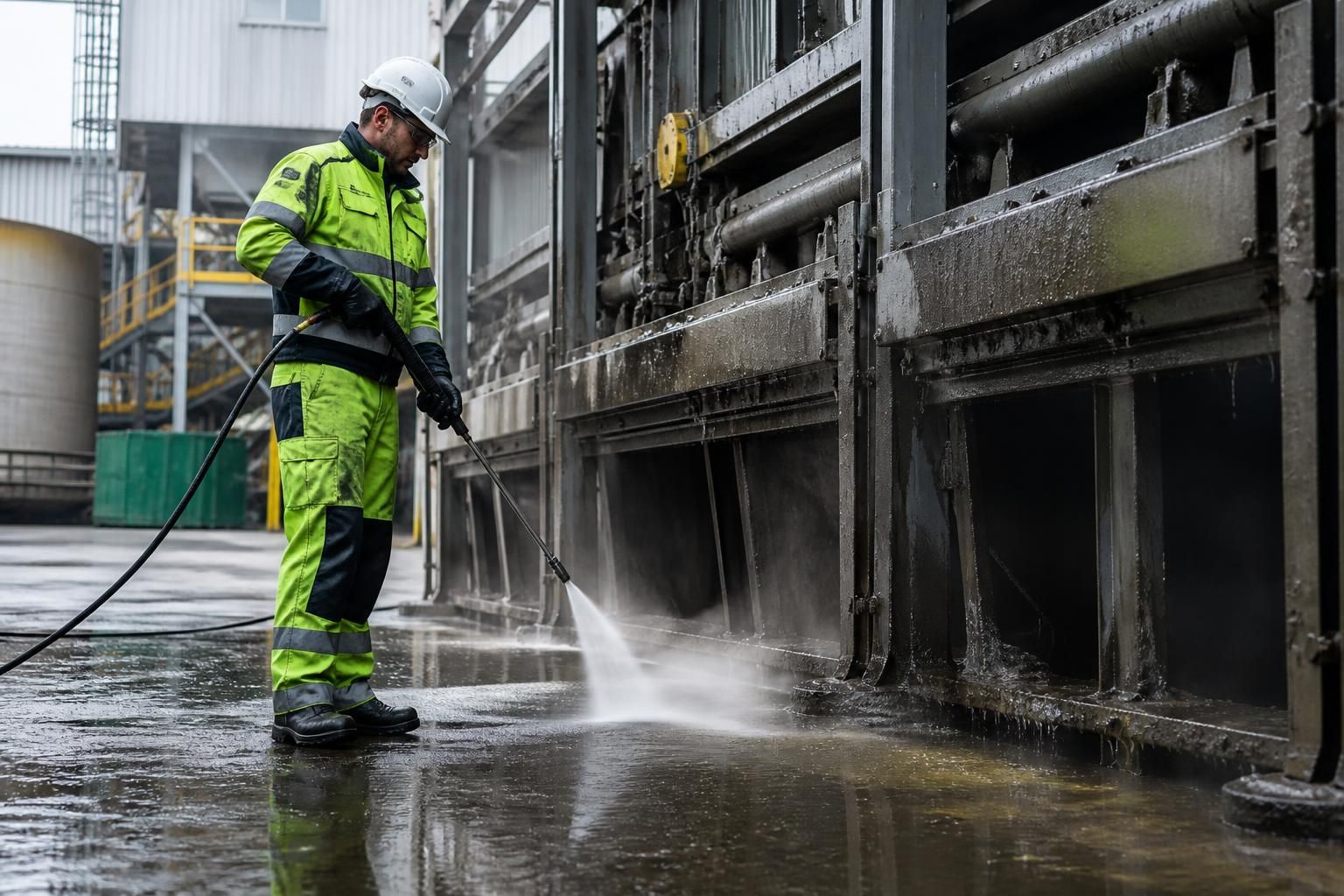
What environmental considerations should be taken into account when choosing hot water jet washing for industrial cleaning?
When choosing hot water jet washing for industrial cleaning, consider the fuel and energy required to heat the water, overall water consumption, detergent selection, and the risk of contaminated runoff entering drains or watercourses. A responsible method should use efficient equipment, environmentally suitable cleaning agents, controlled wastewater collection and disposal, and procedures that comply with local environmental requirements.
Environmental considerations for industrial hot water jet washing centre on energy consumption, water use, cleaning chemicals, wastewater control and the condition of the surface being treated. Hot water can improve cleaning efficiency and reduce the need for aggressive chemicals, but heating the water requires fuel or electricity and the resulting wash water may contain oils, metals, detergents, coatings or other contaminants. The most suitable approach balances cleaning performance with efficient equipment, responsible chemical selection and controlled collection or discharge.
Assess the energy used to heat the water. Hot water equipment generally uses a burner powered by fuel or an electrically heated system. The environmental impact depends on the energy source, the equipment’s efficiency, the water temperature required and the length of the cleaning operation. Avoid using a higher temperature than the surface, contaminant or hygiene standard requires. Well-maintained burners, correctly set equipment and efficient heat transfer can reduce wasted fuel and emissions. Where practical, the choice between fuel-fired and electric equipment should take account of the available power supply, the operating conditions and the source of the electricity.
Heating water is not automatically the least sustainable option. A hot wash may remove grease, oil, biological residue or embedded dirt more quickly than cold water, reducing cleaning time, water use and chemical demand. The full environmental assessment should therefore consider the complete process rather than energy consumption alone. An experienced operator can select the lowest effective temperature and pressure instead of relying on maximum settings.
Control water consumption. Water use is influenced by flow rate, pressure, nozzle selection, operator technique and the condition of the surface. High pressure does not necessarily mean efficient cleaning if it causes excessive splashback, repeated passes or unnecessary damage. Suitable nozzles, controlled working patterns and pre-treatment of heavy contamination can reduce the volume of water required. Where appropriate, recovered or recycled water may be considered, provided it is compatible with the equipment and will not spread contamination or affect the cleaning result.
Water conservation must not compromise hygiene or pollution control. Water used on oily, chemical or biologically contaminated surfaces should not be reused unless it has been appropriately treated and its quality is understood. Any proposal to reuse water should include suitable filtration, storage and handling arrangements, together with measures to prevent cross-contamination.
Choose cleaning agents carefully. Hot water can loosen many contaminants without heavy reliance on detergents, but chemicals may still be required for particular oils, deposits or biological residues. Select products that are suitable for the surface and use the lowest effective concentration. Consider biodegradability, aquatic toxicity, persistence, corrosivity and whether the product contains substances that could create a problem in trade effluent or surface-water drainage.
Safety data sheets should be checked before use, and cleaning agents should never be mixed unless the manufacturer specifically permits it. A product described as biodegradable is not automatically suitable for discharge into a drain or watercourse. The final risk depends on the chemical, the contaminants removed, the dilution and the receiving drainage system. Chemical storage, dosing and empty-container disposal should also be managed to prevent spills.
Plan for contaminated runoff. Runoff is often the most important environmental issue in industrial pressure washing. Water from loading areas, workshops, plant rooms, car parks, façades and construction sites can carry oil, fuel, silt, heavy metals, paint particles, biological material and cleaning chemicals. It should be assumed to be contaminated until the source and condition of the surface have been assessed.
Before work starts, identify nearby surface-water drains, foul-water drains, interceptors, watercourses, soakaways and unmade ground. Surface-water drainage commonly leads to the natural environment without the same treatment provided by a foul sewer, so contaminated wash water must not be allowed to enter it. Drain covers, bunding, temporary barriers, wet vacuums, collection tanks and suitable filtration can help contain the wastewater. The method should also account for rainfall, gradients and the possibility of water escaping beyond the immediate work area.
Collected wastewater should be tested or assessed where necessary and disposed of through an authorised route. Discharge to a foul sewer may require permission from the relevant sewerage provider, while discharge to surface water or land can require environmental consent and is not generally acceptable without appropriate authorisation. Wastewater containing hazardous substances, oils or other controlled contaminants may need specialist handling and documented disposal. Requirements can vary by site and location across Birmingham, the West Midlands and the wider UK, so the responsible party should confirm the applicable conditions before cleaning begins.
Consider the surface and the contamination. The environmental impact is affected by what is being removed and how the surface responds to hot water. Cleaning old coatings, corroded metal, lead-containing paint, sealants or heavily contaminated concrete may produce hazardous debris or wastewater. A preliminary inspection should identify loose coatings, damaged joints, drainage limitations and materials that could be softened, stripped or dispersed by heat and pressure.
Where there is a risk of hazardous coatings or contaminated residues, avoid disturbing the material until the appropriate assessment and controls are in place. Capture removed solids, prevent them from entering drains and arrange disposal according to their classification. Lower-impact methods, such as localised hot water treatment, steam cleaning, mechanical preparation or targeted detergent application, may be more appropriate than washing the entire area.
Reduce air, noise and local disturbance. Fuel-fired machines can produce combustion emissions, particularly where they are operated in enclosed or poorly ventilated areas. Equipment should be positioned and ventilated safely, with electric equipment considered where it is suitable for the site. Noise from pumps, burners and water impact can affect workers, neighbouring occupiers and sensitive premises. Work timing, equipment selection, acoustic controls and communication with the site manager can reduce disturbance.
Overspray and aerosol formation should also be controlled. Use the lowest effective pressure, suitable accessories and screens or exclusion zones where necessary, particularly near occupied buildings, air intakes, vehicles, food-handling areas and drainage points. This protects people and reduces the spread of contaminated droplets.
Check legal and site-specific requirements. Environmental controls should be agreed through the site risk assessment and method statement. The plan should identify the contaminants, drainage arrangements, water source, energy source, chemicals, runoff controls, emergency spill measures and disposal route. Local authority requirements, sewerage-provider conditions, trade-effluent arrangements, waste-transfer documentation and any environmental permits should be checked where relevant.
A responsible hot water jet washing specification should therefore include:
- the lowest effective water temperature, pressure and flow rate;
- efficient, well-maintained equipment with appropriate fuel or electrical arrangements;
- carefully selected and correctly dosed cleaning agents;
- protection for surface-water drains, watercourses and unmade ground;
- collection, treatment or authorised disposal of contaminated wastewater;
- controls for removed coatings, silt, oils and other solid waste;
- measures for emissions, noise, overspray and spill response; and
- records showing how the work complied with site and environmental requirements.
For industrial premises, the environmentally preferable method is usually the one that achieves the required cleaning standard with the least overall use of energy, water and chemicals while keeping all contaminated wastewater under control. A site assessment before work begins allows the cleaning method, temperature, equipment and disposal arrangements to be matched to the contamination and the drainage infrastructure rather than applying the same process to every surface.
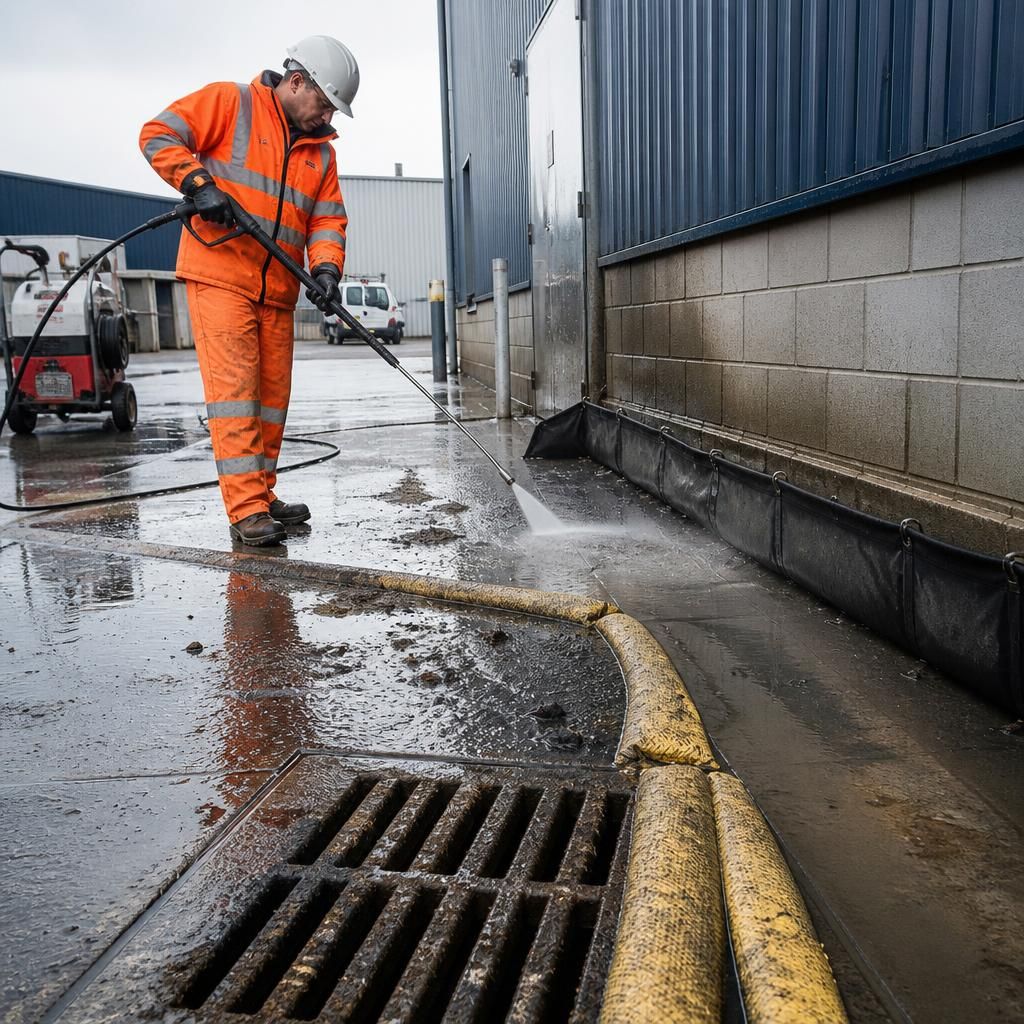
Controlling contaminated runoff is a key environmental consideration when using hot water jet washing for industrial cleaning. Wash water can carry oil, fuel, silt, metals, paint residue, detergents and biological contamination into surface-water drains or nearby watercourses.
Before cleaning begins, identify drainage points, gradients, interceptors and any unmade ground. Use drain covers, temporary bunding, barriers and wet vacuums where necessary to keep wastewater within the controlled work area. Collected water should be assessed and sent through an authorised disposal route; it should not be discharged to a surface-water drain or watercourse without the required approval.
The method should also account for rainfall, overspray and any solid debris removed from the surface. A suitable site assessment and method statement will define the runoff controls, spill response, wastewater handling and disposal arrangements before hot water jet washing starts.