
What are the key benefits of using hot water jet washing over traditional cleaning methods for industrial surfaces?
Hot water jet washing removes oil, grease, ingrained dirt and biological contamination from industrial surfaces more quickly and thoroughly than many traditional methods. It can reduce reliance on chemical detergents, labour-intensive scrubbing and repeat cleaning, while improving hygiene and leaving surfaces ready for use sooner.
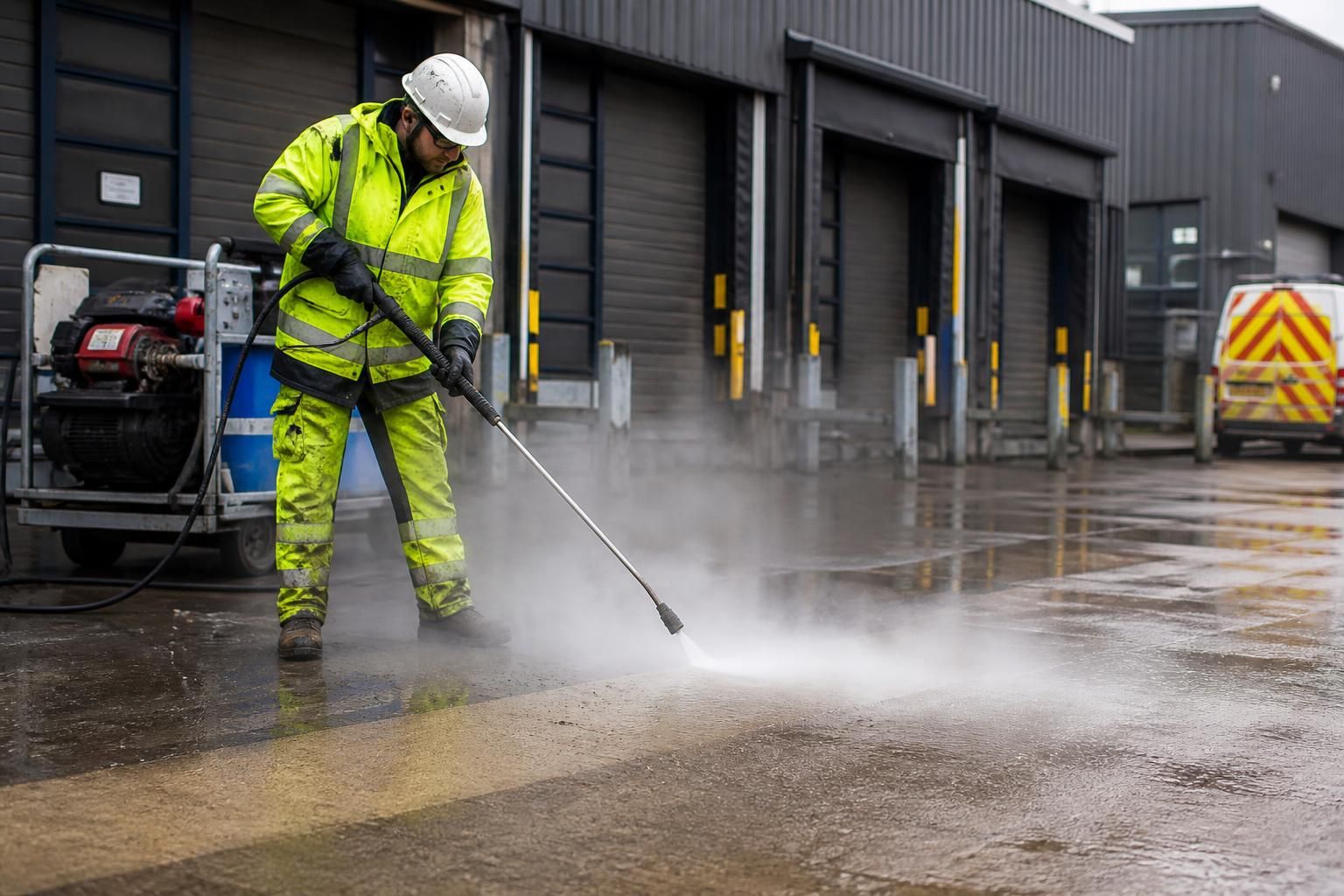
Hot water jet washing uses heated water delivered under controlled pressure to remove contamination from industrial surfaces. Compared with cold-water pressure washing, manual scrubbing and chemical-led cleaning, it is particularly effective against oil, grease, fat, traffic film, ingrained dirt and some biological deposits. The main benefits are faster soil removal, improved cleaning performance, reduced chemical use, more consistent results and shorter disruption to site operations.
More effective removal of oil and grease: Heat softens and loosens oily deposits, reducing their viscosity so they can be lifted from concrete, metal, masonry and other compatible surfaces more readily. Cold water may move loose dirt but often struggles with bonded grease and hydrocarbon residues. Manual cleaning normally requires detergent, agitation and repeated passes, whereas hot water jet washing combines heat, pressure and mechanical action in one process.
This makes it suitable for areas such as loading bays, plant rooms, workshops, service yards, car parks, warehouse floors, waste handling areas and industrial access routes. It can remove deposits from joints, textured finishes and other difficult areas where a cloth, brush or standard hose cannot provide sufficient agitation.
Faster cleaning and reduced labour: Because heat helps break down contamination, operators can often achieve the required result with fewer passes and less hand scrubbing. This can shorten the time needed to clean large surface areas and reduce the amount of labour involved in treating stubborn deposits. Faster work is especially valuable where access routes, production areas or shared facilities need to be returned to service promptly.
Cleaning speed still depends on the contamination, surface condition, access arrangements, equipment configuration and wastewater controls. A heavily soiled surface may need pre-treatment, dwell time or more than one cleaning stage. Hot water is an efficiency advantage, not a substitute for proper planning and suitable technique.
Lower reliance on chemical detergents: Heat can improve cleaning without relying solely on strong degreasers or solvents. Where the material and contamination allow, this may reduce chemical consumption, chemical handling requirements and the risk of residues being left on the surface. It can also make rinsing simpler, although detergents remain appropriate for some oils, process residues and hygiene-controlled applications.
Reducing chemical use does not mean that wastewater can be discharged without consideration. Oil, grease, silt, heavy metals and cleaning chemicals may require containment, filtration, recovery or disposal in accordance with site procedures and applicable environmental requirements. The cleaning method should be selected alongside a plan for collecting and managing the resulting wastewater.
Improved hygiene and contamination control: Hot water can help remove organic residues that support microbial growth, including food residues, grease and general biological soiling. This is useful around waste areas, food-related premises, washdown zones and facilities where cleanability is important. However, hot water jet washing should not automatically be described as sterilisation or disinfection. Effective hygiene also depends on temperature, contact time, pressure, detergent selection, rinsing, surface condition and any required sanitising stage.
More consistent results on textured surfaces: Industrial surfaces often include concrete, blockwork, paving, profiled cladding and anti-slip finishes that trap contamination. The combined effect of heat and pressure can improve access to surface texture and remove deposits that remain after basic rinsing. Operators must control the lance distance, angle, pressure and temperature to avoid driving contamination into porous materials or damaging joints and finishes.
Less repeat cleaning and better presentation: Removing the underlying grease and ingrained soil, rather than only disturbing loose dirt, can help surfaces remain cleaner for longer. This supports a more consistent appearance across façades, yards, car parks, walkways and operational areas. It can also help identify defects such as cracked concrete, failed sealant, corrosion or damaged coatings that were previously hidden by contamination.
Potentially lower whole-life cleaning costs: The cost advantage comes from the complete cleaning process rather than the water temperature alone. Reduced scrubbing, shorter cleaning times, lower detergent use and fewer repeat visits may offset the additional fuel or energy required to heat the water. A proper comparison should include labour, access equipment, traffic management, chemical use, wastewater handling, downtime and the risk of premature surface deterioration.
Improved readiness of treated areas: Hot water can help loosen contamination efficiently and may support quicker drying in suitable conditions, particularly when combined with effective rinsing and drainage. It does not guarantee immediate drying, because weather, ventilation, surface porosity and the volume of rinse water remain important. Areas should only be reopened when they are safe, free from slip hazards and suitable for the site’s operational requirements.
Traditional methods still have a place. Low-pressure washing, manual cleaning, cold-water jet washing and chemical treatment may be preferable for delicate coatings, heat-sensitive materials, restricted drainage areas or light contamination. Excessive temperature or pressure can damage paint, sealants, membranes, plastics, timber, jointing materials and certain façade finishes. A competent contractor should inspect the surface, identify the contamination and complete a discreet test area before selecting the final settings.
Industrial hot water jet washing also requires controlled working practices. Operators need suitable personal protective equipment, protection from hot spray and splashback, safe management of hoses and electrical equipment, and effective segregation from pedestrians, vehicles and active operations. The cleaning system should be configured to control spray, noise, runoff and fuel or exhaust risks, with additional precautions where confined spaces, chemicals or contaminated deposits are involved.
Overall, hot water jet washing is most beneficial when industrial surfaces carry greasy, oily, organic or deeply ingrained contamination and the work must be completed efficiently. It provides stronger soil removal than many traditional approaches, can reduce manual effort and chemical dependence, and may improve hygiene and long-term cleanliness. Its success depends on matching temperature and pressure to the surface, controlling wastewater and applying the method as part of a properly planned maintenance programme.
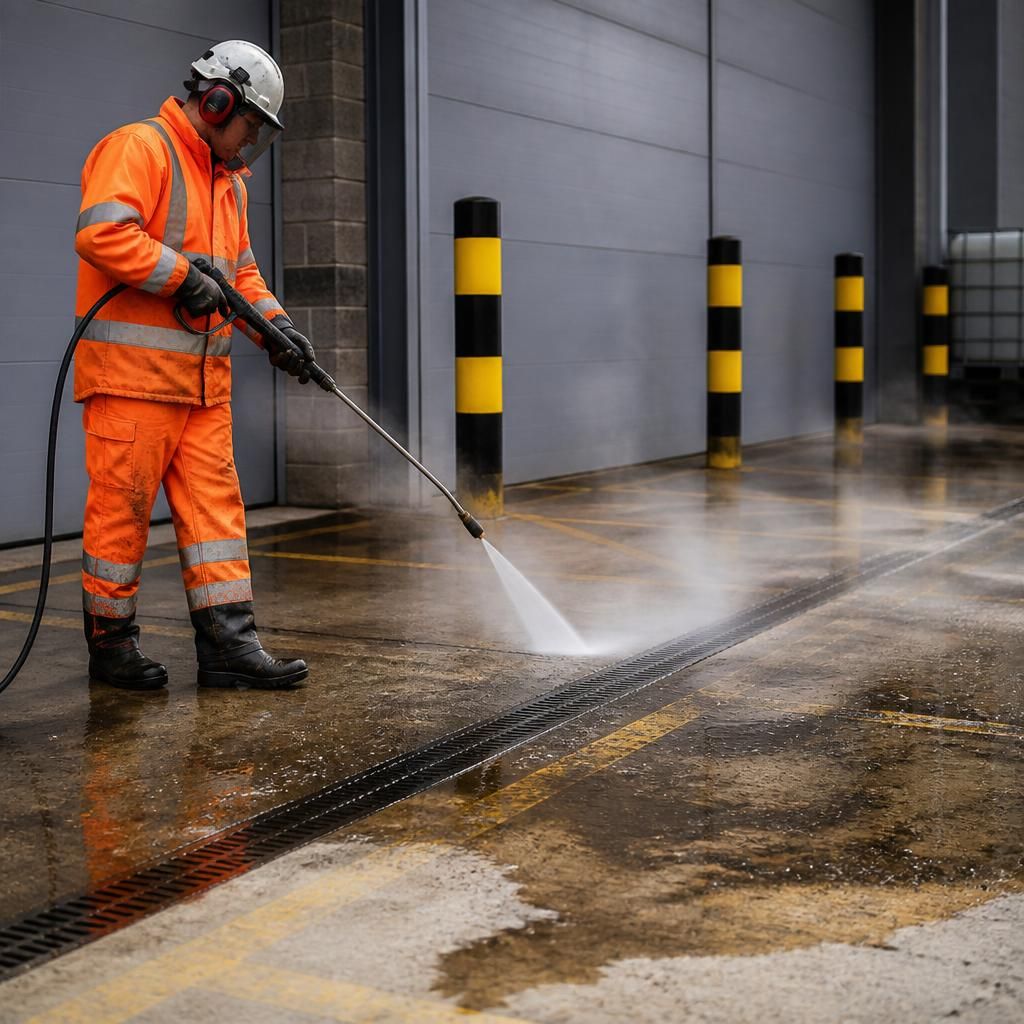
Hot water jet washing removes oil, grease and ingrained industrial contamination more effectively than many traditional cleaning methods because heat softens deposits before the water pressure lifts them from the surface. This is particularly useful on concrete loading bays, workshop floors, service yards, plant areas and waste handling zones.
By combining heat with controlled pressure, the process can reduce manual scrubbing, repeated passes and reliance on strong degreasers. Cleaning may therefore be completed more efficiently, helping return operational areas to use sooner while supporting more consistent results across textured or heavily soiled surfaces.
Hot water is not suitable for every material or contamination type. Temperature, pressure and lance distance must be matched to the surface, with test cleaning and appropriate wastewater controls used where coatings, joints, drainage systems or sensitive materials may be affected.