
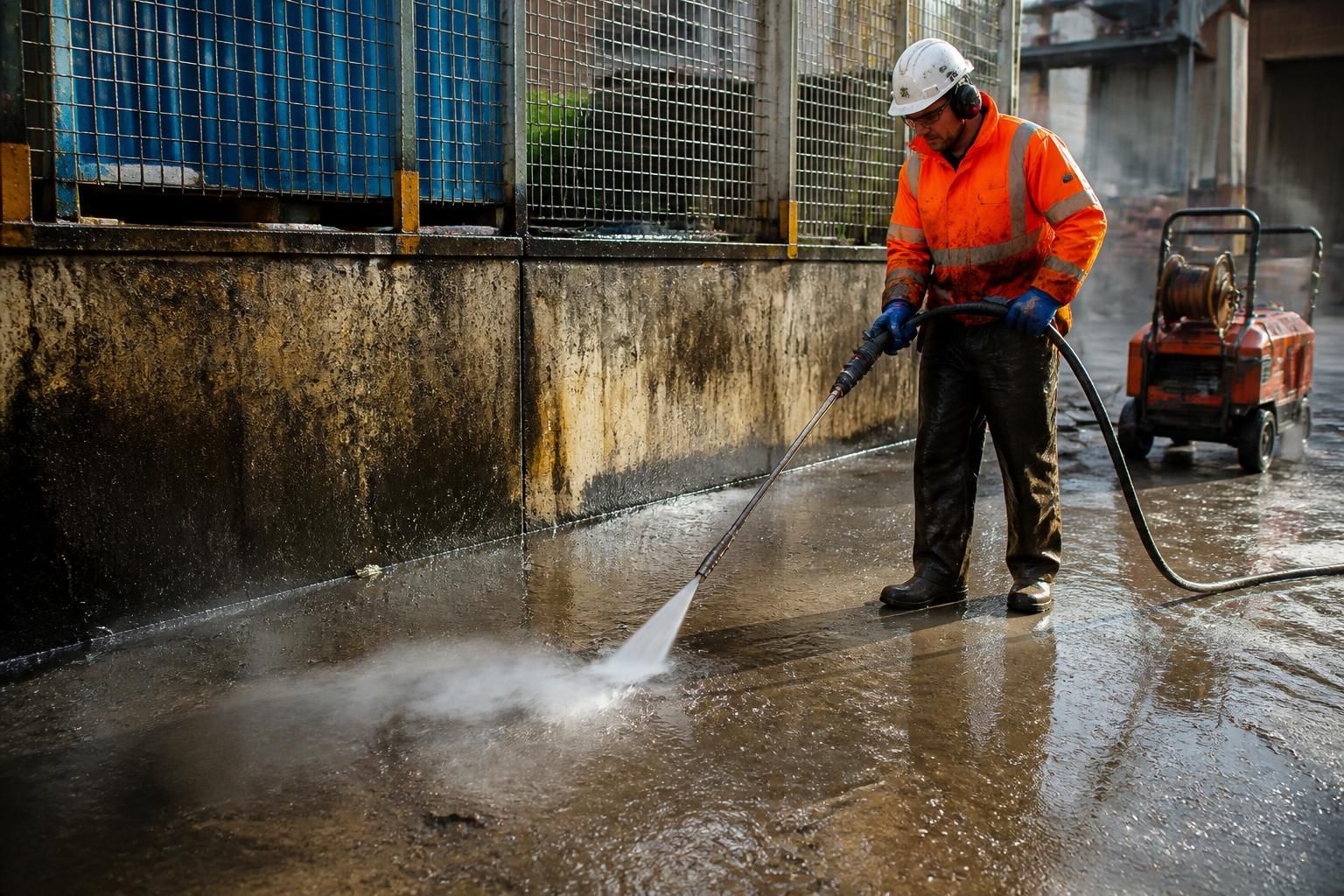
What are the benefits of using hot water jet washing over cold water methods for industrial cleaning?
Hot water jet washing removes grease, oil, ingrained dirt and other deposits more quickly and effectively than cold water methods, making it well suited to demanding industrial cleaning. The heat improves cleaning performance, reduces the need for chemical agents and can help industrial sites return to safe, usable condition sooner.
Hot water jet washing generally cleans industrial surfaces faster and more effectively than cold water methods because heat softens grease, oil, fats, waxes and other stubborn deposits before the water jet removes them. This improves cleaning performance, can reduce reliance on chemical agents and helps return floors, equipment surrounds, loading areas and other working surfaces to a safe, usable condition sooner.
The main benefits over cold water cleaning include:
- More effective grease and oil removal: Heat reduces the viscosity of oily deposits, allowing them to break down and lift from concrete, metal and other suitable surfaces more readily. Cold water may move loose contamination but can leave a greasy film behind, particularly where deposits have hardened or become ingrained.
- Faster removal of difficult contamination: Hot water helps loosen baked-on food residue, fats, traffic film, hydraulic oil, diesel residue, chewing gum and some adhesive deposits. This can reduce the time spent working over the same area and limit the need for repeated passes.
- Reduced chemical use: Heat can provide part of the cleaning action that would otherwise come from degreasers or stronger detergents. Chemicals may still be appropriate for particular contaminants, but using less product can simplify rinsing, reduce chemical handling and help control discharge requirements.
- Improved hygiene control: Hot water can loosen organic matter and improve the removal of residues that support bacterial growth. It should not be described as sterilisation unless the process has been specifically designed, controlled and verified for that purpose, but it can support a more hygienic cleaning regime in suitable industrial environments.
- More consistent results: The combination of heat, pressure and an appropriate nozzle gives operators greater control over contamination that cold water alone may struggle to shift. Consistent pre-assessment and operating procedures are important to achieve this without damaging the substrate.
- Better performance in cold conditions: Warm water is less likely to be immediately affected by low ambient temperatures than cold water. This can help with winter maintenance and with deposits that become harder or more viscous in cold conditions, although drainage, freezing and water management still need to be considered.
Cold water jet washing remains useful for loose dirt, dust, mud, sand and some general surface cleaning. It can also be the appropriate choice where heat could affect a coating, sealant, membrane, plastic component or sensitive finish. However, where the problem is primarily greasy, oily or heavily adhered contamination, cold water often depends more heavily on pressure, dwell time or chemical treatment. Increasing pressure is not always a suitable substitute for heat, as excessive pressure can erode joints, coatings and softer materials.
Hot water is particularly valuable on industrial concrete floors, service yards, plant areas, workshop surfaces, loading bays, car parks and equipment surrounds where oil, food residues, tyre marks or traffic film have built up. It can also be used on selected metalwork, cladding and hard external surfaces, subject to a survey of the material, finish, condition and drainage arrangements. The cleaning method should be matched to the contaminant rather than selected solely because it produces a higher water temperature.
There are operational benefits as well as cleaning benefits. Removing contamination more efficiently can reduce disruption in areas that need to reopen quickly, while fewer repeated passes may help manage water consumption and labour requirements. These outcomes depend on the equipment, operator technique, surface condition and the type of residue present; hot water is not automatically more efficient in every situation.
Industrial hot water jet washing must be planned carefully. The correct pressure, temperature, nozzle, flow rate and distance from the surface should be selected after assessing the substrate. Operators also need to identify electrical equipment, vulnerable seals, drainage points, surface coatings and any substances that could react with heat or water. Water containing oil, chemicals or other contaminants may require controlled collection, separation or disposal rather than discharge to a surface-water drain.
Heat also introduces additional safety considerations. Operators should use suitable protective clothing, gloves, eye and hearing protection, and footwear with appropriate slip resistance. The work area should be controlled to protect employees, visitors and members of the public from hot water, spray, flying debris, noise and slippery surfaces. Equipment should be inspected and maintained, and hot-water units should only be used by trained personnel following the manufacturer’s instructions and the site’s risk assessment.
In practical terms, hot water jet washing is usually the stronger option when industrial cleaning involves grease, oil, fats, ingrained organic matter or deposits that have hardened onto a durable surface. Cold water may be sufficient for lighter dirt or more heat-sensitive materials. A professional assessment can establish whether hot water, cold water, detergent, steam cleaning or a combination of methods will deliver the required result without unnecessarily stressing the surface or creating avoidable wastewater-management issues.
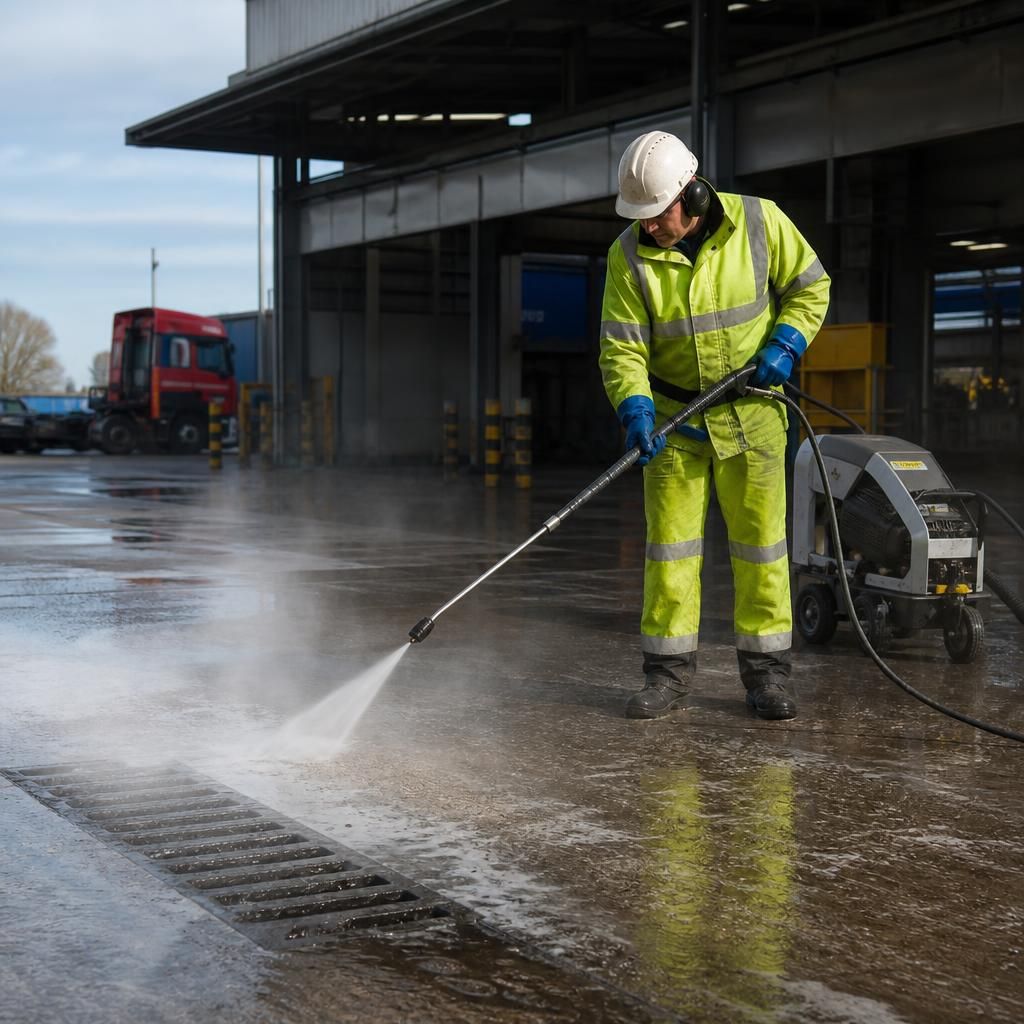
Hot water jet washing uses heated water under pressure to soften and lift grease, oil, fats and other stubborn deposits more effectively than cold water alone. This is particularly useful on industrial concrete floors, loading bays, workshop areas and plant surrounds, where oily contamination can become ingrained and difficult to remove.
Because heat reduces the viscosity of greasy residues, operators can often achieve a thorough clean with fewer repeated passes and less reliance on strong degreasers. This can help shorten disruption, simplify rinsing and reduce chemical handling. The method still needs to be matched to the surface and drainage arrangements: excessive heat or pressure may damage coatings, seals or sensitive materials, and contaminated wastewater may require controlled collection and disposal.