
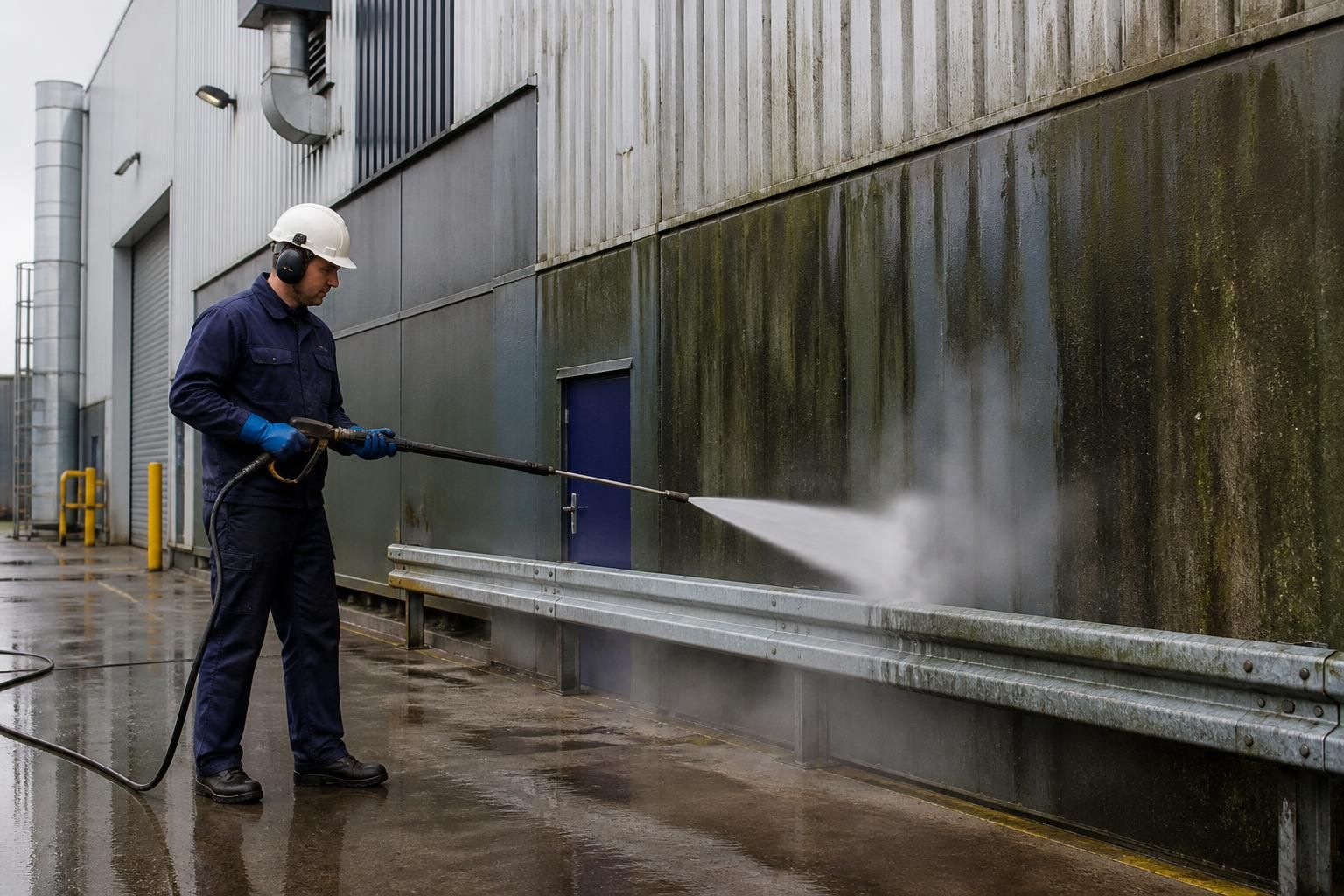
How does hot water jet washing impact the longevity and maintenance of industrial surfaces?
Hot water jet washing can extend the service life of industrial surfaces by removing oils, grease, deposits and biological growth that accelerate staining, corrosion and material deterioration. When the pressure, temperature and cleaning method are matched to the surface, regular cleaning reduces maintenance demands, helps reveal defects early and preserves a safe, professional finish.
Hot water jet washing can extend the service life of industrial surfaces by removing oils, grease, deposits and biological growth that contribute to staining, corrosion and material deterioration. When temperature, pressure, nozzle selection and cleaning agents are matched to the surface, routine cleaning reduces maintenance demands, helps defects become visible sooner and preserves a safe, professional finish.
How hot water protects surfaces
Industrial dirt is often bonded to a surface by oil, traffic film, food residue, process deposits, soot or atmospheric pollution. Cold water may remove loose soil, but it can leave a film behind or require higher pressure and longer dwell times. Heated water softens and lifts many contaminants more effectively, allowing them to be removed with controlled pressure rather than relying solely on mechanical force.
This is particularly useful on loading areas, service yards, plant rooms, car parks, façades, cladding and hard-standing where grease and organic matter can remain in pores, joints and textured finishes. Removing these deposits helps prevent the gradual build-up that makes surfaces more difficult to clean and can support corrosion, staining, slippery conditions and premature coating failure.
Reducing corrosion and chemical deterioration
Oil, salts, acidic residues and other contaminants can retain moisture against metalwork and coated surfaces. Over time, this may contribute to corrosion, blistering, discolouration or loss of adhesion. Hot water jet washing removes the contamination that allows these processes to continue, particularly when followed by appropriate rinsing and drying.
Cleaning does not repair corrosion or restore a failed coating. It does, however, make rust, damaged paint, exposed fixings and failed sealants easier to identify. Early reporting allows maintenance teams to treat affected areas before deterioration spreads into the surrounding substrate.
Where a degreasing chemical is required, it should be selected for the contaminant and the material being cleaned. The chemical must be given sufficient dwell time, then fully rinsed away. Leaving detergent, salts or loosened contamination on the surface can undermine the benefit of the cleaning work and may increase corrosion risk.
Preserving concrete, paving and asphalt
Concrete and paving can deteriorate when oil, algae, moss and trapped moisture remain in the surface. Hot water cleaning can remove these contaminants while avoiding unnecessarily aggressive pressure. This helps maintain traction and appearance and reduces the risk that organic growth will continue to spread across joints and porous areas.
Care is needed around cracked concrete, friable surfaces, repaired sections and open joints. Excessive pressure or heat can widen defects, remove the surface paste, disturb jointing material or expose aggregate. Asphalt can also soften or lose its binder if exposed to unsuitable heat or concentrated pressure. A competent operator will test the surface, adjust the equipment and avoid holding the nozzle in one position.
Protecting cladding, façades and coated finishes
Regular removal of traffic film, bird fouling, algae and atmospheric deposits helps cladding and façade finishes retain a consistent appearance. It also reduces the time that contaminants remain in contact with painted or coated surfaces. This is valuable for commercial buildings where staining can obscure defects, drainage problems or failed sealants.
Pressure and temperature must be controlled carefully on painted metal, powder-coated finishes, render, brickwork, stone and composite panels. High heat can soften certain coatings, while excessive pressure can mark the finish, drive water behind panels or damage pointing and sealant. Cleaning should therefore begin with a discreet test area and progress only when the result and surface response are acceptable.
Supporting roof and drainage maintenance
On suitable roof surfaces, hot water can help remove biological growth, accumulated grime and some deposits from access routes, roof plant areas and drainage details. Keeping gutters, outlets and channels clear helps water discharge properly and reduces standing water that can accelerate staining, material deterioration and leakage risks.
Roof cleaning requires particular caution. Membranes, insulation systems, fragile sheets, coatings and waterproofing details may not tolerate hot water or jet pressure. The cleaning method should be based on the roof specification, condition and warranty requirements. Water must also be prevented from entering vulnerable joints, vents, electrical equipment or occupied areas below.
Making maintenance inspections more effective
A clean surface provides a clearer view of cracks, impact damage, corrosion, open joints, blocked drainage, failed sealants and areas of coating loss. This makes hot water jet washing a useful part of a planned maintenance programme rather than simply an appearance-led service. Findings can be recorded during or after cleaning so that remedial work is prioritised according to condition and risk.
Cleaning schedules should reflect the site environment. Areas exposed to heavy traffic, food or industrial residues, coastal salts, airborne pollution, shade or persistent damp may need more frequent attention than lightly used surfaces. Planned cleaning is usually easier to control than allowing contamination to become heavily bonded and then requiring aggressive treatment.
When hot water jet washing may cause damage
Hot water is not automatically suitable for every substrate. Poorly controlled cleaning can damage timber, delicate coatings, elastomeric sealants, waterproof membranes, plastics, insulation, soft stone and aged or porous masonry. Heat may also affect adhesives, joint compounds and surface treatments. The risk increases when the operator uses a narrow nozzle, excessive pressure, prolonged application or an unsuitable chemical.
Before work starts, the surface should be identified and assessed for age, previous repairs, coatings, defects and areas of weakness. A test clean should confirm the suitable temperature, pressure, nozzle distance, angle and cleaning product. Sensitive components should be isolated or protected, and any runoff should be managed in accordance with site and environmental requirements.
Best practice for long-term surface protection
- Inspect the surface and identify its material, coating and existing defects before selecting the equipment settings.
- Use the lowest effective pressure and temperature rather than treating maximum power as the default.
- Choose a suitable nozzle and maintain a consistent working distance to prevent etching, striping or localised damage.
- Pre-treat grease, oil or biological growth where this allows safer, lower-impact cleaning.
- Rinse thoroughly and avoid leaving chemicals, salts or loosened deposits behind.
- Protect electrical systems, openings, seals, landscaping and vulnerable adjacent materials.
- Control runoff and collect contaminated water where site rules or environmental controls require it.
- Inspect the cleaned area for newly visible defects and arrange repairs before they become more extensive.
- Record the method and any findings so future cleaning can be planned consistently.
In practice, hot water jet washing supports longevity when it forms part of a surface-specific maintenance plan. The greatest benefit comes from removing damaging contamination without removing sound coating, jointing or substrate. Encanto Exterior Cleaning can assess the condition and material of industrial surfaces, test an appropriate cleaning method and recommend a programme that balances cleanliness, access, safety and long-term maintenance requirements.
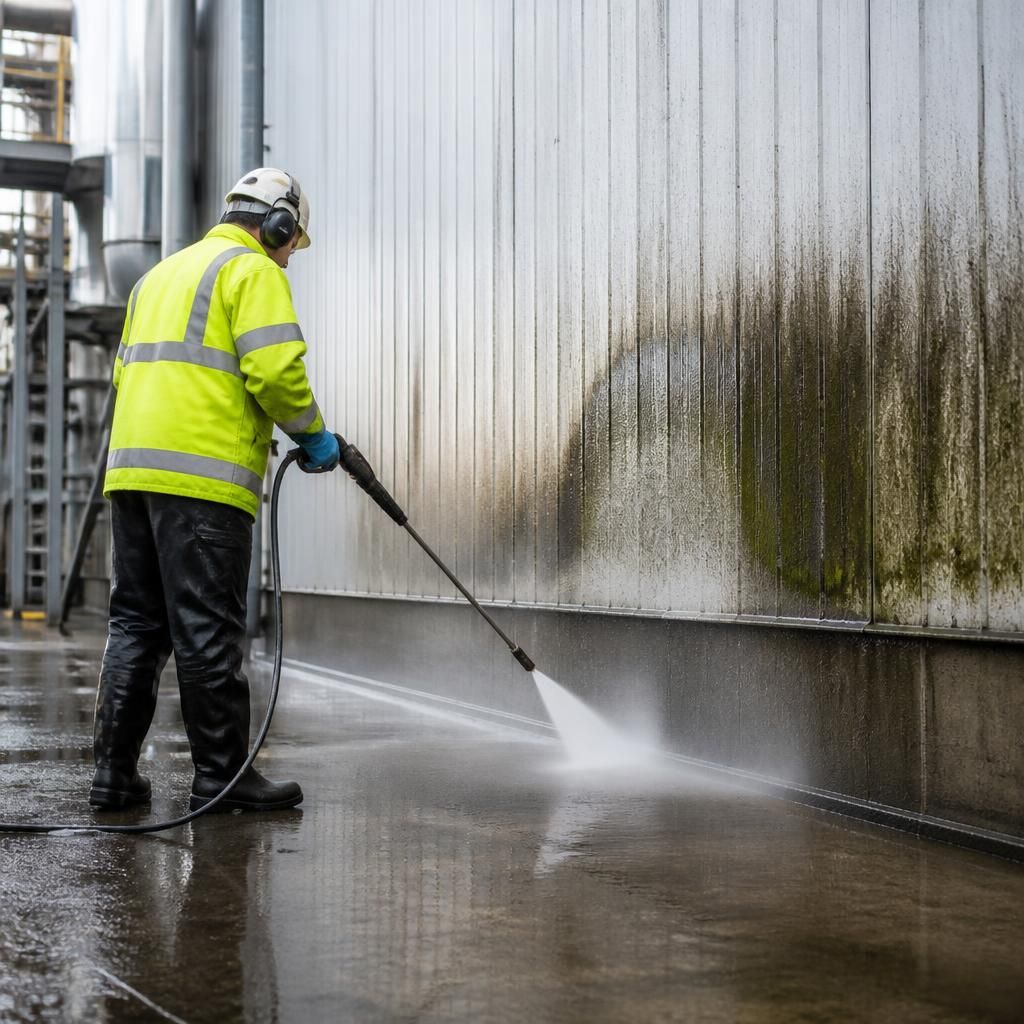
Hot water jet washing can help extend the working life of industrial surfaces by removing grease, oil, salts, algae and other contaminants before they cause prolonged staining, corrosion or surface deterioration. Heated water softens bonded deposits, allowing effective cleaning at a controlled pressure and reducing the need for unnecessarily aggressive mechanical force.
Regular cleaning also makes defects easier to identify. Once contamination has been removed, maintenance teams can inspect for coating failure, cracked joints, corrosion, damaged sealants and blocked drainage, then arrange repairs before minor problems become more extensive. The method must always be matched to the material, coating and condition of the surface, with temperature, pressure and cleaning chemicals tested before wider application.