
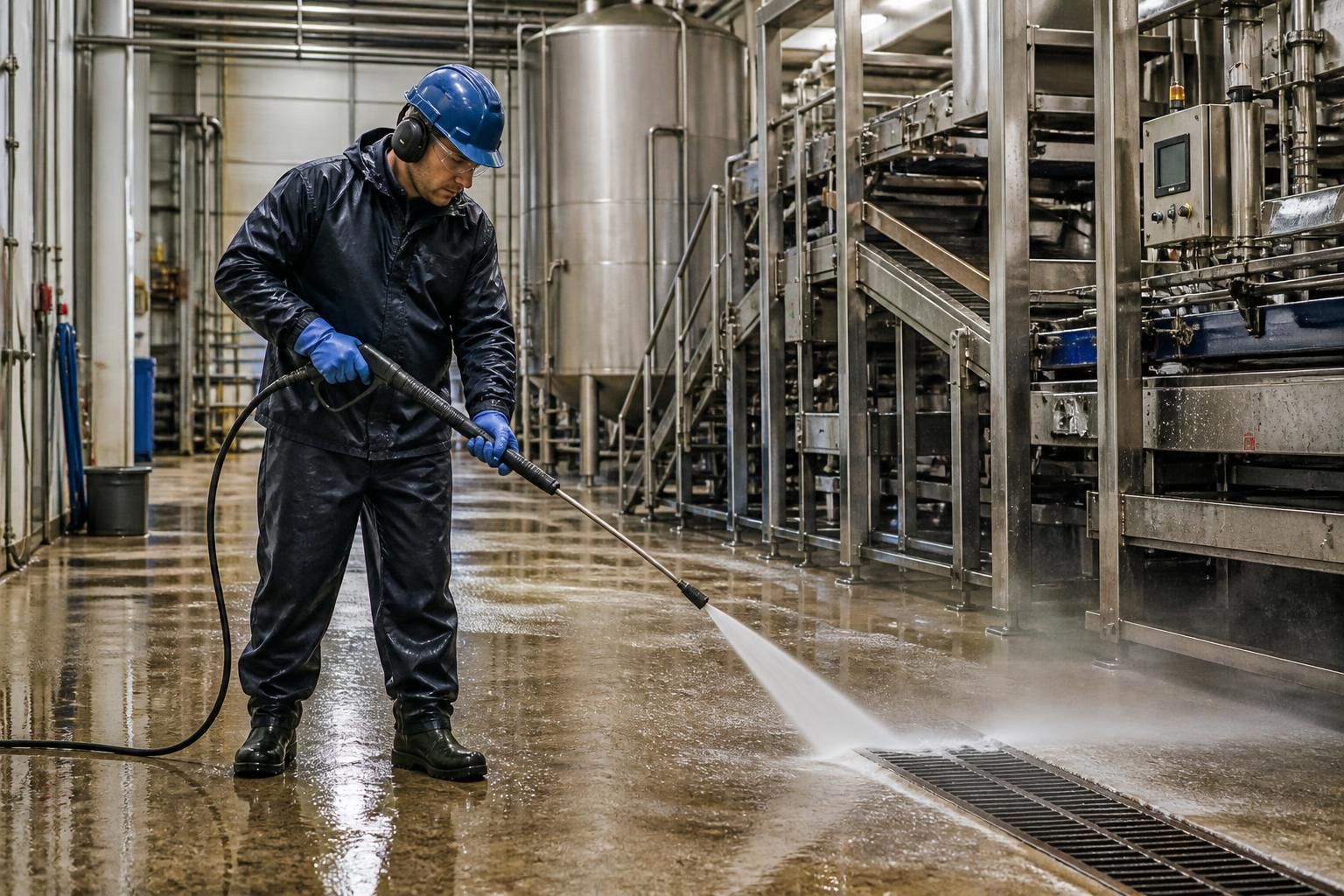
How does hot water jet washing enhance sanitation and hygiene in industrial environments?
Hot water jet washing enhances industrial sanitation by dissolving grease, oils and organic residues more effectively than cold water, while helping to reduce surface contamination and microbial load. It supports more hygienic premises when combined with suitable detergents, controlled cleaning procedures and any required disinfection process.
Hot water jet washing enhances sanitation and hygiene in industrial environments by combining high-pressure water with heat to remove grease, oils, food residues, biological deposits and other contaminants more effectively than cold-water cleaning alone. This improves the cleanliness of hard surfaces and can reduce the amount of contamination present, particularly when the process is supported by suitable detergents, controlled application methods and a separate disinfection stage where required.
Sanitation depends first on removing the soil that allows bacteria, mould and other microorganisms to remain on a surface. Industrial dirt is often bound together by fats, oils, proteins, traffic film or production residues. Cold water may move loose debris, but it can leave behind greasy films and embedded deposits. Heated water softens and lifts these materials, allowing the jet to flush them away more thoroughly.
This is particularly useful in areas such as:
- Food production and preparation environments, subject to the site’s hygiene procedures and applicable regulations.
- Commercial kitchens, catering facilities and waste-handling areas.
- Workshops, depots and engineering premises affected by oils, lubricants and hydraulic fluid.
- Loading bays, service yards and vehicle-washing areas where organic matter and traffic film accumulate.
- Industrial floors, plant rooms, storage areas and external hardstanding exposed to persistent contamination.
Heat also helps cleaning agents work more efficiently. When the detergent is compatible with the surface and the residue being treated, warm or hot water can improve emulsification of oils and help break down deposits that would otherwise require prolonged scrubbing. This may reduce the need for aggressive mechanical abrasion, although detergent selection, dilution and dwell time must always follow the product and site requirements.
It is important to distinguish cleaning, sanitation and disinfection. Jet washing removes visible soil and much of the contamination attached to a surface. Sanitation aims to leave the surface in a suitably hygienic condition by reducing contamination to an acceptable level. Disinfection is a separate controlled treatment intended to destroy or inactivate specified microorganisms. Hot water jet washing should not automatically be described as disinfection, because the result depends on the temperature reaching the relevant surface, the contact time, the equipment settings, the nature of the contamination and the required hygiene standard.
For higher-risk environments, the usual process should be planned as a complete hygiene procedure rather than relying on pressure washing alone. This may include removing loose materials, applying an appropriate detergent, allowing sufficient contact time, agitating heavily soiled areas, rinsing thoroughly and applying an approved disinfectant if required. The cleaned area may then need inspection, testing or documented sign-off in line with the site’s cleaning schedule and quality system.
Correct technique is essential. Excessive pressure can spread contaminated water as aerosol or overspray, drive material into joints and porous surfaces, damage coatings, or transfer contamination from one area to another. Operators should work from cleaner areas towards more heavily soiled areas where appropriate, control the direction of spray, avoid unnecessary splash and use dedicated tools or cleaning arrangements for different hygiene zones. Drainage and wastewater collection should also be considered so that contaminants are not redistributed across the site or discharged improperly.
Hot water cleaning can be especially valuable for persistent grease because it reduces the reliance on harsh chemicals and repeated manual scrubbing. However, heat and pressure are not suitable for every material. Painted finishes, sealants, plastics, electrical equipment, sensitive machinery and some cladding systems may be affected by high temperatures or direct jetting. A competent operator should assess the surface, contamination, drainage, access and surrounding equipment before selecting pressure, temperature and cleaning products.
Industrial hygiene also depends on preventing recontamination after cleaning. Surfaces should be allowed to drain or dry appropriately, cleaned equipment should be stored hygienically, and splash zones should be checked before the area is returned to service. Where cleaning takes place near production lines, exposed goods, ventilation intakes or electrical installations, the work may need to be scheduled during a controlled shutdown and coordinated with the responsible site team.
In practice, hot water jet washing is most effective as part of a documented, risk-based cleaning regime. It provides stronger removal of oily and organic residues than cold water in many applications, helps prepare surfaces for any required disinfectant and supports safer, more presentable industrial premises. The correct method should be determined by the site’s hygiene objectives, the type of contamination, the surface materials and any relevant industry or regulatory requirements.
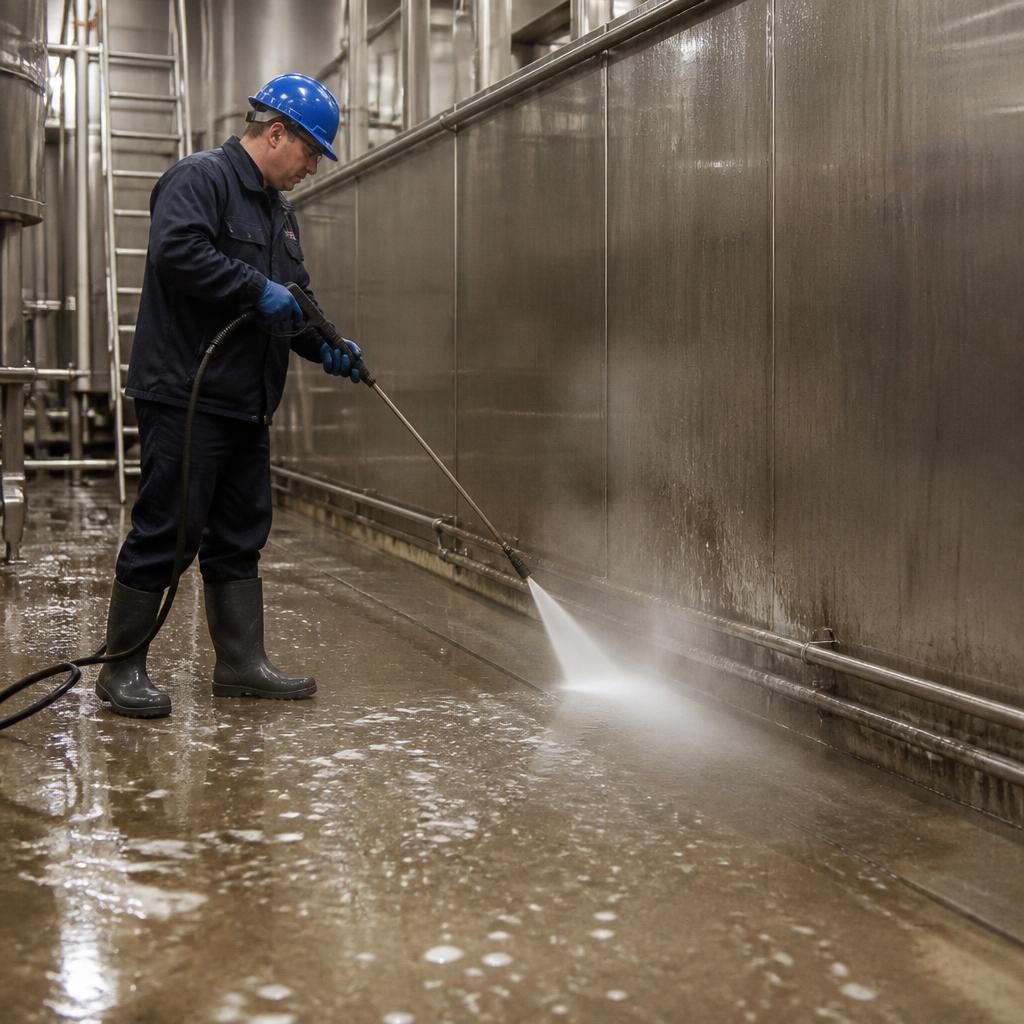
Hot water jet washing improves industrial hygiene by removing grease, oils, food residues and other organic soil that can protect microorganisms on hard surfaces. Heat softens these deposits, while pressure helps flush them away more thoroughly than cold water alone.
It is important to distinguish cleaning from disinfection. Hot water jet washing removes contamination and prepares the surface for any approved disinfectant, but it should not automatically be treated as a disinfection process. The required hygiene outcome depends on the water temperature at the surface, contact time, detergent, contamination type and site procedures.
For reliable results, the process should include suitable detergent application, controlled rinsing, effective drainage and inspection before the area returns to use. Operators must also control overspray and contaminated run-off to prevent recontamination of nearby surfaces, equipment or hygiene zones.