
What surfaces can be cleaned with high-rise jet washing?
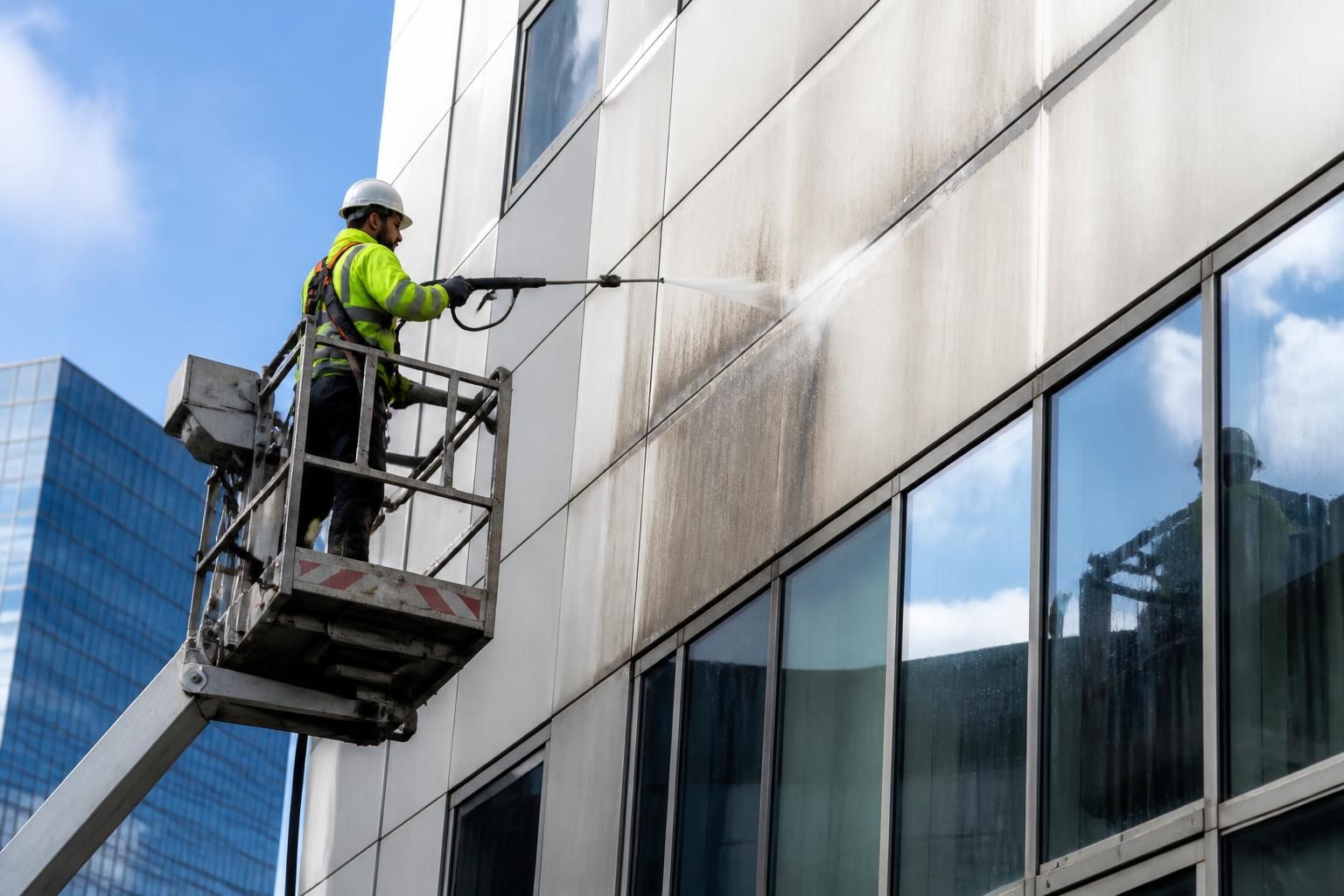
High-rise jet washing can clean many external surfaces, including brickwork, concrete, render, stone, metal cladding, façades, roofs, balconies, walkways and car parks. Water pressure and cleaning methods are adjusted for delicate materials such as glass, painted finishes and weathered masonry to remove dirt, algae, staining and pollution without causing damage.
High-rise jet washing can clean most sound external building surfaces, including brickwork, concrete, render, stone, metal cladding, glass, roofs, balconies, walkways, loading areas and car parks. The cleaning method is selected for the material and its condition: high-pressure water is suitable for robust surfaces, while lower-pressure washing, steam cleaning or controlled chemical treatment is used where a direct jet could damage the finish.
The objective is to remove surface contamination without eroding the substrate, forcing water into the building or disturbing protective coatings. Before work begins, the surface should be assessed for its material, age, previous repairs, paint or sealant, signs of deterioration and the type of contamination present. Pressure, water temperature, nozzle selection, working distance and any cleaning solution can then be adjusted accordingly.
Brickwork and masonry: Sound brick façades can usually be cleaned to remove traffic film, general dirt, algae, moss, bird fouling and some atmospheric staining. Mortar joints require particular care, especially on older buildings where weathering may have weakened the pointing. A concentrated jet held too close to the wall can remove the face of a brick or widen defective joints, so controlled pressure and suitable nozzles are important. Repointing, cracked bricks and other defects should be identified before washing rather than treated as part of the cleaning process.
Concrete and precast panels: Concrete façades, columns, soffits, retaining structures and precast panels are commonly cleaned with pressure washing or steam cleaning. These methods can remove dirt, algae, pollution deposits and loose surface contamination. Staining caused by rust, hard-water deposits or biological growth may need a compatible treatment in addition to water. Cracks, spalling concrete, exposed reinforcement and deteriorated surfaces need to be assessed first, as washing will not repair structural or surface defects.
Render and painted finishes: Render can often be cleaned, but it is more vulnerable than concrete or sound brickwork. High pressure can mark the surface, remove the top layer or lift loose paint. Lower-pressure cleaning, a wider spray pattern and greater working distance are normally more appropriate. Areas with flaking paint, friable render or failed sealant may need remedial work before cleaning. A test patch helps confirm that the finish will tolerate the proposed method and that the result is acceptable.
Natural and manufactured stone: Stone façades, lintels, sills and architectural features can be cleaned, although the treatment must reflect the type of stone. Harder stone may tolerate carefully controlled pressure, while softer or weathered stone can suffer surface loss, pitting or damage to carved detail. Marble, limestone and other porous materials may also react to unsuitable cleaning chemicals. The aim should be to lift contamination from the surface, not to abrade the stone or remove its natural patina unnecessarily.
Metal cladding and façades: Aluminium, coated steel, composite panels and other metal façades can be washed to remove dirt, pollution, algae and bird deposits. The condition of the coating, joints and protective finishes should be checked first. Excessive pressure can damage coatings, drive water behind panels or affect seals. Non-abrasive methods and suitable detergents are generally preferred, followed by thorough rinsing where required. Oxidation, corrosion and failed coating systems may remain visible after cleaning and could require specialist refurbishment.
Glass and glazed surfaces: Windows, curtain walling and glazed panels can be cleaned as part of high-rise exterior maintenance. However, glass is not automatically suitable for aggressive jet washing. Pressure must be controlled around frames, gaskets, vents, drainage channels and opening sections to avoid water ingress. Mineral deposits, silicone residue, paint and construction debris may require specialist glass-cleaning techniques rather than a standard jet. Any coating or film on the glass should be identified before cleaning.
Roofs and rooftop areas: Flat roofs, pitched roof coverings, roof plant enclosures, parapets, gutters and associated access areas may be cleaned where the roof construction and condition allow it. Washing can remove moss, algae, dirt and accumulated deposits, but outlets and drainage routes must be protected from blockages. Fragile coverings, deteriorated membranes, rooflights and poorly sealed penetrations need special consideration. Cleaning should not compromise waterproofing or direct contaminated water into areas where it could cause damage.
Balconies, terraces and walkways: Balcony floors, external stairs, access decks, podiums and communal walkways can be cleaned to remove grime, algae, chewing gum, bird fouling and slip hazards. The drainage arrangement should be checked before work, particularly on occupied buildings. Water must be prevented from entering apartments, electrical points, ventilation openings or neighbouring areas. Balustrades and painted metalwork should be cleaned using a method that protects their coatings and joints.
Car parks, ramps and service yards: Concrete and asphalt car parks, multi-storey car park decks, ramps, loading bays and service yards are generally suitable for pressure washing. These areas often contain traffic film, oil residues, tyre marks, moss and accumulated dirt. Oil and chemical contamination may require pre-treatment and controlled recovery of wastewater rather than unrestricted discharge. Painted lines, expansion joints, drainage channels and damaged asphalt should be considered so that cleaning does not worsen existing defects.
Architectural details and external fixtures: Canopies, signage, roller shutters, plant-screening panels, external ducting, ventilation grilles, bollards and boundary structures can often be included in a high-rise cleaning programme. These smaller elements may be made from different materials on the same elevation, so one pressure setting is rarely suitable for everything. Electrical fittings, sensors, cameras and ventilation equipment must be protected from direct water impact.
Jet washing is not appropriate for every surface or condition. Unsealed timber, severely weathered masonry, loose coatings, defective pointing, damaged render and vulnerable historic finishes may need a gentler method or specialist conservation advice. Materials containing asbestos, lead-based coatings or other hazardous substances must be managed under the relevant controls and should not be disturbed through routine washing. Likewise, cleaning cannot resolve corrosion, failing sealants, structural movement or water ingress; these issues should be recorded and referred for repair.
For a high-rise building, the surface itself is only part of the assessment. The cleaning team must also consider access, wind exposure, overspray, nearby pedestrians and vehicles, drainage, glazing interfaces, tenant operations and the potential effect on neighbouring properties. A pre-clean inspection and test area provide an opportunity to confirm the cleaning technique, check the appearance of the result and identify any areas requiring repair or protection.
In practice, a high-rise jet-washing programme often combines several techniques rather than applying high pressure to every elevation. Robust concrete or paving may receive controlled pressure washing, while glass, coated cladding and delicate masonry may be treated with low-pressure washing or steam. This material-specific approach removes contamination effectively while reducing the risk of surface damage, water ingress and avoidable disruption to the building.
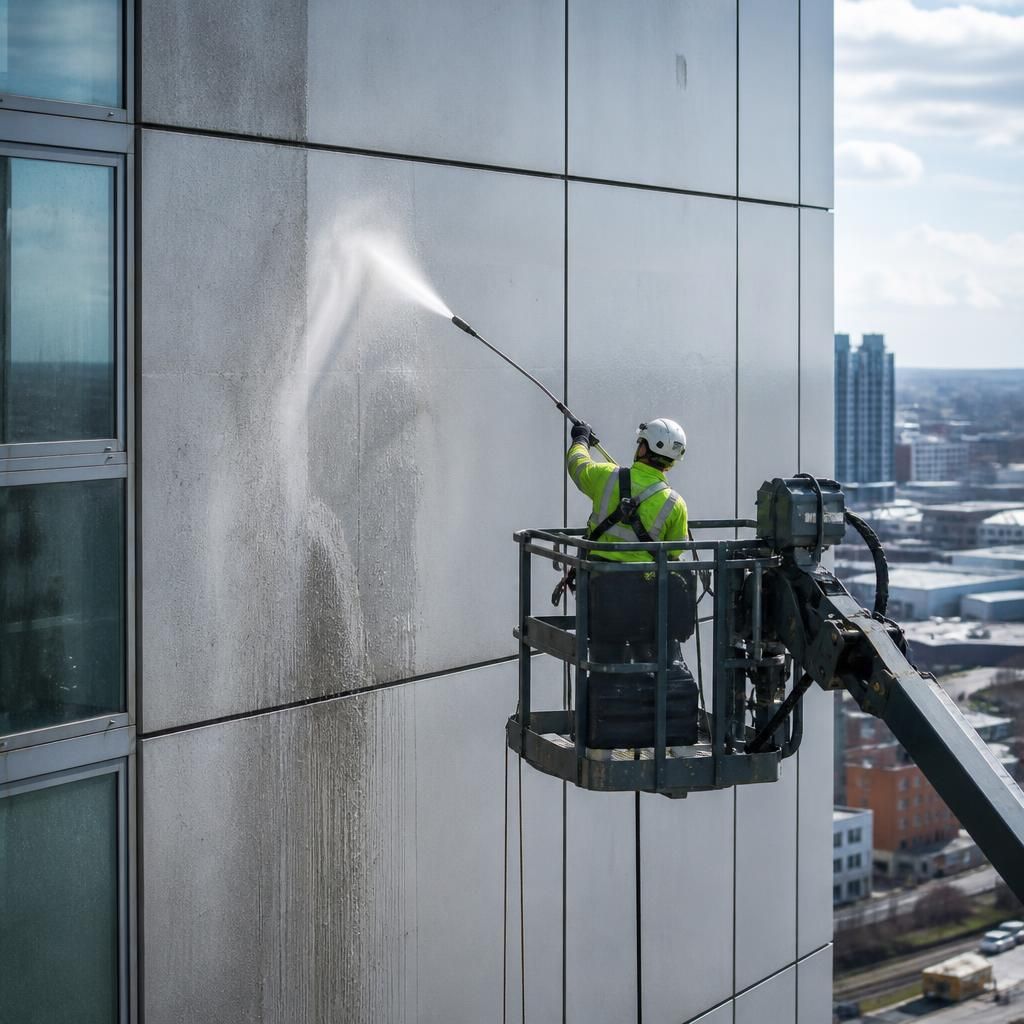
High-rise jet washing can clean façades, cladding, concrete, roofs, balconies, walkways and car parks, but the method must be matched to each surface. Robust concrete and paving may tolerate controlled pressure, while render, coated metal, glass and weathered stone generally require lower pressure, steam cleaning or another gentler treatment.
A pre-clean inspection checks the material, surface condition, coatings, joints, drainage and nearby openings. A small test area can confirm that contamination is removed without eroding masonry, lifting paint, damaging seals or forcing water behind the building envelope. This surface-specific approach is particularly important where one elevation includes several materials, such as glazed panels beside painted render or metal cladding.