
What safety measures are implemented during high-rise jet washing?
High-rise jet washing is carried out under a site-specific risk assessment and method statement, with trained operatives using inspected access equipment, suitable PPE, secure harness systems and controlled water pressure. Exclusion zones, signage, traffic and pedestrian management, façade checks and controlled runoff protect workers, the public, surrounding property and the building itself.
High-rise jet washing is controlled through a documented, site-specific safety system covering access, water pressure, falling objects, public protection, electrical risks, runoff and the building itself. Before work starts, the team assesses the façade, access requirements, surrounding area and likely hazards, then records the controls in a risk assessment and method statement. The agreed method is reviewed with the client and updated if site conditions change.
Planning and site assessment begin before equipment arrives. The assessment considers the building’s height and construction, façade condition, glazing, sealants, cladding joints, roof edges, parapets, balconies, plant, overhead services and nearby roads or footpaths. It also identifies fragile or defective areas that could be damaged by water pressure or access equipment. Weather, wind exposure, visibility, water supply, drainage and emergency arrangements are considered because each can affect whether high-level cleaning can proceed safely.
Where necessary, the cleaning method is tested on a discreet area first. This helps confirm the appropriate pressure, temperature, nozzle, detergent and distance from the surface. Operatives do not assume that a setting suitable for concrete will be safe for render, painted cladding, sealant, brickwork or glazing. Pressure is kept under control to reduce the risk of surface damage, water penetration and debris becoming detached.
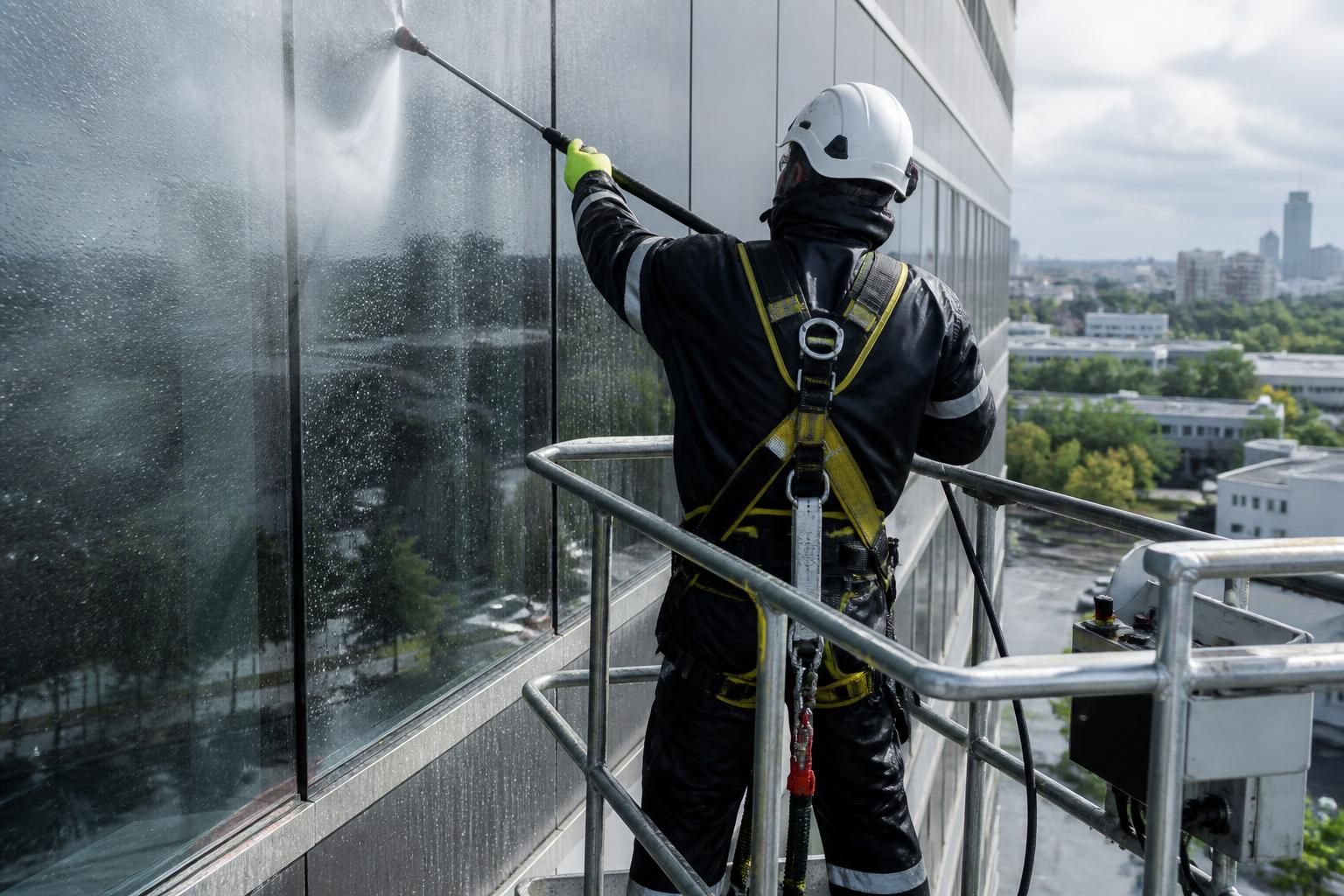
Work-at-height controls are selected according to the building and task. These may include an inspected mobile elevating work platform, scaffold, cradle, temporary platform or rope-access system. Access equipment is operated only by suitably trained and authorised personnel, and it is positioned on ground capable of supporting the load. Operators check for slopes, voids, soft ground, overhead obstructions, vehicle movements and other hazards before use.
Harnesses, lanyards, anchor systems and other fall-protection equipment are selected for the access method and used in accordance with the relevant manufacturer’s instructions. Equipment is inspected before use, with formal examinations and records maintained where required. Rope-access work requires appropriately trained operatives, independent safety arrangements and a practical rescue plan; operatives must not rely on a single point of support. A rescue procedure is established before work starts, rather than being improvised during an incident.
Exclusion zones protect people below and around the building. Barriers, cones and warning signs are positioned to prevent pedestrians, visitors and unauthorised personnel from entering areas where water, equipment or loosened debris could fall. The size and layout of the zone depend on the building, working height, wind and the equipment being used. A banksman or designated ground operative may control access, guide vehicles and maintain communication with the high-level team.
Where the work affects a pavement, car park, entrance or public highway, the site plan includes pedestrian and traffic management. Building entrances are kept accessible where practicable, or a safe alternative route is agreed with the client. Cleaning is paused if members of the public, vehicles or other contractors enter the controlled area and cannot be safely managed.
Tools and equipment are secured against falling. Hoses are routed and restrained to avoid trip hazards, snagging and uncontrolled movement. Hand tools, attachments and small components used at height are tethered where suitable, while ground-level equipment is placed away from pedestrian routes. Operatives maintain clear communication using agreed signals or radios when noise, distance or the building layout makes verbal communication unreliable.
Personal protective equipment is used alongside, not instead of, safer working methods. Depending on the task, this can include a safety helmet with suitable retention, eye or face protection, waterproof and protective clothing, gloves, safety footwear, hearing protection and fall-arrest equipment. PPE is selected for the pressure-washing process, cleaning chemicals, weather and access system. It is checked, maintained and replaced when damaged or no longer provides effective protection.
Jet washing creates particular risks from high-pressure water, splashback, noise, slippery surfaces and airborne contaminants. Operatives keep the lance pointed away from people, maintain a controlled working position and use the correct nozzle and operating pressure. They avoid directing water at electrical installations, open vents, damaged seals or other vulnerable features unless the method has specifically allowed for it. Hoses and freshly cleaned surfaces are managed to reduce slips and trips, and work areas are checked before barriers are removed.
Electrical and mechanical safety is addressed through equipment selection, inspection and separation from water. Cables, generators, pumps and connections are positioned to minimise exposure to spray, standing water and vehicle damage. Electrical equipment is checked before use, and defective items are taken out of service. Machinery is operated in accordance with its instructions and relevant work-equipment requirements; guards and safety devices must not be bypassed.
Cleaning agents are controlled under the site’s chemical safety arrangements. Operatives follow the product’s safety information, use suitable gloves and eye protection, and store chemicals securely in labelled containers. The team considers contact with people, sensitive surfaces, vegetation, drainage systems and other trades. Chemicals are not mixed unless the product instructions expressly permit this, and spillages are contained and reported using the agreed site procedure.
The building is protected through pre-cleaning checks and controlled application. The team identifies loose masonry, failed pointing, open joints, damaged cladding, defective glazing and vulnerable fixtures before applying water. Windows and doors are closed or protected, and building occupants may be asked to keep particular areas clear. Water is directed away from openings and sensitive installations, while pressure and cleaning distance are adjusted to suit the façade material.
High-rise jet washing can dislodge dirt, moss, coatings or loose debris. For that reason, operatives monitor the surface continuously and stop if they find unexpected movement, cracking, water ingress or signs that the substrate is failing. Any significant defect is reported to the client rather than concealed by continuing the clean. Areas that cannot be safely treated with water may require a different method or a separate specialist assessment.
Runoff and environmental controls are part of the safety plan. Before washing starts, the team considers where dirty water will flow and whether it could enter surface-water drains, watercourses, neighbouring property or occupied areas. Drain covers, bunding, wet vacuums, collection systems or other controls may be used where appropriate. Sediment, paint residue, oil, detergents and other contaminants are prevented from spreading, and waste water is handled in accordance with the agreed site and environmental requirements.
Weather is monitored throughout the operation. Strong or gusting wind can affect suspended access systems, platforms, hoses and falling-water patterns; rain can reduce visibility and make surfaces or access points slippery; frost can create additional slip and equipment risks. The supervisor has authority to pause or postpone work when conditions exceed the safe limits for the equipment, building or method statement.
Communication and supervision continue throughout the job. A site briefing covers the method, exclusion zones, emergency contacts, equipment checks, welfare arrangements, first aid and rescue procedures. Operatives coordinate with the client’s representative, security team and other contractors, particularly where entrances, loading areas, plant rooms or occupied floors are affected. A competent supervisor monitors the work and confirms that controls remain effective.
At completion, the work area is inspected for standing water, loose debris, trip hazards, equipment left behind and any signs of damage or water ingress. Barriers are removed only when the area is safe for normal use. The client can be informed of defects discovered during cleaning, restrictions on access, unusual runoff or any remedial work that may be required. Inspection and maintenance records for relevant access and safety equipment are retained as part of the project documentation.
These controls support compliance with applicable UK requirements, including duties relating to work at height, work equipment, lifting equipment, personal protective equipment, hazardous substances, traffic management and environmental protection. The exact controls vary according to the property, access method, façade condition and surrounding public area, so a high-rise jet washing programme should never be treated as a standard ground-level pressure-washing task.
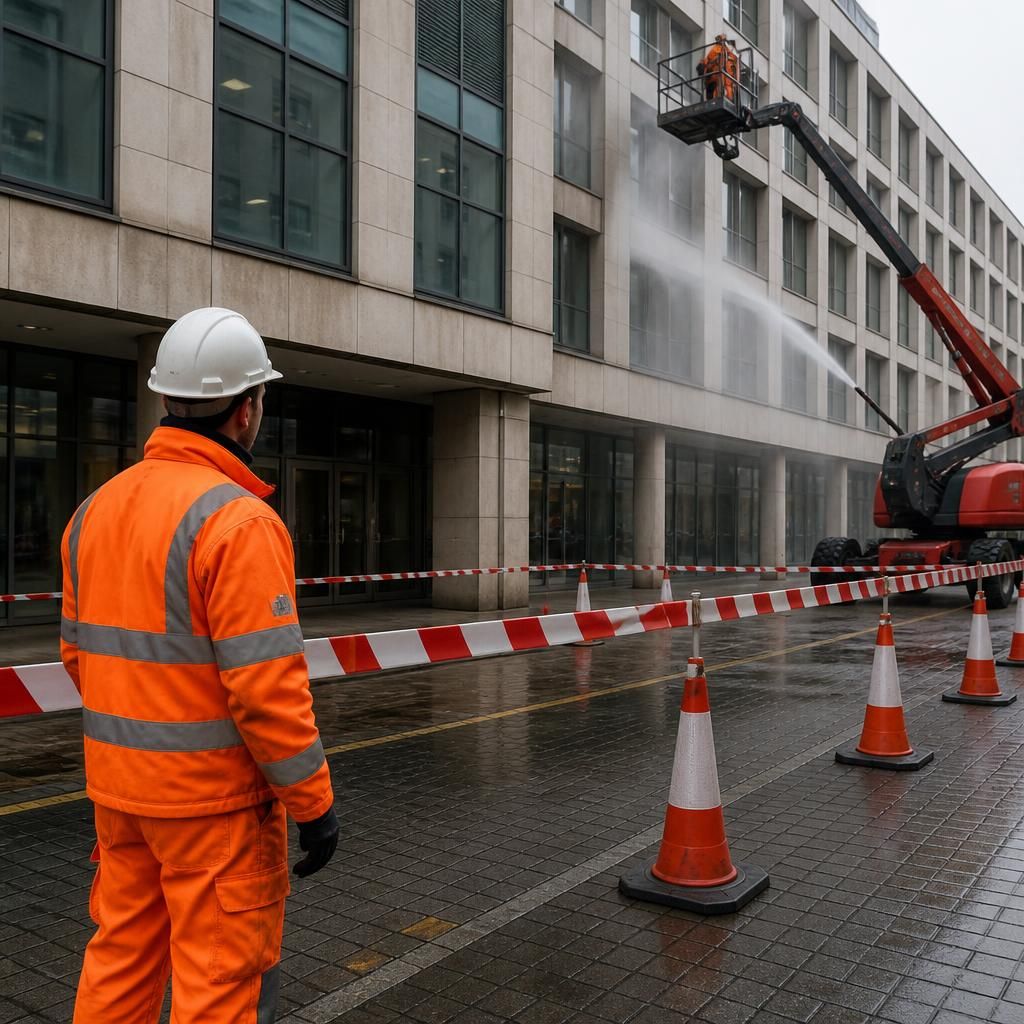
Exclusion zones are controlled areas beneath and around the high-rise workface that prevent people, vehicles and unauthorised personnel from entering where water, equipment or loosened debris could fall. Their position and size are assessed for each building, taking account of the working height, façade condition, wind, access equipment and nearby footpaths or roads.
Barriers, cones and warning signs define the zone, while a designated ground operative may monitor access, guide vehicles and maintain communication with the high-level team. If a doorway, pavement or car park is affected, Encanto Exterior Cleaning agrees a safe route or temporary traffic and pedestrian controls with the client. Cleaning is paused if the area cannot be kept clear, and barriers are removed only after the surface has been checked for standing water, debris and trip hazards.