
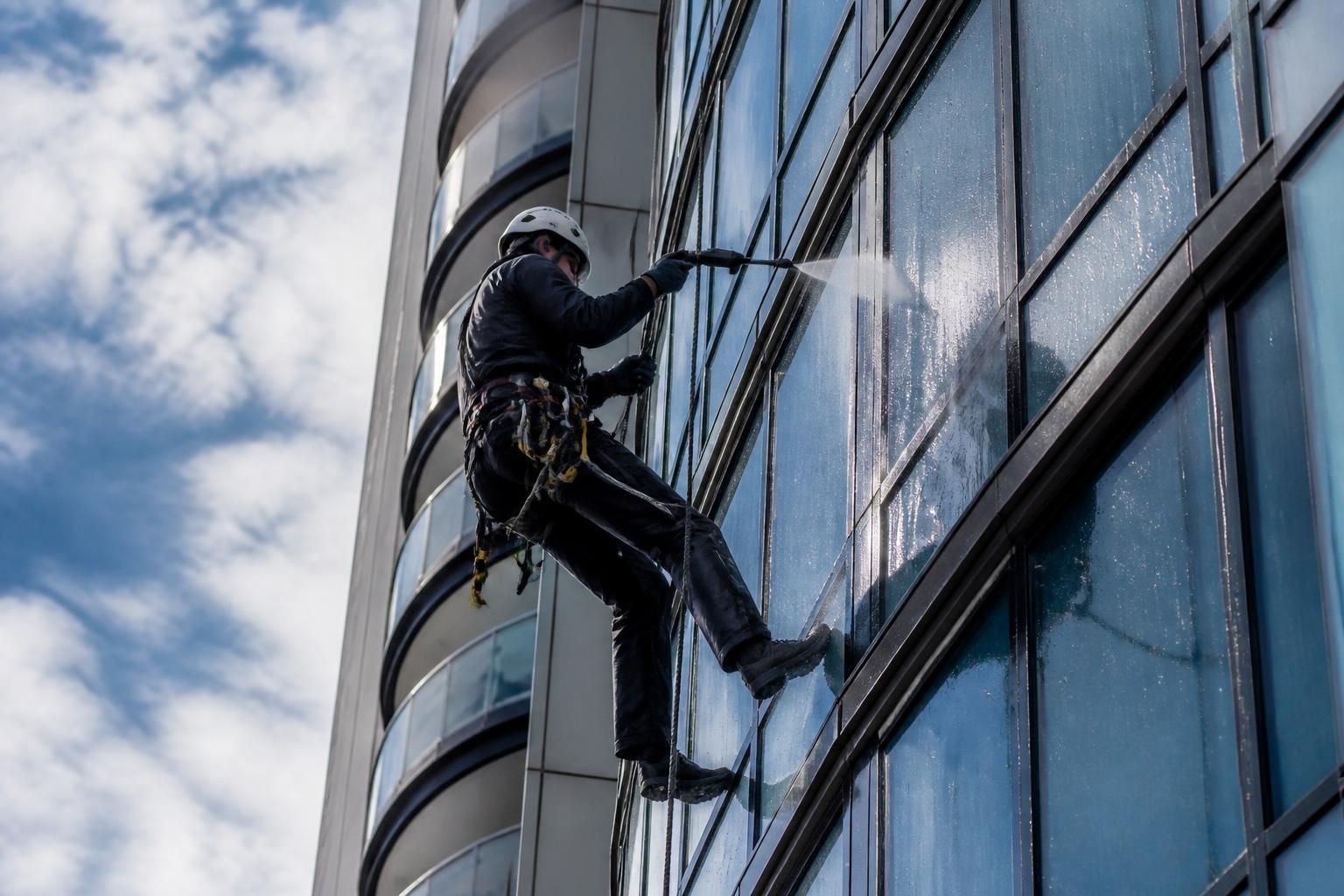
What safety measures are implemented during high-rise jet washing to ensure both worker safety and building security?
High-rise jet washing is managed through a documented risk assessment, trained operatives, inspected access and pressure-washing equipment, suitable personal protective equipment, and controlled exclusion zones. Building security is protected by coordinating with the site team, securing tools and hoses, isolating sensitive areas, controlling water run-off, and monitoring the work area throughout the clean.
High-rise jet washing is controlled through a documented risk assessment and method statement, competent operatives, inspected access and pressure-washing equipment, suitable personal protective equipment and a clearly managed exclusion zone. These controls protect people at height and on the ground while also preventing damage, unauthorised access, water ingress and disruption to the building.
Before work starts, the team reviews the building, its surroundings and the proposed cleaning method. The assessment considers façade materials, windows, roof edges, balconies, plant areas, entrances, nearby roads and pedestrian routes. It also identifies hazards such as falling objects, pressurised water, fragile surfaces, electrical installations, contaminated run-off, adverse weather and the potential for water to enter the building.
A site-specific method statement sets out how the work will be completed, which access system will be used, where equipment will be positioned and how the area will be controlled. The site team is briefed before operations begin, and the controls are reviewed if the weather changes, the work area moves or the building presents an unexpected hazard.
- Competent personnel: Operatives must have appropriate training and experience for high-level cleaning, pressure-washing equipment and the access method being used. Where powered access, rope access or other specialist systems are required, the relevant competence and supervision are arranged before the work begins.
- Equipment inspections: Hoses, lance assemblies, pumps, connections, access equipment, harnesses and anchorage systems are checked before use. Defective items are removed from service. Work equipment is selected, used and maintained in line with applicable UK requirements, including the Provision and Use of Work Equipment Regulations and, where relevant, the Lifting Operations and Lifting Equipment Regulations.
- Fall protection: Where there is a risk of falling, the work is planned around suitable collective protection or personal fall-protection systems. Harnesses, lanyards and other equipment are correctly fitted, connected to suitable anchor points and used in accordance with the manufacturer’s instructions. Rescue arrangements are considered before anyone works at height.
- Personal protective equipment: Depending on the task, this can include protective clothing, gloves, safety footwear, eye or face protection, hearing protection, head protection and respiratory protection where the substance being removed creates a relevant exposure. PPE supports the wider controls; it is not used as a substitute for safe planning or suitable access arrangements.
Pressure settings and cleaning methods are chosen for the surface and the condition of the building. Excessive pressure can damage pointing, coatings, seals, render, cladding, glazing or fragile masonry, while poorly directed water can reach vents, joints and internal areas. Operatives test the method where appropriate, maintain a safe working distance and avoid directing water towards openings, electrical equipment, ventilation systems or vulnerable building details.
Building security is protected by agreeing access arrangements with the responsible site contact before the clean. This includes identifying authorised work areas, arranging access to roofs or plant rooms, protecting keys and access cards, and confirming when entrances, loading areas or car parks may be affected. Tools, hoses and cleaning materials are kept under control so they cannot create a trip hazard, be moved by unauthorised persons or fall from height.
Exclusion zones are established below and around the work area. Barriers, signage and, where necessary, banksmen or other site controls keep pedestrians, vehicles, residents and building users away from falling-object and spray hazards. Access routes are kept clear, and the control measures are adjusted if wind carries spray beyond the original boundary or if site activity changes.
Water management is another important security and protection measure. Drainage points are identified in advance, and run-off is directed away from entrances, electrical installations, sensitive plant and occupied areas. Suitable collection or containment measures may be used where dirty water, cleaning agents, paint residue or other contaminants could enter surface-water drains. The team also checks for leaks, blocked drainage and signs that water is penetrating the façade.
Work is monitored throughout the operation rather than treated as a one-off inspection. Operatives check hoses, couplings, access equipment, anchor points, barriers and the condition of the cleaned surface as the job progresses. A supervisor or designated site contact can stop the work if equipment becomes unsafe, visibility deteriorates, wind affects control of the equipment, people enter the exclusion zone or the building behaves differently from the assessment.
Weather conditions are assessed before and during high-rise work. Strong wind, lightning, heavy rain, freezing conditions or poor visibility can affect access equipment, suspended loads, spray control and fall protection. The method statement and equipment manufacturer’s limitations determine whether work can continue safely; postponing a clean is preferable to allowing conditions to compromise control of people, equipment or water.
Emergency arrangements are agreed before the first cleaning pass. The team needs a reliable means of communication, a clear route for raising an alarm, access to first-aid arrangements and a procedure for dealing with equipment failure, a fall, a burst hose, uncontrolled run-off or water entering the building. The building contact is informed promptly of any incident or change that could affect occupants, security or the fabric of the property.
At completion, the work area is inspected and left secure. Hoses, barriers, tools and access equipment are removed or safely stored, drainage points are checked, and entrances, walkways and other affected areas are left free from slip hazards. Any defects, water ingress, damaged surfaces or access issues identified during the clean are recorded and reported to the responsible client contact.
These measures allow high-rise jet washing to be carried out as a controlled site operation rather than simply a cleaning task. The precise controls depend on the building, access arrangement, surface, cleaning system and surrounding activity, so the final plan should always be confirmed through a site-specific assessment with the client or facilities team.
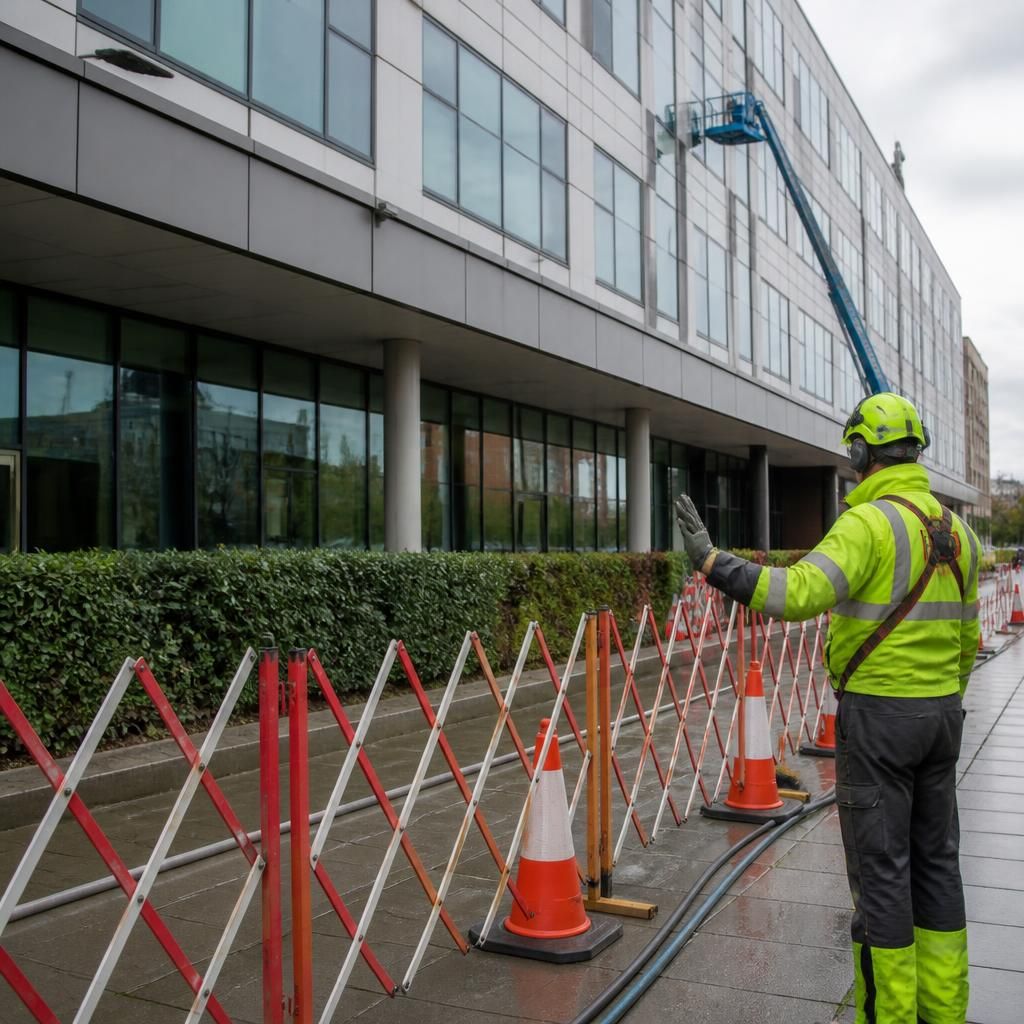
Controlled exclusion zones are a key safety measure during high-rise jet washing. Barriers, warning signs and, where required, a banksman keep pedestrians, vehicles and building users away from falling-object, equipment and spray hazards below the work area.
The team also agrees access arrangements with the site contact before cleaning begins. Hoses, tools, keys and access equipment remain under control, while entrances, loading areas, plant rooms and sensitive equipment are protected from unauthorised access, water and disruption. The exclusion zone is monitored throughout the work and adjusted if wind, changing site activity or the cleaning position increases the risk.