
What factors should you consider when scheduling regular high-rise jet washing maintenance?
Schedule regular high-rise jet washing around the building’s condition, usage, access requirements, weather conditions, surface materials and planned maintenance work. Allow time for risk assessments, permits, traffic or pedestrian management, safe access setup and environmental controls, then choose periods that minimise disruption while ensuring suitable temperatures and wind conditions.
Regular high-rise jet washing should be scheduled around the building’s condition, surface materials, access requirements, occupancy, weather and wider maintenance programme. A suitable schedule must allow enough time for risk assessments, permits, traffic and pedestrian management, safe access installation, environmental controls and contingency planning, while limiting disruption to occupants, visitors and neighbouring properties.
Assess the building’s cleaning needs first. The correct interval depends on the type and location of soiling, the building’s exposure and the condition of its external surfaces. High-rise façades near busy roads may accumulate traffic film, airborne pollutants and soot more quickly than buildings in less exposed areas. Coastal or industrial environments can also introduce deposits that require closer monitoring. Areas beneath roof edges, around entrances and below drainage outlets often become dirty sooner because of rainwater run-off and organic growth.
A condition survey helps establish whether the work should be routine maintenance or a more extensive clean. Check for staining, algae, moss, bird fouling, graffiti, loose coatings, deteriorated sealants and damaged cladding or masonry. Jet washing should not be used to conceal defects that require repair. Any areas showing cracking, failed joints, corrosion or water ingress should be recorded and referred for suitable remedial attention before cleaning begins.
Coordinate cleaning with building use. Occupancy is a significant scheduling factor for offices, residential blocks, hospitals, schools, retail premises and public buildings. Cleaning near entrances, loading bays, balconies or pedestrian routes may need to take place during quieter periods. The schedule should identify when occupants, deliveries, refuse collections, contractors and emergency access are likely to create conflicts.
Advance communication is particularly important where windows may be opened, balconies are in use or water could reach lower-level areas. Agree access restrictions, signage, isolation arrangements and contact points with the building manager. Where work affects tenants or members of the public, provide clear notice of the working areas and any temporary changes to routes or parking.
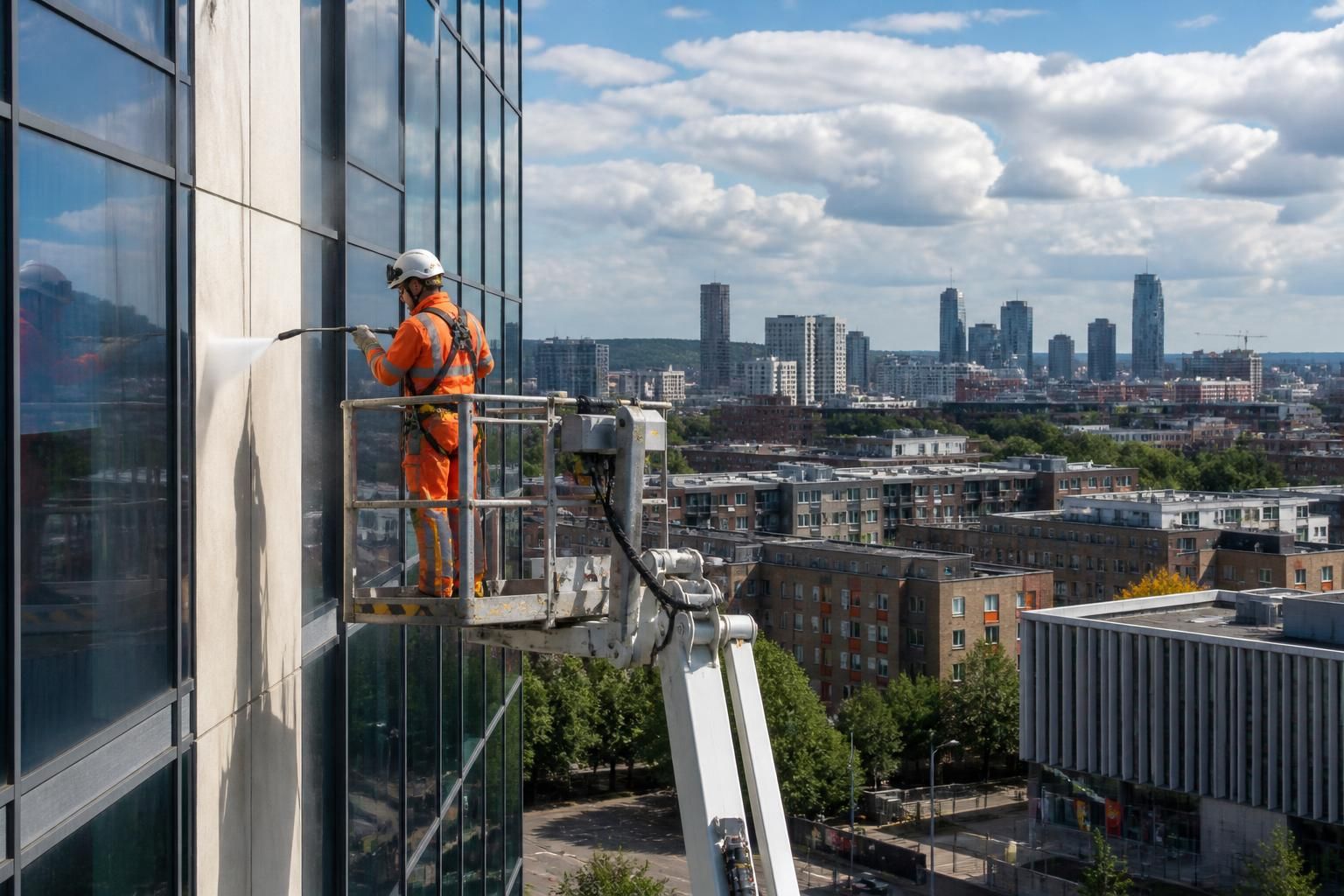
Allow for specialist access planning. High-rise cleaning may involve mobile elevating work platforms, scaffold, cradles, rope access or other systems selected according to the building’s design and the working position required. Access equipment may need a suitable set-up area, ground bearing assessment, exclusion zone, anchorage inspection or permission to occupy shared land.
Scheduling must include time for site surveys, equipment delivery, set-up, testing and dismantling rather than allowing only for the washing itself. Consider nearby roads, pavements, entrances, roof areas and adjoining properties. Where a lift or platform is required, confirm that the planned equipment can reach the affected elevations without obstructing essential routes. A safe method should be agreed before the work date, not improvised after equipment arrives on site.
Choose weather conditions carefully. Wind, rain, temperature, frost and direct sunlight can all affect high-rise jet washing. Strong or gusting winds may make elevated work unsafe, reduce control of spray and prevent the use of certain access equipment. Rain can affect visibility, surface drying and the containment of wastewater, while freezing conditions may create slip hazards or damage wet surfaces.
Very warm or sunny conditions can cause cleaning solutions to dry too quickly and leave uneven results, particularly on large façades. The forecast should therefore be reviewed before mobilisation and again during the work. A practical schedule includes flexibility to pause, postpone or resequence elevations when conditions fall outside the safe operating limits for the equipment, method or surface.
Consider the surface and cleaning method. Glass, powder-coated cladding, painted panels, concrete, brickwork, stone and rendered surfaces do not all tolerate the same pressure, temperature or chemical treatment. The planned method should reflect the surface’s age, condition, coating and susceptibility to staining or damage. Test cleaning in a discreet area where appropriate, particularly when the façade has unknown coatings or repairs.
Scheduling should allow time for selecting the correct pressure, nozzle, water temperature and detergent, as well as rinsing and checking the finished surface. A lower-pressure or steam-cleaning approach may be more suitable for delicate materials, while heavily soiled hard surfaces may require controlled higher-pressure cleaning. The objective is to remove contamination without forcing water behind cladding, into joints or through defective seals.
Align the work with other planned maintenance. Jet washing is often more efficient when coordinated with façade inspections, window cleaning, repainting, sealant replacement, roof maintenance, gutter clearance or repair work. Cleaning before repairs may expose defects that need attention; cleaning after certain repairs may remove residue and provide a more consistent finish. However, newly applied coatings, sealants and repairs may require curing time before they can be washed.
Discuss the sequence with all contractors involved. Avoid scheduling jet washing immediately before work that will create fresh dust, mortar, paint or drilling debris. Equally, do not clean a façade before access equipment or temporary works are installed if those activities are likely to mark or soil the finished surfaces.
Plan environmental and drainage controls. Run-off from high-rise cleaning can carry detergents, silt, paint residue, oils and other contaminants into surface water drains. Before work starts, identify drainage points and establish how wastewater, overspray and solid debris will be contained, collected or disposed of. The method may require drain protection, filtration, vacuum recovery or controlled discharge arrangements.
Schedule sufficient preparation time for these controls and confirm any site-specific or local authority requirements. Avoid periods when heavy rain could overwhelm containment measures. The cleaning plan should also account for water use, noise, overspray, nearby vegetation and sensitive premises.
Build in compliance and contingency time. The planned date should allow for site-specific risk assessments, method statements, permits, equipment inspections, access arrangements and any required notifications. Where work takes place over public areas or near roads, arrangements for barriers, banksmen, temporary traffic controls and pedestrian diversions may need approval in advance.
Allow contingency for weather delays, restricted access, additional surface preparation and unexpected defects. A tightly compressed programme can encourage unsafe working or leave essential rinsing and inspection incomplete. It is better to agree a realistic working window and clear stop-work criteria than to continue when conditions or site controls are unsuitable.
Review and improve the maintenance cycle. After each clean, record the areas treated, the methods used, access challenges, surface defects, environmental arrangements and any sections that could not be completed. Compare the condition at subsequent inspections rather than relying solely on a fixed calendar interval. This creates a condition-based programme that can bring forward cleaning in heavily exposed areas and avoid unnecessary work on surfaces that remain in good condition.
For most high-rise sites, the best schedule is agreed through a site assessment and reviewed as the building, surrounding environment and usage change. Combining condition information with access planning, suitable weather windows, coordinated maintenance and robust safety controls produces a more predictable service and helps protect both the façade and the people using the building.
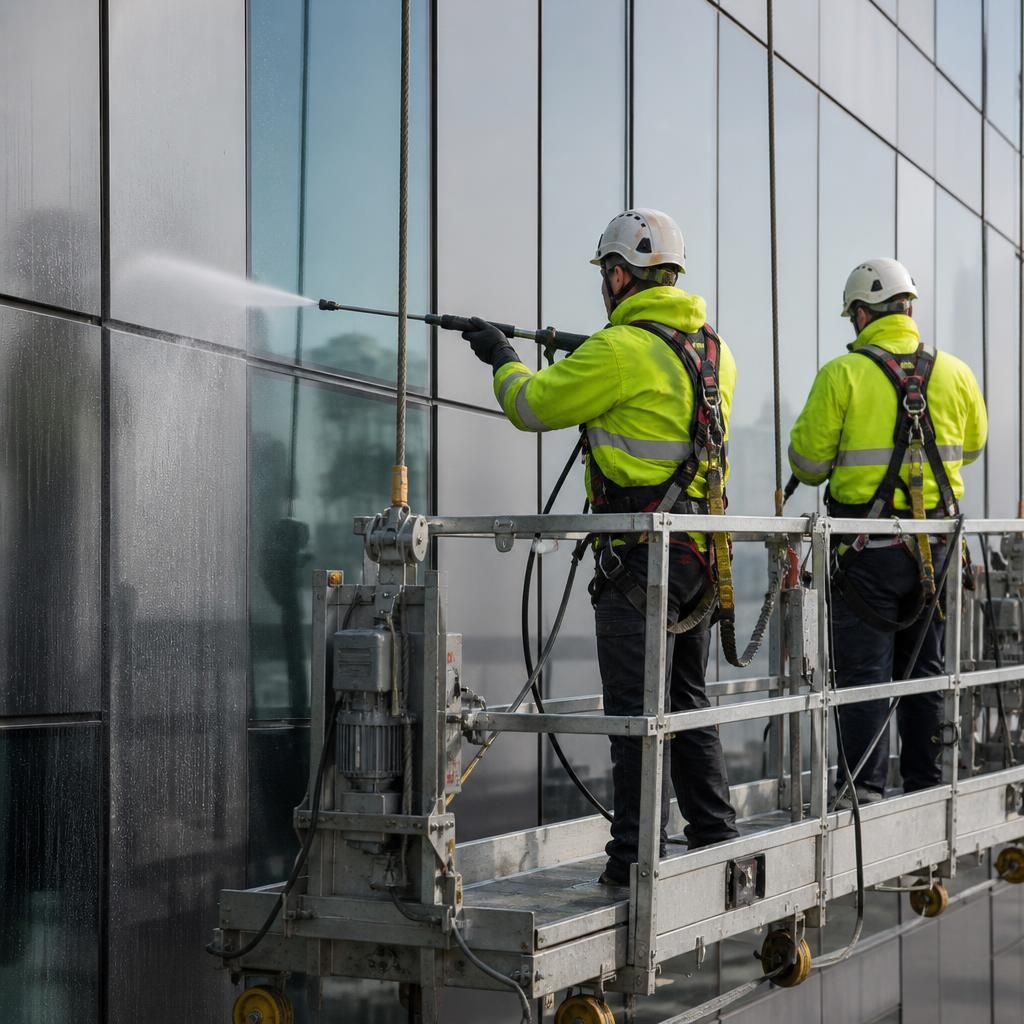
Regular high-rise jet washing should be scheduled as part of the building’s wider maintenance programme, not treated as an isolated task. Coordinate cleaning with façade inspections, window cleaning, roof work, gutter clearance, sealant replacement and repairs so access equipment is installed only once where possible and completed surfaces are not immediately re-soiled.
Agree the sequence with all contractors before work begins. Cleaning may be useful before repairs because it can reveal cracks, failed joints, corrosion or damaged coatings. However, newly applied paint, sealants and other repairs may need adequate curing time before they are exposed to water or cleaning solutions. Avoid cleaning before drilling, rendering or other activities that could leave dust, mortar or debris on the façade.