
What factors determine the cost of high-rise jet washing services for a building?
The cost of high-rise jet washing depends mainly on the building’s height and access requirements, the size and type of surfaces, their current condition, and the equipment and safety systems needed. Additional factors include water and waste management, traffic or pedestrian controls, site location, and whether the work is a one-off clean or part of a regular maintenance programme.
The cost of high-rise jet washing is determined by the complexity of safely accessing, cleaning and managing water from the building, rather than by height alone. The main pricing factors are the building’s size, façade materials and condition, access method, level of contamination, equipment and safety controls required, site location, environmental arrangements and whether the work is a one-off project or part of a planned maintenance programme.
Building height, size and layout
Taller buildings generally require more extensive access planning, but two buildings of the same height can have very different cleaning costs. The total area of façade, roofline, balconies, podiums, canopies and other external surfaces affects the amount of labour, water and cleaning time required. Recessed elevations, enclosed courtyards, projecting ledges and restricted service areas can also make the work slower than cleaning a straightforward vertical façade.
The building’s layout is assessed alongside its surroundings. Nearby roads, pavements, neighbouring properties, underground structures, landscaping and service yards may restrict where equipment can be positioned. A large surface area with clear access may be more efficient to clean than a smaller but highly obstructed elevation.
Access method and working arrangements
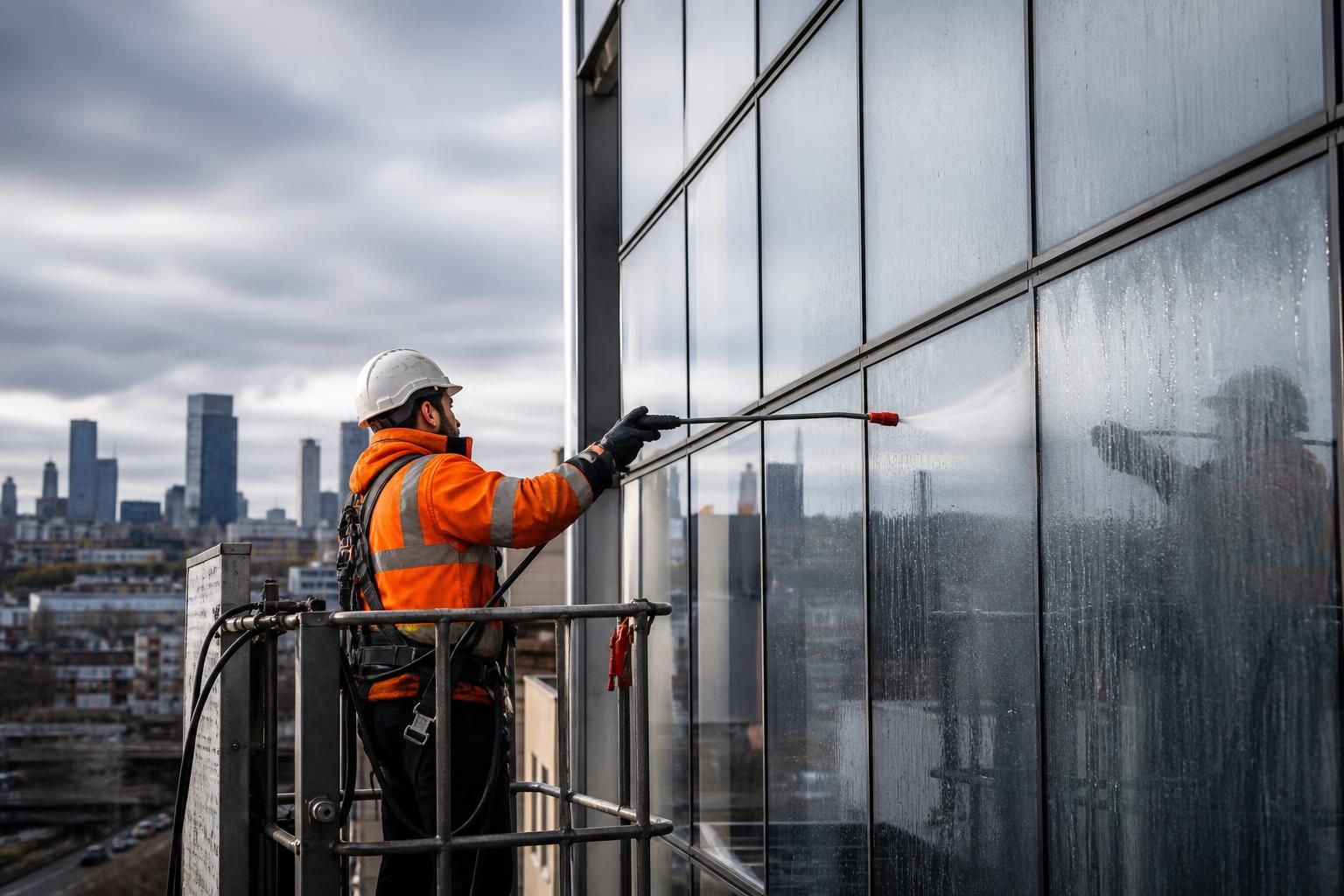
Access is often one of the most significant cost considerations. Depending on the building and site, cleaning may be carried out using a building maintenance unit, suspended access system, mobile elevating work platform, scaffold, rope access or ground-based telescopic equipment. The suitable method depends on the façade design, height, reach, anchor points, ground conditions and the need to keep entrances, roads or occupied areas operational.
Each method involves different mobilisation, inspection and operating requirements. A machine may need a firm, level surface and sufficient space for outriggers, while suspended or rope-access work requires suitable anchor arrangements and carefully controlled exclusion zones. Where permanent access systems or certified anchor points are unavailable, additional temporary arrangements may be needed. These requirements can increase the preparation time and overall cost.
Surface material and cleaning method
Jet washing is not a single setting or process. The cleaning approach must be matched to the surface. Brick, concrete, stone, render, metal cladding, glass, painted surfaces and composite panels each have different tolerances to pressure, heat, water and cleaning chemicals. Some façades may require low-pressure washing, soft washing, steam cleaning or a controlled chemical treatment rather than aggressive high-pressure cleaning.
More specialised methods can involve additional equipment, operator expertise, dwell time and rinsing. The aim is to remove contamination without forcing water behind cladding, damaging joints, eroding masonry, stripping coatings or affecting sealants. A pre-cleaning inspection and, where appropriate, a small test area help determine the safest and most effective method before the full quotation is finalised.
Condition of the building and level of contamination
Light atmospheric soiling is usually more straightforward to remove than ingrained carbon deposits, traffic film, algae, moss, bird fouling, oil, cement residue, paint or graffiti. Heavy deposits may need repeated treatment, slower working, specialist detergents or additional rinsing. Contamination that has been left untreated for a long period can also require more preparation than a façade maintained through regular cleaning.
The condition of the surface is equally important. Cracked render, open joints, failing coatings, damaged pointing and defective seals may require a different cleaning approach or attention from the building owner before work begins. Cleaning can reveal pre-existing defects, but it should not be used to conceal or repair them. If the condition creates a risk of water penetration or loose material, the scope and method may need to be amended.
Water supply, recovery and drainage
High-rise cleaning requires a dependable water supply and a plan for controlling discharge. The availability and pressure of the site’s water supply, the distance to the work area and the need for tanks or pumps can all affect the cost. Some locations require water to be transported, stored or supplied through additional equipment.
Run-off must be managed so that dirty water, chemicals and loosened contaminants do not enter unsuitable drains, public areas or neighbouring premises. Where the site has limited drainage or the work involves oil, paint, heavy sediment or other pollutants, additional collection, filtration, containment or licensed disposal arrangements may be necessary. These environmental controls can be a substantial part of the project, particularly on busy urban sites.
Health and safety requirements
High-rise jet washing involves work at height, pressurised water, wet surfaces, falling droplets or debris and potential interaction with building occupants and the public. The quotation therefore includes the planning and controls needed to carry out the work safely. These may include risk assessments, method statements, access inspections, rescue planning, personal protective equipment, exclusion zones, banksmen and monitoring of weather conditions.
The building’s occupancy and use also influence the arrangements. Entrances, fire exits, loading areas and pedestrian routes may need to remain available, requiring phased work, temporary barriers or a dedicated site marshal. Where the work is close to roads, a traffic management plan or coordination with the site’s facilities team may be required. Security controls can add preparation time when access to roof areas, plant rooms or occupied floors is restricted.
Equipment, mobilisation and site logistics
Equipment costs are influenced by the height and reach required, the cleaning method and the condition of the site. A project may require high-pressure pumps, steam equipment, water-fed systems, tanks, hoses, filtration units, lifting equipment or specialist access machinery. Transporting, setting up, testing and removing this equipment forms part of the job, even where the actual washing period is relatively short.
Location affects mobilisation and working time. Congested city-centre sites, controlled parking areas, restricted delivery windows and limited storage space can make set-up less efficient. If equipment must be moved between several elevations or repeatedly repositioned around the building, the additional labour and time will be reflected in the quotation.
Timing and operational restrictions
Cleaning during normal working hours may be suitable where there is adequate separation from occupants and the public. Other buildings require early morning, evening or weekend work to reduce disruption to tenants, customers, traffic or deliveries. Out-of-hours work may involve additional labour, lighting, security coordination and restrictions on noisy equipment.
Weather can also affect high-rise work. Strong winds, freezing conditions, heavy rain and poor visibility may make suspended or elevated cleaning unsafe. A reliable quotation should allow for sensible weather planning rather than assuming that every working day will be suitable.
One-off cleaning or planned maintenance
A one-off clean may require more intensive preparation where contamination has accumulated over several years. A recurring maintenance programme can often use a more predictable method and focus on preventing heavy build-up, although each visit still requires suitable access and safety controls. Regular work may reduce mobilisation effort when the building’s access arrangements, surfaces and site procedures are already familiar, but the precise saving depends on the scope and frequency agreed.
It is useful to distinguish between a full restoration clean and routine maintenance. The first may include stain treatment, graffiti removal or substantial rinsing, while later visits may involve targeted cleaning of exposed elevations, entrances and high-traffic areas.
How a high-rise jet washing quotation is assessed
A reliable assessment normally considers more than photographs or the building’s floor count. Useful information includes:
- the building address and approximate dimensions;
- the surfaces and elevations to be cleaned;
- the type and severity of contamination;
- available access systems, anchor points and suitable equipment positions;
- water supply, drainage and waste-management arrangements;
- occupied areas, pedestrian routes, traffic restrictions and security procedures;
- preferred working hours and any required completion date; and
- whether the work is a one-off clean, phased project or ongoing maintenance service.
A site survey is particularly valuable where access is complex or the façade materials are sensitive. It allows the cleaning method, test areas, safety controls and environmental arrangements to be confirmed before work starts. The quotation should clearly state what is included, which elevations and surfaces are covered, how water and waste will be managed, and whether repairs, traffic management or additional access provisions fall outside the cleaning scope.
The most cost-effective approach is not necessarily the highest-pressure option. Selecting the correct method for the surface, planning access properly and coordinating the work with the building’s operations can reduce delays, prevent avoidable damage and provide a more predictable overall cost. For an accurate price, the building should be assessed as a complete site, including its façade condition, access constraints, surroundings and environmental requirements.
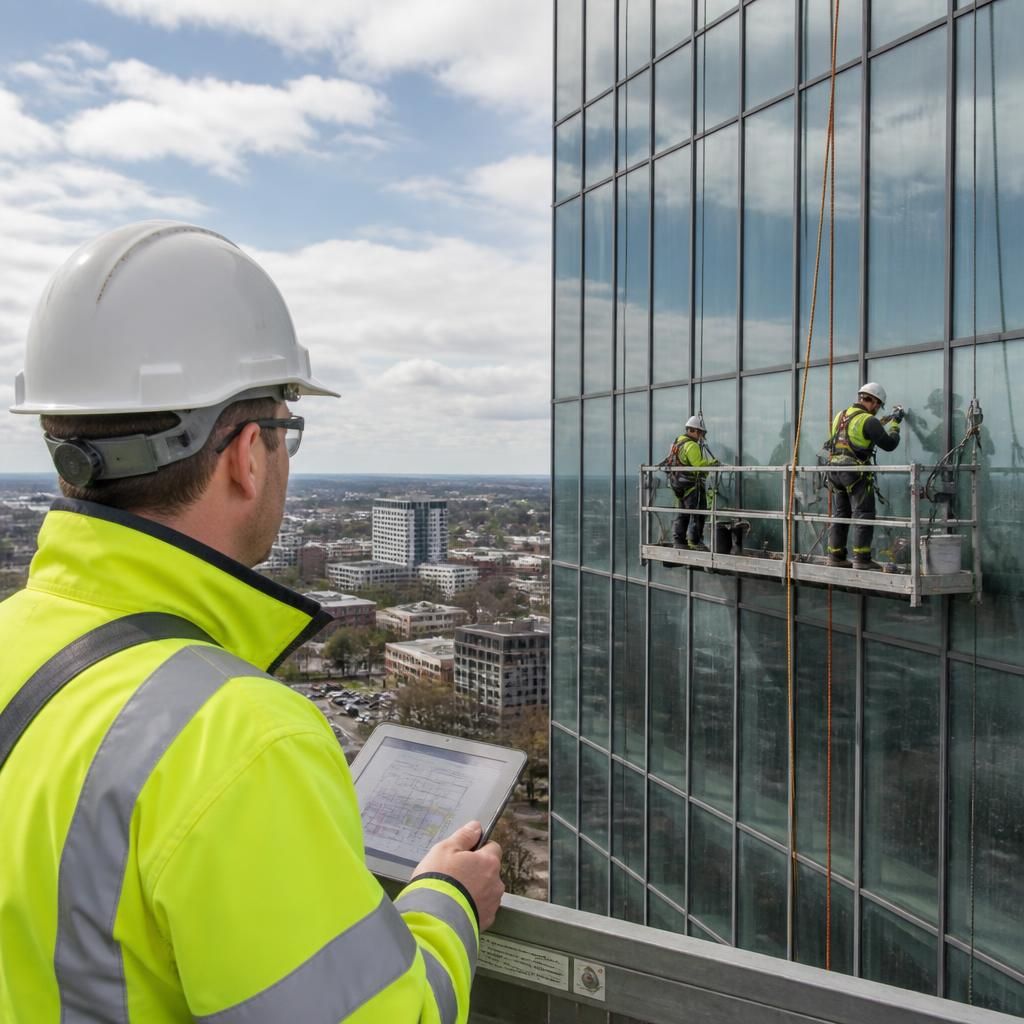
Access requirements are often the main factor affecting the cost of high-rise jet washing. The quotation must account for the equipment, mobilisation, inspections and safety controls needed to reach each elevation, particularly where the building has restricted ground access, limited anchor points, recessed areas or busy pedestrian routes.
A site assessment helps confirm the safest cleaning method and identify requirements such as rope access, suspended equipment, a mobile elevating work platform, exclusion zones or traffic management. Confirming these details before work begins produces a more accurate quotation and reduces the risk of unexpected access costs.
Request a High-Rise Jet Washing Cost Assessment
Contact Encanto Exterior Cleaning to arrange a high-rise jet washing cost assessment based on your building’s access, surfaces, condition and site requirements. We’ll review the scope and provide a clear quotation covering the necessary cleaning, safety and environmental arrangements.