
What equipment is used for high-rise jet washing?
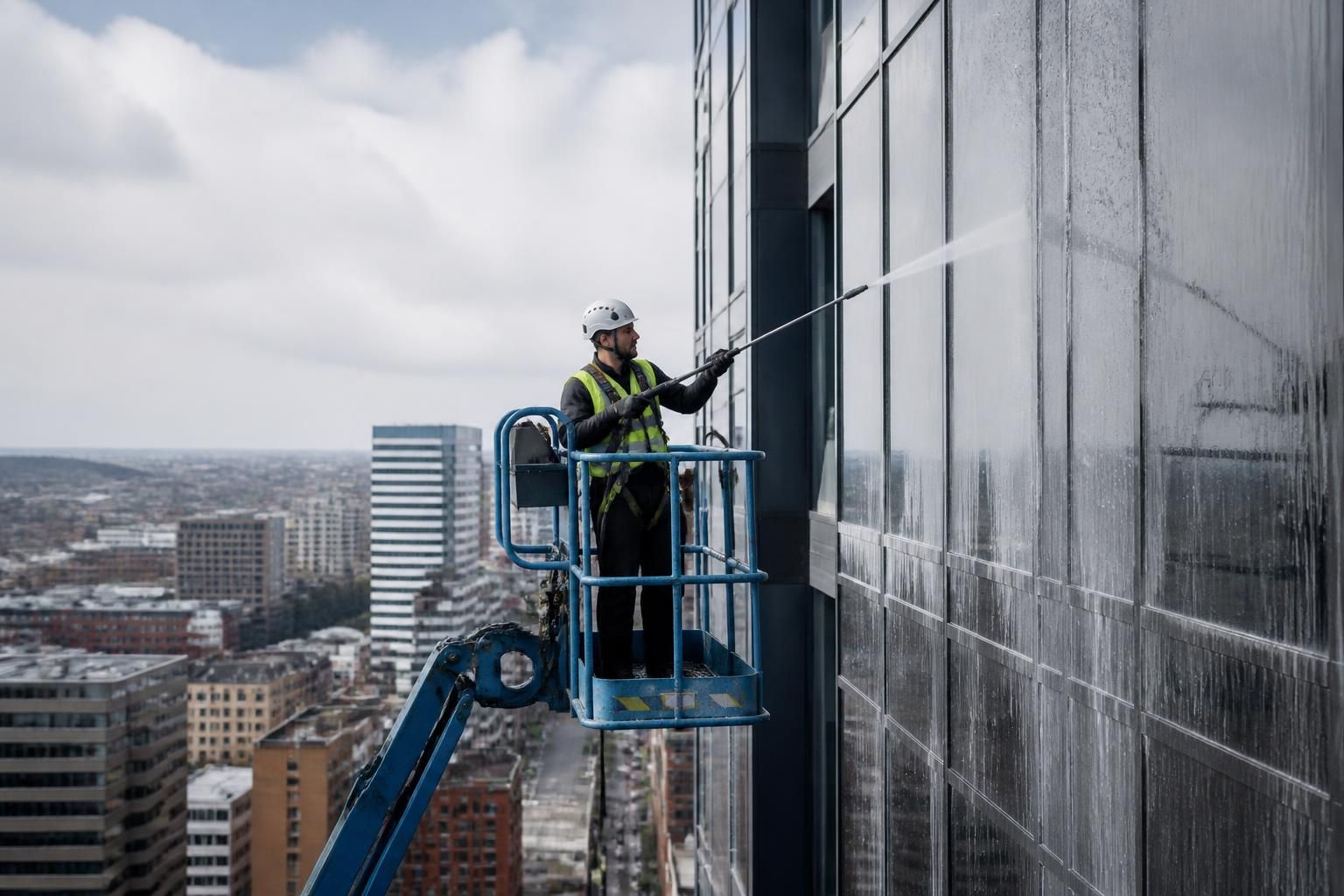
High-rise jet washing uses commercial pressure washers, telescopic water-fed poles, high-reach cleaning systems and, where required, access equipment such as powered platforms, scaffolding or rope-access systems. Operators also use specialist hoses, surface cleaners, low-pressure steam equipment and water-recovery tools selected for the building’s height, façade materials and site conditions.
High-rise jet washing uses a combination of commercial pressure-w washing equipment, high-reach cleaning systems and specialist access equipment. The exact setup depends on the building’s height, façade materials, level of soiling, available water supply, surrounding ground conditions and the access method approved for the site.
Commercial pressure washers provide the main cleaning power. These systems deliver a controlled flow of water at a pressure selected for the surface being cleaned. Heavy-duty equipment is used for durable materials such as concrete, paving, some masonry and certain metal finishes, while sensitive façades may require a lower-pressure system to reduce the risk of surface damage, water ingress or coating failure.
Pressure washers used on high-rise projects are normally configured with long lengths of specialist hose, suitable pumps and access-compatible controls. Operators may adjust the water flow, pressure and nozzle pattern while working at ground level, from a platform or from another access position. The equipment must be capable of maintaining consistent performance over the required hose length without making the system unnecessarily difficult to handle.
Telescopic water-fed poles are commonly used where the façade can be reached safely from ground level or from a suitable roof position. These poles carry a brush and water outlet to the cleaning area, allowing operatives to wash windows, cladding, signs and other façade elements without using a powered platform for every section.
Water-fed pole systems are particularly useful for routine maintenance and surfaces that do not require aggressive pressure. They can apply purified or treated water through a brush head, helping to loosen deposits and reduce spotting as the surface dries. The pole sections, brush type and water flow are selected according to the height and material of the façade.
High-reach cleaning systems extend the working range beyond a standard pole. These may include modular carbon-fibre poles, articulated cleaning heads, lightweight lance systems and remotely operated attachments. They are useful for reaching upper sections of façades, atriums, canopies, signage and roof edges where conventional access equipment would be disproportionate or difficult to position.
High-reach systems are not suitable for every task. Stubborn staining, significant algae growth, damaged coatings or areas requiring close inspection may still need a platform, scaffold or rope-access method so the operative can work at the correct distance and angle.
Access equipment is selected after assessing the building and the surrounding site. Depending on the project, this can include:
- Mobile elevating work platforms for façades that can be reached from a stable, suitable hardstanding area.
- Scaffold or temporary access structures where a longer working period or repeated access is required.
- Suspended access equipment for suitable high-rise façades.
- Rope-access systems where the building design and risk assessment allow trained operatives to reach areas that cannot be accessed efficiently by other means.
- Cherry pickers, boom lifts or other powered platforms for targeted work at difficult elevations.
Access equipment does more than raise the operative. It provides a stable working position, allows the cleaning lance or brush to be controlled accurately and can make it possible to inspect joints, seals, panels and other details while cleaning. The chosen system must suit the ground conditions, overhead constraints, façade layout and requirements of the building owner or site manager.
Specialist lances, nozzles and hose assemblies control how water reaches the surface. Fan nozzles distribute water across a wider area, while more focused nozzles can be used for localised deposits when the substrate can safely withstand the cleaning action. Rotary or turbo-style attachments may be suitable for robust hard surfaces but are not generally appropriate for delicate cladding, glazing, painted finishes or vulnerable masonry.
Long-reach hoses are designed for the pressures, temperatures and site conditions involved. Protective sleeves, hose guides and secure routing help prevent snagging, trip hazards and contact with finished surfaces. On larger projects, hose management is important because poorly positioned hoses can obstruct entrances, affect public access or place unnecessary load on access equipment.
Surface cleaners are used mainly on horizontal areas such as podium decks, balconies, loading areas and car parks. Their enclosed rotating heads help distribute the cleaning action more evenly than a hand-held lance and can reduce spray across nearby surfaces. They are used only where the surface, drainage arrangement and surrounding environment make them appropriate.
Steam and low-pressure cleaning equipment may be chosen for surfaces that need controlled cleaning rather than high-impact jetting. Heated water or steam can help remove organic growth, grease, chewing gum residues and some atmospheric deposits while using less mechanical force. This approach can be more suitable for certain façades, historic materials, painted surfaces and areas where excessive water pressure could cause damage.
Steam cleaning still requires careful control. Heat, moisture and dwell time must be compatible with the substrate, joints, sealants, coatings and any electrical or ventilation features nearby. A test area is normally used to confirm the appropriate method before wider cleaning begins.
Water supply and treatment equipment supports consistent cleaning where the building’s own supply is unsuitable or unavailable. This may include holding tanks, transfer pumps, filtration units, water-softening equipment and purification systems. Treated water is especially useful for window and façade maintenance where mineral deposits could remain as the surface dries.
Where practical, the equipment setup is planned to reduce unnecessary water use. Flow controls, correctly selected nozzles and staged cleaning can prevent excess runoff while still delivering the required result. The water source, drainage route and any restrictions on discharge are considered before work starts.
Water-recovery and containment equipment is used when runoff could enter public areas, surface-water drains or sensitive parts of the site. Depending on the location, this may include drain covers, bunds, wet vacuums, collection mats, pumps, silt-control measures and temporary storage containers. Recovery equipment is particularly important when removing oil, heavy deposits, cleaning chemicals or contaminated residue.
Inspection and monitoring tools help the team select and control the method. These can include moisture checks, surface inspection equipment, distance tools, cameras and communication systems. Before cleaning, the façade is assessed for cracks, failed sealant, loose panels, open joints, damaged coatings and other defects that could affect the work. During the operation, communication equipment helps coordinate operatives at height, ground teams, traffic management and the site contact.
Personal protective equipment is also part of the working equipment. Depending on the task, this may include helmets, eye and hearing protection, gloves, waterproof clothing, slip-resistant footwear, respiratory protection and fall-arrest or restraint equipment. PPE is selected through the site-specific risk assessment and does not replace collective protection, secure access systems or safe work procedures.
The equipment is therefore assembled as a site-specific system rather than taken from a standard list. A relatively accessible façade may only need a commercial washer, water-fed poles and controlled runoff protection. A complex high-rise project may require powered access, rope-access equipment, long-reach hoses, steam cleaning, treated water and recovery systems working together. A test clean and pre-start assessment help confirm that the selected equipment will clean effectively without damaging the building or compromising site safety.
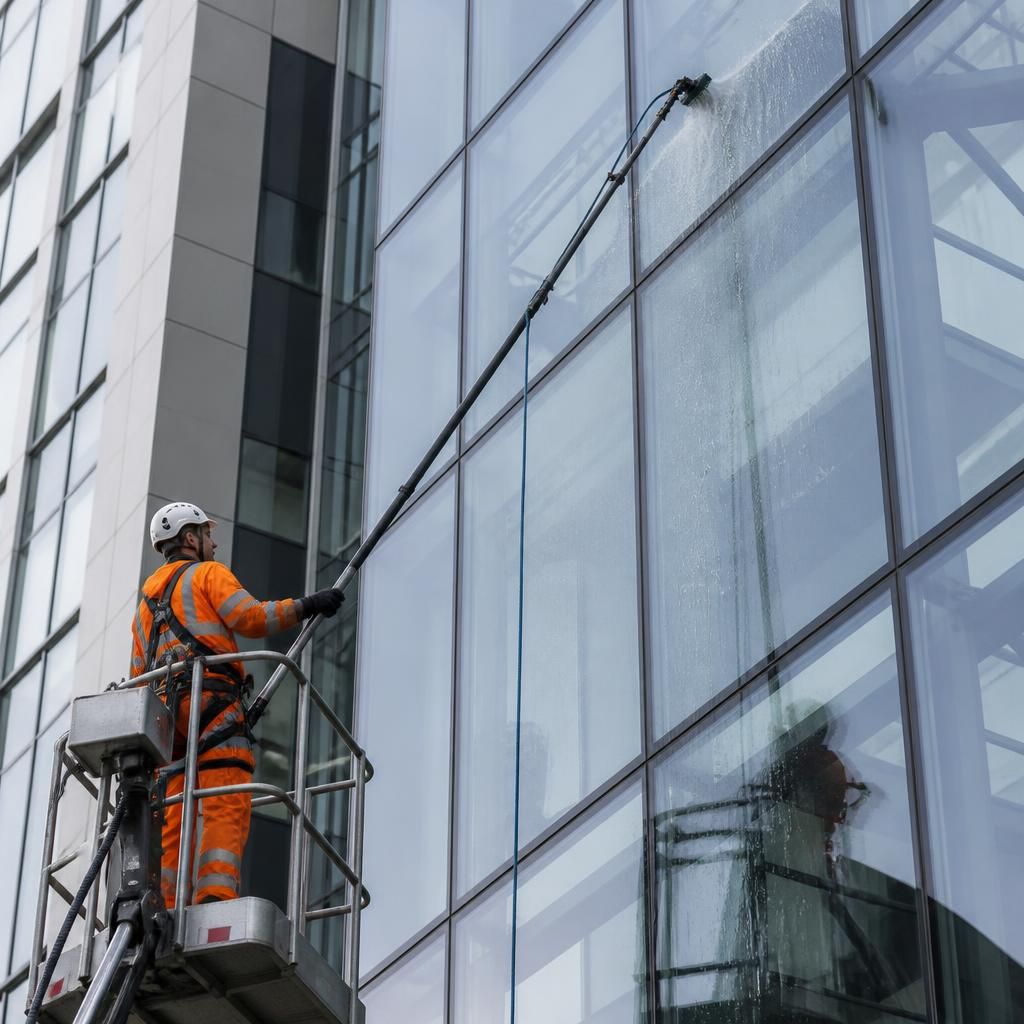
Access equipment determines how safely and accurately high-rise jet washing can be carried out. Telescopic water-fed poles and high-reach cleaning systems can handle many routine façade areas from a safe position, while powered platforms, suspended access or rope-access systems may be needed where the surface requires close inspection and controlled, direct cleaning.
The choice depends on the building’s height and design, ground conditions, façade material, working reach and surrounding obstructions. Equipment must provide a stable operating position, secure hose management and enough control to prevent damage to panels, seals, coatings and joints during cleaning.