
What are the environmental benefits of high-rise jet washing?
High-rise jet washing can reduce environmental impact by using targeted pressure or steam cleaning to remove dirt efficiently, limiting water and chemical use compared with less controlled methods. It also helps extend the service life of façades, cladding and other building materials, while responsible contractors capture and manage contaminated runoff to protect drains and waterways.
High-rise jet washing can reduce a building’s environmental impact when it is planned and controlled properly. Targeted pressure washing and steam cleaning can remove dirt, algae, traffic film, and other contaminants with less water and fewer cleaning chemicals than poorly controlled washing methods. The environmental benefits also include protecting building materials, reducing waste from premature repairs and managing contaminated runoff so it does not enter surface-water drains or local waterways.
The benefit is not created by pressure alone. A high-pressure system used without suitable controls can waste water, spread contaminants, damage surfaces, or create polluted runoff. Environmental performance depends on selecting the right method, using only the pressure and cleaning solution required, and controlling water throughout the work.
More efficient water use
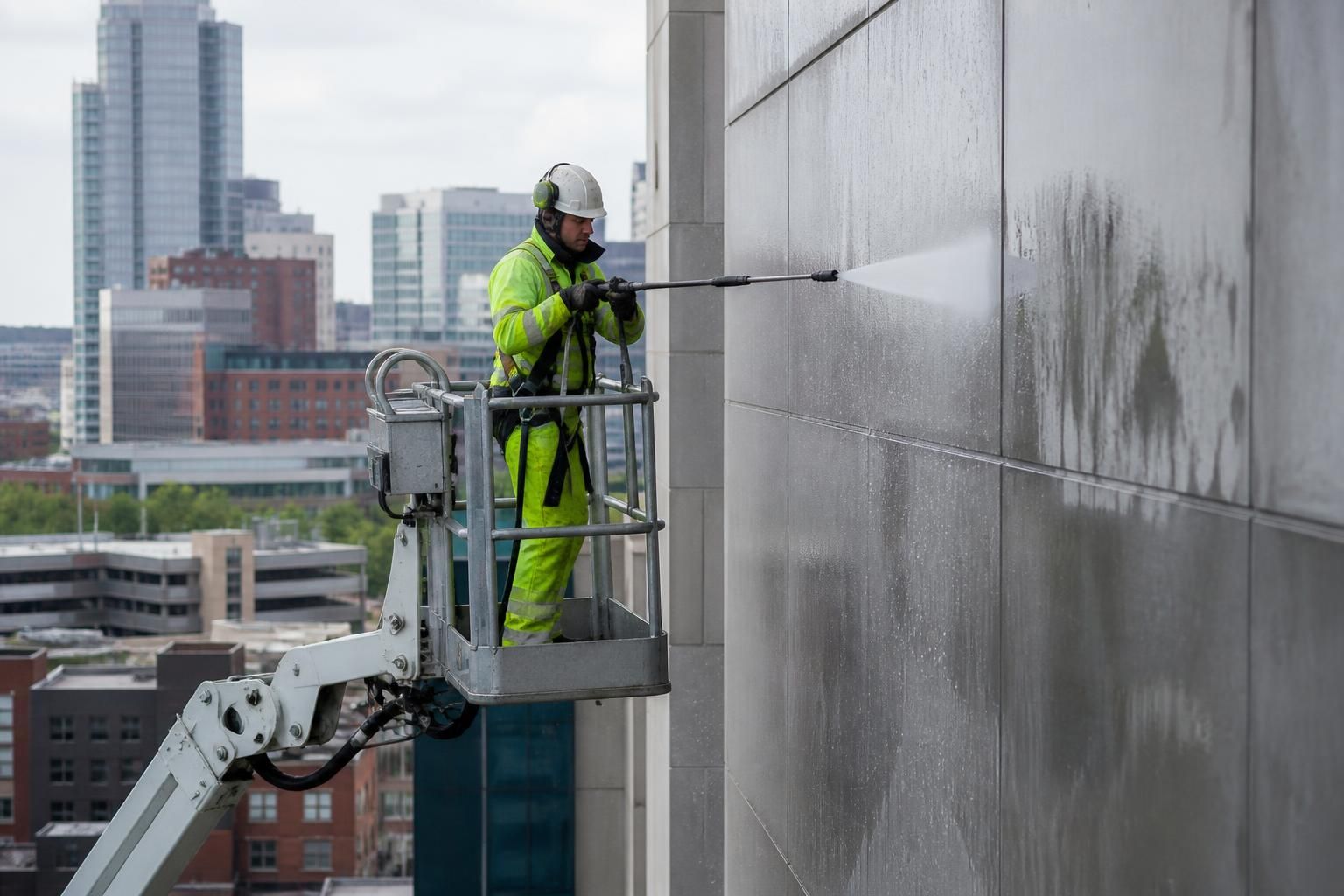
Jet washing applies water directly to the soiled surface rather than flooding large areas. Operators can adjust pressure, flow rate, nozzle selection and working distance according to the façade, cladding, roof or hardstanding being cleaned. This targeted approach helps avoid unnecessary water use, particularly where dirt is concentrated in specific areas such as entrances, loading bays, parapets and lower-level façades.
Steam cleaning can be suitable for certain sensitive surfaces and contaminants. It uses heated water to loosen deposits, oils, biological growth and ingrained dirt, which may reduce the need for prolonged rinsing or chemical pre-treatment. The most appropriate method still depends on the material, the type of contamination and the condition of the building.
Reduced reliance on chemicals
Pressure and steam can often remove contamination mechanically or with heat, reducing reliance on detergents, biocides and other treatment products. Where a chemical is necessary, the product should be selected for the surface and contaminant, applied at the lowest effective concentration, and handled in accordance with its safety and environmental instructions.
Using fewer chemicals can reduce the risk of harmful residues reaching drains, soil and nearby planting. It can also reduce packaging and the amount of chemical-containing wastewater requiring control. This does not mean that chemicals are unsuitable in every situation: organic growth, oil deposits and certain stains may require a carefully selected treatment. Responsible cleaning involves assessing whether a chemical is needed rather than using it as a routine substitute for an effective cleaning method.
Controlled runoff protects drainage systems and waterways
Water from a high-rise façade or paved area can contain silt, oils, traffic residue, paint particles, cleaning agents and biological material. Allowing this water to enter surface-water drains can transfer pollution directly to rivers, streams or other receiving waters. A responsible process identifies drainage routes before work begins and uses suitable measures to prevent uncontrolled discharge.
- Drain covers, bunding or temporary barriers can help protect vulnerable drains.
- Runoff can be collected, redirected or contained where the site assessment requires it.
- Settling or filtration may be appropriate for water containing silt or suspended solids.
- Collected wastewater should be disposed of through an appropriate route and not discharged simply because the work has finished.
- Any required permission for discharge to a sewer or other system should be confirmed with the relevant authority or water company.
The control measures used will vary with the building, surface, contamination, drainage layout and local requirements. They are particularly important on sites near watercourses, in areas with extensive hardstanding, or where oils, coatings or other potentially harmful substances are present.
Extending the life of building materials
Regular, suitable cleaning can remove deposits that hold moisture against façades, accelerate staining or encourage biological growth. Removing these contaminants helps coatings, cladding, masonry and other external materials perform as intended. Keeping surfaces in service for longer can reduce the environmental effects associated with replacement materials, manufacturing, transport, construction activity and disposal.
Cleaning must be matched to the substrate. Excessive pressure, unsuitable chemicals or incorrect access techniques can etch masonry, strip protective coatings, force water behind cladding or damage seals. A method statement and surface assessment are therefore environmental controls as well as quality and safety measures: preventing damage avoids unnecessary repair work and material waste.
Lower waste and fewer repeat interventions
Effective planned maintenance can reduce the need for reactive restoration, repainting or replacement caused by neglected contamination. It may also help preserve protective finishes and reduce the quantity of removed coatings, damaged materials, packaging and disposable cleaning consumables. Cleaning at an appropriate interval is generally more resource-efficient than allowing heavy deposits to build up until aggressive treatment is required.
Access planning can support this outcome. High-rise work may use rope access, cradles, mobile elevated work platforms or other suitable equipment, depending on the structure and site constraints. Selecting an efficient access arrangement can reduce unnecessary setup, vehicle movements and repeated visits, although worker safety and building protection must always take priority.
Energy and carbon considerations
High-rise jet washing does use energy for pumps, hot-water systems, access equipment, transport and wastewater handling. The lowest-impact option is therefore not automatically the system with the highest pressure or the shortest apparent cleaning time. A well-planned project considers the equipment required, the size of the area, the cleaning method, access arrangements and whether work can be combined with other planned maintenance.
Steam cleaning may reduce chemical use and water consumption in suitable applications, but heating water requires energy. Conversely, cold-water pressure washing may use less energy but require more water or a longer cleaning process. This is why the environmental assessment should consider the whole task rather than treating one technology as universally greener.
What customers should expect from an environmentally responsible service
- A survey of the façade, contamination, surrounding area and drainage before cleaning.
- A defined method using the least aggressive effective pressure, temperature and chemical treatment.
- Protection for windows, seals, coatings, landscaping, vehicles and drainage points.
- Runoff controls appropriate to the likely contaminants and site conditions.
- Safe storage, handling and disposal of cleaning products and wastewater.
- Maintenance records that help identify suitable cleaning intervals and prevent avoidable repeat work.
For UK commercial and industrial properties, environmental controls should be considered alongside the site’s drainage arrangements, waste procedures and relevant legal or contractual requirements. A cleaning contractor should be able to explain how the proposed method limits water, chemicals, energy use and pollution risk without making unsupported claims about fixed savings.
In practical terms, the main environmental benefit of high-rise jet washing is a controlled maintenance process: clean only what needs cleaning, use the least intensive effective technique, protect drainage, and preserve the building fabric. When those principles are followed, high-rise cleaning can support a longer-lasting, lower-waste property maintenance programme.
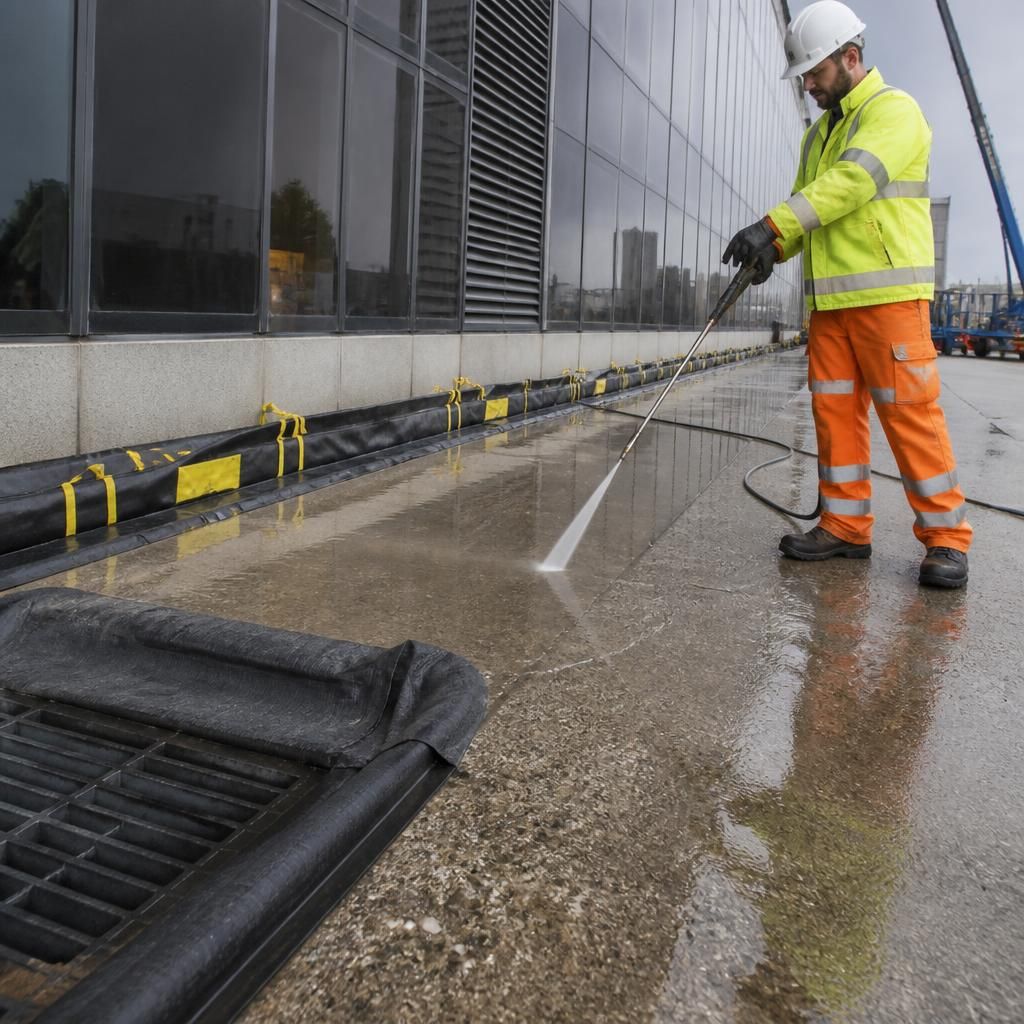
One of the most important environmental benefits of high-rise jet washing is controlled runoff. Water used to clean façades, cladding and hardstanding can carry oils, silt, paint particles, biological growth and cleaning residues into surface-water drains, so responsible cleaning prevents this contaminated water from being discharged without control.
Before work begins, the drainage layout and likely contaminants should be assessed. Suitable measures may include drain covers, temporary bunding, collection systems, filtration or settling controls. Where wastewater is collected, it should be disposed of through an appropriate route in accordance with site procedures and relevant UK requirements. This protects nearby waterways while ensuring that water efficiency and pollution prevention are considered together.
Discuss environmentally responsible high-rise jet washing
Contact Encanto Exterior Cleaning to discuss an environmentally responsible high-rise jet washing plan, including water use, cleaning products and runoff controls. We can assess your building and recommend a suitable maintenance approach for its surfaces and drainage arrangements.