
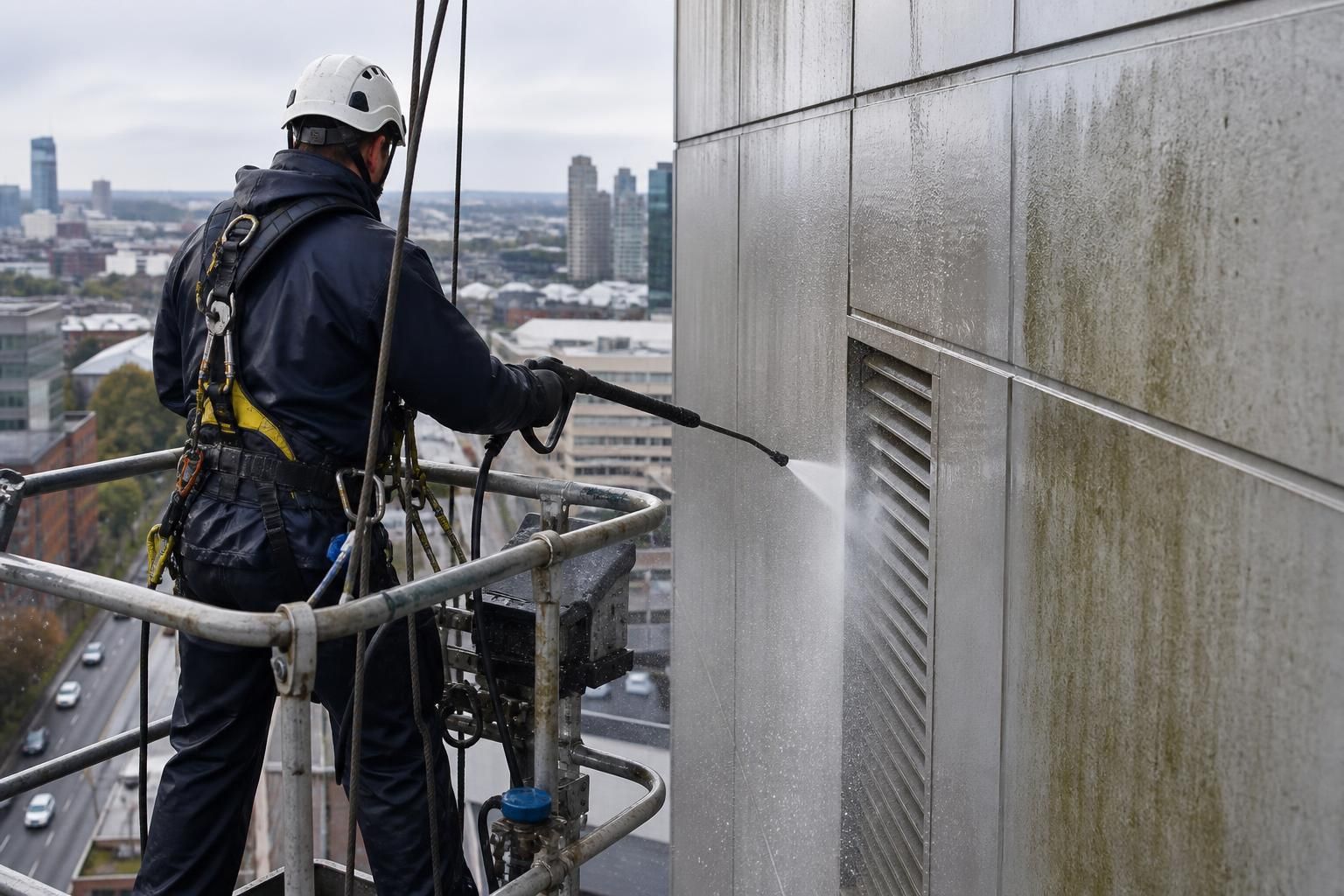
How does the company ensure compliance with environmental regulations during the high-rise jet washing process?
We ensure environmental compliance during high-rise jet washing by assessing the site beforehand, controlling and collecting contaminated runoff, protecting drains and watercourses, and using water and cleaning products responsibly. Wastewater and residues are handled through approved disposal routes, with methods and records reviewed against applicable UK environmental requirements.
Encanto Exterior Cleaning ensures environmental compliance during high-rise jet washing through a planned process covering site assessment, chemical control, water use, runoff capture, waste disposal and record keeping. Before work starts, the team identifies drainage systems, nearby watercourses, sensitive landscaping, public areas and surfaces that could release pollutants. The cleaning method is then selected to remove soiling effectively without creating unnecessary environmental risk.
Site surveys and method statements
A site-specific assessment is used to determine how water, dirt, algae, coatings and cleaning residues may travel from the building. This includes checking whether the work could affect surface-water drains, foul drainage, neighbouring properties, pedestrians or vehicles. The findings are recorded in the method statement and environmental controls are incorporated into the work plan, alongside the access and high-rise safety arrangements.
The assessment also considers the building materials and the type of contamination present. Lower-pressure washing, steam cleaning or a more targeted treatment may be preferable to aggressive jetting where there is a risk of damaging coatings, mortar, sealants or painted surfaces. Using the least intensive effective method can reduce water consumption and limit the amount of contaminated material entering the wastewater stream.
Runoff is controlled rather than allowed to enter the environment
Jet-washing wastewater can contain silt, oils, detergents, paint particles, biological growth and other residues. It is therefore not discharged indiscriminately onto pavements, landscaped areas or into surface-water drains. Drain covers, bunding, booms, temporary barriers and collection equipment may be used to keep dirty water within the working area. On high-rise projects, the team also plans for overspray, wind and the possibility of water tracking down façades or onto lower-level structures.
Where necessary, wastewater is vacuumed, pumped or otherwise collected for suitable treatment or disposal. Any discharge to a foul sewer or trade effluent system is made only where it is permitted and where the receiving sewer operator’s requirements have been met. Surface-water drains, which normally lead directly to rivers or other watercourses, are not treated as a suitable route for contaminated wash water.
Water use is planned and monitored
Water is used in a controlled way, rather than continuously at maximum flow. The team selects suitable pressure, flow and nozzle settings for the surface and contamination, and uses targeted cleaning techniques where they can achieve the required result with less water. Equipment is checked for leaks, and work is organised to avoid unnecessary repeat washing or uncontrolled discharge.
Water requirements and runoff controls are considered before equipment is positioned on site. This is particularly important for high-rise buildings, where water can collect on balconies, podiums, roofs, canopies and recessed areas before reaching ground level. These locations are included in the inspection and containment plan.
Cleaning products are selected and used responsibly
Cleaning agents are chosen according to the surface, the contamination and the proposed wastewater controls. Products are used at the manufacturer’s recommended dilution and are not applied where they could unnecessarily increase the environmental hazard. Safety data sheets and product information are reviewed so that storage, handling, spill response and disposal arrangements are understood before use.
Where a suitable result can be achieved with water, steam or mechanical methods alone, additional chemicals may not be necessary. If detergents, biocides or other treatments are required, the team considers their environmental classification, compatibility with the surface and the likely route of the resulting wastewater. Chemicals are stored securely, kept away from drains and protected from damage during work at height.
Waste and contaminated materials follow approved disposal routes
Collected wastewater, sludge, debris, used absorbents and chemical residues are treated as controlled waste where applicable. They are contained, labelled and transferred through appropriate disposal arrangements rather than being poured into drains or left on site. The correct disposal route depends on the material’s composition and the requirements of the receiving facility.
Spill kits and suitable response materials are available for the work being undertaken. If a spill or uncontrolled discharge occurs, the immediate priority is to stop the source, protect nearby drains and contain the material. The incident is then reported and escalated in line with the agreed site procedure. Where a pollution incident could affect a watercourse or the wider environment, the relevant authority and other responsible parties may need to be notified without delay.
UK environmental requirements are considered throughout the project
Controls are planned with relevant UK requirements in mind, including the Environmental Permitting regime, the duty of care for waste and the rules governing discharges to sewer or the water environment. The exact requirements vary according to the location, wastewater composition, drainage arrangements and any permissions or conditions imposed by the site owner, sewerage provider, local authority or environmental regulator.
Environmental controls also operate alongside health and safety duties. COSHH assessments are used where hazardous substances are involved, while the risk assessment and method statement explain how the work will be carried out without exposing people, property or the environment to avoidable harm. Site teams follow the agreed controls and are briefed on drainage protection, chemical handling, spill response and waste segregation before starting.
Checks and records provide evidence of compliance
Project records can include the site survey, risk assessment, method statement, product information, water and drainage arrangements, waste transfer documentation, discharge permissions and incident reports where relevant. Supervisors check that containment remains effective during the work, particularly when weather conditions change or when cleaning moves between elevations.
After completion, the work area is inspected for residual sludge, chemical containers, debris, leaks and signs of uncontrolled runoff. Drain covers and temporary containment are removed only when it is safe to do so and the area has been checked. Any issue identified is recorded and addressed through the project’s corrective-action process.
For clients, the practical result is an auditable cleaning process that protects drainage systems, reduces pollution risk and supports the building’s environmental responsibilities. The required controls are confirmed during planning, communicated to the site team and reviewed if the building, weather, access arrangements or cleaning method changes.
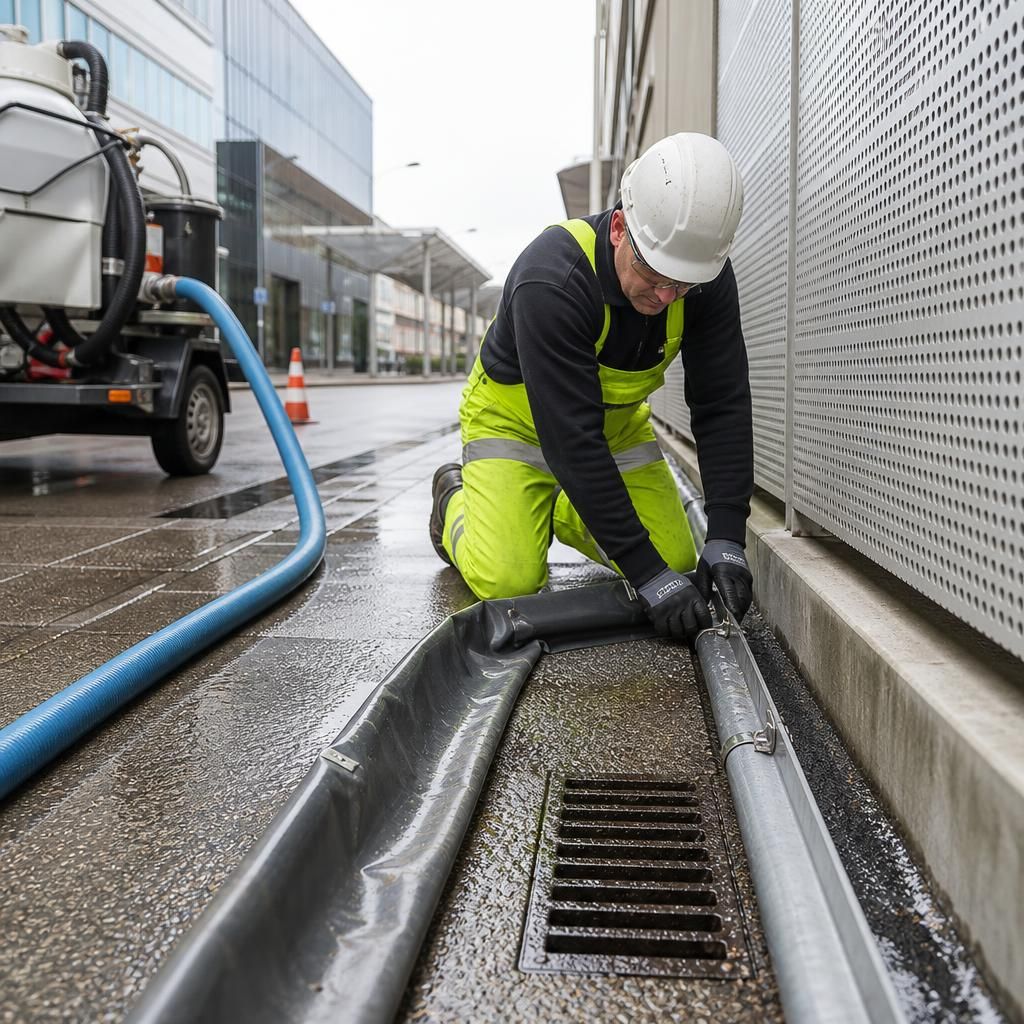
Controlling contaminated runoff is a central part of environmentally compliant high-rise jet washing. Wash water can carry dirt, oils, detergents, paint particles and biological growth, so it must not be allowed to flow into surface-water drains, landscaped areas or nearby watercourses.
Before cleaning begins, the team identifies drainage routes and vulnerable areas, then uses suitable drain protection, bunding and collection equipment. Where required, wastewater is vacuumed or pumped for an approved disposal or treatment route. Any discharge to a sewer is made only where permission and the receiving sewer operator’s requirements allow it.