
What types of industrial flooring surfaces do you specialise in cleaning?
We specialise in cleaning industrial concrete, resin, tarmac, block paving, quarry-tiled and other hard flooring surfaces across commercial and industrial sites. Our methods are selected according to the surface condition and contaminants present, including oil, grease, ingrained dirt, tyre marks, moss and graffiti.
We specialise in cleaning hard industrial flooring surfaces, including concrete, resin, tarmac, block paving, quarry tiles and other durable external or internal floor finishes. The cleaning method is selected according to the material, its condition, the type of contamination and how the area is used, so that deposits are removed without unnecessary damage to the surface or disruption to site operations.
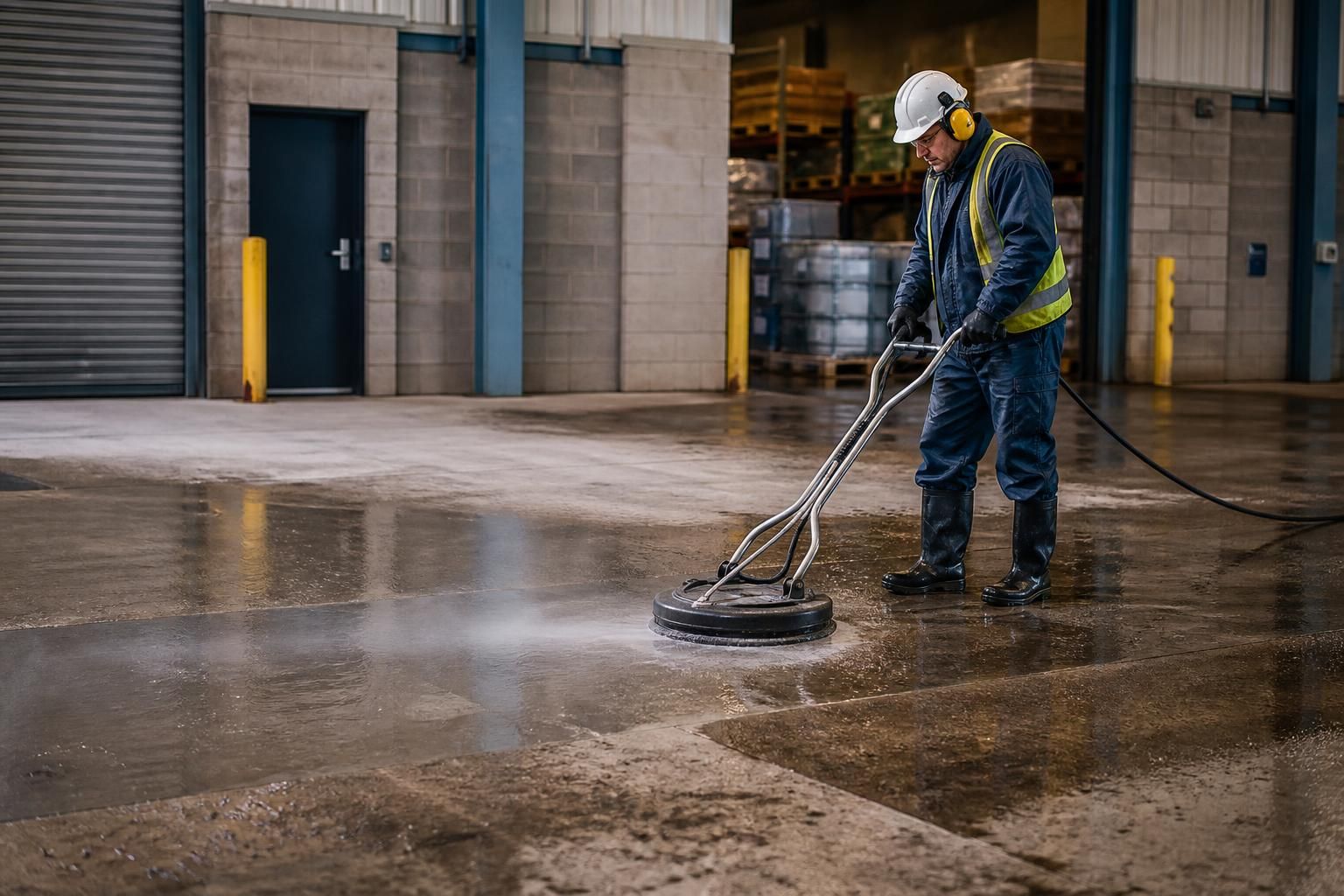
Concrete flooring is one of the most common surfaces on industrial estates, warehouses, loading areas, service yards and car parks. We clean poured concrete, power-floated floors, concrete slabs and older weathered surfaces affected by oil, grease, tyre marks, algae, moss, dirt, cement residue and general traffic grime. Depending on the condition of the slab, cleaning may involve controlled pressure washing, rotary surface cleaning, steam cleaning, detergent treatment or targeted stain removal. Particular care is needed around cracked concrete, open joints, damaged edges and areas where the surface has begun to spall.
Resin and epoxy floors are found in factories, workshops, warehouses, food-related premises and other areas requiring a smoother, more sealed finish. These surfaces generally need a controlled approach because excessive pressure, aggressive chemicals or unsuitable equipment can dull the coating, lift damaged sections or affect the bond between the resin and substrate. We assess whether the floor is epoxy, polyurethane, painted or another resin system before choosing a compatible cleaning solution. Low-pressure washing, steam, mechanical scrubbing and carefully selected detergents can be used where appropriate, particularly for grease, tracked-in dirt and rubber marks.
Tarmac and asphalt are frequently used for access roads, yards, forecourts, car parks and circulation routes. We remove surface dirt, moss, algae, oil contamination, rubber deposits and other marks while taking account of the material’s relatively softer, more textured surface. High pressure applied too closely or at an unsuitable angle can loosen aggregate or damage deteriorated areas, so the equipment and pressure are adjusted to the age, condition and composition of the tarmac. Oil and fuel contamination may also require pre-treatment rather than pressure washing alone.
Block paving and concrete paving require attention to both the paving units and the joints between them. We clean clay or concrete blocks affected by weeds, moss, algae, soil, tyre marks, oil and general weathering. Jointing sand can be displaced during cleaning, particularly where joints are already weak or eroded. We therefore consider the condition of the joints and the required reinstatement before work begins. Where appropriate, the cleaned area can be allowed to dry before compatible jointing material or a suitable protective treatment is considered.
Quarry tiles, ceramic tiles and other hard tiled floors are commonly found in workshops, plant rooms, service areas, commercial kitchens and older industrial buildings. Their textured surfaces can hold grease, fine dirt and residue in the profile, while damaged grout or porous tiles may absorb contamination. Cleaning may combine a suitable detergent, controlled agitation, steam or low-pressure rinsing. We avoid methods that could loosen tiles, erode grout or force water beneath the floor where there are compromised joints.
We can also assess related hard surfaces such as painted concrete, rendered loading-bay floors, brick paving and specialist coated floors. These materials should not automatically be treated in the same way as bare concrete. A painted or coated floor may need gentle cleaning to preserve its finish, while brick and porous masonry can require lower pressure and longer dwell times to remove organic growth without causing surface erosion.
Before cleaning, we consider:
- the flooring material, coating and porosity;
- cracks, joints, repairs, worn areas and surface delamination;
- the type and age of contamination, including oil, grease, rubber, organic growth, paint and graffiti;
- nearby drains, doorways, machinery, stock and sensitive equipment;
- the available water supply, drainage arrangements and wastewater controls; and
- the access, working hours and traffic-management requirements for the site.
Contaminants often need different treatments. Oil and grease may require an appropriate degreaser and dwell time before rinsing, while moss and algae are usually treated with a method suited to the surface and followed by controlled removal. Graffiti may need a specialist remover, steam cleaning or localised agitation, with a test area used first to check for colour change or coating damage. Cement, rust and other deposits also require products selected for the specific floor rather than a general-purpose cleaner.
We normally inspect the area and, where necessary, test the proposed method in an inconspicuous location before completing the full clean. This helps confirm the likely result and identifies risks such as colour variation, loose coating, weakened joints or permanently penetrated staining. The objective is not simply to apply the highest pressure available; it is to achieve the required level of cleanliness while preserving the flooring and keeping the premises safe and usable.
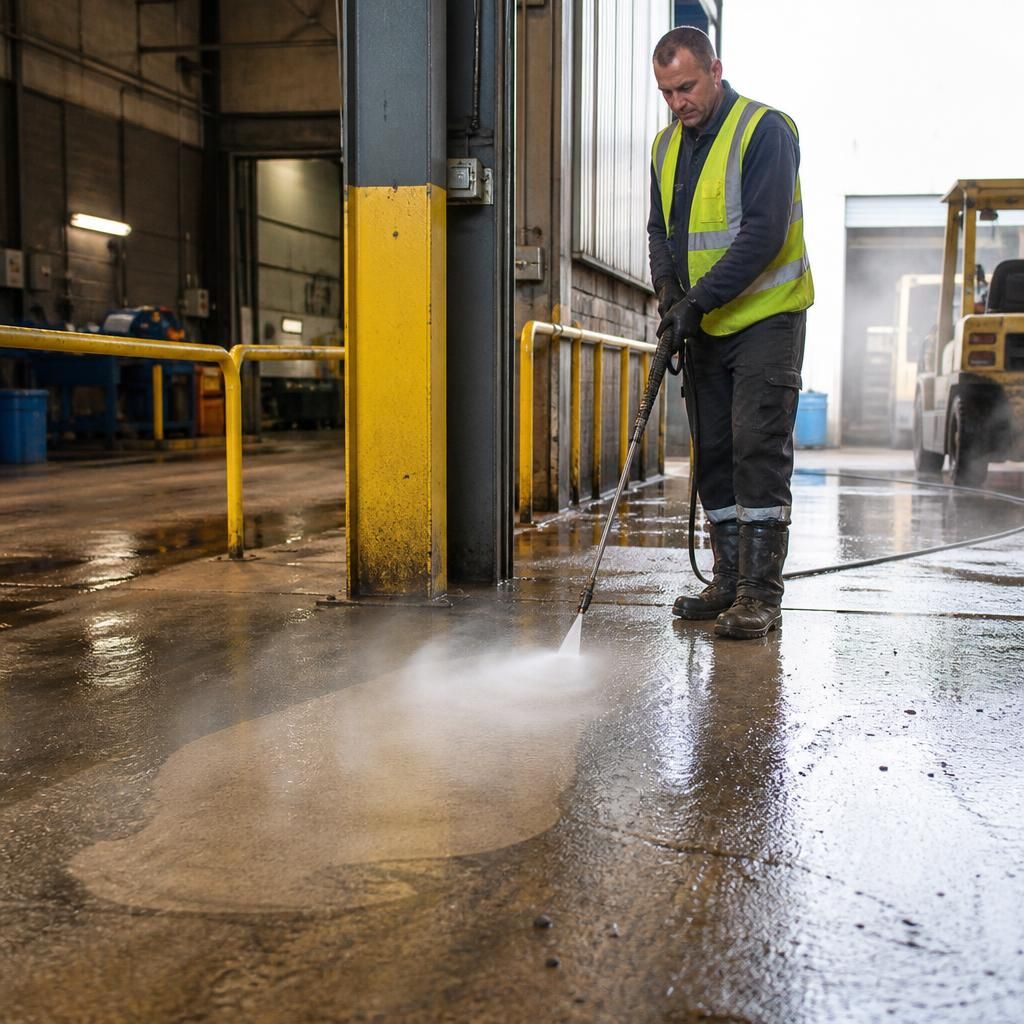
Industrial flooring must be cleaned according to its material, surface condition and contamination. Bare concrete can usually tolerate more mechanical cleaning than resin, painted floors or tarmac, while block paving and quarry tiles require particular care around joints, edges and porous areas.
Before work begins, we assess the floor for cracks, worn coatings, loose aggregate, damaged grout and weakened joints. We then select compatible pressure, steam, detergents and agitation methods, testing an inconspicuous area where the surface or coating may be sensitive. This helps remove oil, grease, tyre marks, organic growth and graffiti without unnecessarily eroding the floor or lifting its finish.