
What types of industrial flooring require specialised cleaning methods?
Industrial flooring that requires specialised cleaning includes porous concrete, resin and epoxy coatings, tiled floors, tarmac, safety flooring and textured or anti-slip surfaces. Each material needs the right combination of pressure, temperature, detergent and recovery equipment to remove oil, grease, ingrained dirt or chemical residue without damaging the surface or creating a slip hazard.
Porous concrete, resin and epoxy coatings, tiled floors, tarmac, safety flooring, painted surfaces and textured anti-slip floors can all require specialised cleaning methods. The correct approach depends on the flooring material, its condition, the type of contamination and how wastewater can be safely recovered. Using excessive pressure, unsuitable chemicals or inadequate drying equipment can damage a finish, drive contaminants deeper into the surface or leave a slip hazard.
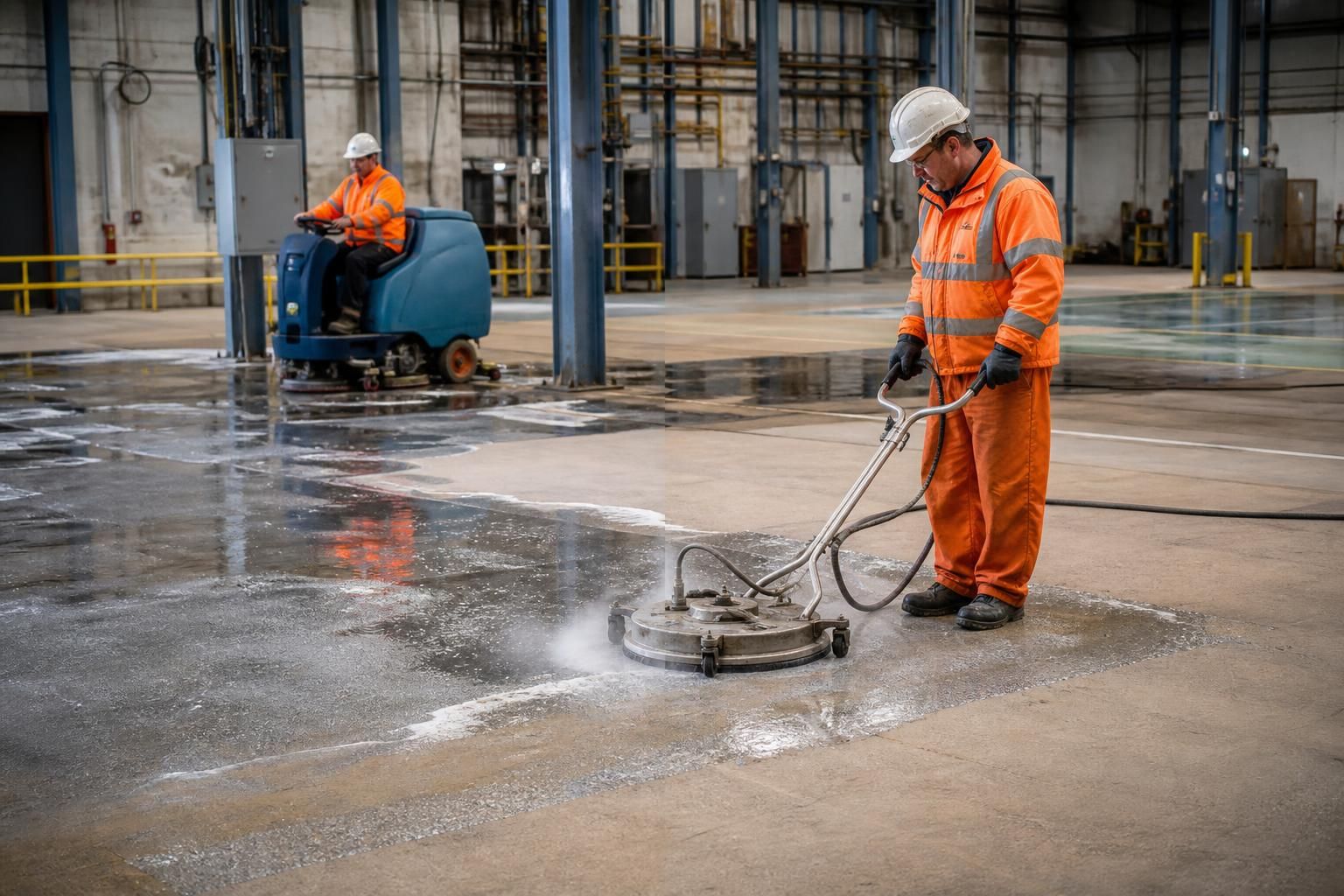
Porous concrete floors absorb oil, grease, fuel residues, process chemicals and dirty wash water into their surface profile. Routine sweeping or mopping will not remove this contamination effectively. Cleaning may involve a suitable degreasing treatment, mechanical agitation with a rotary scrubber or floor-cleaning machine, controlled pressure washing and immediate recovery of the wastewater. Heavily marked concrete may need repeated treatment rather than a single aggressive wash. The method must also account for cracks, joints, spalled areas and damaged concrete, where high pressure could remove loose material.
Polished or mechanically finished concrete needs additional care. It can have a denser surface and a deliberately maintained appearance, so abrasive pads, harsh acids and excessive pressure may dull or etch the finish. Low-moisture scrubbing, compatible detergents and controlled recovery are normally more appropriate than indiscriminate pressure washing. Any cleaning programme should distinguish between removing contamination and preserving the surface treatment.
Resin, epoxy and polyurethane floors are non-porous compared with untreated concrete, but they still require a controlled cleaning regime. Their seamless finish can make oil, grease, rubber deposits and tracked-in dirt easier to remove, provided the coating is intact. Mechanical scrubbing with the correct pad, a compatible detergent and suitable water recovery equipment is often effective. Pressure should be kept within a level that will not lift edges, open failed joints or force water beneath a damaged coating.
Chemical compatibility is particularly important on resin floors. Strong solvents, unapproved acids and aggressive alkaline products can soften, discolour or reduce the performance of the coating. Cleaning products should be selected according to the resin system and the contaminant, with a discreet test area used where the specification or coating history is uncertain. Areas showing blistering, peeling or exposed substrate should be reported before intensive cleaning begins.
Quarry tiles, ceramic tiles and porcelain surfaces often need attention to both the tile face and the grout lines. Grease and fine debris can collect in textured tiles and porous grout, especially in production, catering, loading and service areas. A suitable detergent, dwell time and mechanical agitation can loosen the contamination before controlled rinsing and recovery. Pressure must be adjusted to avoid damaging grout, forcing dirty water into joints or spreading contamination into adjacent areas.
Natural stone and other mineral-based tiles need a separate assessment because their porosity and sensitivity to acidic products vary. Acidic cleaning agents can mark or etch certain stone surfaces, while abrasive methods may alter the finish. Where the flooring has been sealed, the cleaning method should protect the sealer rather than gradually strip it away.
Tarmac and asphalt floors are softer and more temperature-sensitive than concrete. They are commonly affected by oil, diesel, tyre marks, mud, moss and general traffic grime. Excessive pressure, heat or concentrated chemical treatment can loosen the aggregate, disturb the binder or leave a visibly uneven finish. Cleaning is therefore usually based on controlled pressure, appropriate degreasing, careful agitation and thorough recovery, with particular attention to cracks, patch repairs and worn sections.
Safety flooring, rubber and vinyl surfaces are designed to provide resilience and slip resistance, but their surface texture can retain fine dirt and grease. Abrasive pads, stiff brushes or unsuitable solvents may remove the surface pattern, cause scuffing or affect the material. These floors are generally better managed with a compatible low-moisture or scrub-and-recover process, using enough agitation to clean the texture without polishing it smooth. Cleaning should not leave detergent residue, as residue can attract more dirt and affect traction.
Textured, profiled and anti-slip coatings require specialised agitation because dirt settles around raised aggregate or into small recesses. A flat mop may clean the high points while leaving contamination in the profile. Rotary scrubbing, pressure washing or steam cleaning may be appropriate depending on the coating, contamination and drainage arrangements. The objective is to clean the profile without dislodging the aggregate or damaging the bond between the coating and the substrate.
Painted, line-marked and specialist coated floors need a balance between removing contamination and preserving the markings. Strong pressure or aggressive pads can lift paint, fade line markings and expose the substrate. Cleaning should begin with the least aggressive effective method, particularly where coatings are old, thin or already flaking. If paint failure is present, cleaning alone will not restore the finish and remedial preparation or recoating may be required.
The contaminant also determines the cleaning method. Oil and grease generally need a compatible degreaser, sufficient dwell time, mechanical agitation and controlled rinsing or extraction. Cement residue, scale and chemical deposits may require a different treatment, but acidic products should never be applied without confirming that the flooring and surrounding materials can tolerate them. Rubber marks may respond to targeted mechanical action, whereas organic growth on external surfaces may need treatment, agitation and a suitable rinse. Graffiti removal requires identification of both the marking and the underlying floor coating before a remover or pressure system is selected.
Before cleaning, the floor should be assessed for material, coating condition, drainage, joints, cracks, contamination type and nearby equipment. A small test area helps establish the safest combination of pressure, temperature, detergent, pad or brush and recovery method. Sensitive machinery, stock and electrical installations should be protected, and the area should be managed to separate cleaning activity from pedestrians, vehicles and ongoing production.
Wastewater control is part of the specialised method, particularly where oil, chemicals or heavy sediment are present. Wash water should be contained and recovered rather than allowed to enter surface-water drains or escape across adjoining areas. Suitable wet vacuums, scrubber-dryers, extraction equipment or temporary containment may be required. The floor should then be left as dry as practicable, with warning controls maintained until it is safe for workers, vehicles and visitors.
In practice, specialised industrial floor cleaning is not defined by one machine or one pressure setting. It is a material-specific process that matches the flooring and contamination with controlled pressure, temperature, chemistry, agitation and wastewater recovery. This protects the floor finish, reduces the risk of slips and damage, and produces a more reliable result across warehouses, factories, plant areas, car parks and other commercial sites.
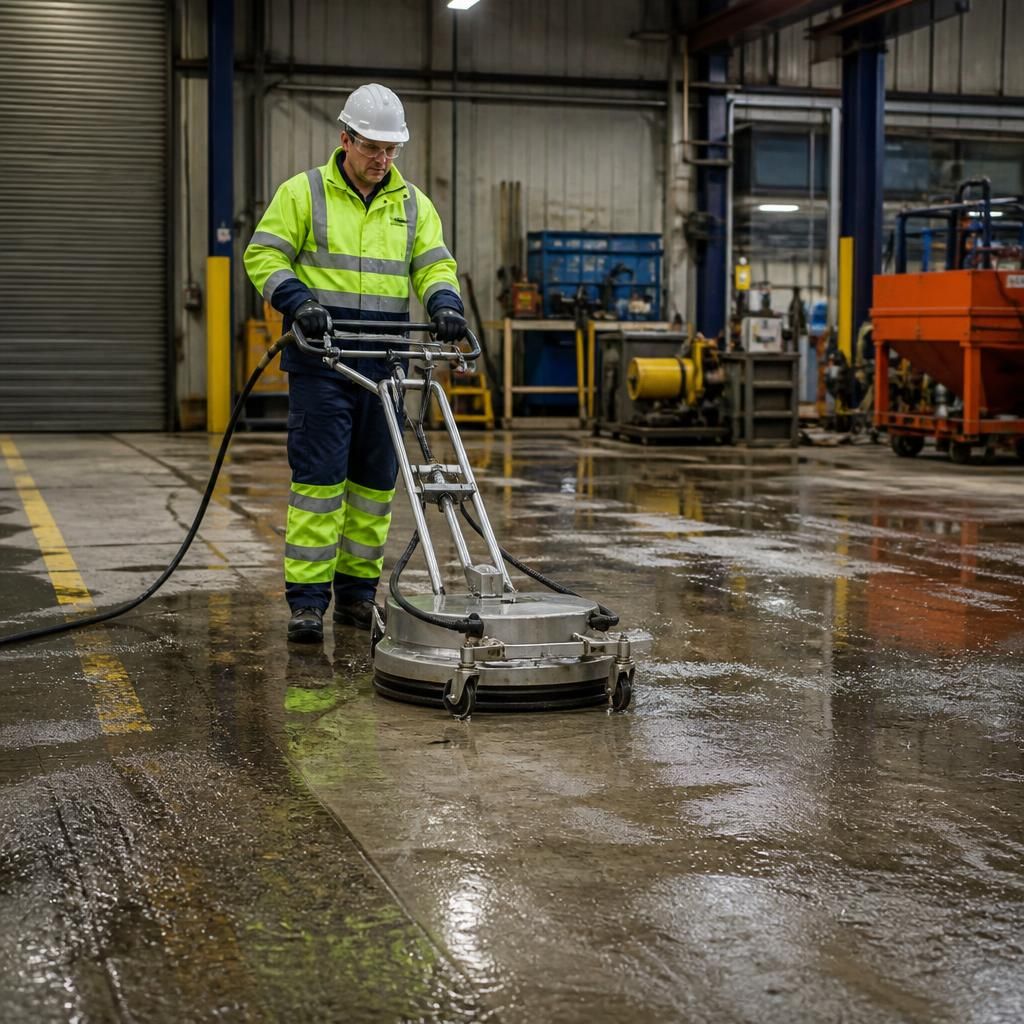
Specialised industrial floor cleaning means adapting the process to the flooring material, its condition and the contamination present. Porous concrete, resin coatings, tarmac, tiled surfaces and anti-slip finishes can each react differently to pressure, heat, detergents and mechanical agitation.
A small test area should be cleaned before the main work begins. This confirms whether the selected detergent, pad or brush and pressure setting will remove the contamination without lifting coatings, damaging grout, disturbing tarmac aggregate or reducing the texture of an anti-slip finish. It also helps establish how much wastewater will be produced and which recovery equipment is needed.
Where the floor shows blistering, cracks, spalling, failed joints or peeling paint, cleaning must be adjusted to avoid worsening the damage. These defects should be identified during the site assessment, as cleaning can remove contamination but cannot replace damaged coatings or repair defective flooring.
Arrange a Specialist Industrial Floor Cleaning Assessment
Arrange a specialist industrial floor cleaning assessment so we can identify the flooring material, contamination and safest cleaning method for your site. We’ll also review access, drainage and wastewater recovery requirements before work begins.