
What techniques are most effective for removing graffiti from industrial floors?
The most effective graffiti removal technique for industrial floors depends on the surface, paint type and age of the marking. Controlled pressure washing or steam cleaning, combined with a compatible graffiti-removal treatment and careful wastewater recovery, usually removes the graffiti while protecting concrete, resin, tarmac and other floor finishes.
The most effective method for removing graffiti from an industrial floor is a controlled, surface-specific process combining a suitable graffiti remover with pressure washing, steam cleaning or mechanical agitation. The correct approach depends on the floor material, the type and age of the paint, how deeply it has penetrated, and whether the area can tolerate water, heat or chemical treatment. Using excessive pressure or an unsuitable solvent can spread the marking, damage the finish or drive paint further into a porous surface.
Assessment comes first. Before cleaning, the floor should be inspected to identify whether it is concrete, tarmac, resin, painted concrete, block paving or another coated surface. The surrounding area also needs checking for drains, joints, expansion gaps and vulnerable equipment. A small test area allows the cleaning team to establish whether the graffiti is water-based, solvent-based, aerosol paint, marker ink or a mixed contaminant, and to confirm that the chosen treatment will not discolour or soften the floor.
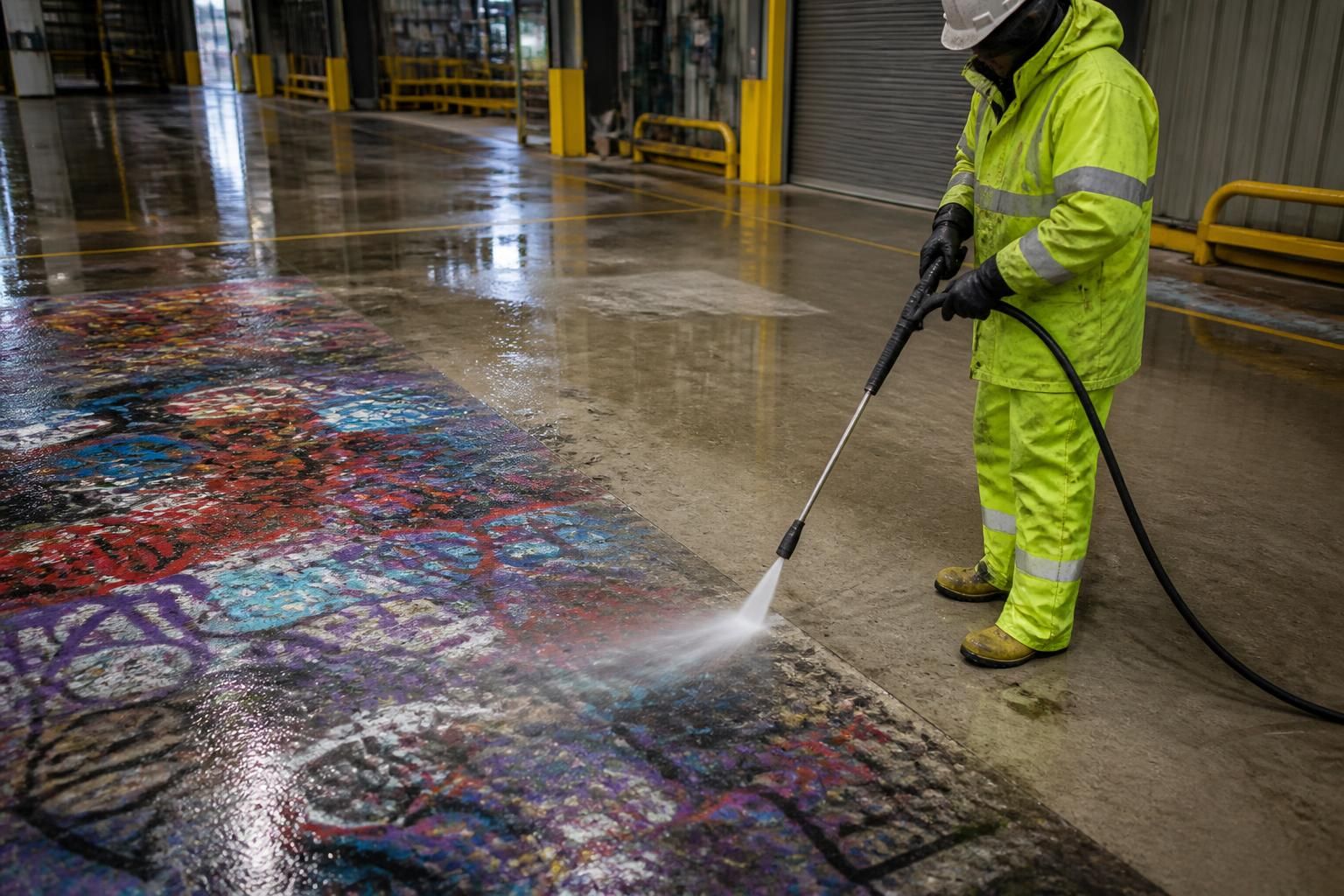
Pressure washing is effective on robust, non-sensitive floors. Controlled pressure washing can remove softened graffiti from sound concrete, tarmac and some hard-wearing paved surfaces. It is most effective after a compatible removal product has been applied and allowed to dwell for the appropriate time. The operator adjusts the pressure, nozzle, water flow and working distance to lift the paint without etching the concrete or stripping an intact coating. A rotary surface cleaner can help produce a more even result on larger areas, provided it is suitable for the surface and does not force contaminated water beyond the work zone.
High pressure is not automatically the best option. Excessive force may damage resin floors, expose aggregate, create visible cleaning marks or spread dissolved paint into joints and drainage channels. On older or friable concrete, lower-pressure cleaning with repeated applications is generally safer than one aggressive pass.
Steam cleaning is useful where heat can soften the marking. Steam can loosen many paints, adhesive residues and marker products while using less water than conventional pressure washing. This makes it particularly useful in areas where water control is important or where a highly targeted treatment is required. Steam cleaning still needs to be matched to the floor. Prolonged heat can affect some resin systems, painted finishes, sealants and joints, so a test patch and controlled application are essential.
Specialist chemical treatments help with bonded or porous graffiti. Graffiti-removal gels, emulsifiers and solvent-free treatments can break down paint before rinsing. The product must be selected for the contaminant and the substrate rather than applied as a general-purpose cleaner. A gel is often useful on vertical edges, textured concrete or areas where extended contact time is needed, because it remains in place instead of running across the floor. Agitation with a suitable brush or pad can improve the result without relying on unnecessarily high pressure.
On porous concrete, the first cleaning pass may remove the surface marking while leaving pigment in the pores. Further controlled treatment may be required, using a product that can draw or dissolve the residue without attacking the concrete. Where the graffiti has penetrated deeply, complete removal may not be possible without some change in the appearance of the surrounding surface. In these situations, uniform cleaning of the affected section or the application of a compatible protective coating may provide a more consistent finish than repeatedly increasing pressure.
Mechanical methods are used selectively. Light abrasive cleaning, soda blasting or specialist floor pads may remove persistent paint from uncoated concrete, but these methods can alter the texture and appearance of the floor. They are not normally appropriate for delicate resin coatings, decorative finishes or surfaces where aggregate exposure would create a maintenance problem. Mechanical removal should therefore be considered only after less aggressive options have been assessed and tested.
Resin, painted and sealed floors require particular care. The objective is to remove the graffiti without removing the floor coating. Low-pressure rinsing, a compatible chemical treatment and soft agitation are commonly safer than abrasive cleaning. Strong solvents can soften, dull or lift resin and paint systems, while alkaline products may affect certain finishes. Product compatibility, dwell time and rinsing requirements should be confirmed before the main work begins.
Tarmac and bituminous surfaces need controlled treatment. Some solvents and excessive heat can soften or mark bitumen, especially in warm conditions. A suitable water-based or substrate-compatible treatment, followed by gentle agitation and controlled rinsing, is usually preferable. Oil-based graffiti and paint residue may need more than one application, and aggressive cleaning can dislodge loose aggregate or leave a visibly lighter patch.
For every method, the cleaning area should be isolated and the wastewater managed before work starts. Rinse water containing paint, solvent residues or cleaning chemicals should not be allowed to enter surface-water drains or escape into surrounding ground. Drain covers, bunding, wet vacuum recovery and appropriate collection or disposal arrangements may be required. The method also needs to account for nearby vehicles, machinery, stock, electrical equipment and pedestrian routes.
A typical process is to remove loose debris, protect adjacent surfaces, test the treatment, apply the selected remover, allow controlled dwell time, agitate where necessary, rinse or steam-clean in a managed direction, recover wastewater and inspect the result. Any remaining shadowing can then be treated locally rather than exposing the whole floor to unnecessary chemical or mechanical action.
Graffiti removal is best scheduled when the area can be segregated safely, but it does not always require a complete operational shutdown. Work zones, drying time, access routes and wastewater recovery can be planned around deliveries, production and pedestrian movement. For large or recurring problems, applying a compatible anti-graffiti sealer after cleaning can reduce future penetration and make subsequent removal faster, although the sealer must be suitable for the floor and the site’s traffic conditions.
In practice, the safest and most consistent results come from combining methods rather than relying on one setting or piece of equipment. A professional assessment determines whether the floor needs low-pressure washing, steam, chemical softening, gentle mechanical agitation or a carefully controlled combination, while protecting the surface and maintaining a safe, compliant work area.
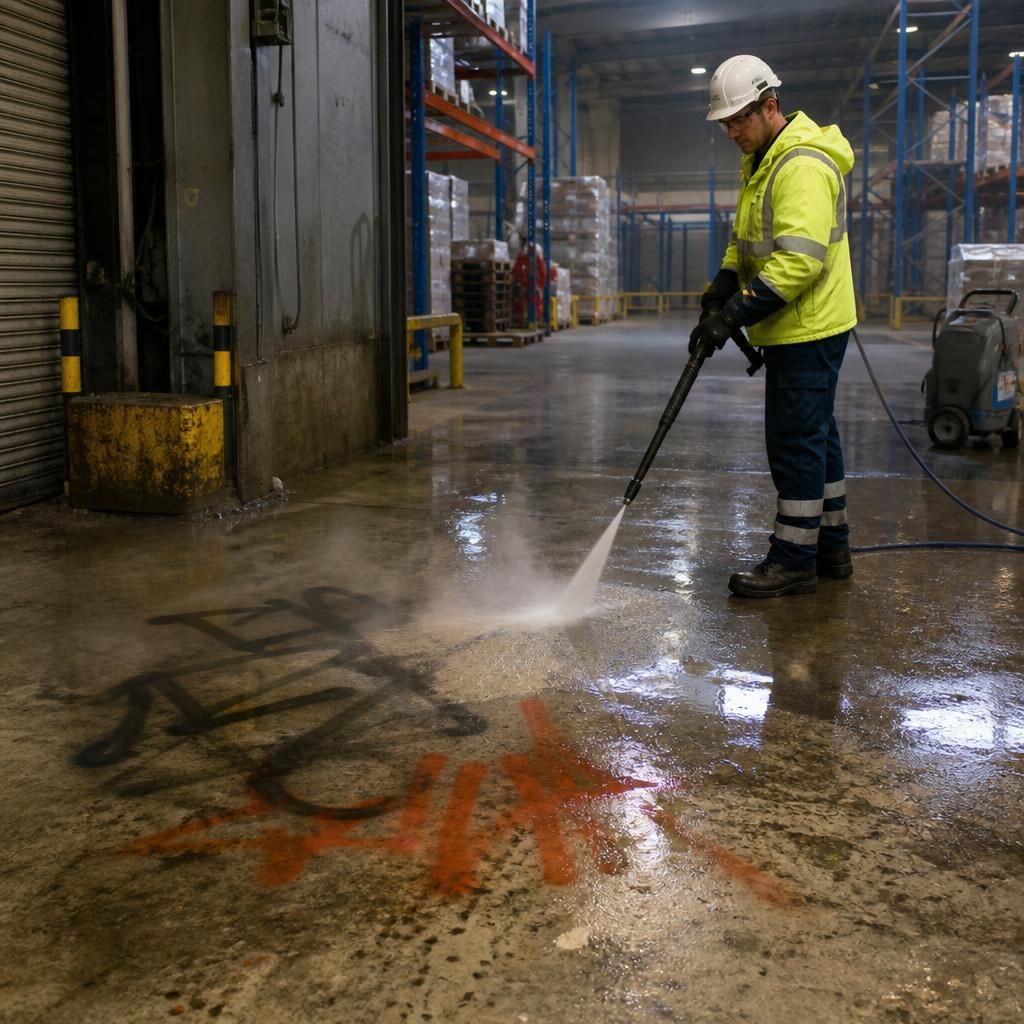
The safest graffiti removal technique for an industrial floor is determined by the floor finish as much as by the paint itself. A small test area should be treated first to confirm that the chosen remover, pressure level or steam temperature lifts the graffiti without softening resin, stripping paint, exposing aggregate or discolouring the surrounding surface.
Sound, uncoated concrete can often tolerate controlled pressure washing after the graffiti has been softened with a compatible treatment. Resin-coated, painted and sealed floors usually require lower-pressure rinsing, mild agitation and a substrate-safe product. Strong solvents and abrasive methods may remove the graffiti while also damaging the coating, creating a larger repair problem.
- Identify the floor material and coating before selecting equipment or chemicals.
- Test dwell time, agitation and rinsing on an inconspicuous section.
- Increase cleaning intensity gradually rather than starting with maximum pressure.
- Inspect joints, drains and textured areas where dissolved paint may collect.
This controlled approach helps achieve a consistent finish while reducing the risk of permanent marks and preventing contaminated rinse water from spreading across the working area.