
What specific cleaning methods and equipment do you use for different contaminants such as oil, grease, or graffiti on industrial floors?
We select the method according to the contaminant and flooring, using industrial degreasers with hot-water pressure washing, rotary scrubber-driers or wet vacuums for oil and grease, and steam cleaning for ingrained residues or sensitive areas. Graffiti is treated with a suitable graffiti remover and controlled pressure or steam cleaning, using specialist attachments to lift the paint without damaging the floor surface.
Industrial floor cleaning methods are selected according to the contaminant, the flooring material, the amount of soiling and how wastewater can be contained. Oil and grease are normally treated with a suitable industrial degreaser, hot-water pressure washing, mechanical agitation and recovery equipment. Graffiti is assessed separately and removed with a compatible graffiti remover, controlled pressure washing or steam cleaning, using the least aggressive method that will lift the paint without damaging the floor.
Oil and grease removal
Oil, hydraulic fluid, fuel and cooking grease can penetrate porous concrete, collect in joints and leave a slippery film on sealed floors. We first remove loose material and use absorbent products where there is standing contamination. The remaining residue is treated with a commercial degreaser selected for the type of oil and the floor finish. The chemical is allowed suitable contact time, without being left to dry, and is agitated to break down the bond between the contaminant and the surface.
- Hot-water pressure washing: Heated water helps soften heavy grease and emulsify oily deposits, making it effective on robust concrete, loading areas, workshops and plant rooms.
- Rotary surface cleaners: Enclosed rotary heads apply consistent pressure and water flow across the floor, helping to reduce streaking and control overspray compared with an open lance.
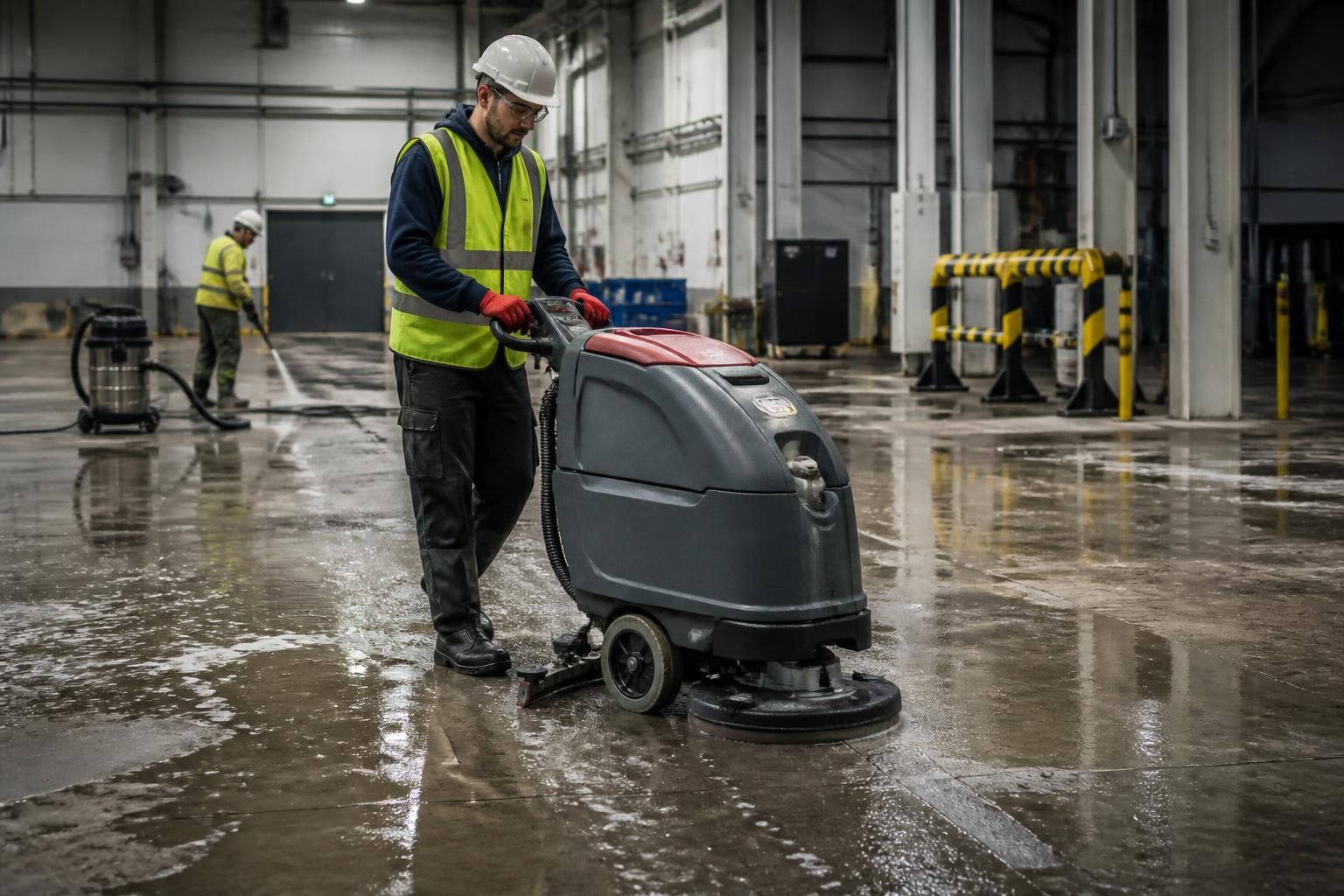
- Scrubber-driers: Ride-on or walk-behind machines combine rotating brushes or pads, cleaning solution and suction. They are useful for large, relatively even floors where the solution must be recovered quickly.
- Wet vacuums and recovery systems: These remove loosened slurry and contaminated water so it is not spread back across the floor or discharged without control.
- Steam cleaning: Low-moisture steam can loosen oily residues around machinery, edges, joints and other restricted areas where flooding is undesirable.
Severe or long-standing oil staining may require repeated treatment, poulticing or a specialist stain-removal process rather than pressure washing alone. Cleaning can remove surface contamination and substantially improve the appearance, but oil that has migrated deeply into porous concrete may not be completely reversible. We test the proposed method in an inconspicuous area before proceeding across the full floor.
Grease, food residue and general industrial build-up
Thick grease is usually dealt with by scraping or absorbing the heaviest deposits before applying a compatible alkaline or solvent-free degreaser, depending on the surface and site requirements. Mechanical scrubbing helps reach textured concrete, safety flooring and other surfaces where dirt collects in the profile. A scrubber-drier is particularly useful when the area needs to be returned to service promptly because it applies cleaning solution and recovers the used water in one operation.
Where a floor is sealed, painted or resin-coated, aggressive chemicals, excessive heat and abrasive pads can dull the finish or affect adhesion. We therefore adjust the chemical strength, brush or pad type, water temperature and pressure to suit the coating. Delicate areas, expansion joints and drainage channels are cleaned with controlled tools rather than allowing high-pressure water to force contamination or moisture into gaps.
Graffiti removal
Graffiti treatment depends on the paint or marker, the age of the marking and the surface beneath it. We identify whether the floor is bare concrete, sealed concrete, tarmac, resin, painted or otherwise coated, then select a remover that is compatible with that substrate. A small test area is important because some solvents can soften coatings, draw pigment further into porous concrete or leave a visible tide mark.
- Graffiti remover: A specialist product is applied to soften the paint, ink or adhesive before it is agitated and removed. The product is selected according to the graffiti medium and the floor finish.
- Steam cleaning: Controlled steam can lift certain paints, marker residues and adhesive deposits while using less water than conventional pressure washing. It is useful around edges, walls, equipment bases and sensitive areas.
- Low or controlled-pressure washing: Pressure is increased only as far as necessary after the chemical has loosened the marking. This helps reduce surface etching, paint loss and unnecessary splash.
- Mechanical agitation: Brushes, pads or specialist attachments help remove softened residue from textured floors and joints without relying solely on high pressure.
- Wet vacuum recovery: Capturing the spent remover, paint fragments and wash water prevents the contamination from being redistributed across the floor or entering surface-water drains.
On porous concrete, removing the visible paint may reveal a shadow where pigment has penetrated the surface. In such cases, further controlled treatment may improve the result, although excessive pressure or abrasive cleaning can create a larger damaged area. Where graffiti is on a protective coating, preserving the coating is normally preferable to removing the marking through aggressive abrasion.
Choosing pressure washing, steam cleaning or scrubbing
Pressure washing is suited to durable floors with heavy deposits, provided there is adequate drainage or a plan for water recovery. Steam cleaning is preferable where low moisture, localised treatment or controlled heat is more important than rapid coverage. Scrubber-driers are efficient on broad, accessible floors with routine oil, grease and tracked-in dirt. Wet vacuums are used alongside these methods whenever slurry or contaminated water must be removed immediately.
The equipment is not chosen in isolation. We consider the floor’s porosity, coating, joints, falls, drainage, nearby machinery, electrical risks, pedestrian routes and the required handover condition. For example, a sealed warehouse floor may tolerate mechanical scrubbing and recovery, while an older porous concrete floor may need lower pressure, targeted degreasing and several controlled passes.
Typical cleaning sequence
- Inspect the floor, identify the contaminant and check the condition of coatings, joints and drainage.
- Remove loose debris and absorb any free oil, grease or paint fragments.
- Test the chemical and equipment combination in a discreet location.
- Apply the selected degreaser or graffiti remover and allow appropriate dwell time without letting it dry.
- Agitate the contamination using a rotary cleaner, scrubber, brush or suitable attachment.
- Rinse or steam clean at controlled pressure and temperature, working in manageable sections.
- Recover wastewater and residues with a wet vacuum, scrubber-drier or other suitable collection system.
- Inspect the result, repeat targeted treatment where necessary and leave the area safe for use.
Wastewater from oil, grease and graffiti removal can contain detergents, hydrocarbons, paint particles and suspended solids. It must be contained and managed in line with the site drainage arrangements and applicable environmental requirements rather than being allowed to enter an uncontrolled surface-water system. We also plan the work around access, ventilation, drying time and nearby operations so that the cleaning method is effective without creating avoidable disruption.
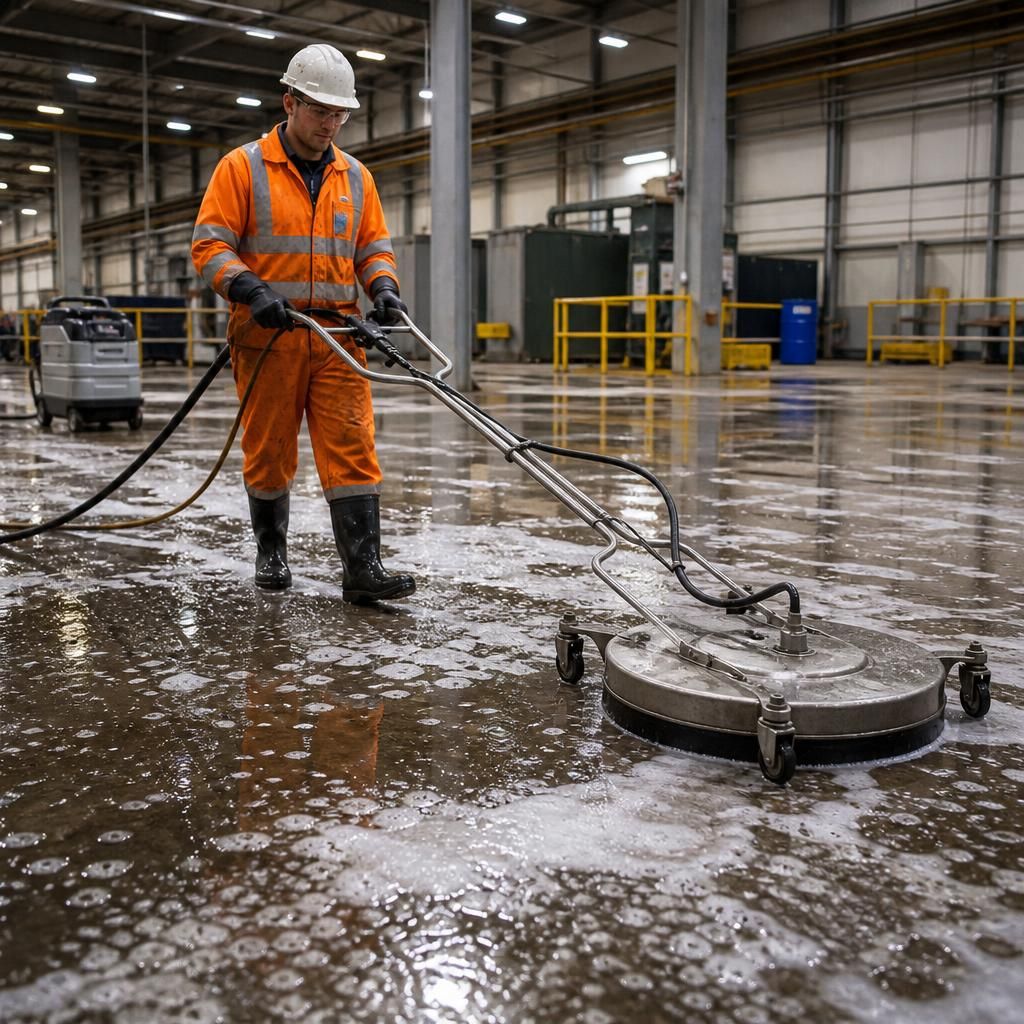
Industrial floor cleaning equipment is selected by matching the contaminant, surface and required level of moisture control. Hot-water pressure washing and rotary surface cleaners suit robust concrete with heavy oil or grease, while scrubber-driers provide controlled cleaning and rapid wastewater recovery on large, even floors. Steam cleaning and low-pressure methods are better for localised graffiti, coated surfaces, joints and areas where excess water could cause damage.
Before full treatment, we test the chosen chemical, temperature, pressure and agitation method in an inconspicuous area. This confirms that oil, grease or graffiti can be removed without etching concrete, softening resin or painted coatings, spreading pigment, or forcing contaminated water into joints and drains. The final process is then carried out in manageable sections, with slurry and wastewater recovered as the work progresses.
Arrange Specialist Industrial Floor Cleaning for Oil, Grease or Graffiti
Arrange a site assessment with our industrial floor cleaning team to identify the most suitable method for oil, grease or graffiti on your flooring. We will review the surface, contamination, access and wastewater requirements before recommending a safe, practical cleaning plan.