
What safety protocols do you implement to protect workers and occupants during the industrial floor cleaning process?
We protect workers and occupants during industrial floor cleaning through a site-specific risk assessment, controlled access, suitable personal protective equipment (PPE), safe equipment operation and clear communication with the site team. We also isolate hazards, manage water and cleaning chemicals responsibly, and inspect the area before reopening it for normal use.
Our industrial floor cleaning safety process is based on a site-specific risk assessment, controlled access, appropriate personal protective equipment (PPE), safe equipment operation and a documented inspection before the area is reopened. We coordinate the work with the responsible site contact so that workers, employees, visitors, vehicles and other occupants are protected throughout the cleaning operation.
Site assessment and method planning
Before work starts, we assess the floor, the surrounding work area and the proposed cleaning method. This includes identifying slip and trip hazards, vehicle movements, pedestrian routes, machinery, electrical equipment, open drains, changes in level, fragile surfaces and any restricted or poorly ventilated areas. We also consider the type of contamination present, such as oil, grease, chemical residue, mud or ingrained deposits, because the substance being removed can affect both the cleaning method and the required controls.
We then agree the work method and site controls with the client. Where appropriate, this includes a written risk assessment and method statement, chemical safety information, equipment requirements, access arrangements, emergency procedures and a plan for managing wastewater. If site conditions differ from those assessed, we pause the work and review the controls rather than continuing with an unsuitable method.
Controlled access and communication
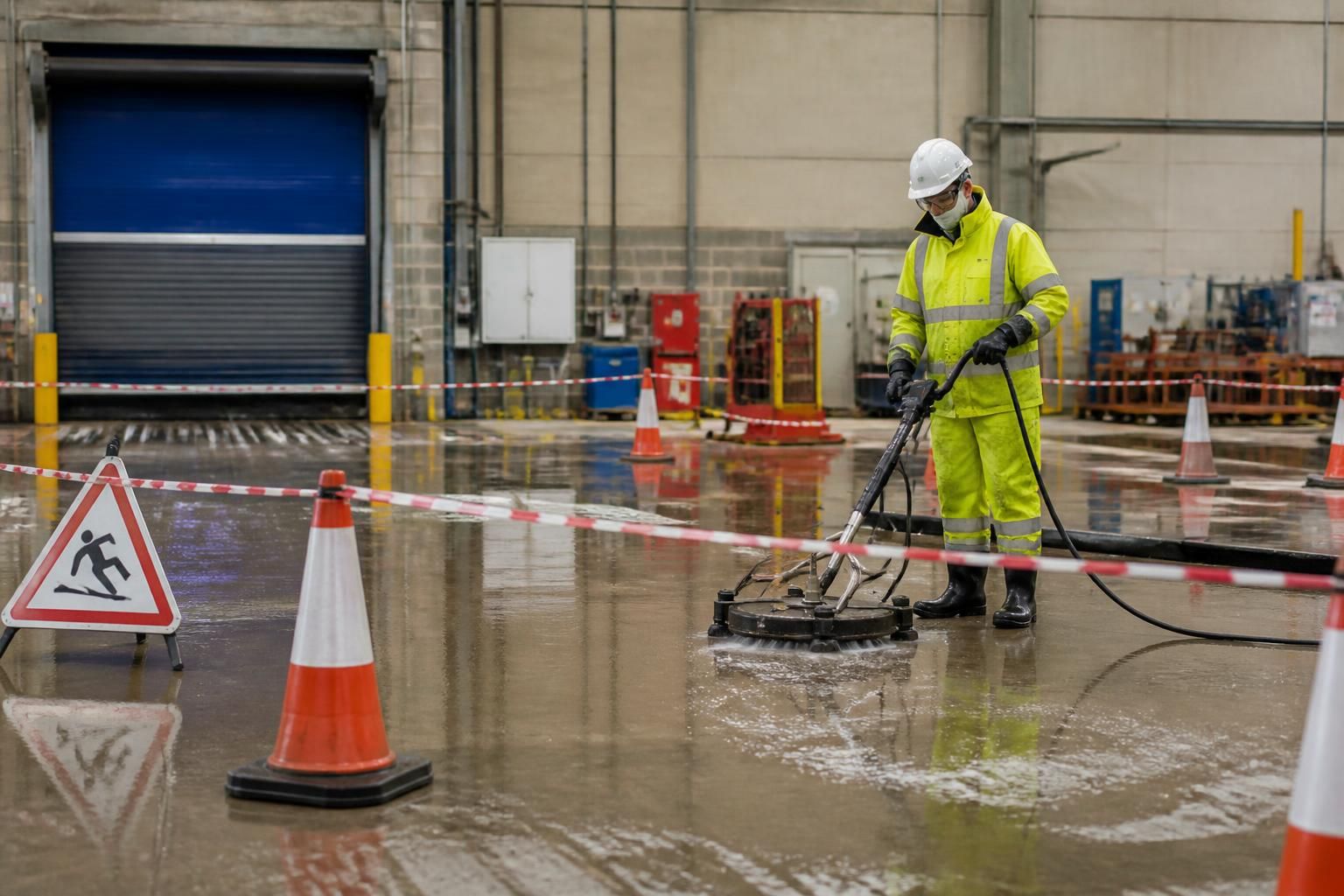
Cleaning areas are separated from people and vehicles using barriers, cones, warning signs or other suitable segregation. We agree exclusion zones with the site team and keep unauthorised people away from operating machinery, spray, steam, cleaning chemicals and wet surfaces. Where the floor forms part of a busy route, we arrange phased cleaning, alternative access or work during an agreed quieter period.
Our operatives communicate the cleaning plan, hazards and access restrictions to the relevant site contact before starting. They also maintain awareness of nearby activities, including loading, deliveries, forklift movements and construction work. If the cleaning area cannot be adequately segregated, we discuss a revised sequence or temporary closure with the client.
Suitable PPE and personal hygiene controls
PPE is selected according to the risks identified during the assessment and the cleaning products or equipment being used. Depending on the task, this may include protective footwear with slip-resistant soles, gloves, eye or face protection, waterproof clothing, hearing protection, head protection and respiratory protection where the assessment identifies a relevant airborne risk.
PPE is not treated as a substitute for safe planning or physical controls. Operatives are trained in its correct use, limitations, storage and replacement. We also prevent contamination from being transferred outside the work area by following appropriate hand-washing, equipment-cleaning and waste-handling procedures.
Safe use of pressure washing, steam and floor-cleaning equipment
Only trained operatives use pressure washers, scrubber dryers, vacuums, rotary machines and steam-cleaning equipment. Before use, equipment is checked for damage, secure connections, hose condition, guards, controls and suitable operating settings. Pressure, temperature, chemical dosing and accessories are selected for the floor surface and contamination rather than using excessive force.
Operators keep hoses and cables managed to reduce trip risks and position equipment so that spray, steam and contaminated water do not affect people, electrical installations or unprotected surfaces. They use stable working positions and do not direct high-pressure water at people, live electrical equipment, fragile fittings or areas where it could cause damage. Electrical equipment and connections are kept away from water, with suitable isolation and protection arrangements agreed where necessary.
Noise, spray and visibility are also considered. Where cleaning equipment creates additional exposure, the work area is controlled and the appropriate PPE and operating restrictions are applied. Machinery is switched off before adjustments, blockages are cleared or maintenance is carried out.
Managing cleaning chemicals and contaminants
We identify the substances being removed and the products proposed for cleaning before application. Chemicals are used in accordance with the relevant safety information and manufacturer instructions, including dilution, contact time, ventilation, storage and disposal requirements. Products are not mixed unless the instructions specifically permit this, as incompatible chemicals can create hazardous reactions or fumes.
Oil, grease and chemical residues can make a floor slippery during removal, so we control the area until the contamination and cleaning solution have been recovered. Where a contaminant may be hazardous, we use additional controls for handling, containment and waste disposal. The site team should tell us about any known substances, production residues or previous spills before work begins.
Slip, trip and other site hazards
Wet cleaning creates a temporary slip hazard even where the finished floor will be safe to use. We limit access while the floor is wet, remove standing water promptly where practical and use suitable signs and barriers. Hoses, cables, tools and recovered waste are kept organised so they do not obstruct walkways, fire routes or emergency exits.
We also account for changes in friction caused by oils, detergents, polished surfaces and residual moisture. The floor is not considered ready for normal pedestrian or vehicle traffic until it has been inspected and the site contact has been informed that the controls can be removed.
Wastewater and environmental safeguards
Dirty water, oil, chemicals and suspended solids are controlled so they do not spread into unaffected areas, enter unsuitable drains or create a further hazard. We use recovery equipment, containment or agreed drainage arrangements appropriate to the site and the material collected. Wastewater is handled in line with the agreed site requirements and applicable environmental controls.
Where cleaning takes place near drains, sensitive equipment or external areas, we establish suitable protection before washing begins. This reduces the risk of pollution, cross-contamination and damage to the building or surrounding ground.
Emergency arrangements and stop-work controls
Before starting, we establish how incidents will be reported and where first-aid, emergency access and site contacts are located. Operatives know the action to take if there is a chemical splash, equipment failure, loss of containment, unexpected exposure, fire alarm or unsafe change in site activity. Work is stopped if a barrier is breached, an unplanned hazard appears, equipment becomes defective or conditions can no longer be controlled safely.
Inspection before handover
At completion, we check that the floor has been cleaned to the agreed standard, excess water and residues have been removed, equipment and hoses have been cleared, and access routes are safe. We inspect for remaining slip hazards, pooled water, dislodged materials or damage that needs to be reported. The area is then handed back in coordination with the site contact, with any continuing drying time, restricted zones or operational precautions clearly explained.
These controls are applied alongside the client’s own site rules and permit systems. Providing details of the floor construction, contamination, nearby operations, drainage arrangements and planned occupancy helps us prepare the safest and most suitable industrial floor cleaning method for the premises.
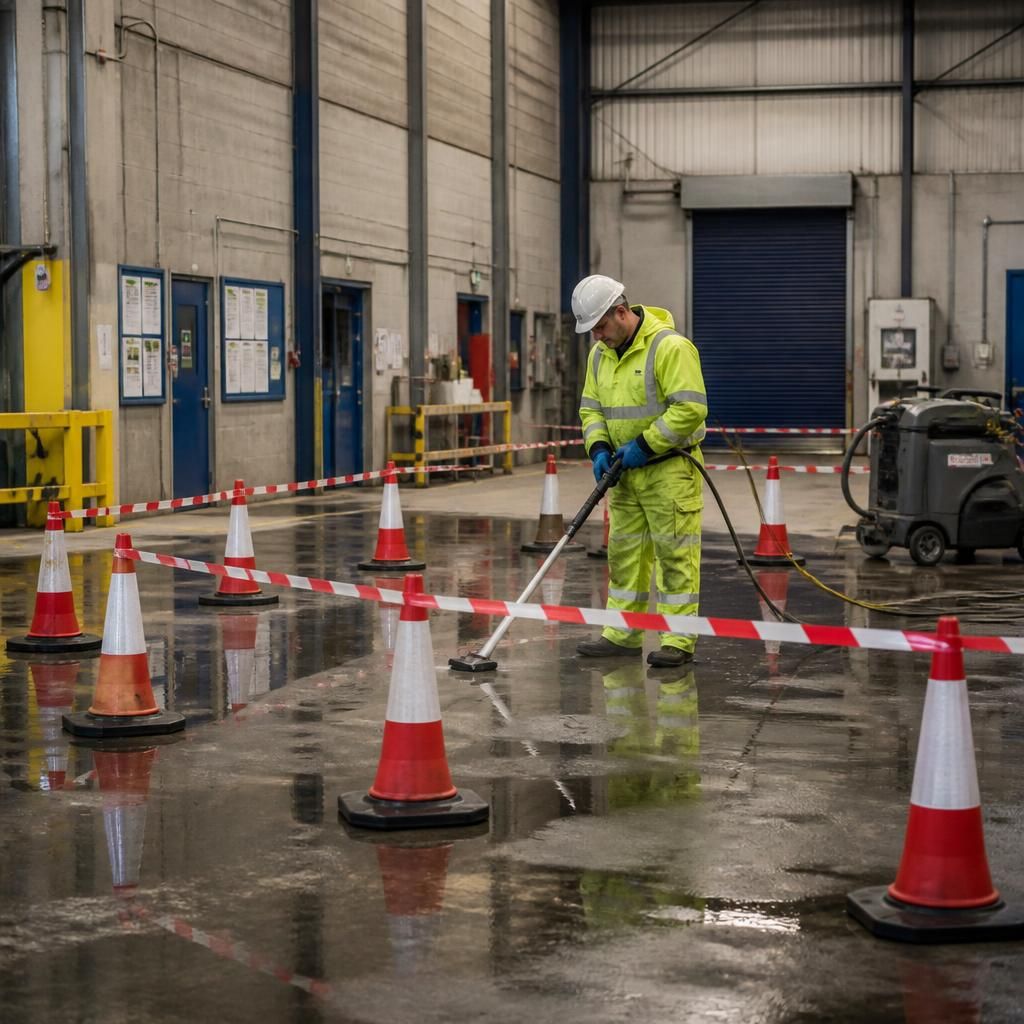
Controlled access is a key safety measure during industrial floor cleaning. Barriers, cones and warning signs separate the cleaning area from employees, visitors, vehicles and site operations, preventing contact with wet floors, cleaning chemicals, spray, steam and moving equipment.
We agree the exclusion zone and cleaning schedule with the site contact before work begins. Where the floor is part of a busy route, we use an alternative access route, phased cleaning or a temporary closure. The area remains restricted until standing water and residues have been removed and the floor has been inspected and confirmed safe for normal use.