
What safety precautions should be considered during industrial floor cleaning?
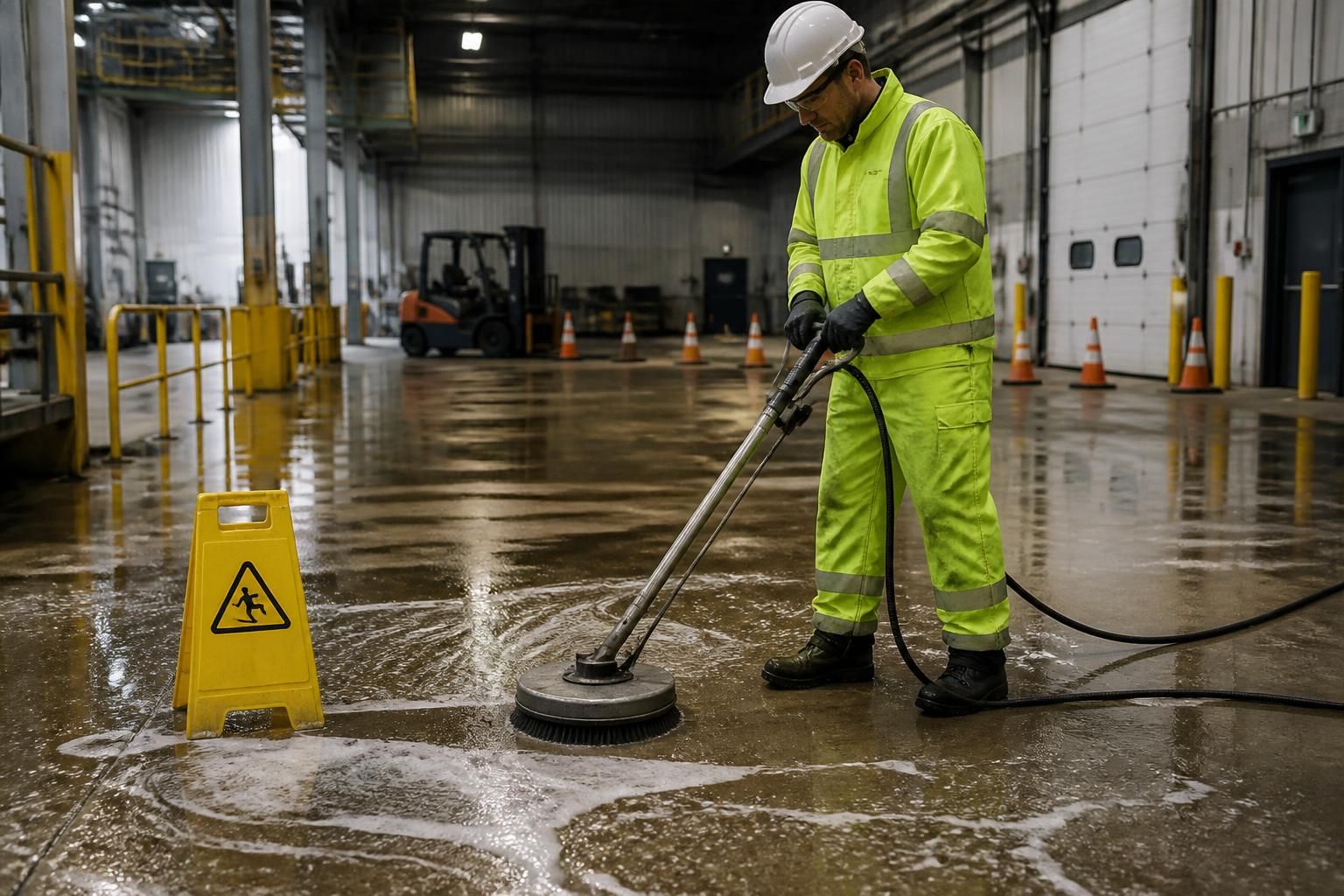
Industrial floor cleaning should be planned through a site-specific risk assessment covering chemical handling, machinery, vehicle movements, slips, trips, electrical hazards and wastewater control. Effective precautions include isolating the work area, using suitable PPE, following equipment and chemical instructions, providing ventilation, controlling access and keeping the floor closed until it is clean and fully dry.
Safe industrial floor cleaning depends on a site-specific risk assessment, suitable control measures and effective separation between the cleaning operation and people, vehicles and equipment. Before work starts, the cleaning team should agree a method statement with the site contact covering the floor type, contaminants, machinery, chemicals, access arrangements, drainage and any operational hazards. The area should remain controlled until the surface is clean, dry and safe to use.
Complete a site assessment before cleaning
- Identify slip, trip and fall hazards, including damaged flooring, uneven surfaces, trailing cables, hoses, drainage channels and changes in floor level.
- Check for vehicle movements, forklift routes, loading areas, pedestrian walkways, machinery and other activities that could conflict with the cleaning work.
- Locate electrical equipment, sockets, control panels and other assets that could be affected by water, steam or cleaning chemicals.
- Confirm the nature of the contamination. Oil, grease, chemical residues, biological matter and unknown substances may require different controls, cleaning agents and waste arrangements.
- Review the floor material and condition before selecting pressure, temperature, agitation or chemical treatment. Excessive pressure or unsuitable chemicals can damage coatings, joints, sealants and sensitive surfaces.
The assessment should also consider who may be affected, including employees, visitors, contractors, drivers and anyone with limited mobility. Where the site contains hazardous substances or process residues, the client should provide relevant information before cleaning begins.
Control access to the work area
Wet cleaning creates a temporary slip risk, even where the finished surface will be safer than it was before. Use barriers, cones and clear warning signage to close the active area, rather than relying only on verbal instructions. Where possible, clean in sections so that safe pedestrian and vehicle routes remain available. Vehicle routes, entrances, ramps and escape paths need particular attention because water, detergent and loosened contamination can be carried beyond the immediate work zone.
Do not remove the controls until the floor has been rinsed or treated as required, excess water has been recovered, the surface is adequately dry and the site contact is satisfied that normal use can resume. If cleaning takes place around a live workplace, agree the working hours and temporary route changes in advance.
Use appropriate personal protective equipment
PPE should be selected from the risk assessment and the products being used, not treated as a substitute for controlling the hazard. Depending on the task, this may include:
- Slip-resistant safety footwear suitable for wet conditions.
- Water-resistant gloves selected for the cleaning chemicals and expected contact time.
- Eye or face protection where spray, splash, debris or chemical mist could occur.
- Protective clothing or waterproof overalls where clothing may become contaminated.
- Hearing protection when operating noisy machinery or pressure-washing equipment.
- Respiratory protection only where the assessment identifies an inhalation risk and the equipment is correctly selected, fitted and maintained.
Protective equipment must be clean, inspected and replaced when damaged or contaminated. Workers should also know how to remove contaminated PPE without spreading residues to skin, vehicles or clean areas.
Manage chemicals in accordance with COSHH principles
Cleaning products should be chosen for the contaminant and floor surface, with product instructions and safety data information available to the operatives. Never mix chemicals unless the manufacturer expressly permits it. In particular, combining incompatible products can release harmful gases or create dangerous reactions.
- Keep chemicals in labelled containers and use the correct dilution.
- Prevent splashes when transferring or applying products.
- Provide ventilation where vapours, aerosols or steam could accumulate.
- Store products securely and away from incompatible substances, drains and vulnerable materials.
- Keep spill-response materials available and deal with leaks promptly.
Where a floor has been contaminated by an unidentified substance, cleaning should not begin until the hazard has been assessed. Unknown residues may require specialist advice, isolation or a different waste-disposal route.
Operate cleaning machinery safely
Only trained and authorised operatives should use scrubber dryers, pressure washers, steam equipment, wet vacuums and other powered machinery. Equipment should be checked before use, including hoses, cables, guards, tanks, connections, wheels, brushes and emergency controls. Defective machinery must be removed from service rather than used with an improvised repair.
Operators should follow the manufacturer’s instructions and the agreed method statement. Keep hands, feet and loose clothing away from moving parts, avoid directing high-pressure water at people or unprotected equipment, and use the lowest effective pressure and temperature for the surface. Hoses and cables should be routed to minimise trip risks and kept away from moving vehicles, sharp edges and standing water where this could create an electrical hazard.
Where powered equipment is used in wet conditions, electrical supplies and connections must be suitable for the environment. Isolate or protect nearby electrical installations and follow the site’s electrical safety arrangements. Battery-powered equipment can reduce some cable hazards, but it still requires safe charging, handling and inspection.
Control slips, trips and vehicle-related risks
Remove excess water as cleaning progresses rather than allowing it to spread across adjoining areas. Recover slurry, oil and loosened debris with suitable wet-vacuum or containment equipment, and keep hoses and power leads organised. Particular care is needed on polished, painted, sealed or sloped floors, where water can move quickly or drying may take longer.
Separate cleaning from forklift and delivery movements wherever possible. If work must take place near operating vehicles, use an agreed exclusion zone, visible barriers and a clear communication process with drivers. High-visibility clothing may be appropriate where site traffic cannot be fully stopped, but it does not replace physical separation.
Plan for steam, pressure and access hazards
Pressure washing and steam cleaning can dislodge particles, spread contamination and cause injury through direct contact. Operatives should maintain a safe working position, avoid directing spray towards people or unprotected assets, and use suitable screens or local containment where splash or debris could travel.
Floor cleaning should normally be carried out from a stable working position. If access equipment is needed to reach raised edges, platforms or associated structures, it must be suitable for the task, inspected and operated by competent personnel. Do not stand on unsuitable objects or use cleaning machinery as an improvised access platform.
Protect drains, products and the surrounding workplace
Before washing begins, identify where water and residues will flow. Protect stock, raw materials, packaging, machinery and finished products from overspray and runoff. Use drain covers, bunding, temporary barriers or recovery equipment where required, while ensuring that water is not directed into an unauthorised drain or external surface-water system.
Wastewater containing oil, detergents, silt or other contaminants must be collected, contained and handled in line with the site’s environmental procedures and applicable disposal requirements. Do not assume that a nearby drain is suitable for discharge. Any spill outside the planned containment area should be reported and managed immediately.
Maintain communication and emergency arrangements
The cleaning team and site contact should know who is supervising the work, how the area is controlled and what to do if there is a spill, injury, equipment failure, chemical exposure or unexpected contamination. Access to first-aid facilities, clean water for rinsing and emergency contact details should be confirmed before work starts. Incidents and near misses should be recorded and used to review the controls.
After cleaning, inspect the floor for remaining contamination, standing water, damaged coatings, displaced covers and trip hazards. Confirm that the surface is sufficiently dry for its intended use and that barriers can be removed safely. A controlled handover to the site contact helps ensure the area is not reopened prematurely, particularly in busy warehouses, factories, car parks and loading facilities.
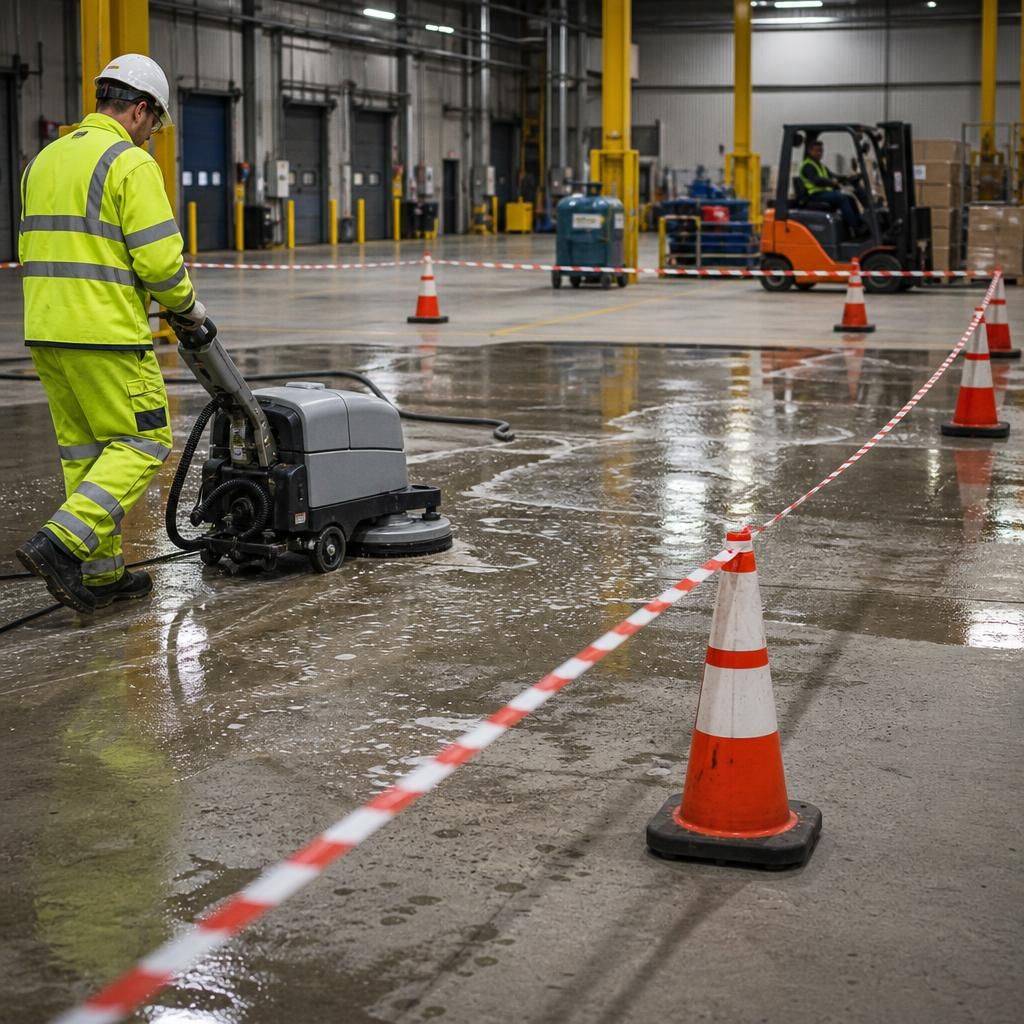
Controlling access is one of the most important safety precautions during industrial floor cleaning because wet surfaces, loosened residues, hoses and machinery can create temporary risks for pedestrians and vehicles. The cleaning area should be separated with barriers, cones and clear warning signs before work begins.
Where the site remains operational, agree temporary walkways and vehicle routes with the site contact. Keep forklifts, delivery vehicles and pedestrians away from the active work zone, and clean in manageable sections where possible. Do not remove the controls until excess water and slurry have been recovered, the floor is sufficiently dry and the area has been checked before being reopened.