
What measures do you take to manage wastewater and environmental impact during industrial floor cleaning?
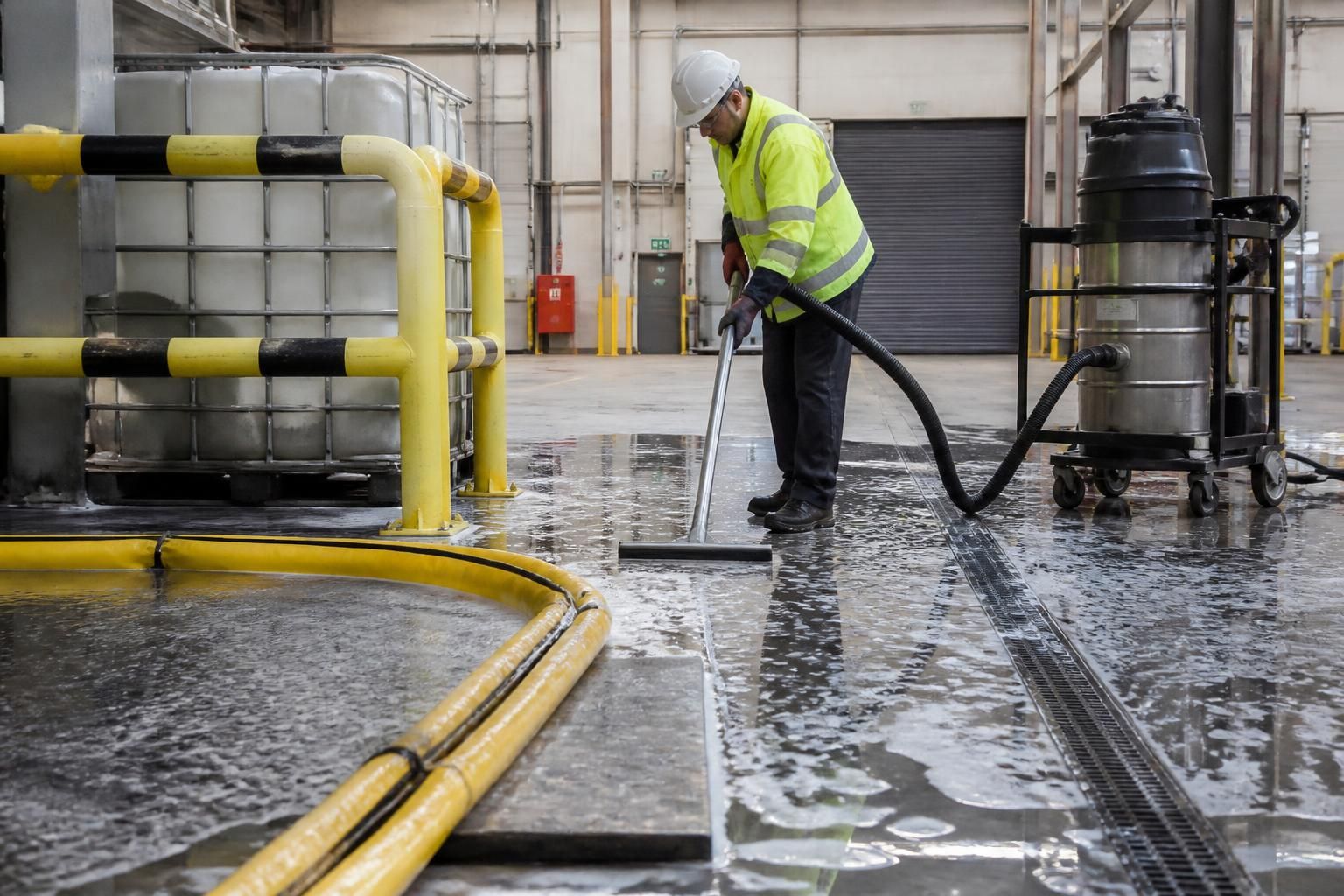
During industrial floor cleaning, we control wastewater at source by using contained work areas, protecting or isolating drains, and recovering contaminated water rather than allowing it to enter surface-water systems. We select suitable low-impact cleaning methods, separate oils and chemical residues where necessary, and arrange responsible disposal in line with site requirements and applicable UK environmental regulations.
During industrial floor cleaning, wastewater and environmental impact are managed through source control, drain protection, water recovery, suitable cleaning methods and responsible disposal. Contaminated water containing oil, grease, chemicals, heavy sediment or other residues is not allowed to enter surface-water drains, watercourses or unprotected ground. The controls are planned around the site, the floor surface, the contaminants present and the final disposal route before cleaning begins.
Site assessment and method planning
Before work starts, the cleaning area is assessed for drainage, gradients, access points, nearby watercourses, storage areas and the likely contaminants. Existing spill risks, damaged drainage covers and connections between surface-water and foul drainage systems are considered. The cleaning method is then selected to remove the contamination effectively while using no more water or chemical product than necessary.
Where appropriate, the method statement identifies:
- the expected type and volume of wastewater;
- the locations of drains, gullies and inspection chambers;
- the containment and recovery equipment required;
- the detergents or degreasers to be used and their safety data;
- how recovered water, sludge and solid residues will be stored and disposed of;
- the controls needed to protect employees, building users and the surrounding environment.
Preventing uncontrolled discharge
Drains within or near the work area are protected, isolated or temporarily sealed using suitable drain covers, mats, bung systems or other containment equipment. Low points and door thresholds can also be bunded to keep wastewater within the designated cleaning zone. This is particularly important on yards, loading areas, car parks and industrial premises where surface-water drainage may lead directly to a watercourse.
Wastewater is collected during the cleaning operation rather than being pushed across the site. Wet vacuums, recovery systems, squeegees, pumps and temporary holding containers may be used according to the scale and layout of the work. Equipment is positioned so that recovered water does not overflow, track into clean areas or create a secondary slip or pollution risk.
Separating oil, sediment and other contaminants
Industrial floor wastewater can contain more than visible dirt. Oil, hydraulic fluid, fuel residues, metal particles, grit, cleaning chemicals and biological contamination may all affect the correct disposal route. Where oily water is present, suitable separation or filtration equipment can be used to reduce the contaminant load before the water is transferred for treatment or disposal. Sludge, absorbent materials and settled solids are collected separately where required rather than being washed back into the drainage system.
Separation does not automatically make wastewater suitable for discharge. The final route depends on the contamination, the site drainage arrangements and the requirements of the receiving facility or water company. Wastewater is not discharged to a foul drain simply because it is no longer visibly dirty.
Choosing lower-impact cleaning methods
The cleaning process is matched to the floor and contamination. Controlled pressure washing may be appropriate for heavy deposits, while steam cleaning, targeted hot-water cleaning, mechanical scrubbing, dry removal or low-moisture methods may reduce water use and wastewater production in other situations. Mechanical agitation and suitable pads or brushes can often loosen contamination before rinsing, reducing the amount of detergent and water needed.
Cleaning products are selected for compatibility with the floor and the contaminant, with preference given to the least hazardous effective option. Product instructions, dilution requirements and safety data are checked before use. Chemicals are never mixed indiscriminately, and stronger products are not used as a substitute for correct dwell time, agitation or recovery.
Drainage permissions and legal controls
Any proposed discharge is checked in advance. Surface-water drains generally carry rainwater and may discharge to the environment, so contaminated cleaning water must not enter them. A discharge to the foul sewer may require permission or trade effluent consent from the relevant water company, and the conditions may specify acceptable substances, volume, pH or sampling arrangements. Consent is not assumed merely because a foul drain is available on site.
Where wastewater is removed from the premises, it is handled through an appropriate waste route. The classification of the liquid, sludge or solid residue is considered before transport, and required transfer documentation is retained. Hazardous or potentially hazardous waste must be managed through the applicable UK requirements and an appropriately authorised waste contractor. Environmental regulators differ across the UK, so the relevant requirements depend on whether the site is in England, Wales, Scotland or Northern Ireland.
Storage and transport of recovered wastewater
Recovered liquid is held in sound, clearly identified containers or tanks with suitable secondary containment. Containers are kept secure, protected from damage and checked for leaks or overfilling. Waste streams are not mixed where doing so could change their classification, create a reaction or prevent appropriate treatment. Vehicles and transfer equipment are checked before moving wastewater away from the work area, and loading is carried out in a controlled location.
Spill prevention and response
A spill response arrangement is maintained for the work, with absorbent materials, drain protection and suitable containment equipment available at the point of use. If a hose, container or piece of recovery equipment fails, cleaning is stopped, the source is isolated and the spill is contained before the affected area is cleaned. Contaminated absorbents and recovered liquids are then managed as waste rather than rinsed into a drain.
Site contacts are informed promptly where a spill could affect drainage, neighbouring areas or the wider environment. Significant incidents are recorded and reviewed so that the containment plan, equipment selection or work sequence can be improved for future cleaning.
Records and completion checks
For larger or higher-risk projects, records may include the method statement, risk and environmental assessments, product information, drainage permissions, waste documentation and any required inspection or sampling results. Before the area is handed back, drains and containment points are checked, recovered water is accounted for, and visible residues are removed without creating a new discharge.
These measures allow industrial floors to be cleaned thoroughly while controlling the main environmental risks: polluted runoff, unnecessary chemical use, excessive water consumption, uncontrolled spills and incorrect waste disposal. The exact controls are confirmed during the site assessment and agreed with the client before work begins, particularly where the premises has sensitive drainage, regulated processes or ongoing production.
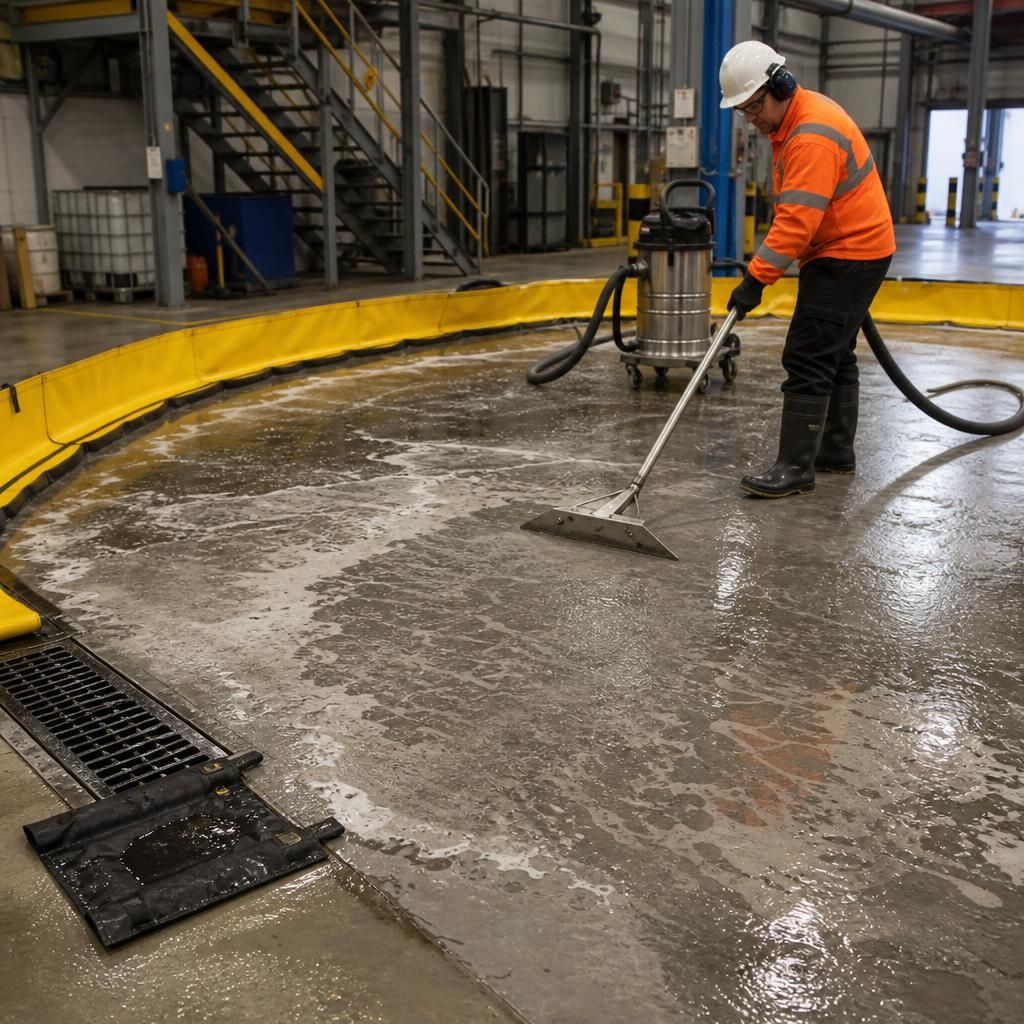
Wastewater is contained and recovered during industrial floor cleaning so contaminated water, oil, sediment and detergent residues cannot enter surface-water drains or surrounding ground. We protect nearby gullies, bund the work area where necessary, and use wet vacuums or recovery equipment to collect water as cleaning progresses.
Recovered liquid and solid residues are kept separate, stored securely and directed through an appropriate treatment or disposal route. Any proposed discharge is checked against the site drainage arrangements and relevant water company or environmental requirements; water is never released simply because it appears clean.