
What is the best method for cleaning oil stains from industrial concrete floors?
The most effective method for cleaning oil stains from industrial concrete floors is professional hot-water pressure washing, combined with a suitable oil-degreasing treatment and mechanical agitation where required. The process should include controlled wastewater recovery and thorough rinsing to remove loosened oil without spreading contamination or damaging the concrete.
The most effective method for cleaning oil stains from industrial concrete floors is a controlled hot-water pressure wash, used with a suitable concrete-safe degreaser, mechanical agitation and wastewater recovery. Heated water softens and lifts oil more effectively than cold water, while the degreaser breaks down the oily residue held in the concrete’s pores. Recovering the wash water is essential because it prevents loosened oil from spreading across the floor or entering surface-water drainage.
The correct process depends on the type of oil, the age of the stain, the condition of the concrete and whether the contamination is confined to the surface or has penetrated deeply. Fresh spillages are usually easier to remove, whereas old, oxidised or repeatedly trafficked oil stains may require several treatments. Cleaning should therefore begin with an inspection rather than applying maximum pressure immediately.
Assessment and preparation
Before cleaning, the affected area should be inspected for cracks, joints, damaged coatings, loose aggregate and nearby drainage points. The source of the leak or spill should be addressed first; otherwise, the floor may become contaminated again after cleaning. Loose dirt, grit and absorbent materials should be removed so that they do not interfere with the degreasing treatment or become a slip hazard.
Any spill response materials used during preparation should be collected and disposed of appropriately. Oil-contaminated absorbents must not be swept into drains, left in walkways or mixed casually with general waste. Where the floor is inside an occupied warehouse, workshop or production area, the work zone should be segregated and access managed while the surface is wet.
Degreasing and agitation
A professional-grade, concrete-compatible degreaser is applied to the affected surface and allowed sufficient contact time to emulsify the oil. Contact time is important: rinsing immediately can remove the product before it has broken down the contamination. The product must be selected for the particular oil and floor finish, as an unsuitable chemical can damage sealed concrete, painted markings or protective coatings.
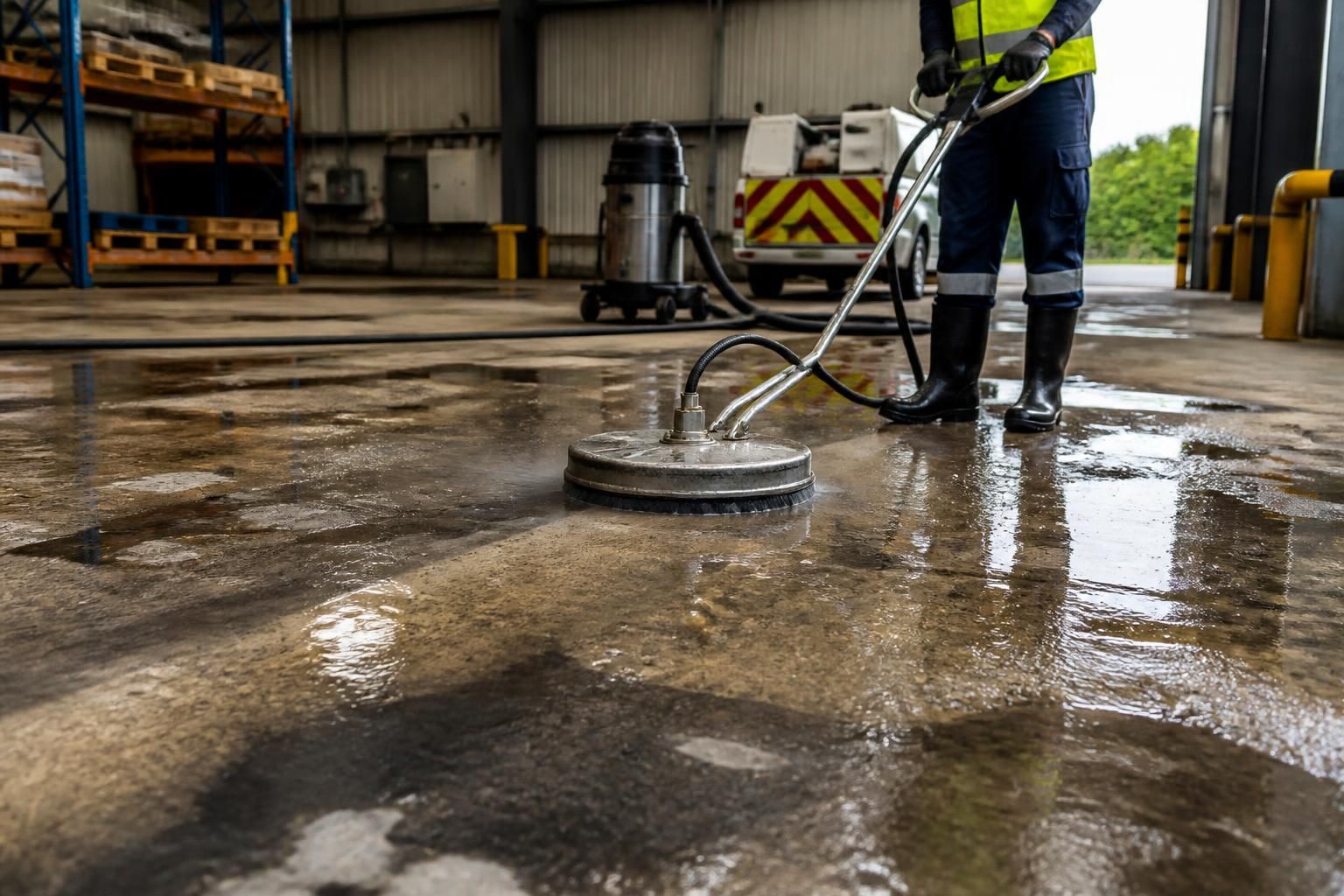
Mechanical agitation is then used where necessary. Rotary floor machines, stiff brushes or specialist surface-cleaning equipment work the degreaser into textured concrete and around joints, edges and machinery bases. Agitation is particularly useful on floors with tyre marks, embedded grease or a rough profile that cannot be cleaned evenly with a lance alone.
Hot-water pressure washing and recovery
After treatment, hot-water pressure washing lifts the loosened oil and degreaser from the surface. The pressure, flow and cleaning tool should be adjusted to the concrete rather than using excessive pressure by default. A rotary surface cleaner can provide a more consistent result on large open areas, while a controlled lance may be needed around kerbs, corners, drains and fixed equipment.
Wastewater should be contained and recovered using wet-vacuum equipment, extraction systems, drain covers or temporary bunding as appropriate to the site. It should not be directed into surface-water drains, soil or unprotected ground. The recovered water must be managed in accordance with the site’s drainage arrangements and applicable environmental requirements. This is both an environmental safeguard and a practical measure to prevent oil being redistributed over the cleaned floor.
Following extraction, the floor is rinsed with clean water and checked for remaining oily residue. If water continues to bead heavily, a slippery film remains or dark staining is still releasing oil, further degreasing and extraction may be required. Persistent staining does not always mean the cleaning has failed: oil can penetrate porous concrete and leave discolouration after the removable surface contamination has been taken away. The important distinction is whether the surface remains oily and unsafe or is simply marked in appearance.
Why other methods may be less suitable
- Cold-water pressure washing: may remove loose dirt but is often less effective against viscous oil and heavy grease. It can also spread contamination if wastewater is not controlled.
- Dry sweeping: removes grit and loose debris but cannot extract oil from concrete pores. Sweeping an oily surface can create a wider slip risk.
- Absorbent granules: are useful for containing a fresh spill, but they are a first-response measure rather than a complete cleaning method.
- Steam cleaning: can be effective for localised grease and sensitive areas, particularly where reduced water use is important, but it may be slower for extensive floor areas and still requires suitable recovery and disposal arrangements.
- Acid-based cleaning: is generally inappropriate for oil removal. Acids target mineral deposits and can etch or weaken concrete while leaving the oil problem unresolved.
- Solvent-based products: may dissolve certain oils but can create vapours, affect coatings and move contamination deeper into the slab. They should only be considered where the product is suitable and the risks are properly controlled.
When stains are deeply embedded
Heavily contaminated concrete may need repeated cleaning, extended dwell time or localised treatment. If oil has penetrated beneath a surface coating, into open joints or into damaged concrete, cleaning alone may not restore a uniform appearance. Remedial options can include removing failed coatings, repairing damaged areas and applying a compatible protective sealer after the concrete is clean and fully dry. A sealer can reduce future absorption, but it should not be applied over residual oil or trapped moisture.
Industrial floors may also need testing after cleaning. A visual inspection, slip assessment and checks for residual oily film can help confirm that the area is safe to return to service. Where the floor is part of a production process, the cleaning specification should also account for hygiene requirements, chemical compatibility and any restrictions on water or cleaning products.
Preventing repeat oil contamination
Regular inspection around vehicles, plant, hydraulic equipment and maintenance areas helps identify leaks before they become embedded. Prompt spill containment, suitable absorbent materials, scheduled deep cleaning and protective floor coatings can all reduce the amount of oil absorbed into concrete. Cleaning frequency should reflect the level of traffic and contamination rather than relying on appearance alone, because an apparently clean floor can still retain a slippery film.
For large industrial areas, the safest and most reliable approach is to plan the work around production activity, isolate the contaminated zone, select the least aggressive effective method and recover all contaminated wastewater. This produces a cleaner, safer concrete surface while reducing the risk of damage, secondary contamination and disruption to the site.
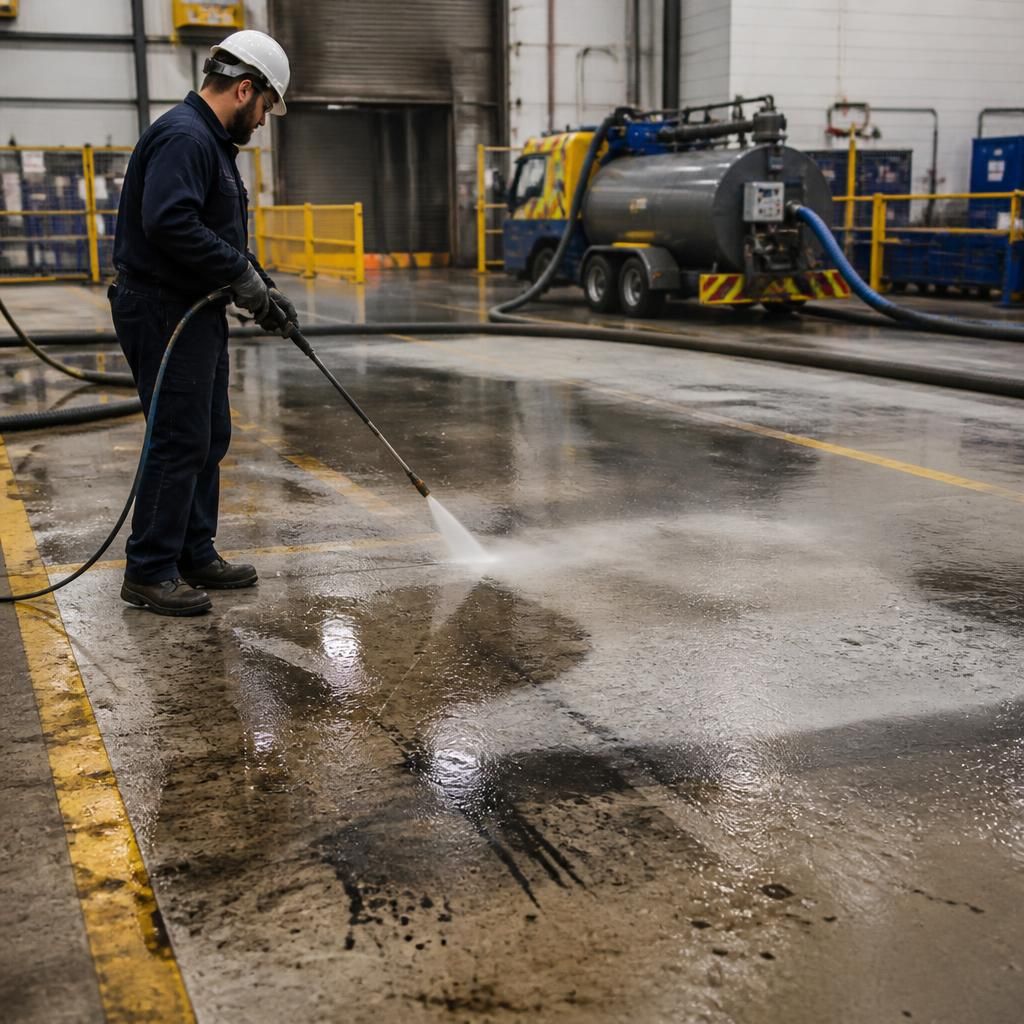
The most effective way to clean oil-stained industrial concrete is to combine a concrete-safe degreaser with hot-water pressure washing and controlled wastewater recovery. Heat helps loosen viscous oil, while the degreaser breaks down residue held in the concrete’s pores. Mechanical agitation may be needed on textured or heavily trafficked areas.
Recovery is essential because rinsing without containment can spread oil across the floor or allow contaminated water to enter surface-water drainage. The wash water should be extracted, the surface rinsed with clean water and the area checked for any remaining slippery film before it is returned to use.