
What safety precautions should be taken when operating industrial floor cleaning machines?
Operating industrial floor cleaning machines safely requires trained operators, suitable personal protective equipment (PPE), controlled work areas and checks that the machine is appropriate for the floor, chemicals and surroundings. Operators should follow the manufacturer’s instructions, control slip, traffic and electrical hazards, and isolate the machine before clearing blockages or carrying out maintenance.
Safe operation of industrial floor cleaning machines depends on competent operators, a documented risk assessment, suitable personal protective equipment (PPE), effective segregation from people and vehicles, and strict adherence to the machine manufacturer’s instructions. Before cleaning begins, the operator should confirm that the machine, pad or brush, cleaning chemical and working method are suitable for the floor, the environment and the task.
Complete a risk assessment before work starts. Identify hazards including vehicle movements, pedestrians, uneven or damaged flooring, ramps, steps, open edges, floor openings, poor lighting, trailing cables, water near electrical equipment, chemical exposure, dust, noise and restricted ventilation. Define the cleaning route, emergency arrangements and controls for each hazard. In a warehouse or factory, agree the work area with the site manager and schedule cleaning when traffic and production activity can be controlled.
Use trained and authorised operators. Operators should understand the specific machine, its controls, steering, braking, emergency stop, battery or fuel system, water recovery equipment and safe operating limits. Ride-on machines should only be used by people who have been trained and authorised for that type of equipment. Training should cover pedestrian awareness, reversing, gradients, collision prevention, chemical handling, charging or refuelling, spill response and the procedure for reporting defects.
Where required by the workplace risk assessment, site rules or the machine type, operators should also receive suitable instruction for working around moving vehicles, hazardous substances and other site-specific risks. Competence should be refreshed when the machine, process or working environment changes.
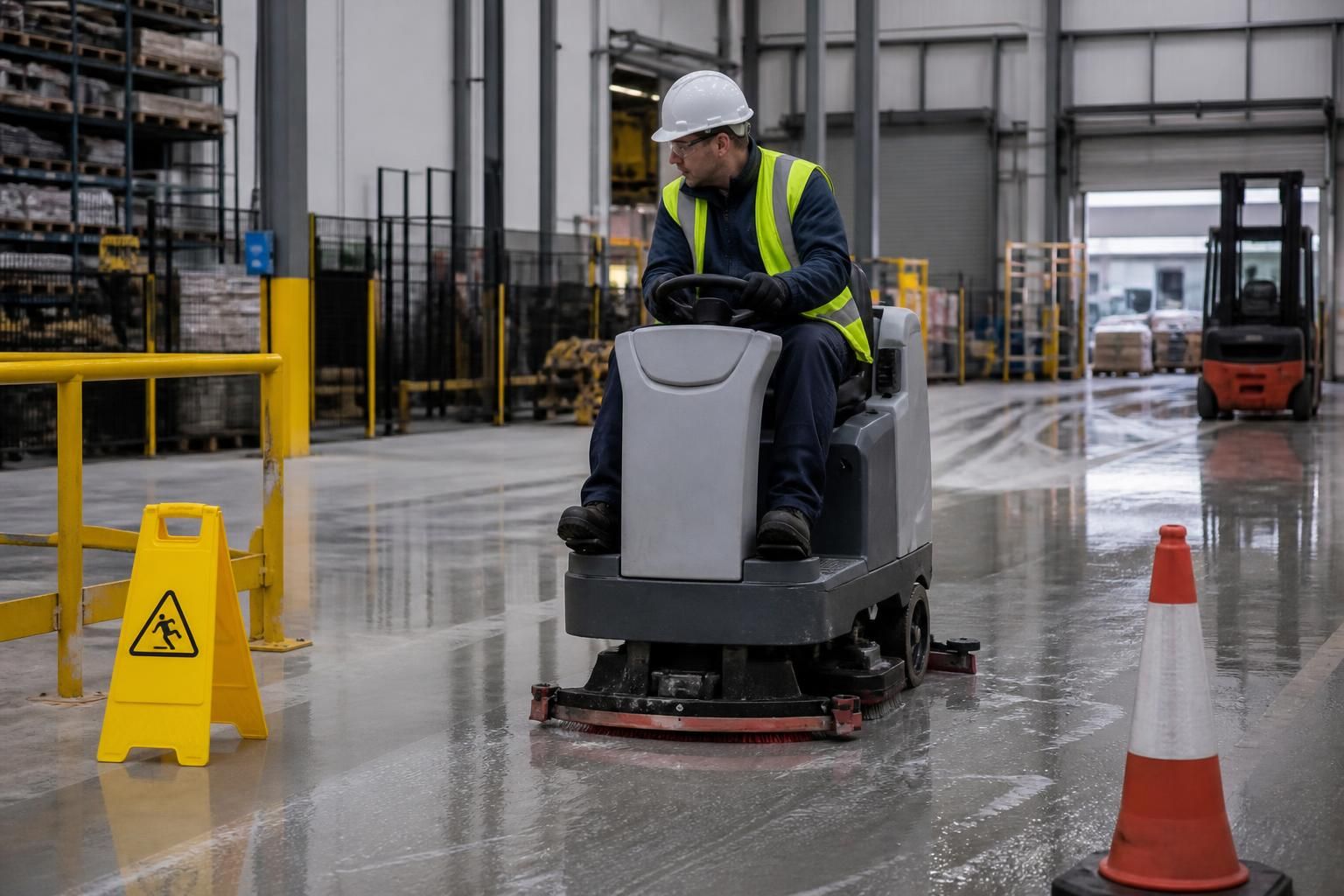
Wear appropriate PPE. Typical PPE may include safety footwear with slip-resistant soles, suitable gloves, eye protection and high-visibility clothing where vehicles or mobile plant operate nearby. Chemical-resistant gloves and eye or face protection may be necessary when handling concentrated detergents, dosing systems or contaminated recovery water. Hearing protection may be required in noisy areas, subject to the site’s noise assessment. PPE must be compatible with the cleaning chemicals and maintained in usable condition.
Carry out pre-use checks. Before switching on the machine, inspect the bodywork, handles, controls, wheels, squeegees, brushes, pads, guards, hoses, tanks, caps, cables and plugs. Check that emergency stops, warning devices, lights, alarms and brakes function correctly where fitted. Look for leaks, exposed wiring, damaged batteries, loose components and blockages. Do not use defective equipment; label it, remove it from service and report it through the site’s defect procedure.
Check the cleaning area before introducing water or chemicals. Remove loose objects, packaging, pallets and debris that could damage the machine or become a trip hazard. Protect vulnerable equipment, isolate sensitive electrical installations where appropriate and confirm that floor drains can accept the expected volume of wash water. Never assume that a floor is suitable for wet cleaning if it is damaged, unstable or contaminated with substances that could react with the detergent.
Control pedestrians and workplace traffic. Use barriers, cones, warning signs and agreed exclusion zones to separate the cleaning operation from people, forklifts and other vehicles. Keep the operator’s route visible and avoid reversing wherever a forward route is practical. If reversing is unavoidable, check behind the machine, use the reversing alarm or a trained banksman where appropriate, and stop if visibility is restricted. Do not rely on warning signs alone to protect people from a moving ride-on machine.
Wet floors can remain slippery during and after cleaning. Work in manageable sections, keep people away until the surface is safe to walk on, remove excess water promptly and display clear wet-floor warnings. Confirm that the floor is dry or suitably safe before reopening the area. Take particular care at entrances, ramps, pedestrian crossings and changes in floor level, where water and residue can increase slip risk.
Use chemicals safely. Read the product label and safety data sheet before use. Follow the specified dilution, application method, storage requirements and first-aid instructions. Never mix cleaning chemicals unless the manufacturer specifically permits it, as incompatible products can release hazardous gases or generate heat. Add products using controlled dispensing methods where available, avoid splashing and wash hands after handling them. Store chemicals in labelled containers and deal with spills using the site’s spill procedure.
Use only the detergent, disinfectant or degreaser approved for the machine and floor. Excess chemical can leave a slippery residue, damage coatings or increase the exposure risk without improving the result. Recovery water may contain oil, chemicals, metal particles or other contaminants, so it should be emptied and disposed of in accordance with site procedures and applicable drainage or environmental requirements.
Operate the machine within its limits. Start at a controlled speed and keep both hands and feet away from brushes, pads, wheels, squeegees and other moving parts. Maintain a safe view of the route and do not carry passengers on a ride-on machine. Avoid sharp turns, sudden braking and excessive speed, particularly on wet floors. Follow the manufacturer’s limits for gradients, thresholds, ramps, temperatures and operating time.
Approach slopes straight on where the manufacturer permits them, keep the machine under control and do not use a ride-on scrubber on a gradient outside its stated operating limit. Take extra care near loading bays, dock edges, pits, mezzanines and unprotected drops. Never operate a machine close to an edge unless suitable physical protection and a documented safe system of work prevent it from entering the hazard area.
Manage electrical and battery hazards. Keep plugs, connectors and electrical controls dry, and inspect cables for cuts, crushed sections or exposed conductors. Use the correct supply and residual current protection where specified by the equipment and site arrangements. Do not pull a machine by its cable or disconnect it by yanking the lead. For battery-powered machines, charge them only in the designated ventilated area using the correct charger. Keep ignition sources away where charging can produce flammable gases, wear the required PPE when handling batteries and follow the battery manufacturer’s instructions for connecting, disconnecting and dealing with spills.
For fuel-powered equipment, refuel in the designated area with the engine stopped and away from ignition sources. Control spills immediately and ensure adequate ventilation. Never use combustion-engine equipment in an enclosed area unless the site has assessed and controlled exhaust emissions appropriately.
Stop and isolate the machine before intervention. Switch off the machine, apply the brake where fitted, remove the key or disconnect the power source and wait for moving parts to stop before clearing a brush, pad, squeegee, hose or suction path. Follow the site’s isolation or lock-off procedure before maintenance, adjustment or cleaning beneath the machine. Do not put hands into a blockage while the machine is energised, and do not defeat guards, interlocks or emergency stops.
When emptying tanks or cleaning components, wear the PPE specified for the recovered material and avoid directing pressurised water at electrical parts. Follow the manufacturer’s procedure for lifting or tilting components; use assistance or mechanical handling if a tank, battery or other part is too heavy to move safely.
Maintain good housekeeping and emergency readiness. Keep cables, hoses, chemicals and removed components out of walkways. Know the location of emergency stops, first-aid equipment, eyewash facilities, spill kits and fire extinguishers. Report collisions, near misses, chemical exposure, electrical faults and repeated machine defects, even if no injury or visible damage has occurred. If a person is exposed to a chemical or contaminated recovery liquid, follow the product safety data sheet and the site’s emergency procedure, seeking medical assistance when required.
After use, park the machine in its designated area with the brushes or pads removed or raised as instructed, drain and clean tanks, rinse recovery components, inspect for damage and place it on charge only in the approved location. Leave the floor and storage area safe, record defects and arrange servicing in line with the manufacturer’s instructions and the site’s planned maintenance system. These controls help keep industrial floor cleaning effective while reducing the risks of collision, slips, chemical exposure, electrical incidents and unexpected machine movement.
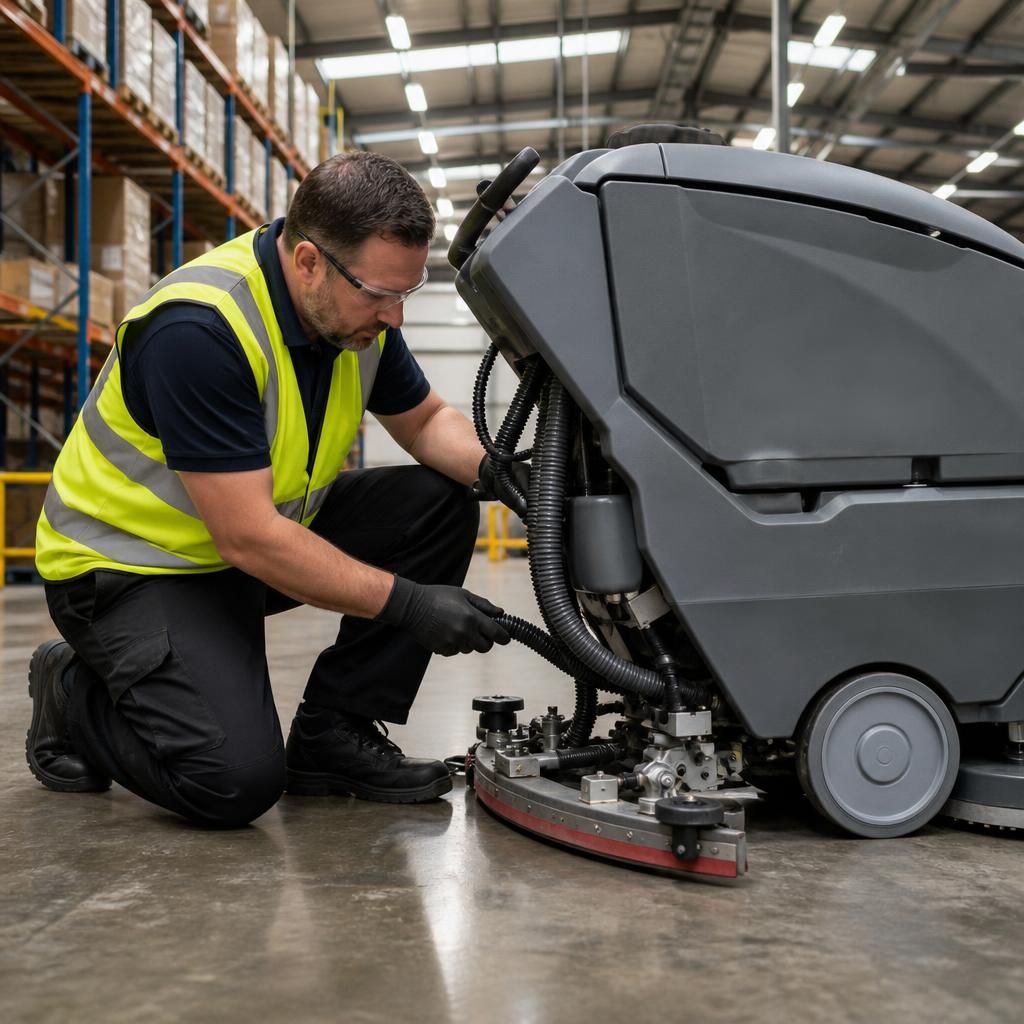
Pre-use checks are a fundamental safety precaution when operating industrial floor cleaning machines. Before starting work, the operator should confirm that the machine is in safe working order and that its brushes, pads, squeegees, tanks, hoses, guards, wheels, controls and emergency stop operate correctly.
Inspect cables, plugs, batteries and connectors for damage, and check for leaks, loose components or exposed wiring. Confirm that warning lights, alarms and brakes function where fitted. The cleaning area should also be checked for debris, damaged flooring, obstructions, open edges, pedestrians and vehicle movements. Any defect must be reported and the machine removed from service until it has been assessed and repaired.
Operators should never clear a blockage or adjust a brush, pad or squeegee while the machine is energised. Switch it off, remove the key or isolate the power source, apply the brake where fitted and wait for all moving parts to stop. Follow the manufacturer’s isolation procedure before carrying out maintenance or cleaning beneath the machine.