
What maintenance practices are essential to ensure the longevity and efficiency of industrial concrete floor cleaning machines?
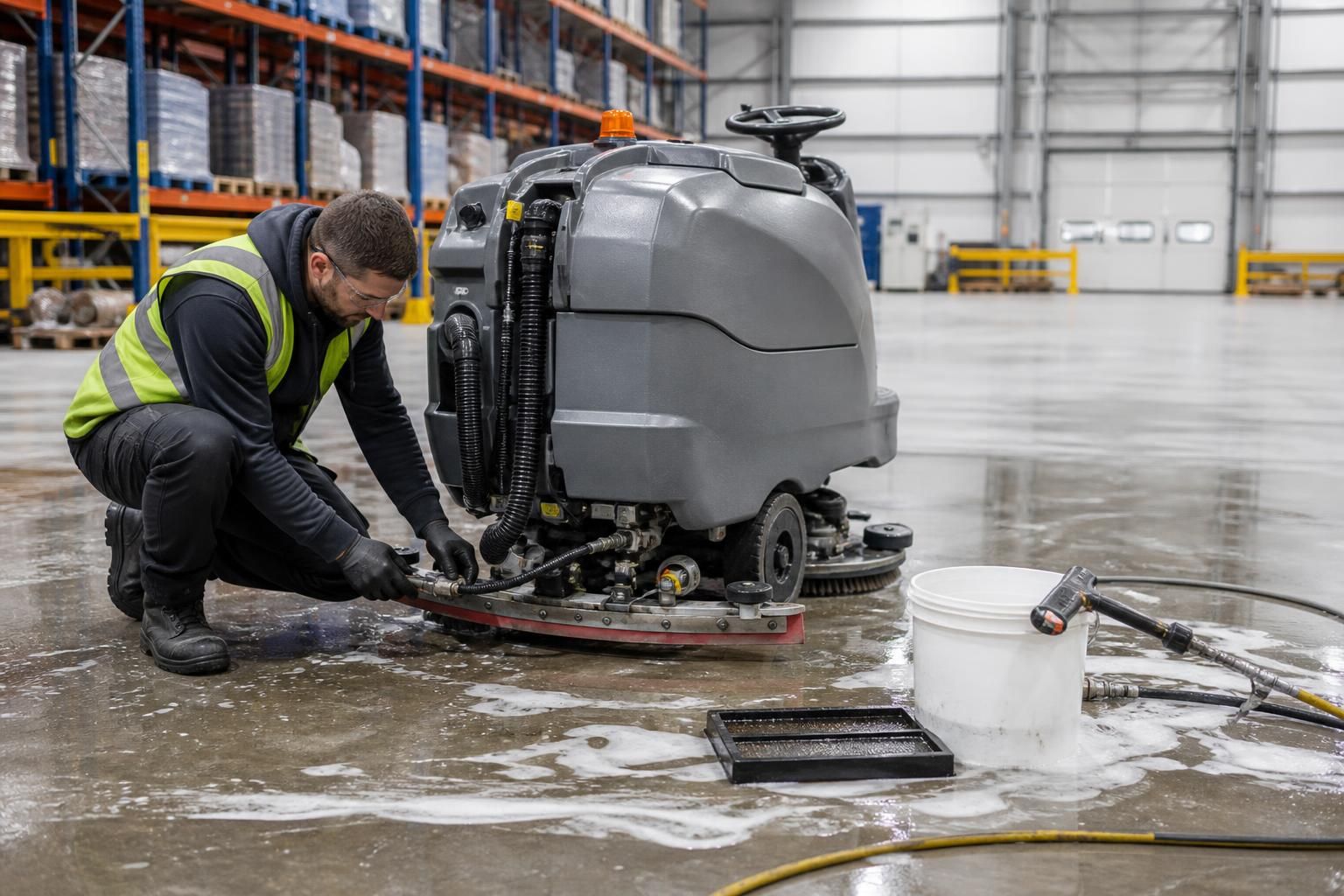
Essential maintenance includes rinsing and inspecting the machine after every use, removing concrete dust and slurry, checking brushes, squeegees, filters, hoses and batteries, and keeping tanks and recovery systems clean. Follow the manufacturer’s servicing schedule, lubricate and replace worn components promptly, and record inspections so faults are identified before they cause poor cleaning performance or costly downtime.
Industrial concrete floor cleaning machines last longer and operate more efficiently when they are rinsed, inspected and correctly stored after every use, supported by planned servicing and prompt replacement of worn parts. Concrete dust, abrasive grit, slurry and cleaning chemicals can quickly damage brushes, squeegees, filters, hoses, tanks, pumps and drive components if they are allowed to remain in the machine.
Clean the machine after every shift
- Switch off the machine, isolate the power supply and follow the manufacturer’s shutdown procedure before cleaning or inspecting it.
- Empty and rinse solution tanks, recovery tanks and debris containers. Do not leave dirty water, slurry or chemical solution standing, as it can cause odours, blockages, corrosion and damage to seals.
- Flush recovery hoses and solution lines with clean water. Check for concrete fines or hardened residue around hose connections, spray jets and tank outlets.
- Remove accumulated dust and slurry from the brush deck, wheels, underside, squeegee assembly and access panels. Use methods suitable for the machine’s electrical and electronic components rather than directing water at them.
- Leave tanks, lids and recovery-system components open to dry where the manufacturer permits. This helps prevent microbial growth and reduces unpleasant smells.
Inspect brushes, pads and squeegees
Brushes and pads are directly responsible for transferring cleaning action to the concrete surface. Inspect them for uneven wear, embedded aggregate, glazing, splitting or deformation. A worn brush may reduce cleaning performance, increase pressure on the drive motor and leave the operator relying on excessive detergent or repeated passes. Rotate or replace brushes and pads in accordance with the equipment instructions and the demands of the floor.
Check front and rear squeegee blades for nicks, curling, hardening and uneven contact with the floor. Turn reversible blades when appropriate and replace them when they no longer recover water consistently. A machine that leaves wet trails may have worn blades, a blocked suction path, an incorrectly adjusted squeegee or a damaged recovery hose; replacing a blade without checking the complete system may not resolve the problem.
Maintain tanks, filters and the recovery system
- Clean solution filters and recovery filters regularly so that restricted flow does not reduce scrubbing or suction performance.
- Inspect tank seals, drain hoses, lids and gaskets for cracking, leaks or loss of flexibility.
- Check vacuum motors and intake screens for blocked airflow. Fine concrete dust can reduce suction and cause overheating if it bypasses or overloads the filtration system.
- Keep float shut-off mechanisms clean and free to move. A faulty float can allow liquid to reach the vacuum motor.
- Inspect drain valves and hose couplings for abrasion, loose fittings and chemical damage.
Check batteries, chargers and electrical components
For battery-powered machines, inspect battery condition, terminals, cables and connectors for corrosion, looseness or damage. Charge batteries using the correct charger and charging procedure, and keep charging areas ventilated where required by the battery type. Do not continue using batteries that are swollen, leaking or showing signs of serious damage. Rechargeable batteries should not be routinely run completely flat, unless the manufacturer specifically requires that procedure.
Inspect mains cables, plugs, switches, control panels and emergency stops before use. Damaged insulation, exposed conductors, intermittent controls or water ingress require the machine to be removed from service until it has been assessed by a competent person. Avoid makeshift electrical repairs, as they can create shock, fire and reliability risks.
Lubricate and inspect moving parts
Follow the service manual for lubrication points, approved lubricants and service intervals. Over-lubrication can attract abrasive dust, while using the wrong product may damage seals or contaminate floor surfaces. Examine wheels, castors, bearings, drive belts, chains, brush motors, lift mechanisms and steering components for unusual noise, vibration, stiffness or play. Check that guards and covers are secure and that fasteners have not loosened through vibration.
On ride-on or powered scrubber-dryers, pay particular attention to traction, braking, steering and parking systems. On sweepers, inspect side brushes, main brooms, dust-control systems and hopper mechanisms. The maintenance requirements differ between machine types, but abrasive concrete dust should always be removed before it reaches motors, bearings and moving assemblies.
Use the correct chemicals and operating settings
Only use cleaning products approved for the machine and the concrete surface. Excessive detergent can create foam, overload recovery systems and leave a film that attracts further dirt. Incorrectly concentrated chemicals may attack seals, hoses, tanks or floor finishes. Use the correct brush pressure, water flow, speed and vacuum settings for the floor condition. Excessive pressure or unnecessary water flow increases component wear without necessarily improving the result.
Never use a machine outside its intended application, such as collecting unsuitable liquids, aggressive chemicals or large quantities of dry dust without the required filtration. Where concrete dust is present, use the specified dust-control or filtration arrangement rather than allowing fine particles to circulate through the machine.
Follow a planned servicing programme
Operator cleaning and inspection should be supported by servicing based on operating hours, working conditions and the manufacturer’s schedule. Heavy dust, abrasive debris, frequent slurry recovery and demanding shifts may require more frequent inspection than light-duty use. Planned servicing should include electrical testing where applicable, battery assessment, motor and pump checks, filter inspection, drive-system examination, fastener checks and verification of safety controls.
Use trained, competent technicians for work involving electrical systems, batteries, hydraulic components, vacuum motors or drive assemblies. Keep service records showing inspections, defects, parts replaced, battery work and outstanding actions. Records make recurring faults easier to identify and help prevent a machine being returned to service with a known defect.
Store the machine correctly
- Park it on a clean, level surface in a dry, protected area away from traffic routes and temperature extremes.
- Lower or release brushes and squeegees where instructed so they are not left compressed or distorted.
- Store hoses without tight kinks and protect cables from crushing, moisture and vehicle movement.
- Secure ride-on machines against unintended movement and follow the correct procedure for isolating or maintaining batteries during extended storage.
- Keep the machine clean and dry before covering it. A cover should allow appropriate ventilation rather than trapping condensation.
Act on warning signs promptly
Reduced suction, streaking, unusual vibration, burning smells, overheating, loss of traction, leaking tanks, rapid battery discharge or repeated circuit trips indicate that the machine needs investigation. Continuing to operate it can turn a replaceable consumable or minor blockage into motor, pump or control-system damage. Tag defective equipment, record the fault and remove it from service where safe operation or cleaning performance may be affected.
Effective maintenance is therefore a combination of post-use cleaning, routine condition checks, correct operation, planned servicing and accurate records. This approach keeps industrial concrete floor cleaning machines working at their intended capacity, limits avoidable wear and reduces disruption to warehouse and factory cleaning schedules.
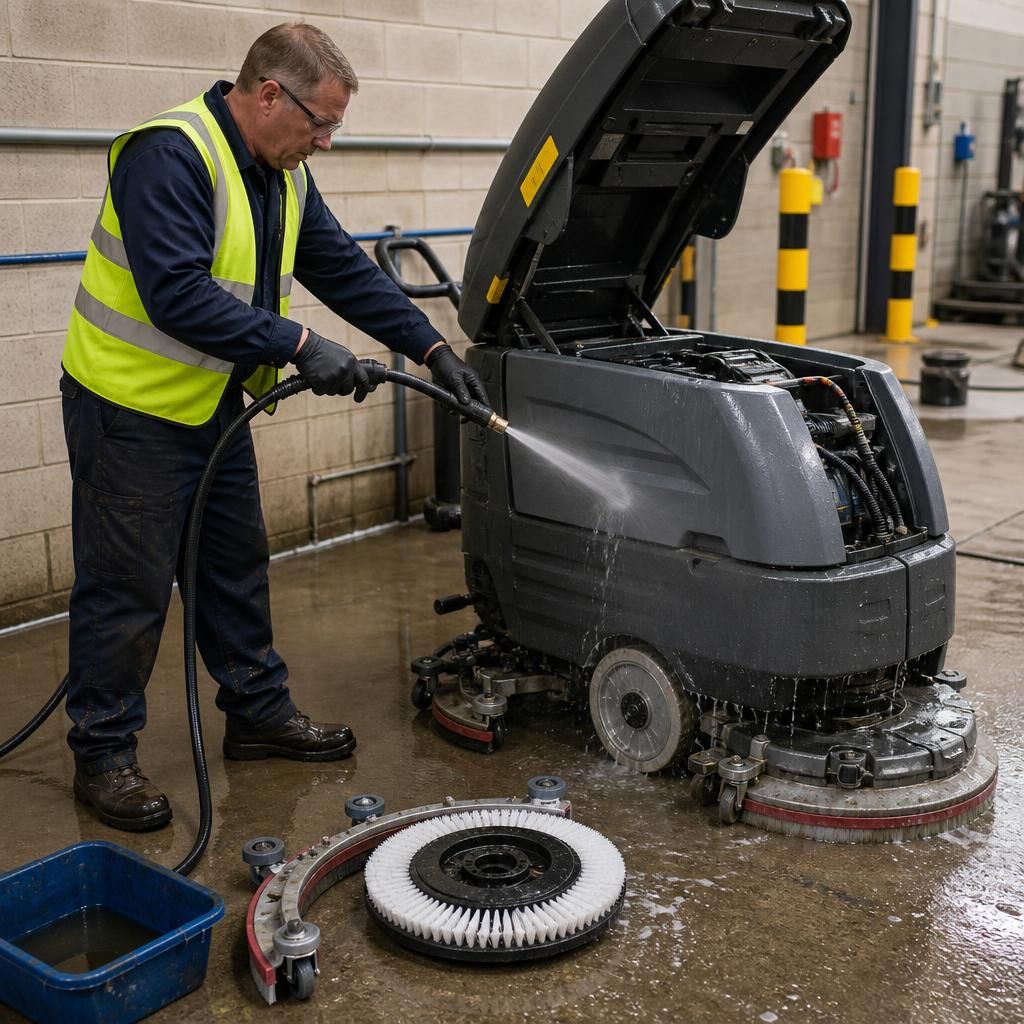
Cleaning and drying an industrial concrete floor cleaning machine after every use is one of the most important maintenance practices for preventing blockages, corrosion and loss of suction. Concrete dust, abrasive grit, slurry and detergent residue can harden inside tanks, hoses, filters and squeegee assemblies, placing additional strain on pumps, vacuum motors and seals.
- Empty and rinse the solution and recovery tanks, then flush hoses, outlets and spray jets with clean water.
- Remove slurry and dust from the brush deck, wheels, squeegees and underside, taking care not to direct water at electrical controls or motors.
- Clean filters and check float shut-off mechanisms so airflow and recovery protection are maintained.
- Leave tanks, lids and recovery components open to dry where permitted by the manufacturer.
This post-use routine should be recorded alongside any defects found. Streaking, standing water, reduced suction, unusual noise or leaking connections should be investigated before the machine is returned to service.