
What maintenance is required to keep industrial floor cleaning machines in optimal condition?
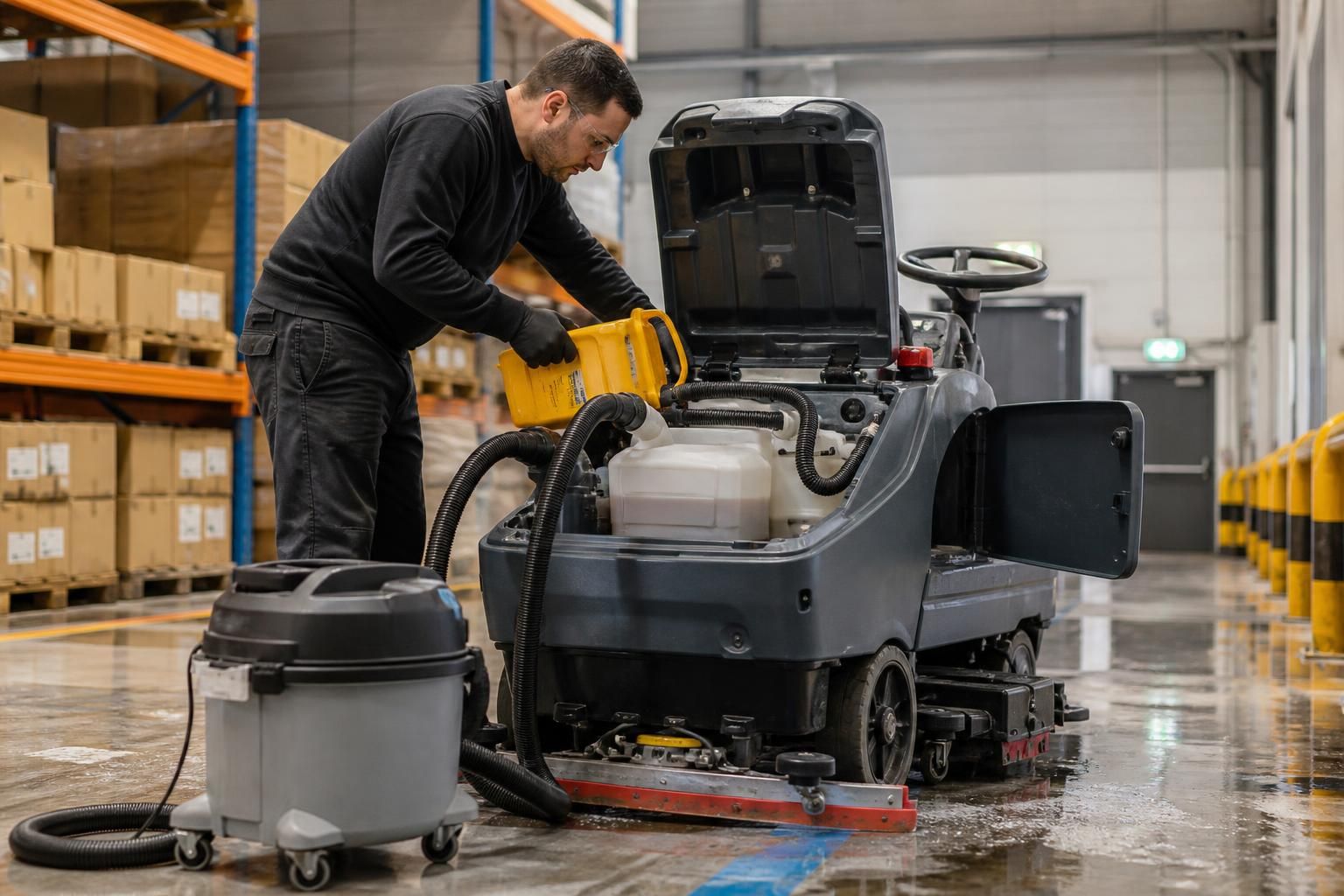
Maintaining industrial floor cleaning machines requires daily cleaning and inspection, scheduled servicing, and prompt replacement of worn components. Empty and rinse tanks, clean brushes, pads, squeegees, filters and suction systems after use, check batteries, cables, hoses and wheels, and follow the manufacturer’s service schedule to prevent breakdowns and maintain effective cleaning.
Industrial floor cleaning machines remain in optimal condition when they are cleaned after every use, inspected before operation, serviced in line with the manufacturer’s instructions and taken out of service when safety-critical faults are found. Routine maintenance prevents poor water recovery, uneven cleaning, premature component wear, avoidable breakdowns and damage to warehouse or factory floors.
The exact maintenance routine depends on the equipment. Scrubber dryers require particular attention to solution and recovery tanks, brushes, pads, squeegees, filters and suction systems. Sweepers need regular brush, hopper, filter and dust-control maintenance. Battery-powered machines also require correct battery charging and care, while fuel-powered equipment needs additional engine and exhaust checks.
Clean the machine after every use
Cleaning residues left inside a machine can harden, create unpleasant odours, block components and promote corrosion. At the end of each shift or cleaning task:
- Empty the recovery tank and rinse it thoroughly to remove dirty water, chemicals and settled debris.
- Empty and rinse the solution tank where the machine design and cleaning product instructions allow it.
- Flush solution lines and nozzles if detergent, slurry or mineral deposits could have accumulated.
- Remove brushes and pads, wash them, and allow them to dry before storage. Replace items that are excessively worn, distorted or contaminated.
- Clean squeegee blades and inspect their edges for splits, hardening or uneven wear.
- Clean the suction inlet, hoses and filters so that airflow and water recovery are not restricted.
- Remove dust, grit and chemical residue from the body, control panel, wheels and underside of the machine.
- Leave tanks, lids and removable components open or positioned as recommended so that the equipment can dry properly.
Do not use high-pressure water directly on motors, electrical connections, control panels or battery compartments unless the manufacturer specifically permits it. Excess water can create electrical faults even when the exterior appears sealed.
Carry out pre-use inspections
A brief inspection before each use helps identify defects before they affect cleaning quality or create a hazard. Check that the machine starts and stops correctly, warning indicators work and all guards and covers are secure. Examine the following points:
- Power cables, plugs, chargers and electrical connections for cuts, crushing or heat damage.
- Battery condition, terminals and securing arrangements on battery-powered equipment.
- Fuel lines, caps, leaks and exhaust components on fuel-powered machines.
- Hoses, couplings and solution lines for splits, blockages and loose connections.
- Brushes, pads, squeegees and side skirts for wear or damage.
- Wheels, castors, steering, brakes and drive controls for smooth and predictable operation.
- Tank seals, drain hoses and latches for leaks.
- Lights, beacons, horns, reverse alarms and other fitted safety equipment.
Any leak, exposed wiring, damaged guard, ineffective brake or other safety-critical defect should be reported and the machine isolated until it has been assessed and repaired by a competent person.
Maintain brushes, pads and squeegees
Consumable cleaning components directly affect the result. Worn brushes may leave soil behind, while an unsuitable pad can mark or dull a floor coating. Inspect brush bristles for flattening, uneven wear and embedded debris. Check pads for thinning, tearing and contamination, and use the grade specified for the floor finish and cleaning task.
Squeegee blades must sit evenly against the floor without excessive pressure. Turn or replace blades when the working edge becomes rounded, split or permanently deformed. If water remains behind the machine, check the blade condition, alignment, suction hose and recovery filter before increasing pressure or detergent concentration.
Look after tanks, filters and suction systems
Recovery tanks and filters need frequent cleaning because fine dust, slurry and cleaning chemicals can reduce suction. Remove and wash accessible filters according to the equipment instructions, checking for tears or blockages before refitting them. Keep drain hoses and tank outlets clear, and inspect seals for deterioration.
Do not allow dirty water to remain in a recovery tank during storage. It can produce odours, damage seals and encourage residue to build up in hoses. If a machine repeatedly loses suction after cleaning, it may have a blocked filter, damaged hose, poor tank seal or worn suction motor, all of which require investigation rather than repeated use.
Charge and maintain batteries correctly
Use the specified charger and charging procedure for the battery type fitted to the machine. Keep charging areas ventilated where required, protect chargers from moisture and do not operate equipment with damaged leads or connectors. Inspect battery terminals for corrosion, ensure batteries are secure and keep the compartment clean and dry.
Follow the manufacturer’s guidance on charging, water levels where applicable, equalisation and storage. Do not mix battery types or chargers without approval. Poor charging practice can reduce available operating time, damage the battery and increase the risk of overheating. Battery work should be completed by trained personnel using the appropriate personal protective equipment and isolation procedures.
Service mechanical and electrical components
Planned servicing should follow the manufacturer’s schedule and account for operating conditions. Machines used on abrasive concrete, in dusty environments or for long shifts may need more frequent inspection than equipment used lightly in a clean, dry area. A competent technician should assess drive systems, motors, pumps, belts, bearings, steering, brakes, fasteners and electrical controls as applicable.
Lubricate only the points and components identified in the service instructions. Excess lubricant can attract dust and grit, while incorrect products can damage seals or belts. Replacement parts should meet the machine specification; improvised repairs can affect cleaning performance, electrical safety and warranty requirements.
Store equipment in suitable conditions
Park machines on a stable, level surface in a dry, secure and adequately ventilated area. Protect them from frost, excessive heat, standing water and vehicle impact. Lower or release components where instructed, keep brushes and squeegees from being permanently compressed, and store removable items so that they can dry without becoming contaminated.
Before extended storage, clean and dry the machine, follow the battery storage procedure and protect exposed connections as specified. When returning the equipment to service, complete a full inspection rather than relying on the previous operator’s checks.
Keep maintenance records
Record cleaning, inspections, faults, repairs, parts replaced, battery work and servicing. A simple log helps identify recurring issues such as blocked filters, rapid blade wear or reduced battery performance. It also provides evidence that equipment has been maintained and makes it easier to schedule servicing before a machine fails during a planned cleaning operation.
Operators should receive instruction on the specific machine, cleaning chemicals, isolation procedures and reporting requirements. Maintenance must be carried out with the machine stopped, isolated from its power source where appropriate and secured against unintended movement. Consistent daily care, supported by competent scheduled servicing, is the most reliable way to preserve cleaning performance and extend the working life of industrial floor cleaning equipment.
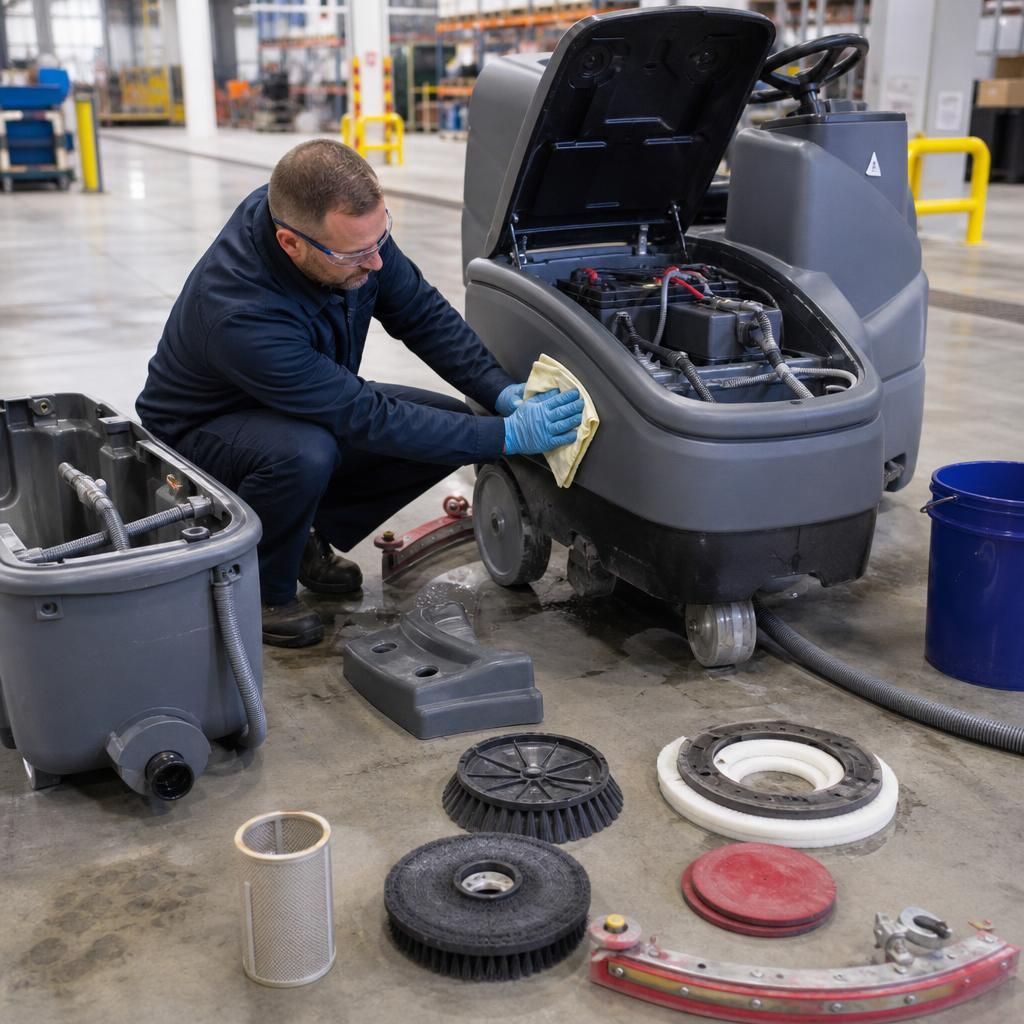
Daily cleaning and drying are essential maintenance tasks for industrial floor cleaning machines. Empty and rinse the solution and recovery tanks after each use, then clean the brushes, pads, squeegee blades, filters and suction hoses. This removes chemical residue, slurry and debris before they harden or restrict water recovery.
Allow removable components, tanks and lids to dry as the manufacturer recommends, while keeping electrical controls, motors and battery compartments protected from water. Inspect parts as they are cleaned and replace worn brushes, pads or squeegee blades promptly. This routine helps prevent odours, blockages, uneven cleaning and avoidable damage during the next operation.