What are the key features to look for in industrial concrete floor cleaning machines to ensure effective performance in my specific environment?
Industrial concrete floor cleaning machines should match the site’s floor type, soil level and working conditions, with sufficient brush pressure, water flow, vacuum recovery and manoeuvrability for the area being cleaned. Look for durable construction, adjustable cleaning settings, effective water recovery, suitable battery or power capacity, operator safety features and access to replacement parts and servicing.
The most important features in an industrial concrete floor cleaning machine are adjustable cleaning power, effective water recovery, suitable capacity, robust construction and safe manoeuvrability. The machine should be selected for the concrete surface, type of contamination, available working space, operating conditions and cleaning frequency rather than simply its overall size or advertised power.
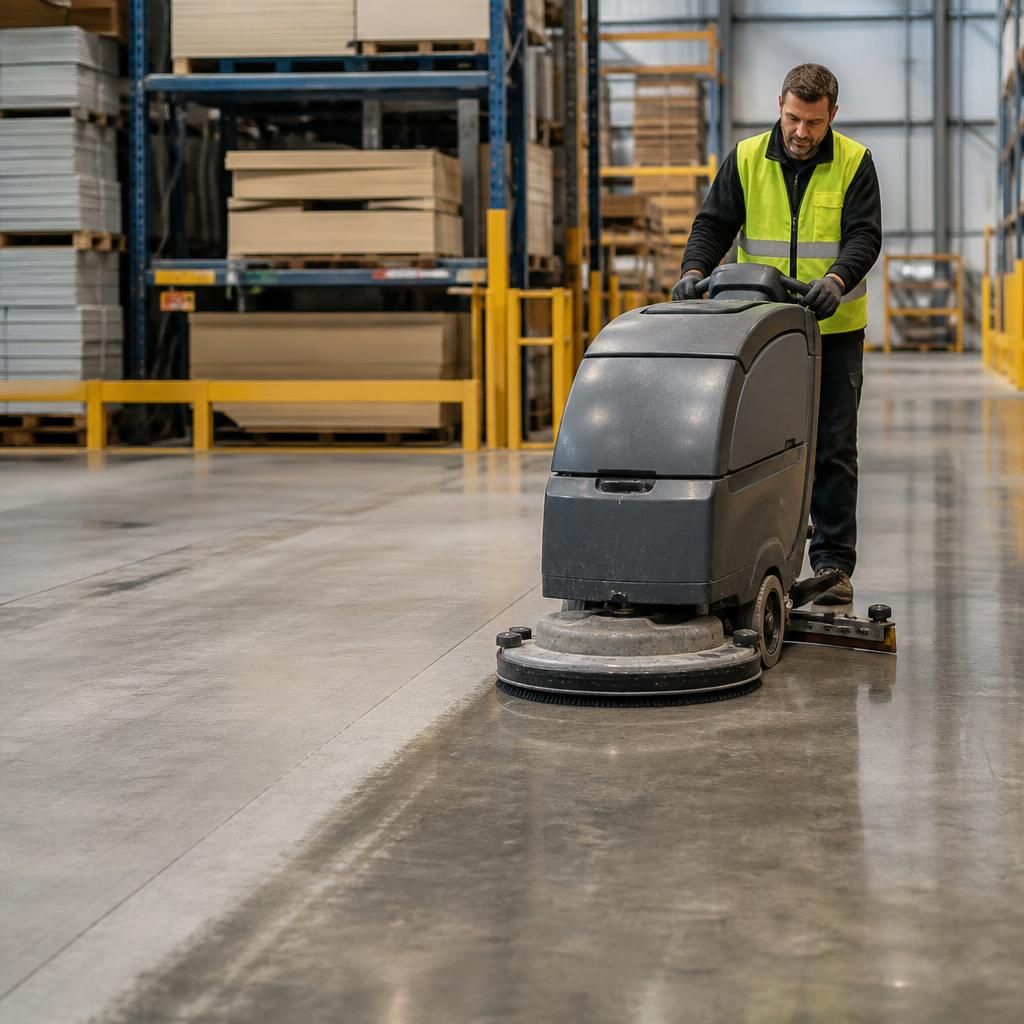
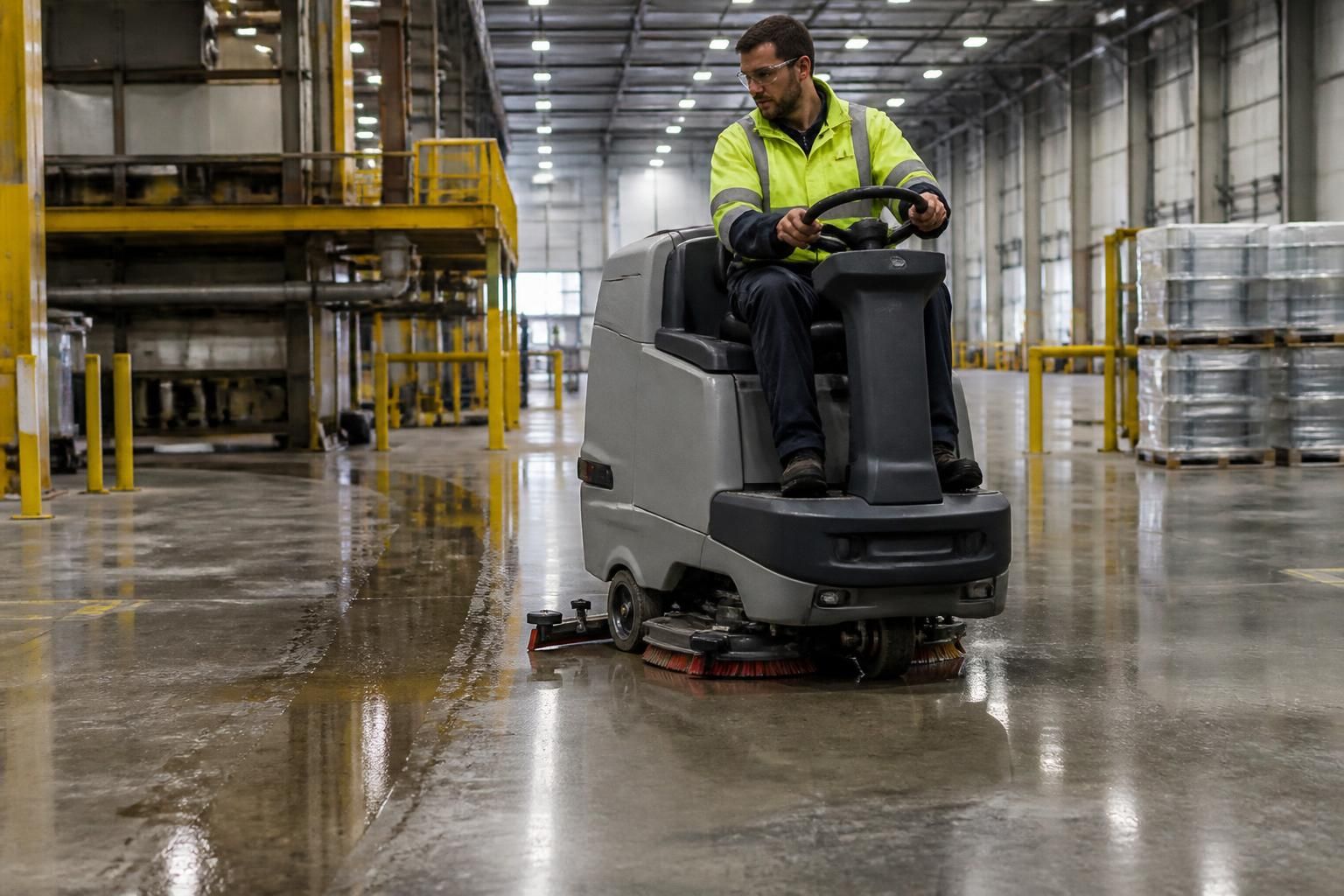
For most large warehouses, factories and distribution areas, a scrubber-dryer is the primary machine to assess. It applies water and cleaning solution, agitates the surface with brushes or pads, then removes the contaminated water through a squeegee and vacuum system. A sweeper may be required first where the floor contains loose aggregate, packaging debris, dust or metal swarf. Heavily contaminated areas may also need targeted pressure washing, steam cleaning or manual treatment before machine scrubbing.
Adjustable brush or pad pressure is essential because industrial concrete floors vary considerably. Lightly soiled, sealed or coated floors can be damaged by excessive pressure or an unsuitable abrasive pad, while unsealed concrete with ingrained oil and tyre marks may require greater agitation. Choose a machine that allows the operator to alter brush pressure and select compatible brushes or pads. Cylindrical brush systems can be useful where light debris collection and scrubbing are both required; disc systems provide broad contact with relatively even floor areas.
The cleaning head should be appropriate for the floor’s condition. Consider whether the concrete is:
- smooth, power-floated and sealed;
- rough, porous or heavily textured;
- covered with a resin, epoxy or other protective coating;
- jointed, uneven or affected by surface wear; or
- contaminated with oil, grease, rubber marks, mud, dust or production residues.
On coated floors, confirm that the brush, pad and detergent combination will not dull or strip the finish. On porous concrete, a machine needs sufficient agitation and controlled solution flow, followed by reliable recovery so that contaminated liquid is not left in the surface or joints.
Water and detergent control directly affects cleaning quality and operating cost. Look for independently adjustable solution flow, rather than a system that releases the same quantity of water at every speed. Lower flow is normally preferable for lightly soiled areas or slow-drying environments, while heavier contamination may need additional solution and dwell time. A clean-water tank and recovery tank should be easy to fill, empty and inspect. Tank openings must be accessible so that residue, sludge and detergent build-up can be removed during routine cleaning.
Detergent dosing can help maintain consistent chemical concentration and prevent unnecessary use of cleaning products. The system should still allow the operator to use the correct chemical for the concrete and contamination. Inappropriate detergents can leave a film, affect coatings, increase slip risk or interfere with wastewater disposal. Always follow the chemical manufacturer’s instructions and the site’s drainage and environmental procedures.
Water recovery and vacuum performance are particularly important in operational warehouses and factories. A strong vacuum motor, well-designed squeegee and flexible recovery hoses should leave the floor as dry as practicable after one pass. Check that the squeegee follows minor changes in the floor and can be lifted or adjusted when crossing thresholds. Poor recovery can leave slippery patches, extend drying time and spread contaminated water into clean areas.
Recovery performance also depends on the floor itself. Deep joints, damaged concrete, steep gradients and uneven surfaces can prevent a machine from collecting all the liquid. Where the floor has significant defects, assess the machine on the actual site rather than relying only on manufacturer specifications. A pre-use trial can reveal whether the squeegee, wheels and cleaning head maintain contact across the working area.
Capacity and productivity should be matched to the size and layout of the facility. A larger cleaning width and tank capacity may reduce interruptions on open warehouse floors, but a large machine can be unsuitable around racking, production lines, doorways and loading bays. Consider the machine’s practical cleaning rate, including filling, emptying, turning, battery changes and movement between areas, rather than its theoretical headline output.
For restricted or congested spaces, prioritise:
- a compact body and narrow cleaning head;
- a tight turning circle;
- clear visibility around the cleaning head;
- easy access to corners and edges;
- low overall height for doorways and storage areas; and
- controls that can be operated safely while wearing the required personal protective equipment.
For extensive open floors, a ride-on machine may reduce operator fatigue and improve consistency, provided there is sufficient clearance, suitable traffic management and a safe place to park and charge it. A walk-behind machine can offer better control in narrow or frequently obstructed areas.
Power supply and battery performance must suit the cleaning schedule. Battery-powered machines avoid trailing cables and are often more practical in areas used by pedestrians, vehicles or handling equipment. Check the expected working time under normal brush pressure and vacuum use, not just the battery’s nominal capacity. Charging time, battery replacement arrangements, ventilation requirements and the availability of a spare battery can affect whether the machine is suitable for continuous operations.
Mains-powered equipment can provide consistent operation for suitable indoor environments, but cables introduce trip, damage and contamination risks. If a cable is used, the machine should include appropriate protection and the site should have a controlled method for routing it away from traffic and wet areas. For petrol or diesel-powered equipment, confirm that ventilation is adequate and that emissions will not affect workers, stored goods or sensitive production processes.
Durability and construction are central to industrial use. Look for a strong chassis, protected motors, impact-resistant components, corrosion-resistant tanks and robust wheels or castors. The machine should tolerate regular movement over expansion joints, thresholds and loading-bay surfaces without exposing vulnerable components. Seals, hoses, squeegees, brush mounts and wheels are wear items, so they should be replaceable without excessive downtime.
Ease of maintenance is as important as initial build quality. Inspect whether the recovery tank, filters, vacuum hoses, squeegee assembly and brushes can be removed and cleaned without specialist tools. A machine that is difficult to empty or sanitise may develop odours, blockages and reduced suction. Clear service access, fault indicators and an operating-hour display can help the team identify problems before they affect cleaning performance.
Operator safety features should include controlled acceleration, effective braking, stable handling, emergency stop access and clear battery or low-fluid warnings. Ride-on machines should have appropriate speed control, visibility and protection against unintended movement. Automatic brush and water shut-off when the machine stops can reduce puddling and wear. Check for non-slip operator surfaces, suitable lighting or warning beacons where needed, and audible alerts that are appropriate for the site’s noise levels.
Safety selection must reflect the environment. A machine used near forklifts needs a clearly defined pedestrian and vehicle segregation process. A machine used in food, pharmaceutical or other controlled areas may require specific materials, cleaning procedures and chemical controls. In wet or washdown areas, confirm that the equipment has the required protection rating and is approved for that operating condition; do not assume that every industrial machine is suitable for direct hose-down cleaning.
Noise, emissions and environmental controls can determine whether a machine is appropriate for the facility. Low-noise equipment is preferable near offices, occupied buildings and operations that continue during cleaning. Battery equipment may be more suitable for enclosed areas where combustion emissions are unacceptable. Water-saving controls, efficient vacuum motors, recyclable components and measured detergent dosing can reduce resource use, but they must not compromise the required cleaning result.
Wastewater handling should be considered before purchase. The machine must allow contaminated water to be collected and disposed of in accordance with the site’s drainage arrangements and applicable requirements. Oil, chemicals, heavy sediment and production residues may need separate handling. A machine that leaves liquid behind or makes recovery difficult may be unsuitable even if its scrubbing performance is strong.
Service support and parts availability are practical performance features. Confirm that brushes, pads, squeegee blades, filters, hoses, batteries and other consumables can be sourced promptly. Ask about servicing, operator training, fault diagnosis and access to technical support. A slightly simpler machine with dependable parts and straightforward maintenance can deliver more consistent service than a complex model that is difficult to repair or configure.
Before choosing, document the site conditions and carry out a controlled assessment on representative areas. Record the floor finish, contamination, cleaning width required, access restrictions, slopes, drainage arrangements, available power, expected operating hours and the time allowed for drying. Test the machine using the intended brush or pad, detergent and operating speed. Assess how well it removes the actual contamination, whether the floor dries safely, how easily it reaches edges, and whether the operator can use it without excessive fatigue.
The best machine is therefore the one that provides controlled agitation, consistent solution delivery, thorough recovery and safe movement in the specific facility. Matching those features to the concrete surface and daily workflow will produce more reliable results than selecting equipment solely by tank size, motor power or purchase price.