
How often should warehouse and factory floors be cleaned using industrial machines?
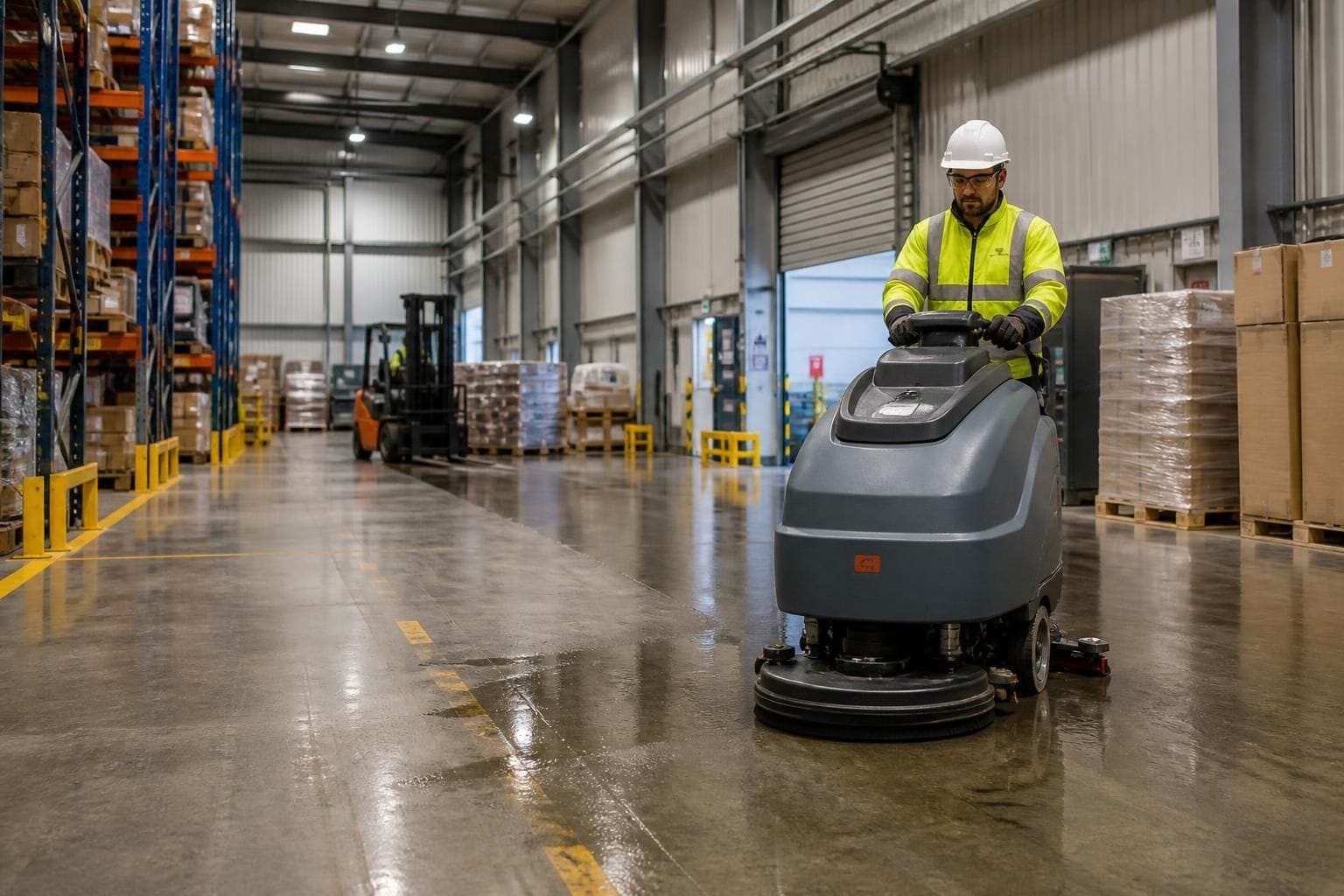
Warehouse and factory floors should usually be machine-cleaned daily in high-traffic or spill-prone areas, with less-used zones cleaned weekly or according to their condition. The correct schedule depends on traffic, contamination, workplace risks, product handling and housekeeping requirements, so review it whenever dust, oil or debris begins affecting safety or operations.
Warehouse and factory floors should be cleaned with industrial machines according to traffic, contamination and operational risk. High-traffic aisles, loading areas, production zones and spill-prone surfaces commonly need machine cleaning daily, while lightly used storage areas may be suitable for weekly or condition-based cleaning. The schedule should be documented, monitored and adjusted whenever dust, oil, debris or residues begin to affect safety, hygiene or performance.
A useful cleaning plan normally combines routine housekeeping with scheduled machine cleaning:
- Throughout the working day: remove loose packaging, pallets, metal fragments and other obstructions promptly. Deal with spills as soon as they occur rather than waiting for the next planned clean.
- Daily: machine-clean busy pedestrian routes, forklift aisles, dispatch areas, entrances, production floors and any surface where dirt or residue can create a slip or contamination risk.
- Several times a week: clean moderately used areas where dust and tracked-in dirt accumulate but do not present an immediate operational risk.
- Weekly or according to condition: machine-clean low-traffic storage areas, peripheral zones and sections that remain visibly clean between routine inspections.
- Periodically: schedule a more detailed clean for beneath racking, around machinery, along edges, in drainage channels and in other areas that routine scrubbing does not fully reach.
These frequencies are starting points rather than fixed rules. A warehouse handling dry goods may mainly require dust and debris removal, whereas a factory using oils, lubricants, adhesives, chemicals or wet processes may need daily or more frequent machine cleaning. Residues that are not removed can spread through vehicle traffic, become harder to lift and increase the risk of slips, product contamination or damage to the floor surface.
Traffic is one of the most important factors. Forklifts and pallet trucks bring in dirt from external yards and can spread moisture or oil across a wide area. Main routes, turning points, ramps, doorways and loading bays therefore usually need more frequent attention than aisles that are rarely used. Cleaning may also be required outside normal production hours so that the floor has time to dry before people, vehicles or stock return to the area.
The type of material on the floor also affects the method and frequency. Fine dust may require regular vacuuming or sweeping before scrubbing. Oil and grease may need a suitable degreasing solution and a scrubber dryer capable of recovering the contaminated water. Sticky residues can require slower machine passes or targeted treatment. The cleaning method should be compatible with the concrete, resin, coated or other floor finish; excessive water, unsuitable chemicals or abrasive action can deteriorate some surfaces.
Food, pharmaceutical, healthcare-related and other controlled environments may require cleaning at defined intervals within documented hygiene procedures. In these settings, the frequency should reflect the site’s risk assessment, contamination controls, production requirements and any applicable quality or hygiene standards. A general warehouse schedule should not be applied without considering those controls.
Machine cleaning is particularly important when floors are visibly dirty, feel slippery, generate dust, show tyre marks or retain footprints and residues after normal sweeping. It is also advisable after a spill, maintenance work, construction activity, flooding, stock damage or any incident that introduces an unusual contaminant. Isolate the affected area and use the correct recovery and disposal procedure rather than allowing the substance to be distributed by cleaning equipment.
To set an effective schedule, assess each zone separately and record:
- the number and type of people, forklifts and other vehicles using the area;
- the materials, products and substances handled there;
- the likelihood and consequences of slips, trips, contamination or dust exposure;
- the floor finish, drainage and drying conditions;
- the impact of cleaning on production, storage and access;
- the results of inspections, spill records and previous cleaning work.
Cleaning records should identify the area, method, machine used, chemicals applied, date, responsible person and any defects found. Supervisors should check whether the floor is clean and dry, whether residues remain at edges or beneath equipment, and whether the machine has removed rather than redistributed the contamination. If the same areas repeatedly become dirty before the next planned clean, increase the frequency or address the source of the contamination, such as damaged loading-bay seals, ineffective matting, leaking equipment or poor waste control.
Industrial machines do not replace basic housekeeping. Loose debris should be collected before wet scrubbing, spills should be controlled immediately, and aisles should be kept clear enough for the operator to clean safely. Operators should follow the machine manufacturer’s instructions, use the correct pad, brush and cleaning solution, and allow adequate drying time. Cleaning activities must be planned around pedestrians, vehicles, electrical equipment and stored goods.
For many facilities, a zoned schedule is the most practical approach: daily machine cleaning for high-risk and high-traffic areas, less frequent cleaning for stable low-traffic zones, and additional deep cleaning when inspections or production conditions indicate a need. Encanto Exterior Cleaning can help review the condition of warehouse and factory floors and establish a machine-cleaning programme that reflects the site’s traffic, contaminants, floor type and operating hours.
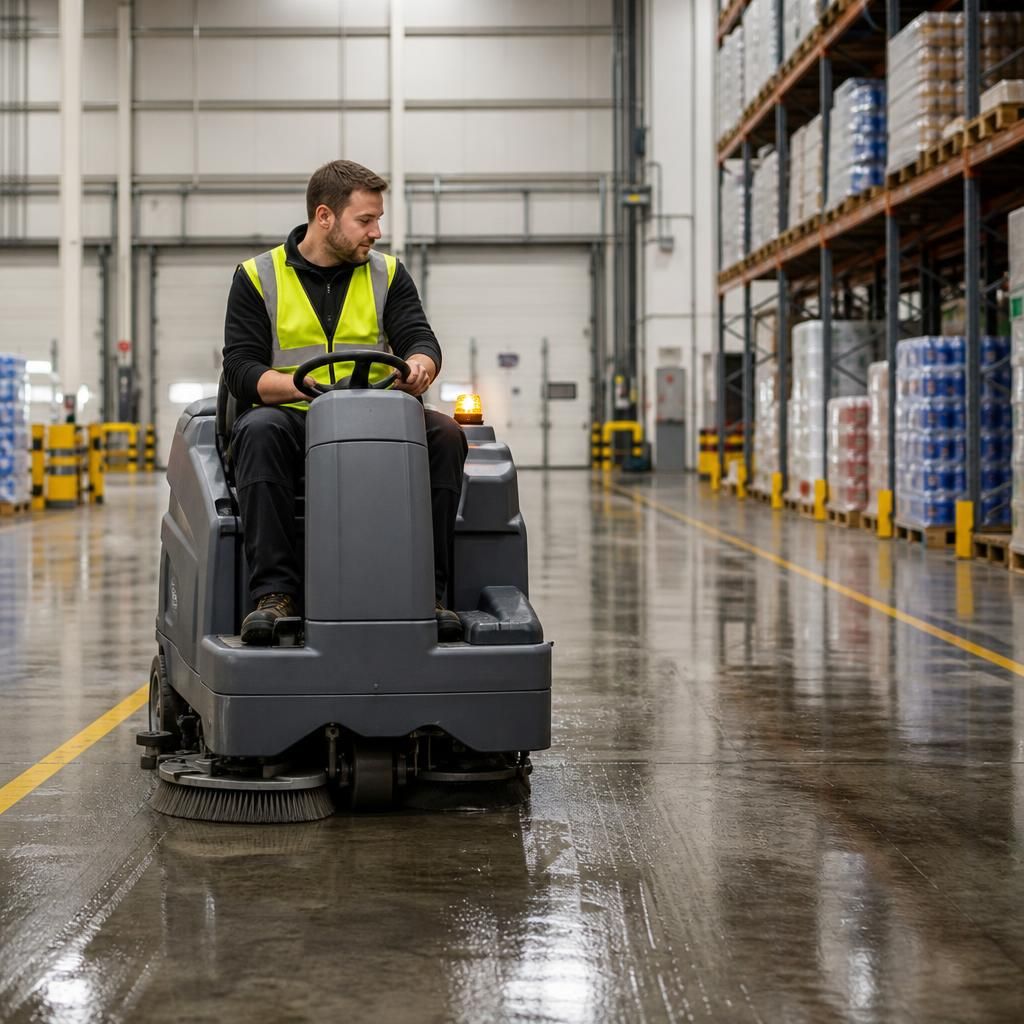
Industrial machine cleaning should be scheduled by floor zone rather than applied uniformly across the entire warehouse or factory. High-traffic aisles, loading bays, production areas and spill-prone surfaces generally need daily attention, while lightly used storage areas may be suitable for weekly or condition-based cleaning.
Review each zone for forklift traffic, tracked-in dirt, oil, dust, product residues and slip risks. Clean spills immediately and increase the planned frequency if contamination returns before the next scheduled visit. Cleaning should also be timed around operations, allowing sufficient drying time before pedestrians, vehicles or stock re-enter the area.
Record the machine, cleaning solution, date, operator and condition of the floor after cleaning. These records help identify recurring problems, such as leaking equipment, ineffective entrance matting or poor waste control, so the underlying source can be addressed rather than simply increasing cleaning frequency.