How can I ensure my industrial floor cleaning machines are energy efficient and environmentally friendly to reduce operational costs and environmental impact?
Ensure industrial floor cleaning machines are energy efficient by selecting the correct machine size and cleaning method, using efficient motors and battery systems, and matching water, detergent and pressure settings to the floor and soil level. Regular maintenance, responsible battery charging, route planning and responsible disposal of wastewater and consumables will reduce energy use, operating costs and environmental impact.
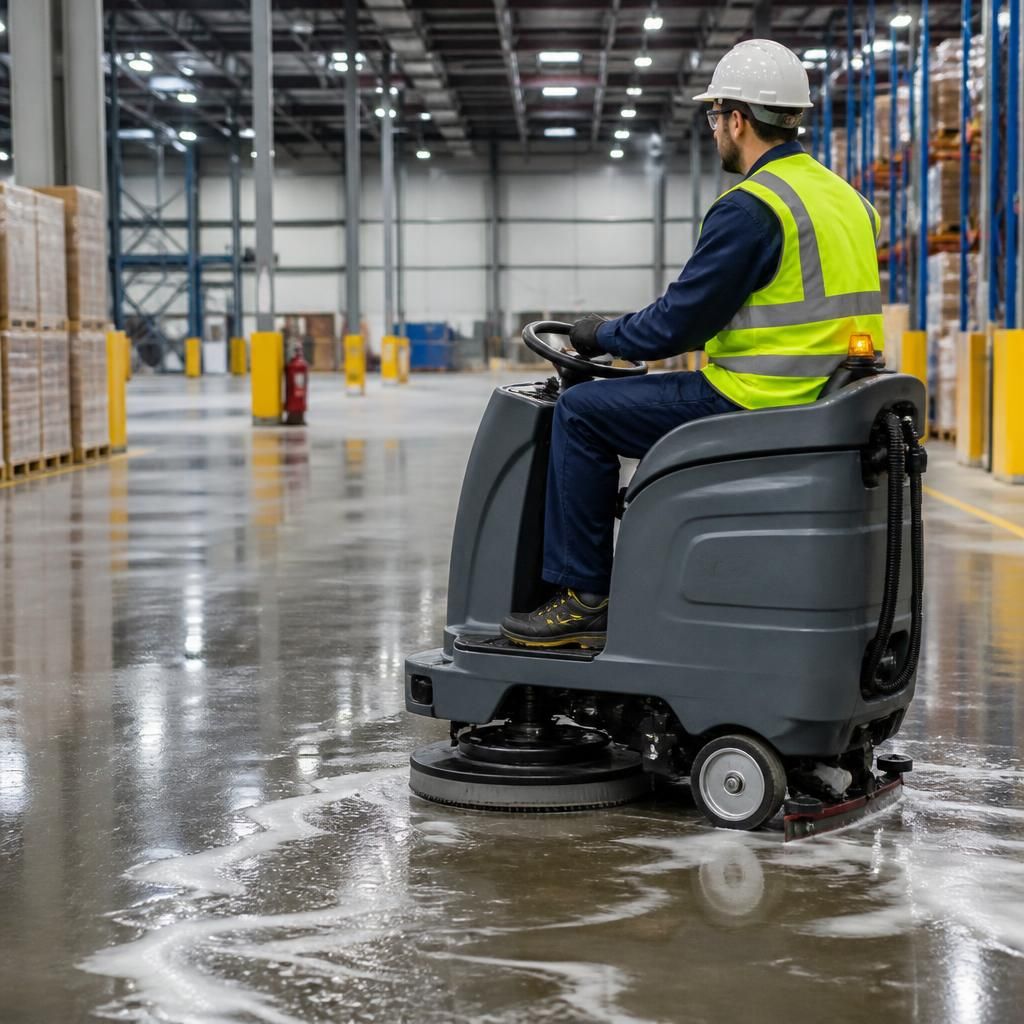
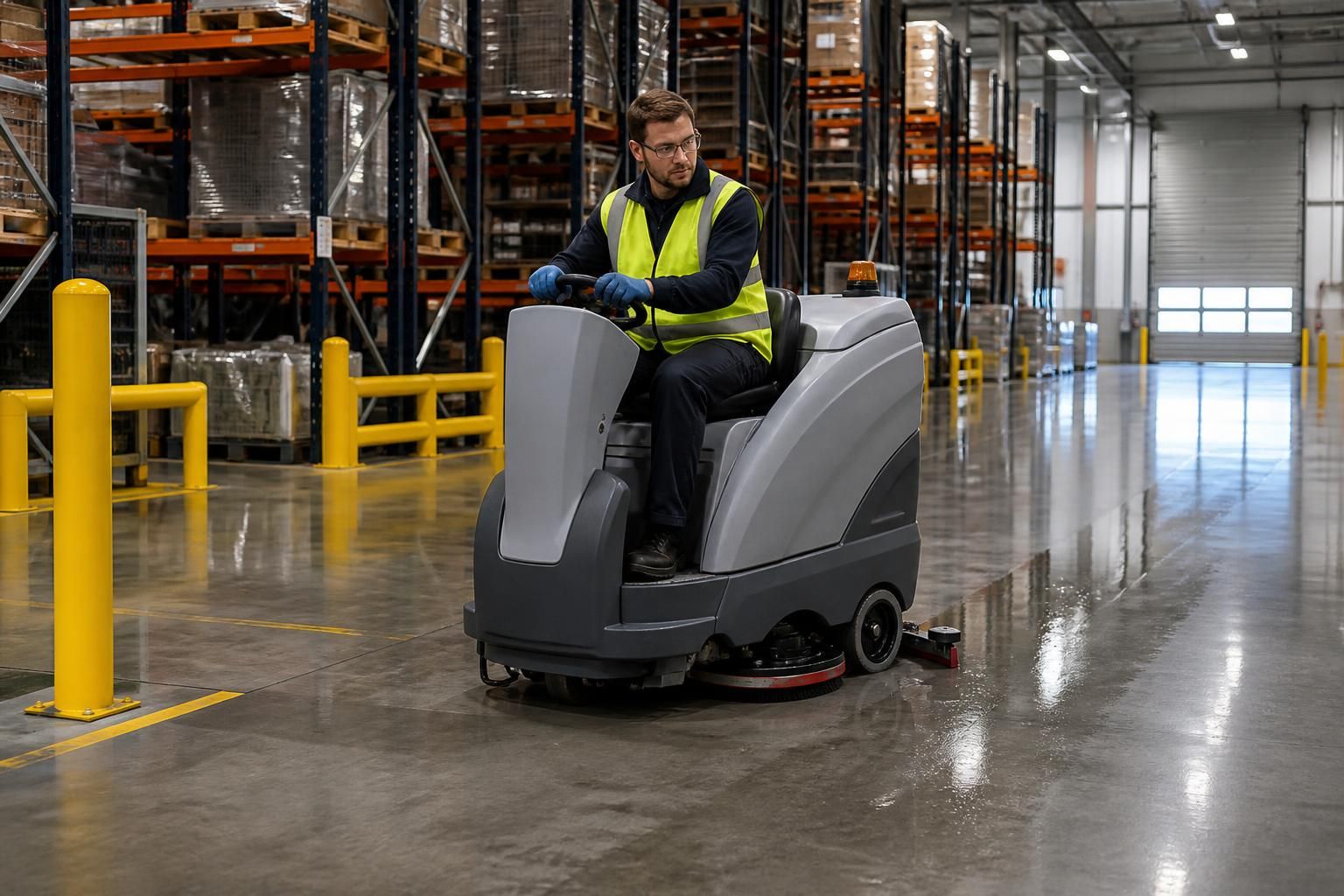
Energy-efficient industrial floor cleaning depends on selecting the right machine for the floor, using only the water and detergent required, and maintaining the equipment so it operates at its designed performance. Correct sizing and settings reduce electricity, fuel, water and chemical consumption while also shortening cleaning times. A practical environmental approach should cover the machine’s power source, cleaning method, operator procedures, maintenance, charging and the disposal of wastewater and consumables.
Choose a machine that matches the work
Oversized cleaning machines can consume more energy, water and detergent than necessary, particularly when used in narrow aisles, confined production areas or lightly soiled spaces. An undersized machine may require repeated passes, increasing total operating time and energy use. Select the scrubber dryer, sweeper, pressure washer or combination machine according to the floor area, access routes, soil type, surface finish and required cleaning frequency.
For large warehouses and factories, the most efficient option is usually the machine that completes the required task in the fewest effective passes without compromising cleaning quality. Consider working width, travel speed, tank capacity, battery endurance, recovery performance and manoeuvrability together rather than choosing on machine size alone. A machine that cannot access corners, loading bays or congested areas efficiently may create additional manual work and repeated cleaning.
Where the floor condition allows it, use mechanical sweeping or dry soil removal before wet cleaning. Removing loose dust, grit and packaging debris first reduces the load on scrubber dryers, limits water contamination and helps prevent abrasive particles from wearing brushes, squeegees and pumps.
Use efficient power systems
Electric machines generally avoid on-site exhaust emissions and can be suitable for enclosed warehouses, factories and food or manufacturing environments where air quality is important. Battery-powered equipment should have sufficient capacity for the planned task so that cleaning is not interrupted by avoidable charging or battery changes. Select the battery and charger as a matched system and follow the manufacturer’s charging, ventilation and storage requirements.
Where equipment uses an internal combustion engine, use it only where the application and ventilation arrangements make it appropriate. Keep engines correctly serviced and avoid leaving them running while the machine is stationary. For electrically powered equipment, inspect cables, plugs and connections, and avoid operating with damaged components or unsuitable extension arrangements.
Modern machines may include variable-speed motors, energy-saving operating modes, automatic brush-pressure adjustment or systems that reduce water flow when the machine is stationary. These features can prevent power, water and chemical use when full output is not needed. They are most effective when operators understand when to select standard, intensive or economy settings.
Control water, detergent and pressure
Use the lowest water flow that achieves the required result. Excess water does not necessarily improve cleaning; it can increase drying time, create slip risks, overload recovery systems and increase the volume of wastewater requiring treatment or disposal. Check that spray jets, solution lines and dosing systems are clear and functioning correctly so that water is distributed evenly across the cleaning path.
Apply detergent according to the product instructions and the level of contamination. More chemical can leave residues, require additional rinsing and increase disposal requirements. Automatic dosing systems can help maintain consistent concentration and avoid the overuse associated with manual pouring. Select a detergent suitable for the floor material, soil type and wastewater arrangements, and do not mix products unless the manufacturer specifically permits it.
Pressure washing should be targeted rather than used at maximum pressure by default. Excessive pressure can damage joints, coatings, painted surfaces and drainage infrastructure while using more energy and generating contaminated spray. Match pressure, temperature, nozzle selection and flow rate to the surface and the soil. Steam cleaning can be useful for certain residues because it may reduce chemical use, but it still requires appropriate water, electricity and safe operating controls.
Plan the cleaning route
Route planning reduces unnecessary travel, turning and repeat passes. Clear obstructions where possible, coordinate cleaning with warehouse movements and divide large areas into practical sections. Clean from the furthest point towards the exit or collection area, while maintaining safe segregation from pedestrians, vehicles and production activity.
Deal with spills and heavily contaminated zones promptly so that soil does not spread across a larger area. Localised pre-treatment or spot cleaning can be more efficient than applying an intensive machine setting across an entire floor. Establish cleaning schedules based on traffic, soil loading and operational risk rather than cleaning every area at the same intensity.
Maintain the machine to preserve efficiency
Routine maintenance is essential because blocked filters, worn brushes, damaged squeegees, under-inflated tyres, leaking tanks and poorly adjusted components increase resistance and reduce cleaning performance. The machine may then need extra passes, higher pressure or longer operating time to achieve the same result.
- Empty and clean recovery tanks after use to prevent odours, blockages and pump problems.
- Clean solution filters, spray jets, vacuum filters and air inlets at the intervals specified by the manufacturer.
- Inspect brushes, pads and squeegee blades, replacing them when wear prevents effective soil removal or water recovery.
- Check for leaks, loose connections, unusual noise, reduced suction and changes in battery performance.
- Keep batteries, charging points and ventilation areas clean and free from combustible materials.
- Arrange planned servicing rather than waiting for a failure that could interrupt operations or require inefficient emergency use.
Use the correct brush or pad for the surface. An overly aggressive pad can remove unnecessary floor finish and increase motor load, while an unsuitable soft pad may require repeated passes. Correct adjustment of brush pressure and squeegee position is equally important.
Charge and manage batteries responsibly
Charge batteries in a designated, ventilated area using the correct charger and the manufacturer’s procedure. Avoid routinely leaving equipment connected longer than necessary where this conflicts with the battery system’s instructions. Keep charging records where useful, investigate sudden reductions in run time and replace batteries through an approved recycling or take-back route.
Battery life is affected by storage conditions, cleaning practices and charging behaviour. Prevent water or cleaning chemicals from entering battery compartments, and follow the specified arrangements for periods when equipment is not used. Extending battery service life reduces replacement costs and the environmental impact associated with manufacturing and disposal.
Reduce wastewater and consumable waste
Use recovery systems correctly so that dirty solution is collected rather than spread across the floor or discharged in an uncontrolled manner. Wastewater may contain oil, metals, detergents, dust or production residues, so it must be handled in accordance with site procedures and applicable environmental requirements. Do not discharge contaminated water into surface-water drains unless this is expressly permitted.
Separate recyclable packaging, used pads, filters and other consumables where site arrangements allow. Store chemicals securely, use older stock appropriately before its expiry and select concentrated products only when they can be dosed accurately. Environmental performance includes the full use and disposal cycle, not just the machine’s electricity consumption.
Measure performance and train operators
Record practical indicators such as cleaning time, machine hours, water and detergent use, battery charging patterns, repeat passes and maintenance issues. Comparing these records across similar areas can identify inefficient routes, incorrect settings or equipment that is losing performance. Review the cleaning result as well as resource use; reducing water or energy is not beneficial if it leaves contamination, creates safety problems or leads to repeat work.
Operators should be trained to select the appropriate mode, control speed, avoid unnecessary idling, respond to spills, complete shutdown procedures and report faults promptly. Clear instructions and periodic checks help ensure that economy settings are used appropriately rather than applying maximum power and flow to every task.
For major sites or changing operational requirements, review the cleaning method with the site manager and cleaning team. A combination of dry sweeping, targeted scrubbing, scheduled deep cleaning and specialist pressure or steam cleaning may provide a lower-impact solution than using one high-intensity method throughout the facility.