
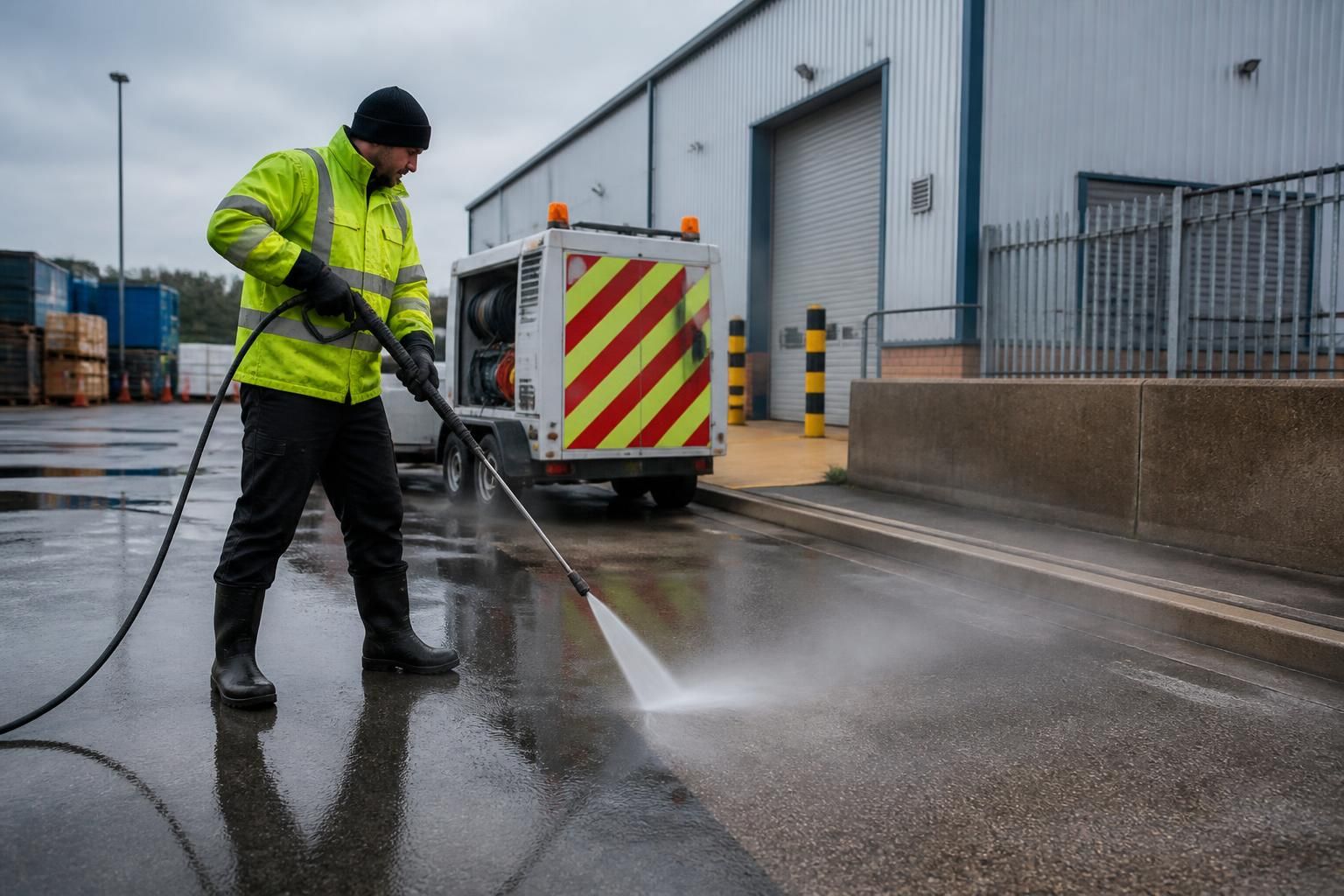
Why is professional tarmac cleaning preferable to DIY methods?
Professional tarmac cleaning is preferable to DIY methods because trained technicians use suitable pressure levels, cleaning products and equipment to remove embedded dirt, oil, moss and organic growth without unnecessarily damaging the surface. It also provides safer, more consistent results while helping protect the tarmac’s appearance, drainage performance and service life.
Professional tarmac cleaning is preferable to DIY methods because it combines the right equipment, cleaning products and application techniques with proper control of safety, drainage and surface risk. Tarmac can be damaged by excessive pressure, unsuitable chemicals and aggressive mechanical action, particularly when the surface is weathered, cracked or already losing its binding material. A trained cleaning team can assess the condition first and select a method that removes contamination without unnecessarily shortening the surface’s service life.
DIY cleaning often treats every area in the same way. A domestic pressure washer may appear suitable for removing dirt, but its concentrated jet can leave visible striping, dislodge surface aggregate or erode weak edges. Holding the lance too close to the tarmac can also disturb the bitumen-bound surface, while inadequate rinsing may spread loosened oil, detergent or organic matter across adjoining areas. These problems are particularly noticeable on car parks, access roads, service yards and pedestrian routes where appearance and traction both matter.
Professional contractors begin by identifying the type and severity of contamination. General traffic film, soil, moss, algae, weeds, oil, grease, rust staining and construction residue do not respond equally to the same treatment. Oil and grease, for example, require a suitable degreasing approach and careful management of the resulting wastewater. Moss and organic growth may need controlled removal followed by treatment of the affected area, while ingrained dirt may require hot-water pressure washing or specialist surface-cleaning equipment. Selecting the correct process reduces the need for repeated passes and limits unnecessary stress on the tarmac.
Equipment selection is another important difference. Professional cleaning may involve controlled-pressure washing, hot-water cleaning, steam cleaning, rotary surface cleaners, specialist brushes or recovery equipment, depending on the site and contamination. These systems can distribute cleaning action more evenly than a handheld domestic lance. Operators can adjust pressure, temperature, flow rate and cleaning distance, and can use a small test area to confirm that the chosen method is safe before treating the whole surface.
Professional cleaning also reduces the risk of damaging related features. Tarmac commonly meets kerbs, drainage channels, paving, line markings, gates, walls, cladding and building entrances. Uncontrolled water or cleaning chemicals can cause staining, move debris into gullies or affect nearby materials. A planned service protects these interfaces by controlling overspray, directing water appropriately and taking account of the site’s drainage arrangements.
Safety is especially important on commercial and industrial premises. Wet tarmac can become slippery during cleaning, and loose moss, silt and oil can create hazards while work is in progress. There may also be moving vehicles, pedestrians, delivery activity, plant and restricted access. A professional team can plan work zones, communicate access requirements, use appropriate personal protective equipment and arrange suitable precautions around traffic and public areas. This is difficult to manage safely when cleaning is treated as an occasional DIY task.
Runoff must also be considered. Washing oil, sediment, detergents and organic debris into a surface-water drain can create pollution and may breach site requirements. Professional work includes planning for collection, containment or controlled discharge where necessary, together with responsible handling of removed contaminants. This is both an environmental consideration and a practical reason not to use excessive water or inappropriate chemicals.
Professional cleaning produces more consistent results across large areas. On a commercial site, uneven cleaning can leave visible bands, patches of remaining algae or different levels of brightness between adjoining sections. Trained operators work methodically, taking account of surface age, traffic patterns, shade, drainage and areas of heavier contamination. They can also identify where staining is likely to be permanent or where the tarmac has deteriorated rather than simply become dirty.
That distinction matters because cleaning cannot correct every form of surface failure. Cracking, potholes, loose aggregate, deformation, failed joints and extensive loss of binder may require repair or resurfacing. A professional assessment can separate removable contamination from underlying defects, helping prevent a customer from spending money on increasingly aggressive cleaning when the surface needs remedial work instead.
Although hiring a contractor has an upfront cost, DIY work is not necessarily the cheaper option for a commercial site. The full cost may include equipment hire, detergents, protective measures, labour, water management, traffic disruption and repeat treatments. There is also a potential cost if unsuitable cleaning causes surface damage, affects drainage or leaves an area unsafe. Professional cleaning reduces these risks by matching the work to the condition and intended use of the tarmac.
DIY cleaning may be reasonable for a small, lightly soiled area where the surface is sound and the operator can follow the equipment manufacturer’s guidance. It is less suitable for large areas, oil-contaminated surfaces, heavy moss growth, heavily trafficked sites, older tarmac or locations where runoff and public safety need to be controlled. For commercial and industrial premises, professional cleaning is generally the more dependable option because it addresses the surface, the surrounding site and the operational risks together.
After cleaning, a contractor can advise on practical maintenance, including removal of leaf debris, prompt treatment of oil spills, management of moss-prone shaded areas and periodic inspections for cracking or drainage problems. This helps maintain the appearance and usable condition of the tarmac without relying on increasingly forceful cleaning. Professional cleaning is therefore preferable not simply because it is more powerful, but because it is more controlled, safer and better suited to protecting the surface over time.
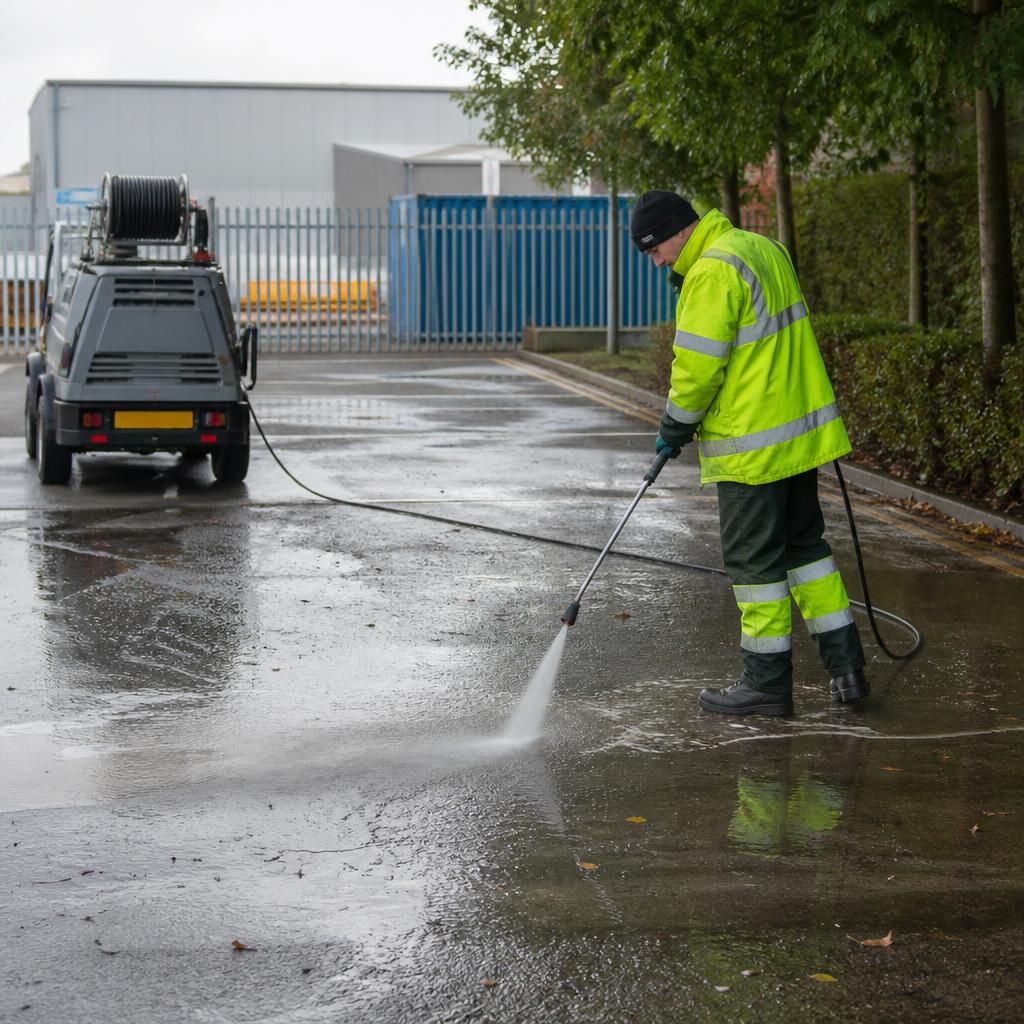
Professional tarmac cleaning is safer than DIY cleaning because the method can be matched to the surface condition, contamination and surrounding site. Trained operators can adjust pressure, temperature, water flow and cleaning distance, reducing the risk of stripping aggregate, disturbing weak edges or leaving visible cleaning lines.
This control is particularly important on commercial car parks, service yards and access roads. Professionals can also manage wet-surface hazards, protect nearby drainage channels and control runoff containing oil, silt, detergents or organic debris. The result is a more even clean while reducing the risk of surface damage, pollution and disruption to site users.