
What specific techniques and equipment are employed in professional tarmac cleaning and how do they enhance the surface's condition?
Professional tarmac cleaning combines pressure washing, hot-water or steam cleaning, rotary surface cleaners, specialist detergents and targeted stain treatment to remove dirt, algae, oil, tyre marks and other contaminants. These controlled techniques and purpose-built machines improve appearance, traction and drainage while reducing the risk of surface damage, excessive water use or displaced aggregate.
Professional tarmac cleaning uses controlled pressure washing, hot-water or steam treatment, rotary surface cleaning, specialist detergents and targeted stain removal to lift contaminants without loosening the aggregate or damaging the bitumen binder. The equipment and method are selected according to the tarmac’s age, condition, porosity, traffic level and the type of soiling present. This improves the surface’s appearance, traction and drainage while helping to preserve its serviceable condition.
Initial inspection and preparation. Cleaning begins with an assessment of the surface rather than applying the same treatment everywhere. The contractor checks for loose aggregate, cracking, fretting, potholes, previous repairs, oil-affected areas and standing water. Drainage channels, gullies, kerbs and nearby façades are also considered so that dislodged dirt and cleaning products can be managed safely. Loose debris is removed with stiff brushes, blowers or mechanical sweepers before water is introduced. Damaged areas may need to be repaired separately, as cleaning alone cannot restore failed tarmac.
Adjustable pressure washing. Commercial pressure washers provide a consistent flow of water that can remove compacted soil, dust, mud, algae and general traffic grime from tarmac. Professional operators adjust the pressure, nozzle selection, distance and travel speed to suit the surface. Excessive pressure or holding the lance too close can displace aggregate, expose the binder, create visible striping or force water into cracks. Controlled application is particularly important on older surfaces and areas where the top layer has already begun to deteriorate.
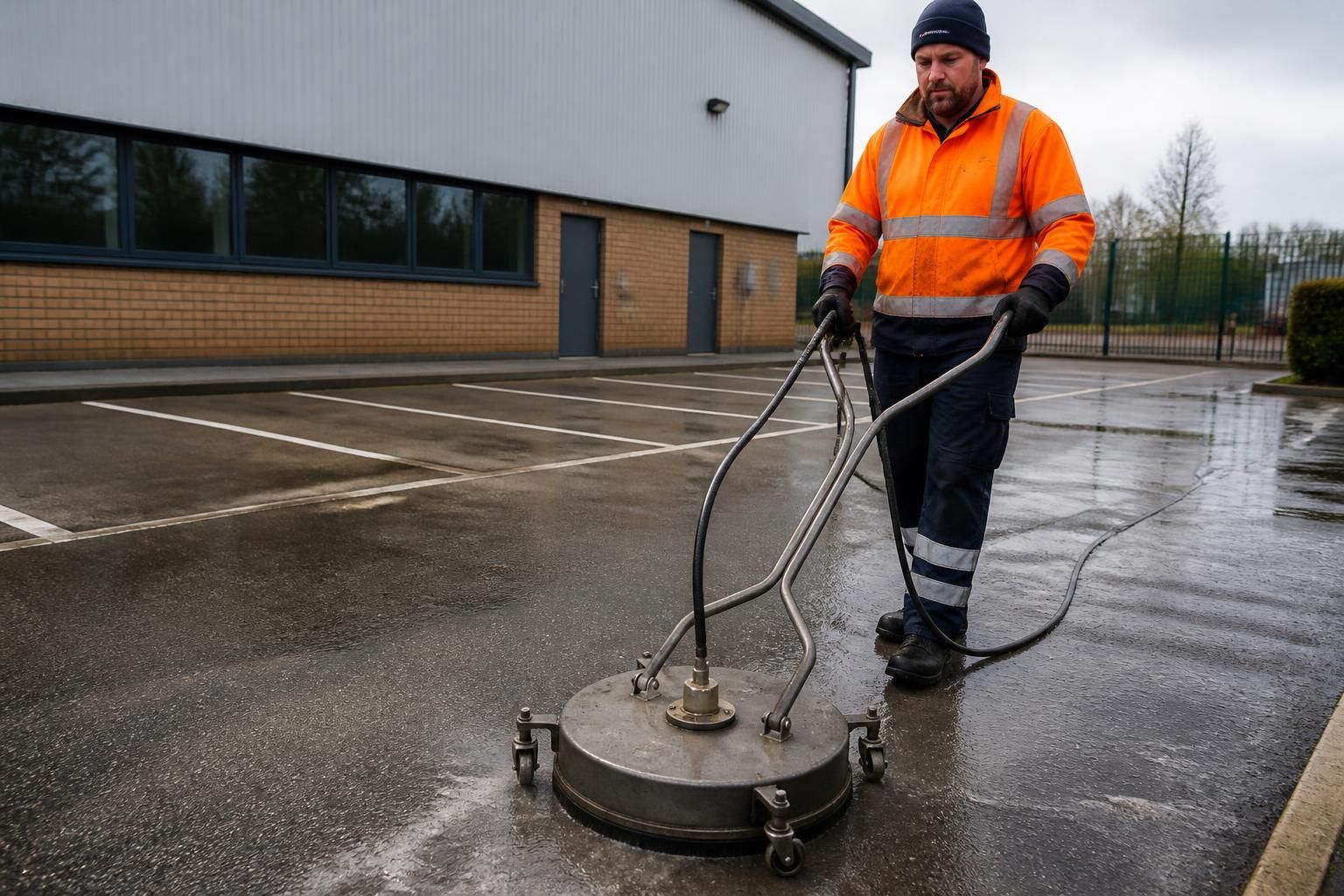
Rotary surface cleaners. Rotary cleaners use enclosed spinning jets to distribute water evenly across a broad area. Compared with a hand-held lance, this helps produce a more uniform finish and reduces the risk of streaks or concentrated impact points. The enclosed design also limits splash, which is useful around buildings, entrances, parked vehicles and pedestrian routes. Rotary equipment is generally most effective on large car parks, service yards, access roads and forecourts where consistent coverage is required.
Hot-water and steam cleaning. Heated water softens oily residues, traffic film, chewing gum and ingrained organic matter, allowing them to be removed with less reliance on high pressure. Steam cleaning uses a lower-volume, high-temperature application and can be useful for localised treatment, sensitive edges and areas where water consumption or overspray needs to be controlled. Heat must still be applied carefully because it can affect certain sealants, repairs or weakened bitumen surfaces. The operator should test a discreet area and avoid directing heat at vulnerable joints or exposed defects.
Detergents and targeted stain treatment. General dirt may respond to a suitable surface cleaner, while oil, diesel, grease, tyre marks, algae and moss require different treatments. Degreasers help break down hydrocarbon residues so they can be lifted and recovered. Organic growth may be treated with an appropriate biocidal or fungicidal product, followed by mechanical removal. Rust, paint and other distinctive stains need separate assessment because an aggressive chemical can lighten the surrounding tarmac or affect adjoining materials. Products should be selected for compatibility with bitumen and used according to their instructions.
- Oil and fuel: absorbent materials, degreasers, hot water and repeated controlled passes may be used, with contaminated residue collected rather than washed into drainage.
- Algae, moss and lichen: brushing, low-impact washing and an appropriate treatment help remove growth and reduce the likelihood of rapid return.
- Tyre marks: heated water, detergents and rotary agitation can reduce rubber transfer without unnecessarily scouring the surface.
- Compacted dirt: pre-treatment, brushing and even rotary cleaning usually provide better results than increasing pressure alone.
Water recovery and access equipment. Wet vacuum systems, recovery tools and drain protection help collect dirty water, oil residues and suspended solids. This is important on commercial sites where wash water could enter surface-water drains or affect neighbouring land. Where large or awkward areas are involved, operators may use compact sweepers, vehicle-mounted pressure-washing systems or access equipment to reach raised edges, ramps and connected hard surfaces safely. Equipment selection should support safe access without obstructing site operations unnecessarily.
How these methods improve tarmac. Removing sediment and organic growth restores the surface’s original colour and makes markings, bays and access routes easier to identify. Clearing slippery films and biological growth can improve underfoot and vehicle traction, although cleaning does not replace repairs where the tarmac has structural failure. Removing debris from around gullies and drainage channels also helps water leave the surface rather than remain in depressions. Oil removal is particularly valuable because prolonged hydrocarbon contamination can soften or weaken bituminous materials.
Professional cleaning also involves knowing when not to clean aggressively. Deep cracking, loose chippings, polished aggregate, failed repairs and widespread surface fretting may indicate that patching, resurfacing or sealing is more appropriate. A competent method therefore combines testing, staged cleaning and post-work inspection. The finished surface should be checked for remaining stains, displaced aggregate, blocked drainage points and any areas requiring further restoration or maintenance.
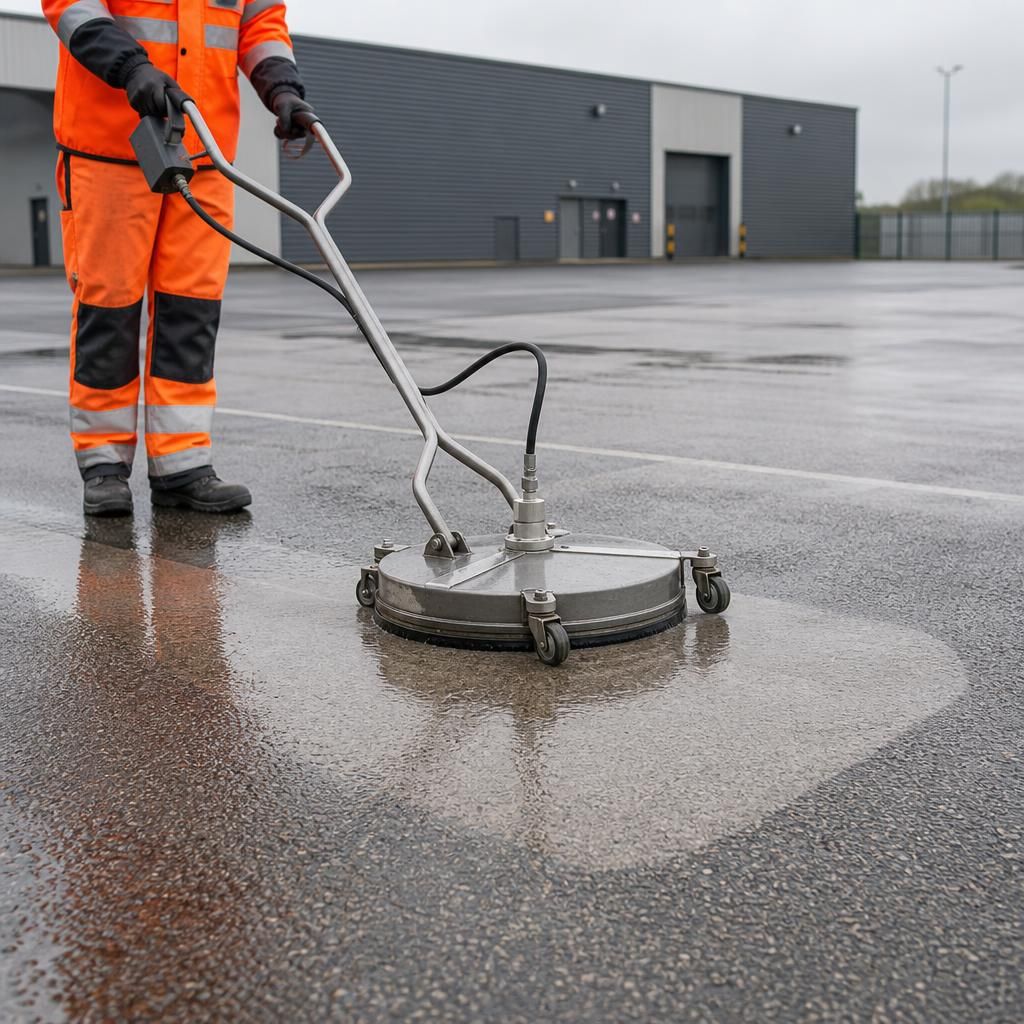
Rotary surface cleaning is a professional tarmac-cleaning technique that uses enclosed spinning jets to distribute water evenly across the surface. This produces more consistent coverage than a hand-held lance, helping to remove traffic film, compacted dirt, algae and general grime without creating concentrated impact marks or visible cleaning stripes.
The operator still adjusts water pressure, temperature, detergent and travel speed to suit the tarmac’s condition. Controlled passes are particularly useful on car parks, forecourts and service yards, while edges, cracks and weakened areas are treated more gently to reduce the risk of displaced aggregate, splash or further surface deterioration.