
What is the process involved in tarmac cleaning and restoration?
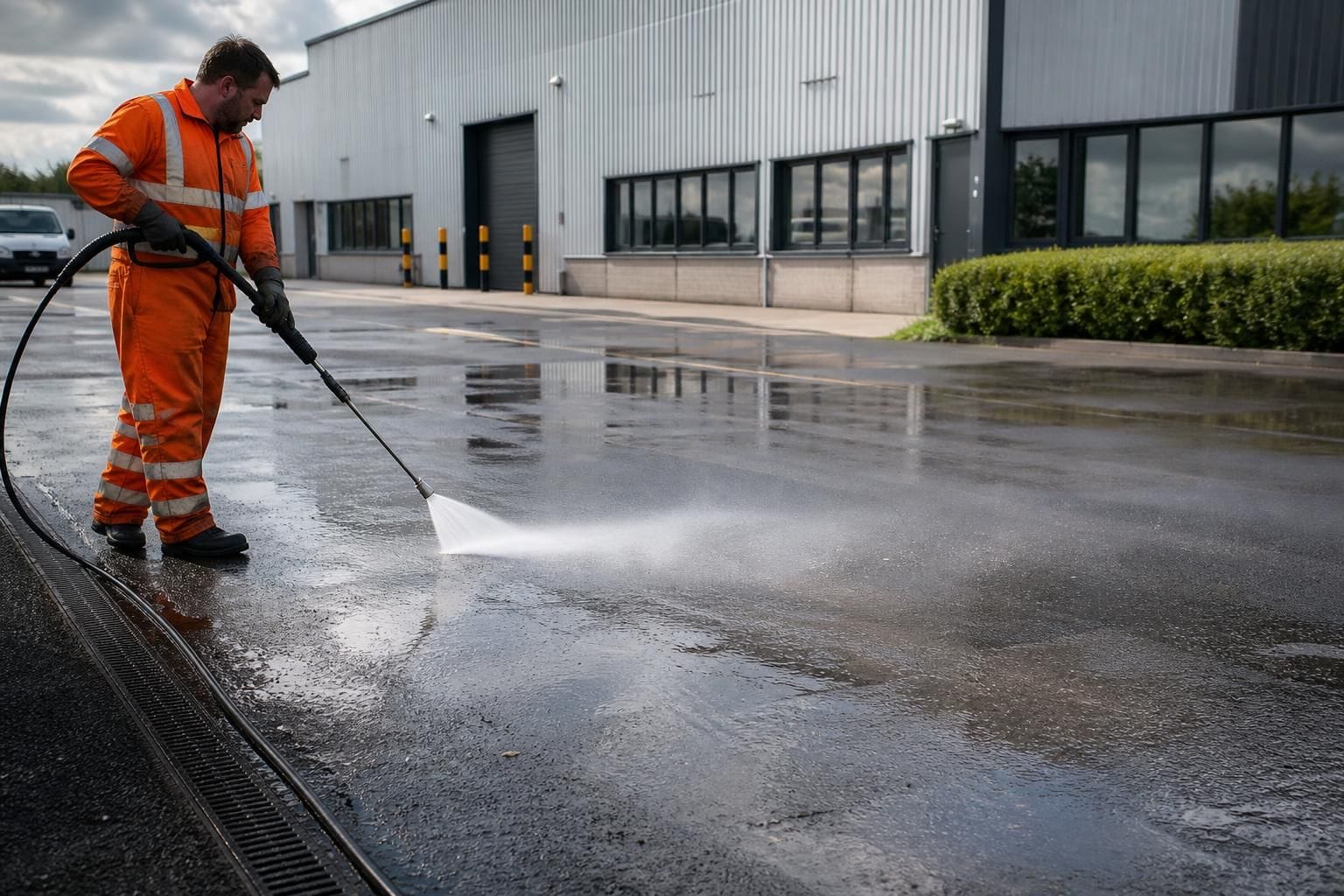
Tarmac cleaning and restoration typically involves inspecting the surface, removing dirt, moss, oil and other contaminants with suitable pressure-washing or steam-cleaning methods, then completing repairs before applying a compatible protective treatment or sealant. The exact process is adjusted to the tarmac’s condition, drainage, surrounding surfaces and intended use.
Tarmac cleaning and restoration is a planned process of assessing the surface, removing contaminants with controlled pressure washing or steam cleaning, carrying out necessary repairs, and applying a compatible protective treatment where appropriate. The method must be adapted to the age, construction, condition and use of the tarmac, as well as drainage, nearby buildings and environmental controls.
1. Site inspection and planning
The work begins with an inspection of the tarmac and the surrounding area. This identifies the surface type, areas of deterioration, drainage points, access restrictions and any risks to pedestrians, vehicles, buildings or landscaping. The inspection also considers how the area is used, such as whether it is a car park, service yard, access road, footpath or loading area.
Contaminants are assessed because different deposits require different treatment. Common examples include general dirt, traffic film, algae, moss, weeds, chewing gum, oil, fuel residues, tyre marks, rust staining, paint and construction debris. Existing defects, including cracks, potholes, loose aggregate, edge breakdown and areas affected by standing water, are recorded before cleaning starts.
For commercial and industrial sites, the cleaning plan should also account for vehicle movements, working hours, exclusion zones and the safe management of surface water. A suitable method statement and risk assessment can be prepared where the site or work scope requires them.
2. Preparation of the work area
Before equipment is operated, the area is cleared of movable obstructions and the work zone is separated from pedestrians and vehicles. Drainage channels, gullies and adjacent surfaces are checked so that waste water and loosened contaminants can be managed correctly.
Nearby doors, vents, walls, signs, vehicles, planted areas and sensitive surfaces may need protection. Oil, chemical residues or other pollutants require particular care, as simply washing them towards a drain can spread contamination. Where necessary, drain covers, collection equipment or other containment measures are used in line with the site’s drainage arrangements and applicable requirements.
Dry debris, loose weeds and surface growth are removed first. This reduces the amount of material that could be driven into the tarmac during wet cleaning and allows the operator to see the condition of the surface more clearly.
3. Selecting the cleaning method
The cleaning method is selected according to the contamination and the strength of the tarmac. Pressure washing is effective for removing dirt, algae, moss and general traffic film, provided that pressure, water flow and nozzle selection are controlled. Excessive pressure or an unsuitable technique can dislodge aggregate, open existing defects or damage adjoining surfaces.
Steam cleaning may be preferable where a lower-chemical approach is required, where oily deposits need loosening, or where controlled heat can improve the removal of ingrained contamination. It can also be useful in areas where surface growth or chewing gum is present. Specialist treatments may be considered for oil, rust, paint or other stubborn stains, but products should be compatible with bituminous materials and used according to their instructions.
Cleaning is normally carried out in manageable sections. The operator works systematically, paying attention to edges, joints, corners, kerbs, channels and areas beneath parked vehicles or equipment. Particularly contaminated sections may need more than one controlled treatment rather than a single aggressive pass.
4. Removing and managing loosened contamination
As deposits are loosened, they must be removed rather than left to dry back onto the surface. Slurry, sediment, oil residues and other waste are collected or directed into an appropriate recovery system where required. The water management approach depends on the contaminant, the site drainage and local requirements.
This stage is important on industrial and commercial premises because wash water can carry pollutants into drainage systems or onto neighbouring land. Responsible cleaning includes preventing uncontrolled run-off and leaving gullies, channels and surrounding areas free from displaced debris.
5. Drying and condition assessment
Once cleaning is complete, the tarmac is allowed to drain and dry sufficiently for a reliable assessment. Wet surfaces can conceal cracks, fretting, depressions and areas where the binder has deteriorated, so restoration decisions should not be based solely on the appearance immediately after washing.
The cleaned surface is checked for remaining staining, loose aggregate, failed edges, potholes, cracks and areas of poor drainage. Cleaning may improve the appearance substantially, but it cannot rebuild tarmac that has lost structural integrity. Where defects are significant, repair or resurfacing may be more suitable than applying a coating.
6. Repairs and preparation for restoration
Minor defects may be repaired by filling suitable cracks, reinstating eroded edges or patching localised areas. Potholes and larger failures generally require damaged material to be removed, the base to be assessed and a suitable repair material to be compacted correctly. Repairs should be carried out on a sound, clean and appropriately prepared surface.
Drainage problems also need to be addressed. Persistent standing water can accelerate deterioration and undermine the benefit of cleaning or sealing. If water is collecting because of damaged channels, blocked gullies or an uneven surface, those issues should be resolved as part of the wider maintenance plan.
7. Applying a compatible protective treatment
After repairs and suitable drying time, a protective treatment may be applied if it is appropriate for the tarmac and its intended use. Tarmac restoration products can improve colour consistency, bind some surface particles and provide a degree of protection against weathering, water penetration and everyday contamination. They are not a substitute for repairing a failing base or badly damaged surface.
The product must be suitable for bituminous tarmac and compatible with any existing treatment. Application conditions, including surface temperature, weather, moisture and curing time, are checked before work begins. Coatings are applied evenly, with particular care around edges, joints, markings and drainage points. The area must remain closed for the period needed for the treatment to cure; reopening too early can cause tracking, marking or premature wear.
8. Quality checks and handover
After the work has cured or dried sufficiently, the surface is inspected for missed contamination, uneven treatment, loose material, blocked drainage points and visible defects. Any necessary finishing work is completed before the area is returned to normal use.
The handover should make clear what was cleaned, which repairs were undertaken, whether a protective treatment was applied and any restrictions that applied during curing. It is also useful to record conditions requiring future attention, such as recurring oil contamination, poor drainage, damaged kerbs or areas subject to heavy vehicle loading.
Why the process must be tailored
There is no single pressure setting, cleaning product or restoration treatment that is suitable for every tarmac surface. A relatively new car park with traffic film requires a different approach from an older service yard affected by oil, heavy vehicles and edge deterioration. The correct process balances cleaning performance with protection of the bituminous surface and control of run-off.
Regular inspection and planned cleaning help prevent moss, algae, oil and dirt from becoming established, while early repairs reduce the risk of local defects developing into larger failures. Professional restoration is most effective when cleaning, drainage, repairs, protection and ongoing maintenance are considered together rather than treating surface appearance in isolation.
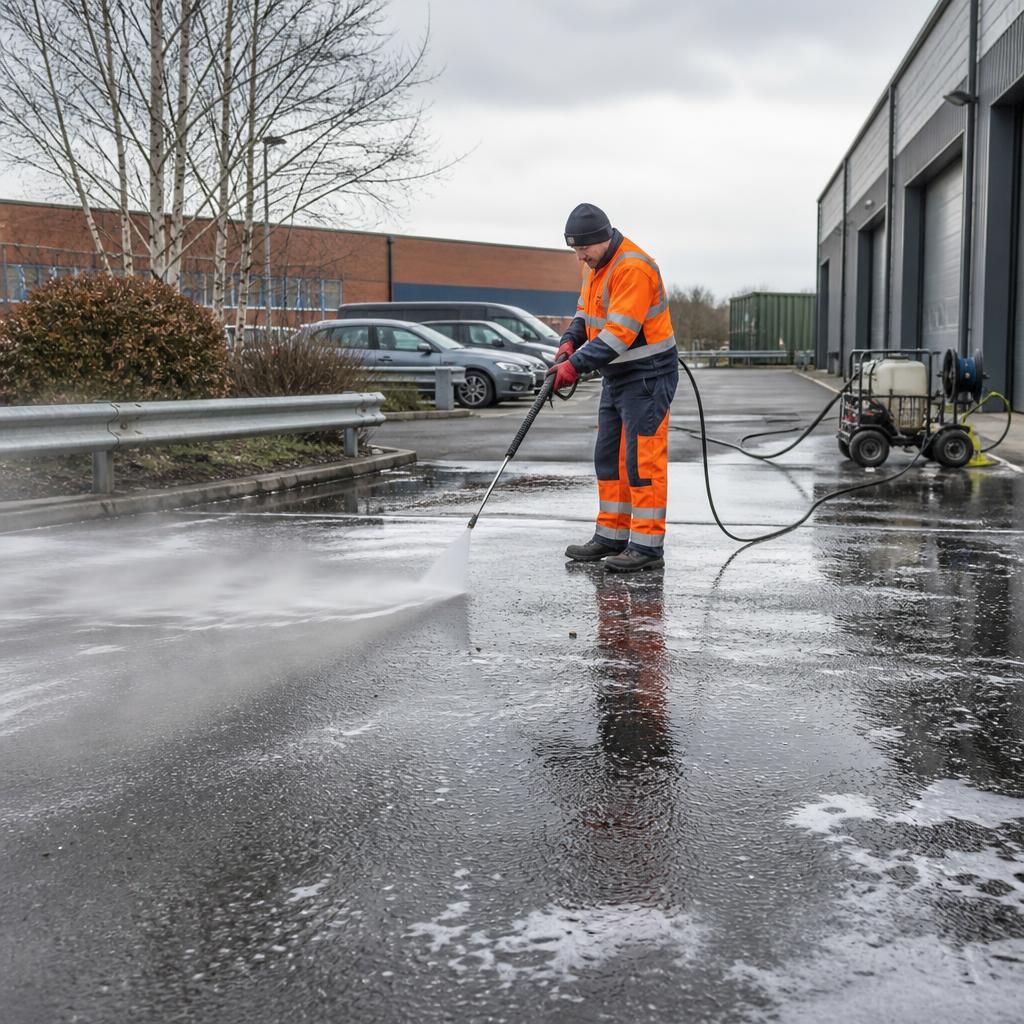
Tarmac cleaning and restoration is more than pressure washing: it combines condition assessment, controlled contaminant removal, repairs and, where suitable, protective treatment. The surface must be inspected before work begins so the cleaning method does not worsen loose aggregate, cracks, potholes or damaged edges.
After cleaning, the tarmac is allowed to dry so defects and remaining staining can be assessed accurately. Localised failures may then be repaired before a compatible treatment is applied. Drainage, weather conditions, surrounding surfaces and curing time are also considered, helping to produce a clean, durable finish without allowing contaminated wash water to spread across the site.