
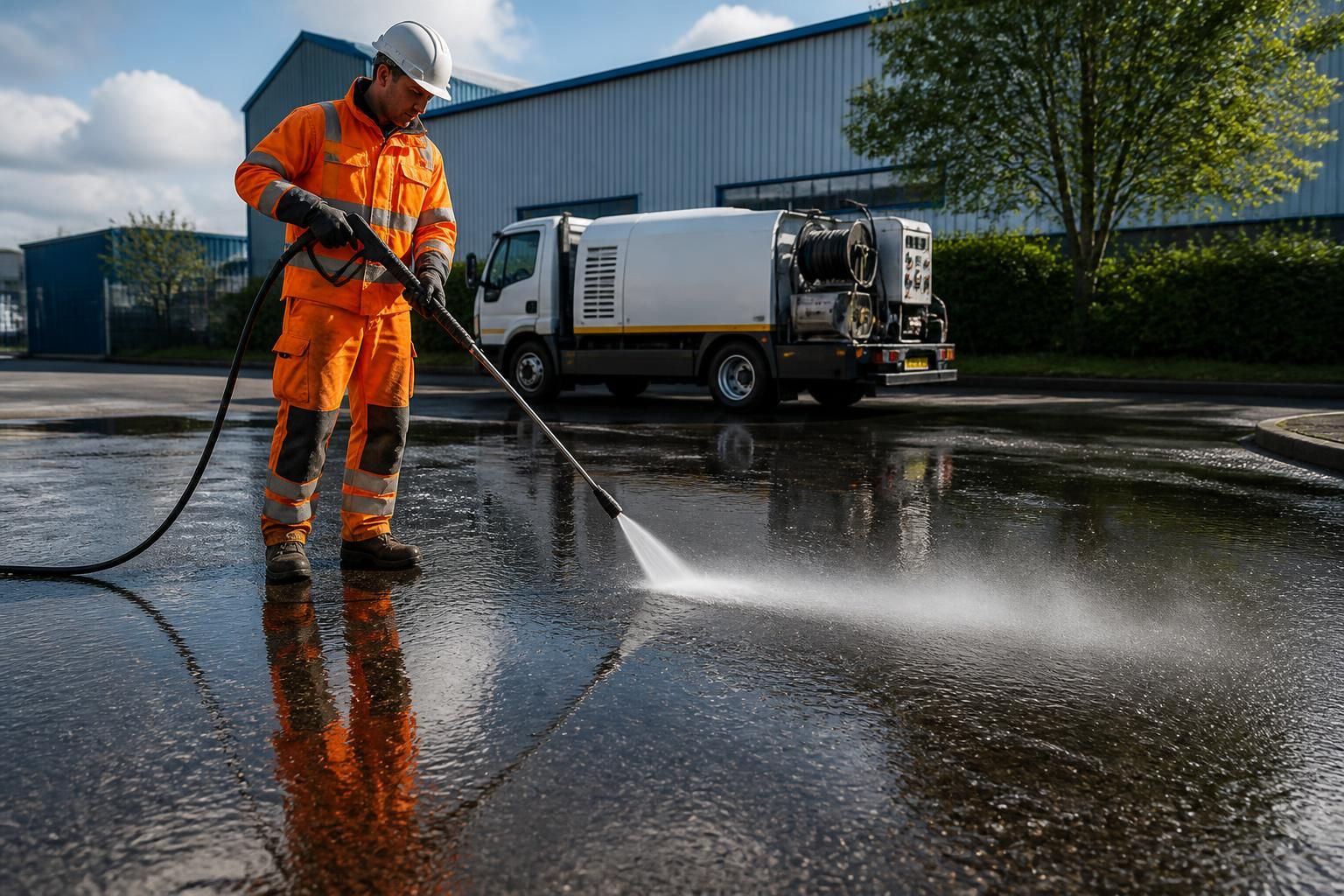
What factors should be considered when choosing a tarmac cleaning service provider?
When choosing a tarmac cleaning service provider, consider their experience with commercial surfaces, cleaning methods and equipment, environmental controls, health and safety procedures, insurance, and ability to work around site operations. A reliable provider should give a clear, site-specific quotation explaining the proposed process, expected results, access requirements and any restoration or ongoing maintenance work.
Choosing a tarmac cleaning service provider should be based on more than the quoted price. The provider needs relevant experience with tarmac and asphalt surfaces, suitable equipment, effective environmental controls, robust health and safety procedures, appropriate insurance and the capacity to work safely around vehicles, pedestrians and normal site operations. A reliable contractor should inspect the surface, explain the proposed method and provide a clear, site-specific quotation.
Experience with comparable sites
Ask whether the contractor regularly cleans commercial and industrial tarmac rather than only domestic driveways. Large car parks, access roads, service yards, forecourts and estate roads can have different cleaning requirements because of traffic levels, drainage arrangements, surface age and the type of contamination present. Experience with similar sites helps the contractor judge how much pressure, heat, detergent and recovery equipment can be used without loosening aggregate, damaging repairs or disturbing line markings.
It is also useful to establish whether the provider has worked on sites similar to yours in Birmingham, the West Midlands or elsewhere in the UK. A contractor familiar with commercial premises should understand access restrictions, pedestrian segregation, delivery schedules, permit requirements and the need to keep disruption under control.
Inspection and a suitable cleaning method
A competent provider should assess the tarmac before recommending a process. The inspection should consider the age and condition of the surface, cracks, failed joints, previous repairs, loose aggregate, drainage points, oil staining, moss, weeds, chewing gum, mud, tyre marks and any areas where the binder may already be weakened. Cleaning can improve appearance and remove contaminants, but it cannot correct every structural defect. Any limitations should be identified before work starts.
The proposed method should be matched to the contamination and surface condition. Pressure washing may be appropriate for general dirt and organic growth, while steam cleaning or controlled hot-water treatment can be more effective for ingrained deposits and some oil-related soiling. Targeted treatments may be needed for chewing gum, fuel residues or algae. The contractor should explain why the chosen approach is suitable and whether a test patch will be completed first.
Be cautious of providers who promise to remove every mark or restore old tarmac to a new condition without examining it. Some staining penetrates the surface, and aggressive treatment can cause additional damage. A professional assessment should distinguish between removable contamination, permanent discolouration and defects that require separate repair or resurfacing.
Equipment and technical capability
Check that the provider has commercial-grade equipment appropriate for the size and layout of the site. This may include pressure-washing systems with controllable pressure, hot-water or steam equipment, surface-cleaning attachments, rotary tools, wet vacuums and water-recovery systems. The important point is not simply the power of the machinery, but whether operators can control the cleaning intensity and manage wastewater properly.
For larger areas, the contractor should have a practical plan for moving equipment, supplying water where necessary and maintaining consistent results across the site. Access equipment may also be required where tarmac adjoins walls, raised structures or difficult-to-reach edges, although the equipment used should be proportionate to the task and operated by trained personnel.
Environmental and wastewater controls
Tarmac cleaning can mobilise oil, silt, detergents, organic matter and other pollutants. Ask how dirty water will be contained, collected, filtered, treated or disposed of. It should not be allowed to enter surface-water drains unless this is permitted and the discharge meets the relevant requirements. The provider should identify drainage points during the site assessment and explain how they will protect them.
Where chemicals are proposed, request information about the product type, application method and any precautions required. A responsible contractor uses the least aggressive treatment that is effective, avoids unnecessary chemical use and prevents run-off from reaching soil, watercourses or neighbouring areas. Environmental controls are particularly important on industrial estates, construction sites, forecourts and premises with drainage connected to sensitive water systems.
Health and safety arrangements
Commercial tarmac cleaning involves pressurised water, wet surfaces, moving vehicles, electrical equipment and, in some cases, chemical treatments. The provider should be able to supply suitable risk assessments and method statements, commonly referred to as RAMS, before work begins. These should cover the equipment, chemicals, access routes, pedestrian and vehicle segregation, slip risks, drainage protection, emergency arrangements and waste handling.
Ask how the work will be managed around staff, visitors, residents, deliveries and members of the public. Appropriate signage, barriers, exclusion zones and phased working may be necessary. The contractor should also confirm that operatives are trained to use the relevant machinery and access equipment, and that personal protective equipment will be provided where required.
Insurance, competence and documentation
Confirm that the provider holds suitable public liability insurance and, where relevant, employers’ liability insurance and cover for its equipment and vehicles. Your site may also require specific documentation, contractor questionnaires, permits, induction records or evidence of training. These requirements should be discussed before the quotation is accepted.
Membership of a trade organisation or possession of formal accreditations can support a contractor’s credentials, but they should not replace questions about the actual team carrying out the work. Look for clear documentation, competent supervision and a willingness to explain procedures rather than relying solely on logos or broad claims.
Ability to minimise disruption
For commercial premises, scheduling and site coordination are part of the service. The provider should discuss suitable working hours, vehicle movements, delivery periods, access restrictions and drying time. They may recommend phased cleaning so that part of a car park, service yard or access road remains available while another area is treated.
Clarify how long the work is expected to take, what areas must be kept clear, whether water or power is needed and when the surface can safely be used again. Weather can affect outdoor cleaning, particularly where surfaces need time to dry or where treatment products require specific conditions. A dependable contractor should explain how adverse weather or unexpected site restrictions will be managed.
Quotation and scope of work
A useful quotation should describe the areas included, the type of contamination being addressed, the proposed cleaning method, preparation requirements, access arrangements, wastewater controls and any exclusions. It should state whether line markings, oil treatment, weed removal, gum removal, repairs, sealing or re-sanding are included or priced separately.
Compare quotations on the basis of the complete scope rather than the headline price. A low quote may exclude wastewater recovery, difficult edges, preparation, out-of-hours working or follow-up treatment. Conversely, a higher quote may reflect specialist equipment, additional containment or a more suitable restoration process. Ask about possible additional charges before work starts and request confirmation of whether the price includes VAT.
Restoration and aftercare advice
Cleaning is only one part of maintaining tarmac. Where the surface is faded, porous or vulnerable to recurring contamination, the provider may advise on suitable protection or further restoration. Any recommendation should be based on the actual condition of the tarmac rather than applied as an automatic add-on.
The contractor should also explain practical aftercare, such as controlling oil leaks, removing organic debris, addressing weeds at an early stage and reporting cracking or drainage problems promptly. A planned maintenance arrangement can be useful for sites exposed to heavy traffic or repeated contamination, provided the frequency and scope are tailored to the surface and its use.
Questions to ask before appointing a provider
- Have you cleaned tarmac surfaces of a similar size, age and use?
- What contamination do you expect to remove, and what may remain after treatment?
- Which equipment and cleaning products will you use, and why are they suitable?
- Will you complete a test patch or condition assessment before treating the whole area?
- How will you protect drains and contain or dispose of wastewater?
- What RAMS, insurance documents and site information can you provide?
- How will vehicles, pedestrians and deliveries be managed during the work?
- What is included in the quotation, and what would be charged separately?
- Will cleaning expose defects that need repair or further restoration?
The best choice is a provider that combines relevant tarmac experience with controlled cleaning methods, clear environmental and safety procedures, suitable insurance and transparent pricing. Before approving the work, make sure the scope, expected outcome, access arrangements and responsibilities are recorded in writing. This gives your organisation a realistic basis for comparing providers and helps ensure that the cleaning improves the surface without creating avoidable operational, environmental or maintenance problems.
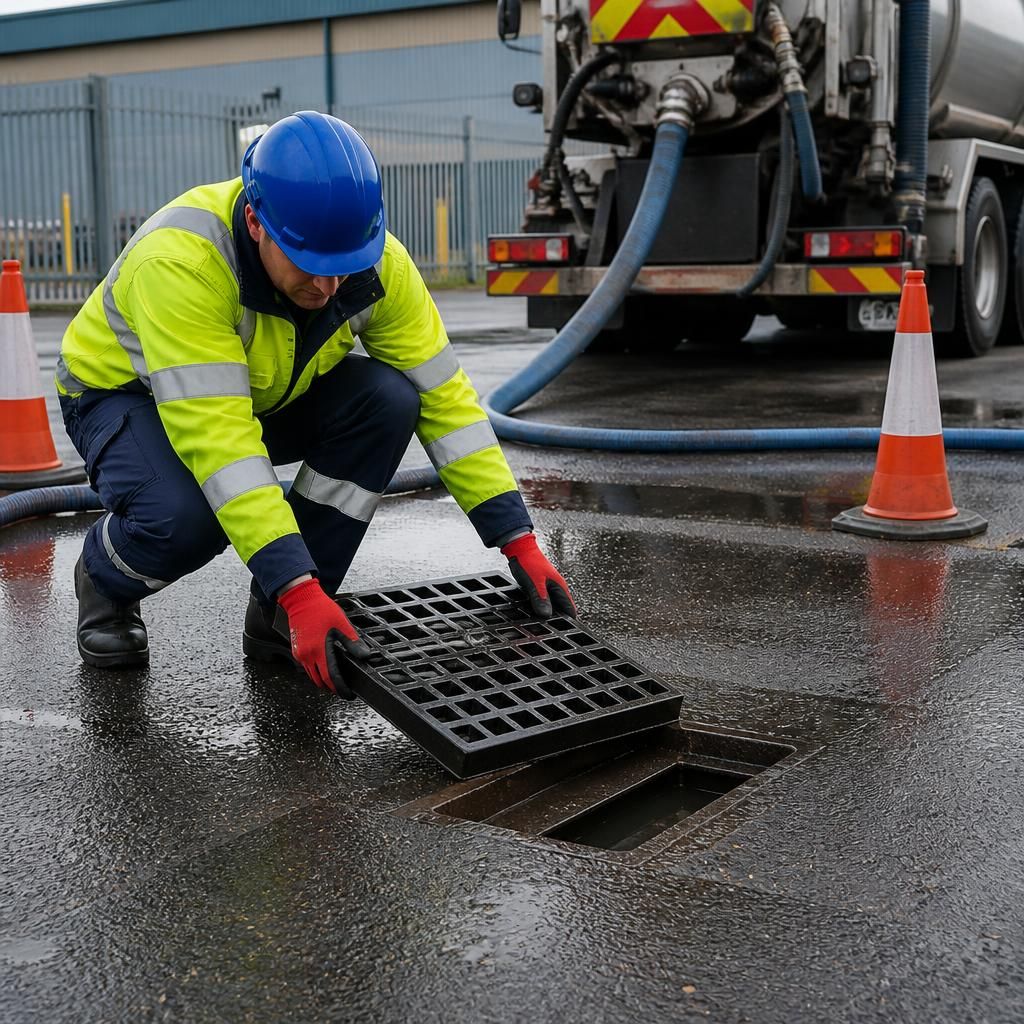
Wastewater control is a key factor when choosing a commercial tarmac cleaning provider. Cleaning can mobilise oil, silt, detergents and organic matter, so the contractor should explain how dirty water will be contained, recovered and disposed of without polluting surface-water drains, soil or nearby areas.
- Drainage points should be identified before work begins.
- Drain covers, barriers or recovery equipment may be needed to prevent uncontrolled run-off.
- Any cleaning products should be suitable for the surface and used only where necessary.
- The quotation should state whether wastewater recovery and disposal are included.
A provider that cannot clearly describe its drainage protection and waste-handling arrangements may create avoidable environmental and compliance risks for the site.