
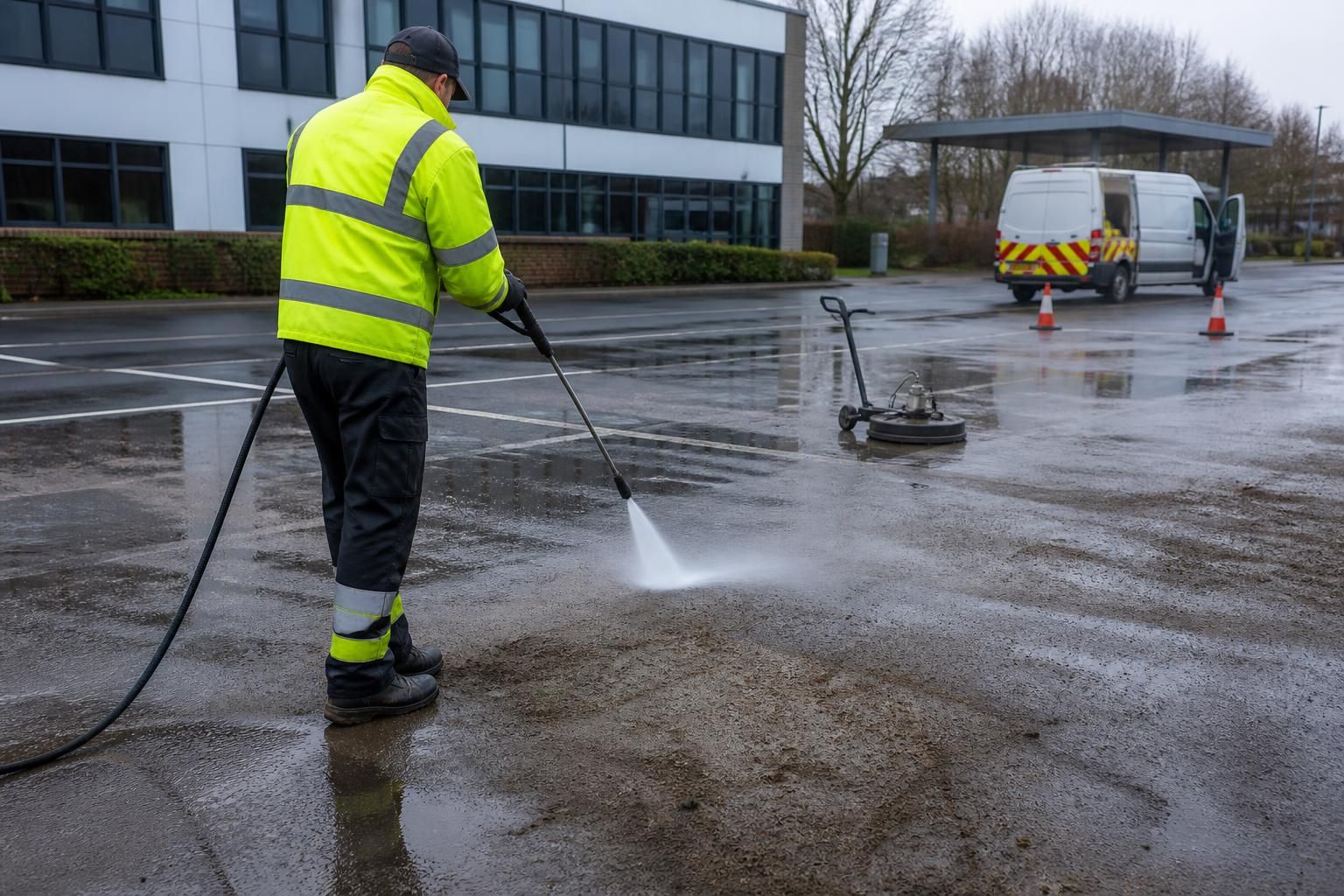
What factors should be considered when choosing a tarmac cleaning and restoration service provider?
When choosing a tarmac cleaning and restoration service provider, assess their relevant commercial experience, cleaning methods, equipment, environmental controls, health and safety standards, insurance and ability to work around your site’s access and operational requirements. A reliable provider should inspect the surface first, explain the proposed process clearly and provide a suitable maintenance or restoration plan rather than applying a one-size-fits-all treatment.
Choosing a tarmac cleaning and restoration service provider should be based on their relevant experience, proposed cleaning method, equipment, environmental controls, health and safety procedures, insurance, and ability to work around your site’s access and operational requirements. A competent provider will inspect the surface before recommending treatment, explain what the work can realistically achieve, and provide a clear plan for cleaning, restoration and ongoing maintenance.
Relevant commercial experience
Look for a contractor with experience of cleaning and restoring tarmac in environments similar to yours. A car park, service yard, access road, depot or public-sector site may contain different contaminants and present different operational risks. Commercial experience is particularly important where the area is large, heavily trafficked, shared with pedestrians or vehicles, or connected to drainage systems.
Ask whether the provider has undertaken comparable work for property managers, construction companies, facilities teams or local authorities. Experience should include more than basic pressure washing. The contractor should understand how tarmac reacts to pressure, heat, detergents, oil contamination, moss treatment and surface repairs, and should be able to identify when cleaning alone will not resolve underlying deterioration.
Initial inspection and accurate diagnosis
A reliable service provider should assess the surface before preparing a quotation or method statement. The inspection should consider the age and condition of the tarmac, cracking, loose aggregate, failed repairs, standing water, oil staining, moss, algae, weeds, chewing gum, tyre marks and other contamination.
The contractor should also check nearby walls, kerbs, drainage channels, gullies, vehicles, landscaping and building entrances. This helps determine the appropriate pressure, temperature, cleaning products and recovery measures. It also prevents a treatment intended for robust tarmac being used on a weakened or poorly bonded surface.
Be cautious of a proposal that promises to remove every stain or restore badly worn tarmac without qualification. Cleaning can improve appearance and hygiene, but it cannot replace failed surfacing or reverse structural damage. A professional assessment should distinguish between removable contamination, surface discolouration and defects requiring repair or resurfacing.
Suitability of the proposed methods and equipment
Different contaminants require different treatments. Pressure washing may be suitable for general dirt, algae and surface debris, while hot water or steam cleaning can help break down oil, grease, chewing gum and ingrained deposits. Rotary cleaning equipment can produce a more consistent result across broad areas, provided it is used at a pressure and flow rate suitable for the surface.
Ask the provider to explain which equipment will be used and why. The method should reflect the tarmac’s condition, the type of contamination and the surrounding environment rather than relying on the same setting for every project. Excessive pressure, concentrated jets or unsuitable chemicals can dislodge aggregate, damage edges and spread contamination.
Where restoration is required, clarify what this means in practical terms. It may involve targeted stain treatment, moss and weed removal, joint or edge attention, crack treatment, surface dressing or another remedial measure. The quotation should separate cleaning from repairs or protective treatments so that the expected outcome is clear.
Environmental and wastewater controls
Cleaning tarmac can produce contaminated water containing oil, sediment, detergents and other pollutants. A responsible provider should explain how wastewater, sludge and removed debris will be contained, collected and disposed of. Water should not be allowed to enter surface-water drains when it could cause pollution.
Ask whether the contractor uses recovery equipment, drain protection, bunding or other controls where appropriate. They should select cleaning products carefully, follow the product instructions and use the least aggressive treatment that will achieve the required result. Environmental controls are especially important on industrial sites, near watercourses, at fuel handling areas and where drainage is shared with other premises.
Health and safety arrangements
Commercial tarmac cleaning involves pressurised water, hot equipment, chemicals, moving vehicles, slips, trips and restricted access. The provider should be able to supply suitable risk assessments and method statements, often referred to as RAMS, before work begins. These should cover pedestrian segregation, traffic management, chemical handling, equipment operation, wet surfaces, access equipment and emergency arrangements where relevant.
Check how the contractor will protect staff, visitors, members of the public and other trades. A suitable plan may include barriers, warning signs, controlled work zones, agreed delivery routes and phased cleaning. The provider should also confirm whether its operatives are trained and equipped for the particular machinery and access conditions involved.
Insurance, documentation and professional standards
Request evidence of appropriate public liability and employers’ liability insurance, together with any other cover relevant to the proposed work. The contractor should provide written quotations, scope of works, exclusions, risk assessments and waste documentation where applicable.
Membership of a trade body or possession of formal accreditations can provide useful reassurance, but these should support—not replace—evidence of relevant experience and sound working practices. It is also sensible to check references or examples of comparable commercial projects, focusing on the type of surface, scale of the work and conditions under which it was completed.
Access, scheduling and operational planning
The best technical method may not be suitable if it prevents the site from operating. Discuss vehicle movements, pedestrian routes, delivery times, security arrangements, water and power availability, noise, drying time and access to the work area. A provider experienced in commercial work should be able to plan around trading hours, tenant access, construction activity or public use where practicable.
For larger sites, ask whether the work can be divided into manageable phases. The programme should identify preparation, cleaning, wastewater control, drying, inspection and any restoration or repair work. It should also explain when the surface can safely be returned to use.
Clarity of the quotation and expected results
A useful quotation should describe the areas included, the contaminants targeted, the equipment and treatments proposed, the restoration work included, access requirements, environmental controls and any exclusions. It should state whether additional repairs, stain reduction or repeat treatments would be quoted separately.
Discuss the expected finish before approving the work. Some oil marks, tyre staining and age-related discolouration may be reduced rather than completely removed, particularly where contamination has penetrated the surface. Clear expectations help you compare providers on the quality and suitability of their proposals rather than on price alone.
Aftercare and maintenance advice
A suitable provider should explain how to maintain the cleaned surface and reduce recurring contamination. Advice may cover spill response, sweeping, weed and moss control, drainage maintenance, traffic management and the timing of future professional cleaning. If the site has recurring oil or waste contamination, the contractor should identify the likely source rather than treating the visible marks repeatedly without addressing the cause.
Comparing providers against these factors will help you select a contractor that can deliver a controlled, compliant and appropriate service. The strongest proposal is not necessarily the cheapest; it is the one that demonstrates an accurate assessment, suitable equipment, safe working practices, responsible wastewater management and a realistic understanding of what cleaning and restoration can achieve on your tarmac.
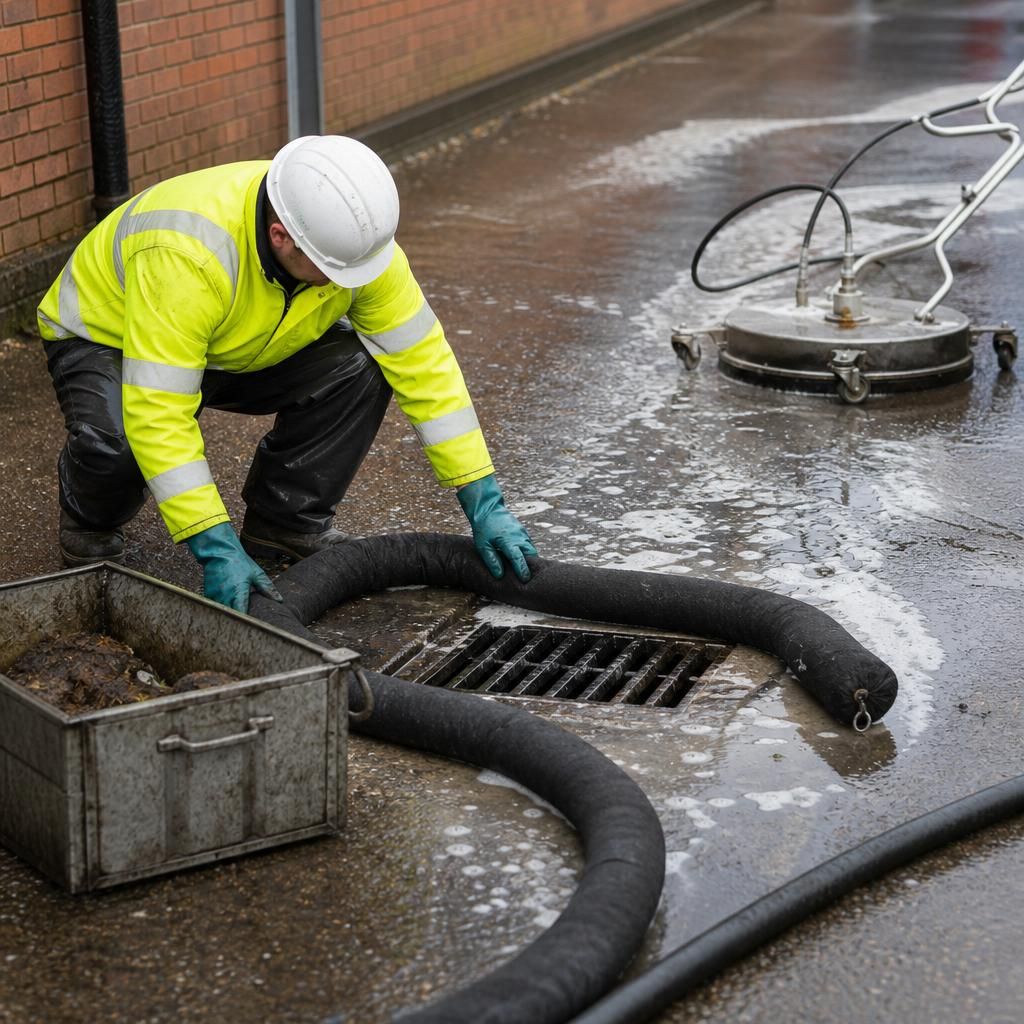
Environmental controls are a key factor when choosing a tarmac cleaning and restoration provider because the work can produce wastewater containing oil, sediment, detergents and other pollutants. A responsible contractor should explain how this water and any removed debris will be contained, recovered and disposed of without entering surface-water drainage systems.
Ask whether the proposed method includes drain protection, water recovery or other containment measures suited to your site. These controls are particularly important in car parks, service yards, industrial premises and areas near watercourses. The provider should also select the least aggressive cleaning products capable of treating the contamination and explain any environmental precautions in the quotation or method statement.