
What are the environmental considerations when selecting tarmac cleaning products and methods?
When selecting tarmac cleaning products and methods, consider their biodegradability, chemical content, water use, runoff control and potential impact on surrounding soil, drains, vegetation and wildlife. Lower-impact products, controlled pressure or steam cleaning, and responsible collection and disposal of contaminated wastewater can reduce pollution while protecting the tarmac surface.
Environmentally responsible tarmac cleaning depends on selecting products and methods that remove contamination without polluting watercourses, damaging the bitumen-bound surface or creating avoidable waste. The main considerations are chemical composition, biodegradability, water consumption, pressure and temperature control, runoff containment, wastewater disposal, and the possible effects on surrounding soil, vegetation, drainage systems and wildlife.
Assess the contamination before choosing a product. A detergent suitable for general dirt may be unnecessary for oil, algae, moss, chewing gum, tyre marks or construction residues. Using the mildest effective treatment reduces chemical use and limits the amount of contaminated wastewater produced. A competent contractor should identify the deposit, test the proposed treatment in an inconspicuous area and confirm that the product will not soften, stain or strip the tarmac binder.
Check the product’s environmental profile. Product information and safety data should be reviewed before use, rather than relying only on terms such as “eco-friendly” or “green”. Relevant points include:
- Whether the formulation is readily biodegradable under appropriate conditions.
- Its pH and whether it is strongly acidic or alkaline.
- Whether it contains solvents, petroleum distillates, persistent surfactants, hazardous biocides or other substances that could harm aquatic life.
- Whether it is suitable for use on bitumen-bound surfaces and near planted areas.
- Whether the manufacturer provides clear instructions for dilution, contact time, rinsing and disposal.
Biodegradability does not automatically make a product harmless. A biodegradable chemical can still damage vegetation, aquatic organisms or drainage infrastructure if it is concentrated, over-applied or discharged incorrectly. The quantity used, the contamination being removed and the way the residue is collected are all part of the environmental assessment.
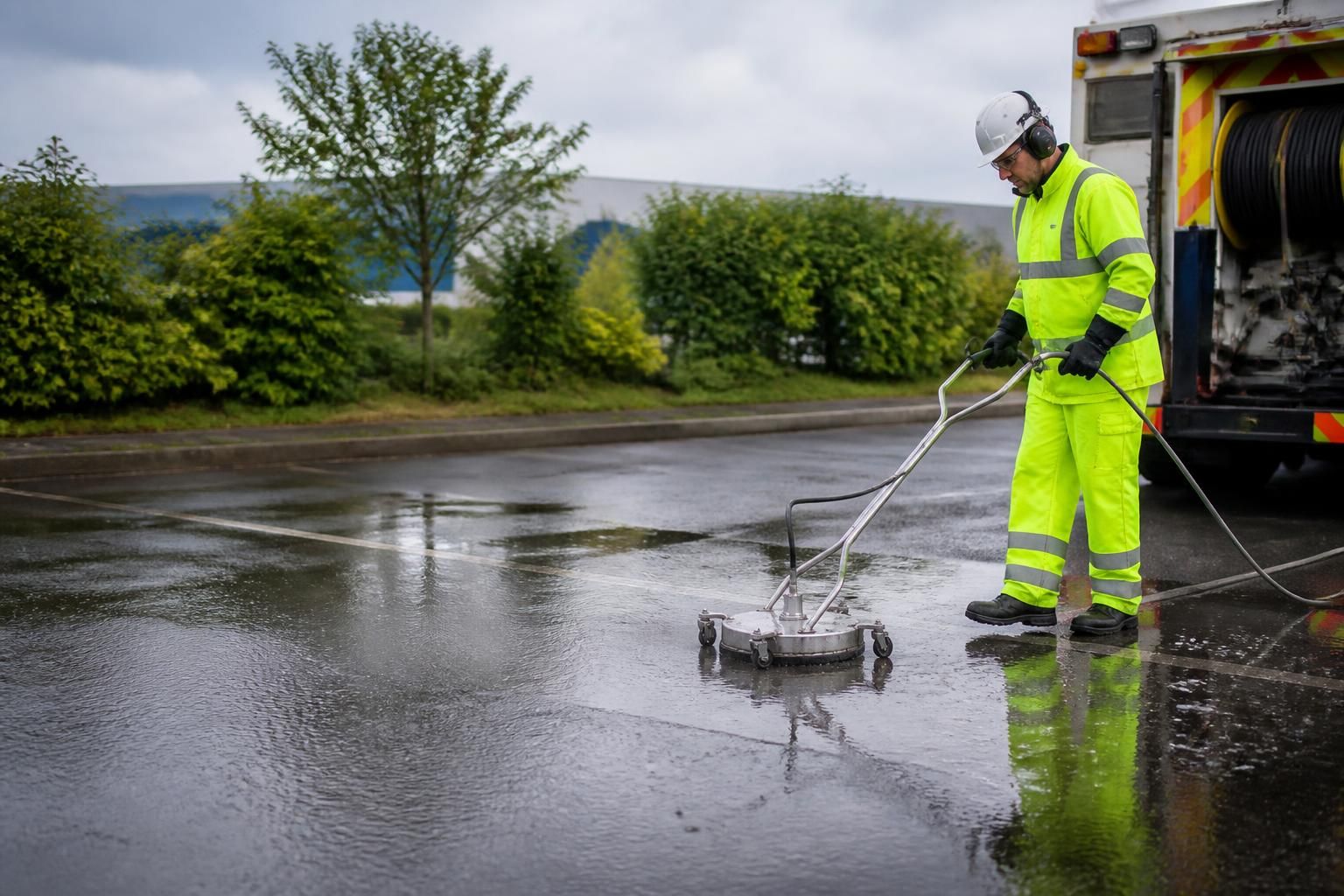
Use pressure and temperature carefully. Pressure washing can reduce reliance on chemicals, but excessive pressure can loosen aggregate, erode worn areas, expose the binder and spread pollutants across a wider area. The correct pressure, nozzle, working distance and cleaning pattern should be selected for the condition of the tarmac rather than applied uniformly to every surface.
Steam cleaning or hot-water cleaning may remove biological growth, grease and ingrained dirt with limited detergent use. However, heat must be controlled because prolonged or excessive temperatures can soften bitumen, particularly on aged, heavily trafficked or poorly specified surfaces. Low-pressure rinsing, rotary surface cleaners and targeted spot treatment can often provide a better balance between cleaning performance, surface protection and water use.
Consider water consumption as well as water quality. A method that uses less detergent may still have a significant environmental impact if it requires excessive rinsing. Contractors should avoid leaving chemical residues on the surface while also preventing unnecessary water use. Practical measures include pre-sweeping loose debris, applying products accurately, observing the correct dwell time, using equipment that controls flow and recovering wastewater where contamination is present.
Rainfall should also be considered when planning the work. Cleaning immediately before heavy rain can spread loosened oil, sediment or treatment residues into drainage systems and surrounding ground. Work should be scheduled when the surface can be controlled and rinsed safely, with suitable measures in place if weather conditions change.
Control and contain runoff. Runoff from a commercial or industrial tarmac area may contain oil, fuel residues, metals, detergents, sediment, organic matter, paint or other contaminants. It should not be allowed to enter surface-water drains, streams, ponds or unprotected soil. Surface-water drainage commonly leads to watercourses with little or no treatment, so apparently clean-looking water may still be harmful.
Suitable controls can include drain covers or mats, temporary bunds, booms, wet vacuums, sump pumps, collection tanks and staged cleaning. The appropriate arrangement depends on the site layout, drainage connections, slope, contamination and volume of water. Any standing water or recovered slurry should be collected for appropriate treatment or disposal instead of being pushed into a nearby drain.
Discharge to a foul sewer is not automatically permitted either. The sewerage undertaker or relevant authority may require trade effluent consent, particularly where water contains oil, chemicals or high levels of suspended solids. A responsible cleaning plan should identify drainage routes in advance and establish who is authorised to approve any discharge.
Protect soil, vegetation and wildlife. Tarmac cleaning often takes place beside grassed areas, planted borders, trees, water features and habitats used by birds or insects. Chemical overspray and uncontrolled runoff can scorch plants, affect soil organisms and carry pollutants beyond the work area. Operators should protect vulnerable areas, avoid spraying in windy conditions, use targeted application and prevent collected wastewater from reaching planting beds or open ground.
Biocidal treatments for moss, algae and lichen require particular care. They should be used only where necessary, applied at the correct dilution and kept away from drains and watercourses. Physical removal and controlled washing may be preferable where growth is light. Any treatment should follow the product label and current UK requirements for safe handling, storage and disposal.
Manage oil and other hazardous contamination separately. Oil, diesel, hydraulic fluid and similar residues need more than a general-purpose detergent. Washing them across a larger area can increase pollution and make recovery more difficult. Absorbent materials, targeted degreasers, containment and wastewater recovery may be required. Used absorbents, oily sludge and contaminated filters should be classified and disposed of through an appropriate waste route, with documentation retained where required.
Paint, concrete residue, cement washout and construction materials may also require specialist treatment. Mechanical removal, vacuum recovery or carefully controlled softening can be preferable to aggressive chemical stripping. The aim is to remove the contaminant without dispersing it into the drainage network or creating hazardous airborne dust.
Consider waste and transport impacts. Environmental performance includes what happens to empty containers, used absorbents, filters, collected sludge and wastewater after cleaning. Products should be stored securely, kept in labelled containers and used according to stock-control procedures to prevent spills or expired chemical waste. Reusable equipment and concentrated products that can be accurately diluted on site may reduce packaging, although this should not override surface or pollution-control requirements.
Wastewater should be taken to an authorised facility or managed under an approved site procedure. A contractor should be able to explain how waste is classified, transported and documented, and should use appropriately registered waste carriers where applicable. Spill kits and an incident response procedure are also important, especially on sites where fuel, oil or chemicals are stored.
Balance environmental protection with the condition of the tarmac. A method is not sustainable if it causes premature surface failure and leads to avoidable replacement or repair. Aggressive pressure, unsuitable solvents, excessive heat and repeated abrasive treatment can shorten the life of the surface. Protecting the bitumen binder, joints, edges, repairs and drainage details reduces the need for additional materials and future cleaning.
Before work begins, the contractor should inspect the tarmac for cracking, fretting, potholes, failed repairs, loose aggregate and areas where the binder has deteriorated. These defects may need to be marked, protected or repaired separately. Cleaning should not be used to conceal a drainage or surface defect that is contributing to contamination.
Questions to ask when selecting a method or contractor include:
- What is the contaminant and why is the proposed product necessary?
- Is there a lower-chemical or lower-water method that would achieve the required result?
- How will drains, soil, planting and nearby watercourses be protected?
- How will dirty water, sludge and contaminated absorbents be collected?
- Where will recovered wastewater and other waste be taken?
- What controls will be used if weather conditions change or a spill occurs?
- Has the method been tested for compatibility with the existing tarmac?
- Can the contractor provide product safety information, risk assessments, method statements and relevant waste documentation?
For commercial and industrial sites, the most defensible approach is usually a planned, targeted treatment supported by runoff controls and documented waste handling. Lower-impact detergents, efficient water use, controlled pressure or steam cleaning and proper recovery of contaminated water can deliver a clean, safe surface while reducing the risk of pollution. The correct choice should be based on the contamination, the tarmac’s condition and the site’s drainage and environmental sensitivities—not on product claims alone.
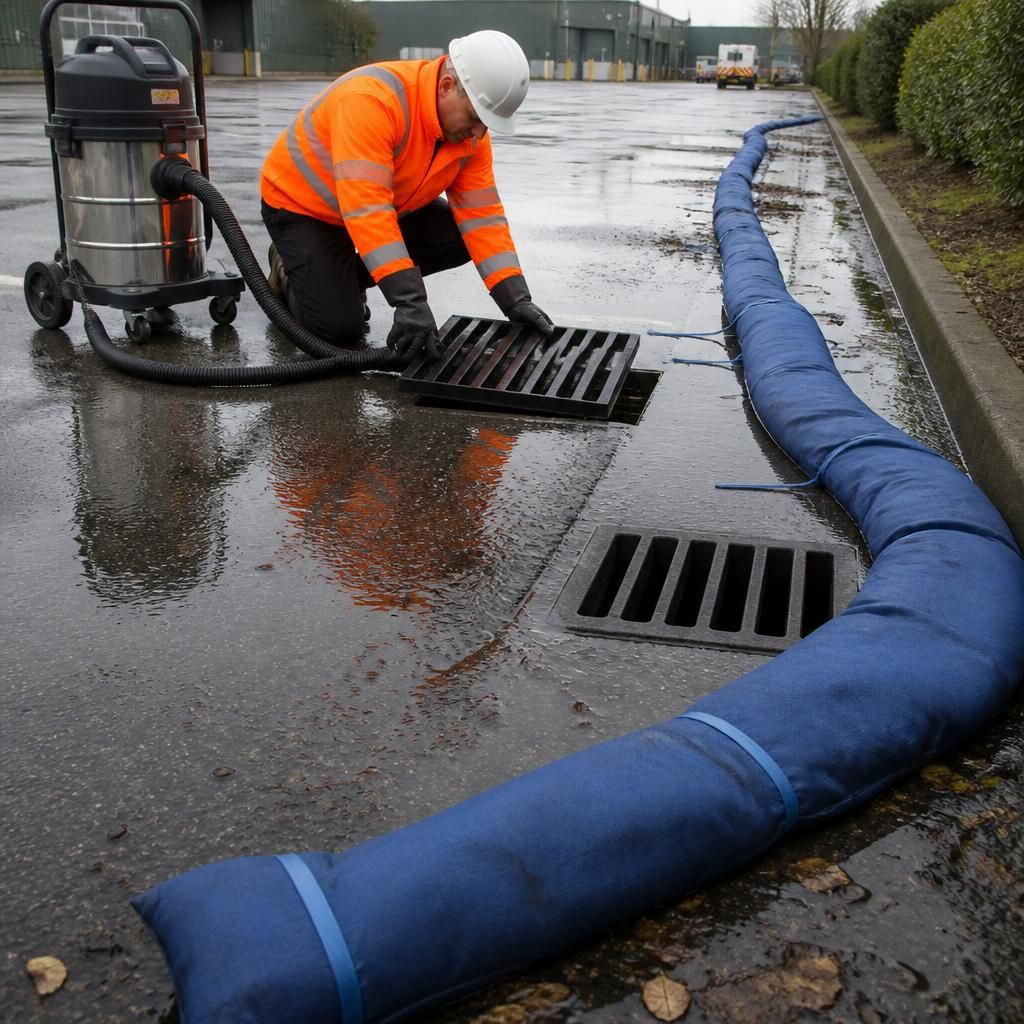
Runoff control is a key environmental consideration in tarmac cleaning because dirty water can carry oil, detergents, sediment and other contaminants into surface-water drains, soil or nearby watercourses. Before cleaning begins, the drainage layout should be identified and suitable controls, such as drain covers, temporary bunds and wet vacuums, should be used where contamination is present.
Collected wastewater and sludge should be managed through an appropriate disposal route rather than discharged without permission. This protects the surrounding environment and helps ensure the cleaning method complies with the site’s drainage arrangements and relevant trade effluent requirements.