
What are the environmental benefits of professional tarmac cleaning?
Professional tarmac cleaning can reduce environmental impact by controlling contaminated runoff, using water and cleaning products responsibly, and limiting waste during maintenance. Removing pollutants and extending the serviceable life of the surface can also reduce the need for more frequent repairs or replacement, helping conserve materials and resources.
Professional tarmac cleaning can reduce environmental impact by controlling contaminated runoff, using water and cleaning products responsibly, and extending the usable life of the surface. Removing oil, fuel, organic growth, dirt and other contaminants helps protect drainage systems and nearby watercourses, while effective maintenance can delay repair or replacement and reduce the materials, transport and waste associated with larger works.
Controlled management of contaminated runoff
Water from tarmac cleaning can contain oil residues, fuel, sediment, rubber particles, detergents and other pollutants. If this water is allowed to flow directly into surface-water drains, soil or streams, it may cause pollution and can interfere with drainage infrastructure. Professional contractors assess the site before work begins, identify drain points and use suitable measures to prevent uncontrolled discharge.
Depending on the site and the contaminants present, these measures may include drain covers, bunding, temporary containment, wet vacuum recovery, filtration or collection for appropriate disposal. Runoff should be managed in accordance with the site’s drainage arrangements and applicable environmental requirements. This is particularly important on car parks, service yards, industrial premises, petrol station forecourts and other areas where hydrocarbons may be present.
More efficient use of water
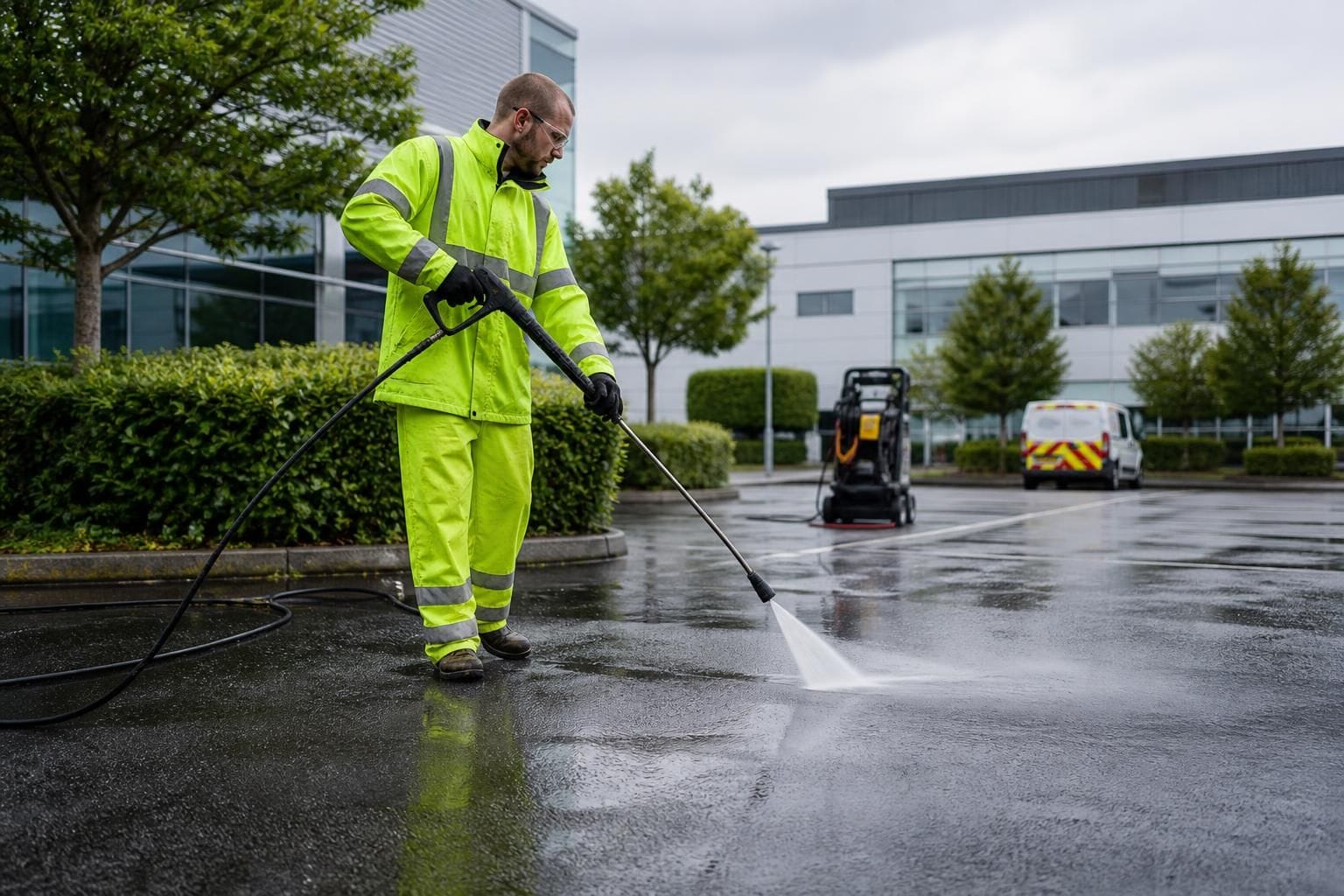
Professional pressure washing and steam-cleaning equipment can apply water at a controlled pressure, flow rate and temperature. This allows the cleaning method to be matched to the condition of the tarmac rather than relying on excessive water or repeated passes. Trained operators can also pre-treat specific contaminants and target heavily soiled areas, reducing unnecessary washing of areas that do not require intensive cleaning.
Water use still depends on the size of the surface, the level of soiling, the chosen technique and whether recovery is possible. A responsible approach is therefore not simply to use the least water in every situation, but to use an effective method that avoids waste while achieving the required cleaning standard. Where practical, recovered water may be filtered or handled through an appropriate waste process, subject to its contamination level and the equipment available.
Responsible selection and use of cleaning products
Some tarmac contaminants cannot be removed effectively with water alone. Oils, chewing gum, algae, moss and ingrained deposits may require a specialist treatment. Professional cleaning enables the product to be selected for the specific contaminant and applied in a controlled quantity, rather than using a stronger or unsuitable chemical across the whole surface.
Product selection should consider biodegradability, toxicity, compatibility with bitumen-based surfaces, the risk to vegetation and the likely effect on drainage systems. The term “eco-friendly” is not, by itself, proof that a product is suitable for discharge or harmless to aquatic life. The product’s safety information, the site conditions and the planned method of collecting or treating wastewater all need to be considered.
Correct dilution, dwell time and rinsing are also important. Over-application can increase chemical use and create more contaminated wastewater without improving the result. Operators should follow the manufacturer’s instructions and prevent concentrated products from entering drains, soil or watercourses.
Extending the serviceable life of tarmac
Regular, appropriate cleaning helps identify and remove substances that may contribute to surface deterioration. Oil and fuel can soften or weaken bituminous binders, while standing organic matter can retain moisture and encourage moss or weed growth around cracks and edges. Abrasive grit and accumulated debris can also contribute to wear when trafficked over repeatedly.
Cleaning does not repair structural defects or reverse all ageing. However, it can form part of a planned maintenance programme that includes prompt crack treatment, drainage maintenance and localised repairs. Keeping an existing tarmac surface in service for longer can reduce demand for new aggregate, bituminous materials and ancillary products. It can also reduce the fuel use, transport movements, excavation and construction waste associated with premature resurfacing.
Less waste and fewer unnecessary replacement works
When a surface looks heavily stained or overgrown, replacement may appear to be the only option, even where the underlying tarmac remains serviceable. Professional assessment and cleaning can help distinguish between appearance-related soiling and genuine structural failure. Where cleaning restores an acceptable condition, it may avoid unnecessary removal and disposal of otherwise usable material.
Cleaning work can still produce waste, including collected silt, oil-contaminated absorbents, vegetation and disposable filters. These materials must be handled according to their contamination and disposed of through suitable waste arrangements. A contractor should not simply wash collected pollutants into a drain or leave them on site to be dispersed by rain.
Protection of surrounding areas
Controlled cleaning reduces the risk of pollutants reaching planted areas, neighbouring land and surface-water systems. This matters where tarmac is close to trees, landscaped areas, watercourses or drainage channels. Operators should consider spray drift, overspray, noise, access routes and the effect of hot water or cleaning products on adjacent materials and vegetation.
Good site planning also helps prevent secondary pollution. For example, absorbent materials, recovered sludge and contaminated protective equipment should be kept secure during the work, and equipment should be cleaned in a location where wash water can be controlled. Work areas may need to be divided into manageable sections so that runoff can be contained and processed safely.
Lower impact through suitable equipment and planning
Using the right equipment can reduce the time spent on site, avoid repeated treatments and limit unnecessary disturbance. Pressure washing is often suitable for general dirt and loose deposits, whereas steam cleaning or specialist spot treatment may be more appropriate for grease, gum or sensitive areas. Water recovery equipment can be valuable where drainage is restricted or contamination is significant.
Environmental performance also depends on planning. Combining cleaning with other scheduled maintenance can reduce repeat travel, while arranging work during suitable weather can prevent rainfall from carrying loosened contaminants into the drainage system. The method should be based on the tarmac’s age and condition, the contaminant, the surrounding environment, drainage arrangements and the required finish.
What to confirm with a cleaning contractor
- How will runoff be prevented from entering surface-water drains or nearby watercourses?
- Will wastewater be recovered, filtered, contained or discharged through an approved route?
- Which cleaning products will be used, and are they suitable for tarmac and the site’s drainage conditions?
- How will oil, silt, vegetation and other collected waste be stored and disposed of?
- Will the proposed method use pressure washing, steam cleaning, spot treatment or a combination of techniques?
- What measures will protect surrounding soil, planting, buildings and neighbouring areas?
- Can the work be incorporated into a planned maintenance programme to reduce repeat visits and delay replacement?
Professional tarmac cleaning is not automatically environmentally responsible simply because it is carried out by a specialist. The environmental benefit depends on controlling runoff, using water and products proportionately, managing waste correctly and choosing a cleaning method that does not damage the surface. When these controls are included in the work plan, cleaning can support longer-lasting tarmac, reduce avoidable construction waste and help protect the wider site environment.
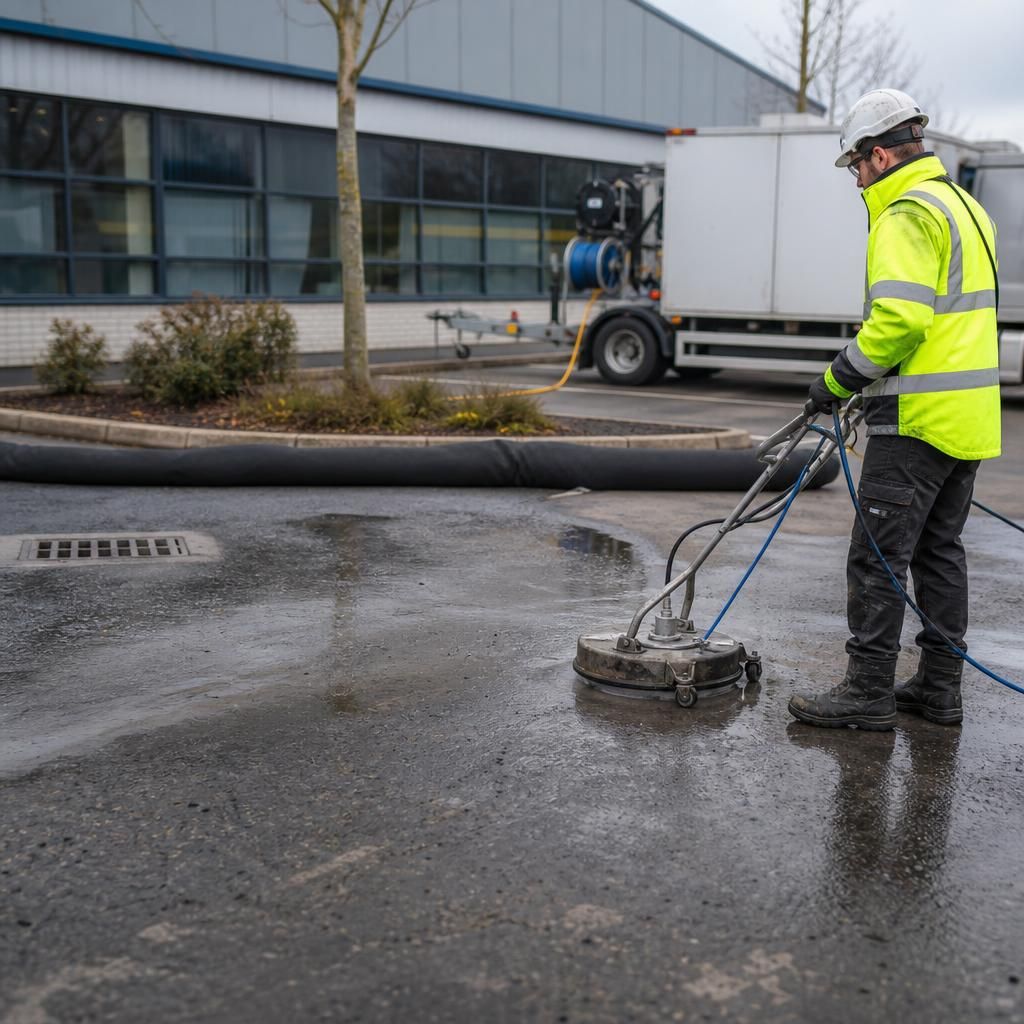
One of the main environmental benefits of professional tarmac cleaning is the controlled management of contaminated runoff. Cleaning water can contain oil, fuel residues, sediment, rubber particles, detergents and other pollutants that should not enter surface-water drains, soil or nearby watercourses.
Before work begins, the contractor should assess the drainage layout and the contaminants present. Suitable controls may include drain covers, temporary bunding, wet-vacuum recovery, filtration or collection for appropriate disposal. Using only the water, cleaning products and treatment intensity required for the condition of the surface also helps reduce waste while protecting surrounding planting, buildings and drainage systems.