
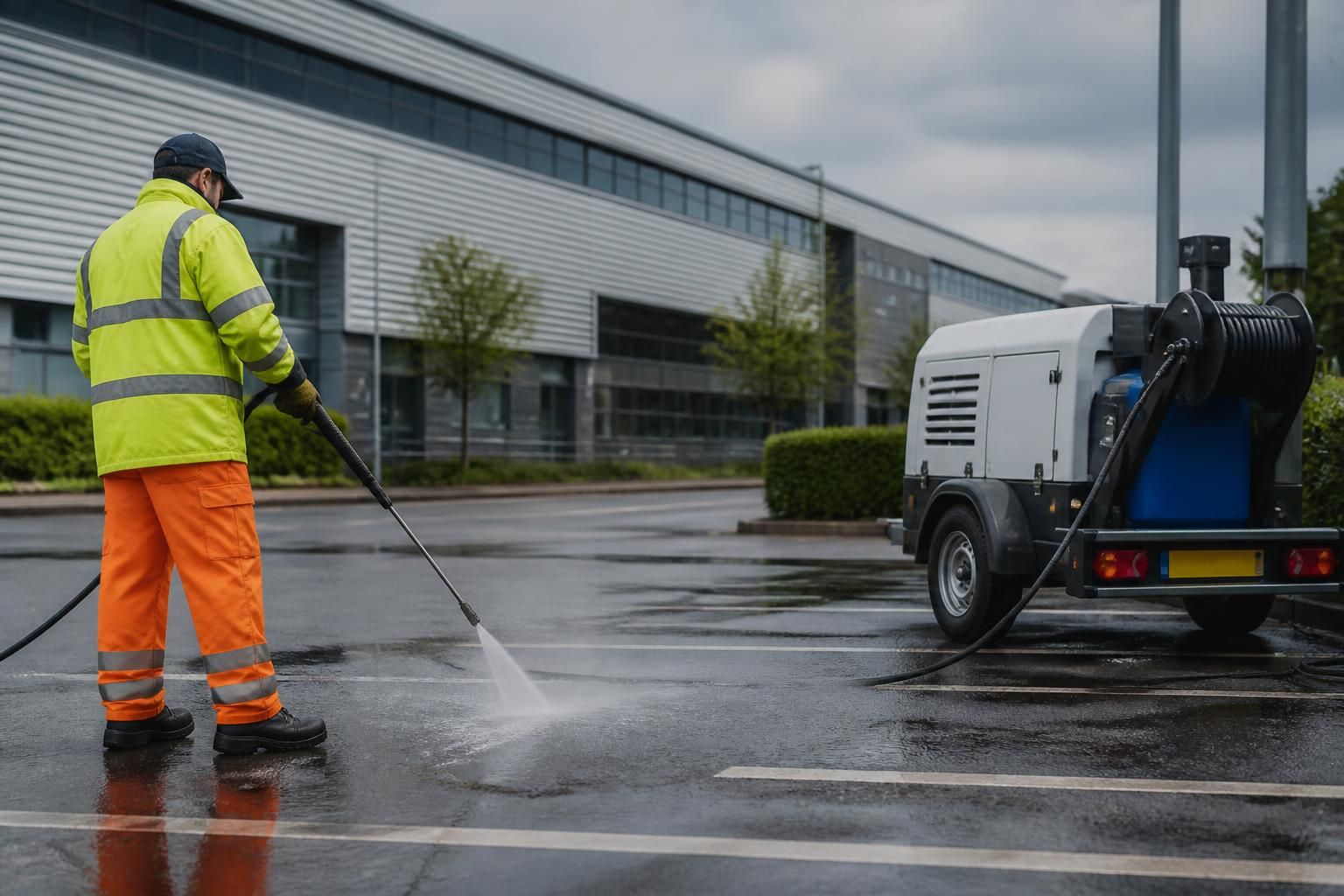
How often should tarmac surfaces be professionally cleaned and restored to maintain their condition?
Commercial tarmac surfaces should generally be professionally inspected and cleaned at least annually, with restoration scheduled when wear, fading, cracking, oil contamination or drainage problems become apparent. High-traffic sites, car parks and areas exposed to heavy soiling may require more frequent cleaning, while restoration intervals depend on the surface’s condition, usage and previous maintenance.
Commercial tarmac should usually be professionally inspected and cleaned at least annually, while restoration should be scheduled when the surface shows significant fading, cracking, oil contamination, potholing, edge failure or drainage-related deterioration. High-traffic car parks, service yards, access roads and sites exposed to heavy vehicle movements or persistent soiling may need more frequent cleaning. Restoration does not follow a fixed calendar interval because it depends on the tarmac’s age, construction, usage, exposure and previous maintenance.
Cleaning and restoration are different activities. Professional cleaning removes surface contaminants such as traffic film, mud, algae, moss, chewing gum, oil and other spillages. Restoration is a more involved programme intended to improve the condition and performance of worn tarmac. It may include treating contamination, removing vegetation, repairing local defects, improving the appearance of the surface and applying a suitable protective or rejuvenating treatment where appropriate. Cleaning cannot correct structural movement, failed foundations or extensive surface damage, so these issues should be assessed separately.
A practical maintenance frequency for commercial sites is:
- Routine inspections: Check the tarmac regularly for new stains, loose aggregate, cracking, standing water, moss growth, potholes and damaged edges. Inspections should also follow construction work, fuel spills, severe weather or unusually heavy traffic.
- Professional cleaning: Arrange a planned clean at least annually, or more often where the surface receives heavy use, accumulates oil and mud, or forms part of a customer-facing or safety-critical area.
- Targeted cleaning: Treat oil, chemical residues, food waste, organic growth and other spillages promptly rather than waiting for the next scheduled visit. Some contaminants become harder to remove and can soften, stain or degrade the binder if left in place.
- Restoration: Plan restoration when cleaning alone no longer returns the surface to an acceptable condition, or when early deterioration could be repaired before it develops into more extensive damage.
The right interval is strongly influenced by traffic. A lightly used access road may remain presentable for longer than a busy retail car park, loading area or industrial yard. Turning movements, braking, parked vehicles, delivery activity and heavy plant place additional stress on the surface. Areas beside entrances, waste storage, refuelling points and loading bays commonly require closer monitoring because they are more exposed to spills, abrasion and concentrated traffic.
Environmental exposure also affects the maintenance cycle. Rain can move dirt and contaminants across the surface, while prolonged dampness encourages moss and algae in shaded areas. Frost and repeated wetting can worsen existing cracks and weak edges. Sunlight may fade the appearance of the binder, although fading alone does not necessarily mean that the tarmac has failed. A professional assessment helps distinguish cosmetic weathering from defects that require repair or restoration.
Cleaning should be brought forward when the surface becomes slippery, visibly contaminated or difficult to keep presentable. Oil and fuel residues are particularly important because they can reduce traction and may soften or weaken bituminous materials if allowed to remain. Moss and algae can create a slip risk, especially on shaded paths, ramps and pedestrian routes. Mud and loose aggregate can obstruct drainage channels and spread onto adjoining areas, creating further maintenance and safety issues.
Restoration is more appropriate when there is widespread fading, loss of surface texture, recurring contamination, minor cracking, localised fretting or a general reduction in appearance and usability. Early intervention may limit the spread of defects, but a surface with substantial potholes, movement, deep cracking or failed drainage may need repair or partial reconstruction rather than a surface treatment alone. The underlying cause should always be identified before restoration work is specified.
For sites with planned maintenance contracts, the most effective approach is to combine scheduled cleaning with condition-led inspections. A visit can record the condition of traffic lanes, parking bays, pedestrian routes, kerbs, drainage points and access areas, while noting any new defects since the previous service. This creates a maintenance history and makes it easier to plan cleaning, repairs and restoration before problems interrupt site operations.
Cleaning frequency should also reflect the required presentation standard. A public-facing commercial car park, managed estate or local authority site may need more regular cleaning than a restricted industrial yard, even where the physical wear is similar. Health and safety requirements, lease conditions, environmental controls, customer expectations and planned events can all justify an additional clean or an earlier inspection.
Before work begins, the surface should be assessed for its construction, condition, drainage, surrounding materials and contaminants. The cleaning method must be strong enough to remove soiling without dislodging aggregate, damaging the binder or forcing contaminated water into drains or nearby ground. Where pressure washing, steam cleaning, chemical treatment or access equipment is required, the method should be selected according to the surface and the site rather than applied as a standard routine.
In practical terms, arrange an annual professional inspection and clean as a baseline, increase the frequency for heavily trafficked or heavily soiled locations, and treat spills and organic growth promptly. Schedule restoration when the inspection identifies deterioration that routine cleaning cannot resolve. This condition-led approach maintains appearance and safety while avoiding unnecessary restoration work or allowing preventable defects to develop.
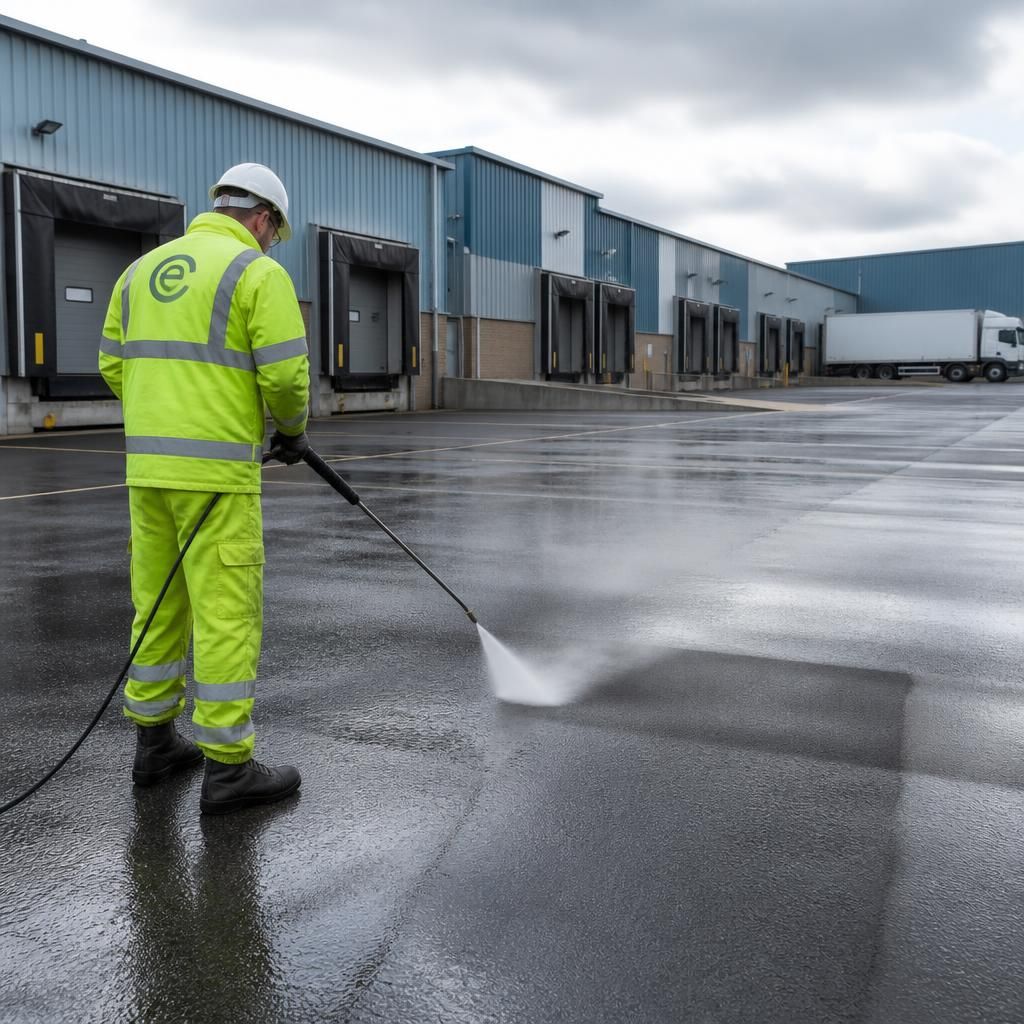
Professional tarmac cleaning is generally best scheduled at least annually, while restoration should be arranged when inspection identifies deterioration that routine cleaning cannot resolve. The correct interval depends on traffic levels, contamination, drainage, weather exposure and the surface’s existing condition.
Busy car parks, loading areas, service yards and access roads usually need closer monitoring than lightly used surfaces. Frequent turning, braking, heavy vehicles and repeated oil or fuel spillages can accelerate wear, particularly around entrances, loading bays, waste storage areas and refuelling points.
- Inspect regularly for oil staining, moss, algae, cracking, loose aggregate, potholes, standing water and damaged edges.
- Arrange targeted cleaning promptly after significant spillages or periods of heavy soiling.
- Plan restoration when cleaning no longer improves the surface sufficiently, but assess structural defects and drainage separately before specifying treatment.