
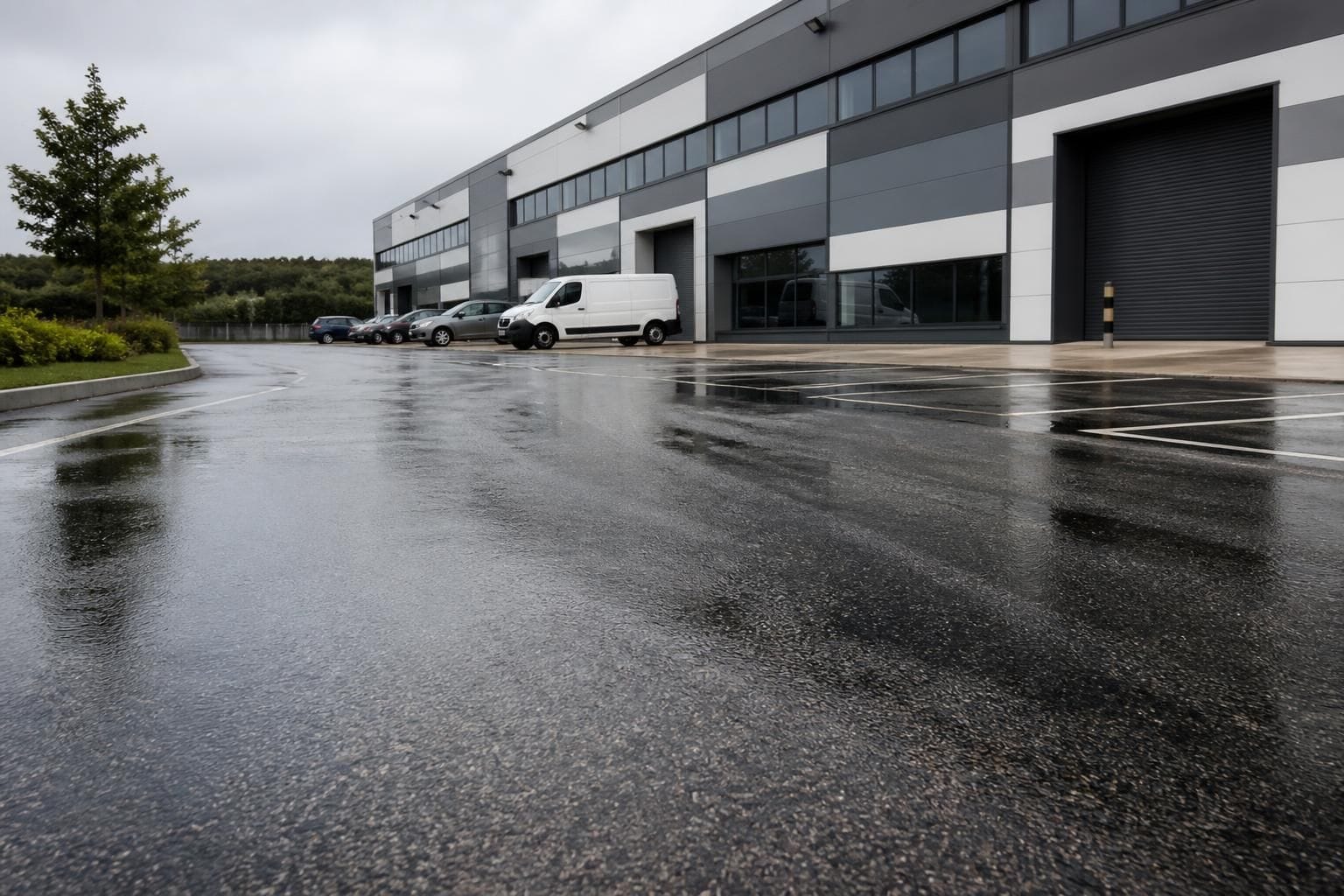
How often should tarmac be cleaned and restored?
Commercial tarmac should generally be professionally cleaned at least annually, with more frequent cleaning for heavily trafficked areas, sites exposed to oil or organic growth, and surfaces affected by winter weather. Restoration should be carried out when cleaning no longer removes staining, the surface begins to oxidise or lose aggregate, or cracking and deterioration require protective treatment.
Commercial tarmac should generally be professionally cleaned at least annually, while busy, heavily soiled or weather-exposed surfaces may need cleaning more frequently. Restoration is not governed by a fixed timetable: it should be scheduled when routine cleaning no longer removes staining, the binder and aggregate begin to deteriorate, or cracking, surface wear and water penetration indicate that protective treatment is needed.
The appropriate interval depends on how the surface is used and the conditions it is exposed to. A low-traffic access road at a well-maintained site may remain presentable with planned annual cleaning and periodic inspections. By contrast, car parks, loading areas, service yards and pedestrian routes often accumulate contamination more quickly and may require additional visits throughout the year.
Factors that affect cleaning frequency
- Traffic levels: Vehicle movements and pedestrian traffic bring in soil, grit, salts and other material that can become embedded in the surface.
- Type of traffic: Delivery vehicles, plant, forklifts and HGVs can deposit hydraulic fluid, diesel, oil and rubber, particularly around turning points, loading bays and parking areas.
- Organic contamination: Leaves, moss, algae and other growth are more likely where surfaces remain damp or shaded by buildings and vegetation. These contaminants can make tarmac slippery and may retain moisture against the surface.
- Winter conditions: Salt, grit, freeze-thaw conditions and persistent wet weather can increase soiling and accelerate deterioration, especially where existing cracks allow water to enter.
- Drainage: Standing water and blocked drainage channels increase the risk of staining, algae, frost damage and progressive weakening.
- Appearance requirements: Premises receiving visitors, customers or inspections may need more regular cleaning to maintain a consistent professional appearance.
- Nearby works: Construction, landscaping and resurfacing projects can introduce cement residue, dust, mud, paint and other difficult contaminants that should be removed promptly.
A practical maintenance pattern
For many commercial sites, an annual professional clean provides a useful baseline. This should be supported by routine visual checks and prompt spot cleaning where oil, fuel, chemical residues or other harmful substances are spilled. Higher-risk areas may benefit from a planned maintenance programme that includes cleaning after periods of heavy use, before important site inspections, and following winter weather or construction activity.
Cleaning is usually most effective when scheduled before contamination becomes deeply established. For example, removing leaf debris and organic growth before prolonged wet weather can reduce the likelihood of slippery deposits. Treating oil and fuel staining promptly can also limit penetration into the porous surface. Localised cleaning may be sufficient in some areas, whereas widespread contamination requires a coordinated treatment of the whole surface to avoid an inconsistent finish.
When tarmac needs restoration rather than cleaning
Cleaning removes surface contamination; it does not repair structural or material failure. Restoration should be considered when the tarmac shows signs such as:
- fading, oxidation or a dry, weathered appearance;
- loss of fine binder or loose aggregate at the surface;
- cracking, fretting, potholes or failed edges;
- repeated staining that remains after suitable cleaning;
- standing water caused by surface wear or drainage defects;
- degradation around joints, reinstated areas, kerbs or access points; or
- a surface that has become difficult to keep clean because it is porous, worn or uneven.
Some visual deterioration can be improved through specialist cleaning and a suitable protective or rejuvenating treatment. More serious defects may require localised repairs, crack treatment, patching, drainage work or resurfacing before any protective coating is applied. Applying a treatment over loose, contaminated or unstable material is unlikely to provide a durable result, so the condition of the substrate should be assessed first.
How to review the correct interval
A maintenance inspection should consider the surface’s cleanliness, grip, drainage, cracking, aggregate condition and areas of repeated contamination. It is useful to record problem locations such as loading bays, entrances, ramps, turning circles and shaded sections. Comparing these observations after each service helps establish whether the existing interval is adequate or whether certain areas need more frequent attention.
Cleaning should normally be planned before the surface presents a safety or appearance problem. Restoration should be arranged before minor defects develop into widespread failure, while allowing sufficient time for repairs and treatments to cure before the area returns to service. The exact approach depends on the tarmac specification, age, previous treatments, weather conditions and the type of contamination present.
In summary, annual professional cleaning is a sensible starting point for many commercial tarmac surfaces, but it is not a universal rule. Busy sites, areas exposed to oil or organic growth, and surfaces affected by winter conditions may require more frequent cleaning. Restoration should be condition-led, with action taken when cleaning alone cannot recover the appearance or when wear, cracking, aggregate loss and water-related deterioration begin to affect performance.
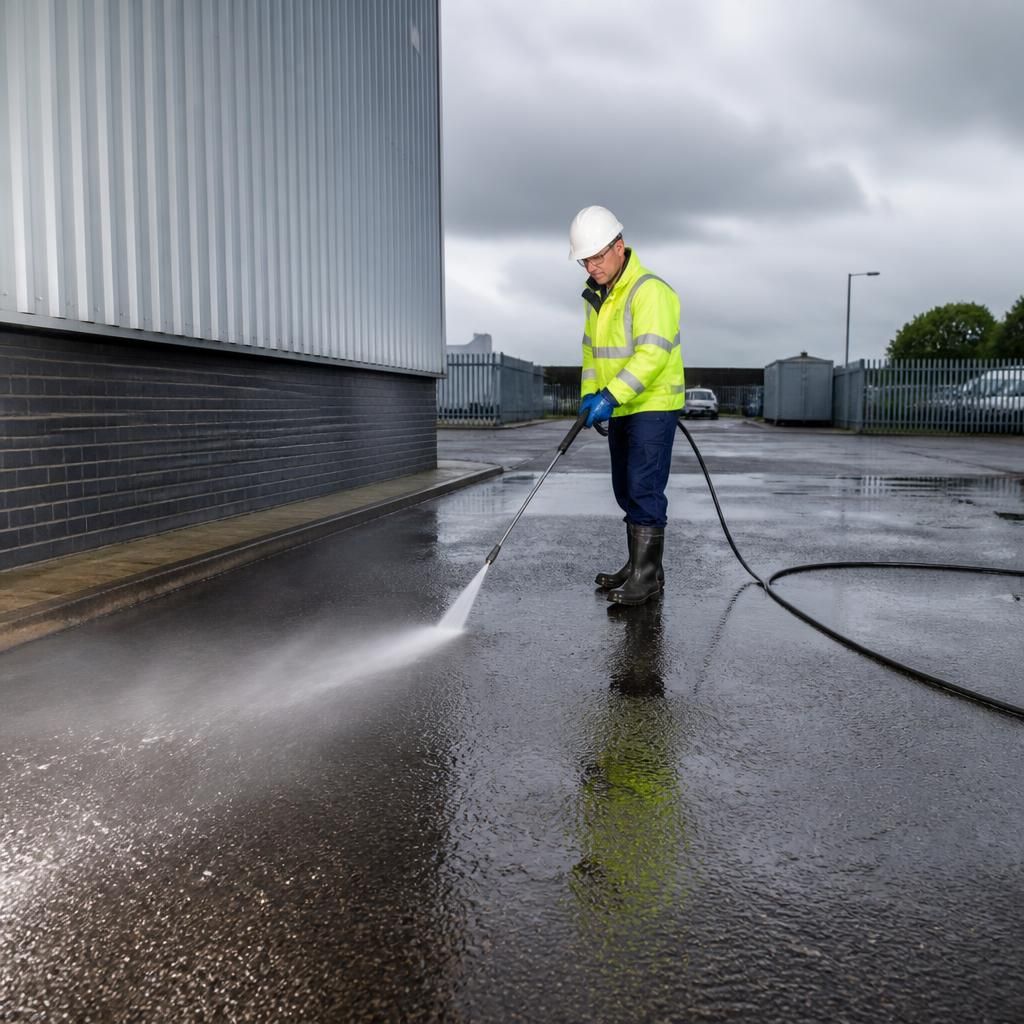
Tarmac should be professionally cleaned on a planned, condition-led basis, while restoration should be scheduled when cleaning no longer removes staining or the surface shows signs of wear. An annual clean is a sensible starting point for many commercial sites, but busy areas, loading bays and shaded surfaces may need attention more often.
Arrange an inspection if you notice:
- oil, fuel or chemical staining that remains after cleaning;
- moss, algae or other organic growth making the surface slippery;
- fading, loose aggregate, cracking, fretting or potholes; or
- standing water caused by surface wear or drainage problems.
Prompt cleaning helps prevent contaminants becoming embedded, while early restoration can address minor deterioration before it develops into more extensive surface failure.
Arrange a tarmac cleaning and restoration assessment
Arrange a tarmac cleaning and restoration assessment to review contamination, surface wear, drainage and any areas requiring repair or protective treatment. We can recommend a suitable maintenance schedule based on the condition and use of your site.