How can I prevent oil stains from reappearing on concrete?
Prevent oil stains from reappearing on concrete by removing the contamination at depth with a suitable degreaser, rinsing away all residue and allowing the surface to dry fully before applying a compatible concrete sealer. Also address the source of the spill and use drip trays or absorbent materials in areas where vehicles, plant or machinery regularly release oil.
Oil stains reappear on concrete when oil has penetrated below the visible surface, residue remains in the pores, or the original source of contamination has not been addressed. Long-term prevention therefore requires thorough degreasing and extraction, complete drying, suitable sealing and practical controls around vehicles, plant and machinery.
1. Identify and control the source of the oil
Cleaning the concrete will not prevent recurrence if contamination is still reaching the surface. Inspect the area for leaking vehicles, hydraulic equipment, storage containers, waste-oil drums, plant and poorly maintained drainage points. Repair leaks where possible and use drip trays, bunded storage or absorbent mats beneath equipment that cannot be moved.
In traffic areas, mark designated parking or maintenance zones and keep spill-response materials readily available. Fresh oil should be contained and removed promptly rather than being left for rain or vehicle movement to spread it across a larger area.
2. Remove contamination below the surface
Oil is absorbed into concrete through its pores, particularly where the surface is aged, weathered or unsealed. A light surface wash may remove the dark film without extracting the deeper contamination, allowing oil to migrate back to the surface as the concrete warms or becomes damp.
A suitable concrete degreaser should be selected according to the type of oil, the age of the stain and the condition of the surface. The product needs sufficient dwell time to break down the contamination, but it must not be allowed to dry on the concrete. Agitation with an appropriate brush or rotary cleaning equipment can help release embedded residue.
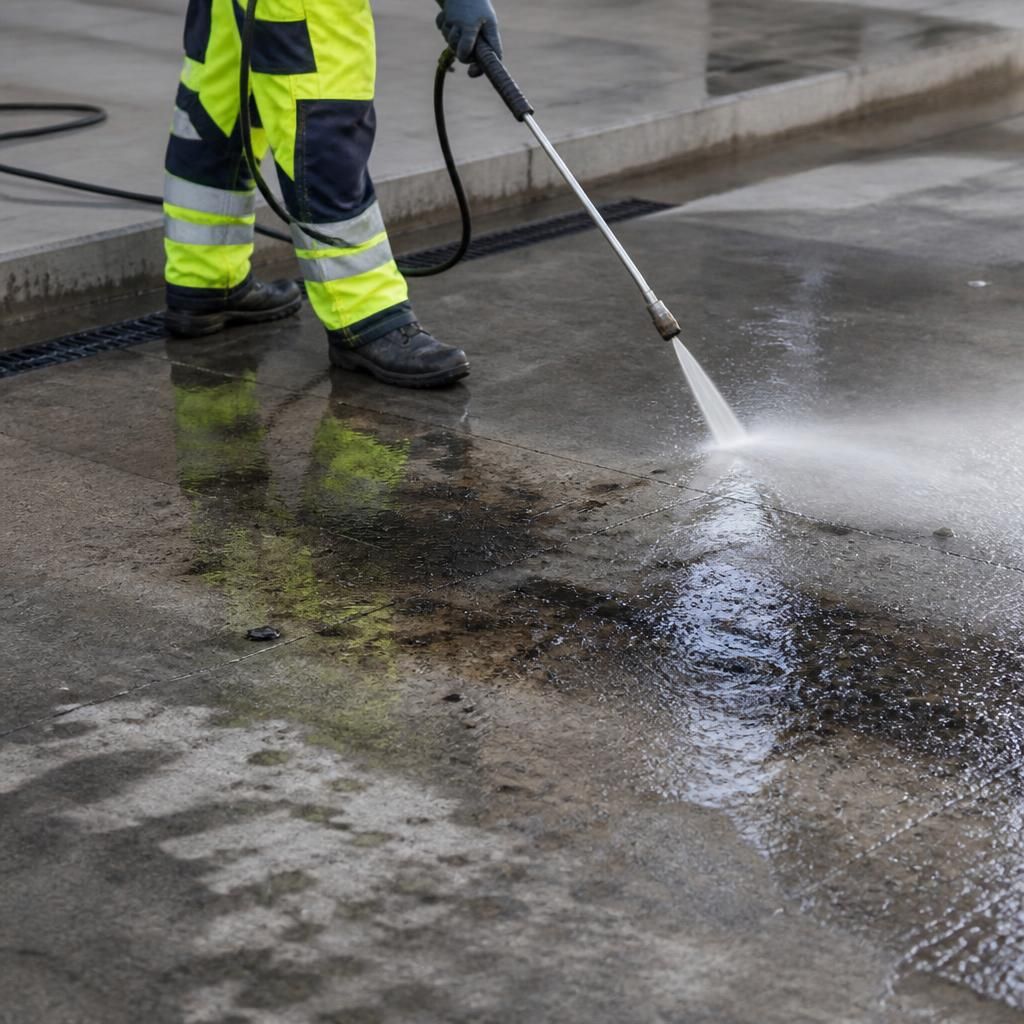
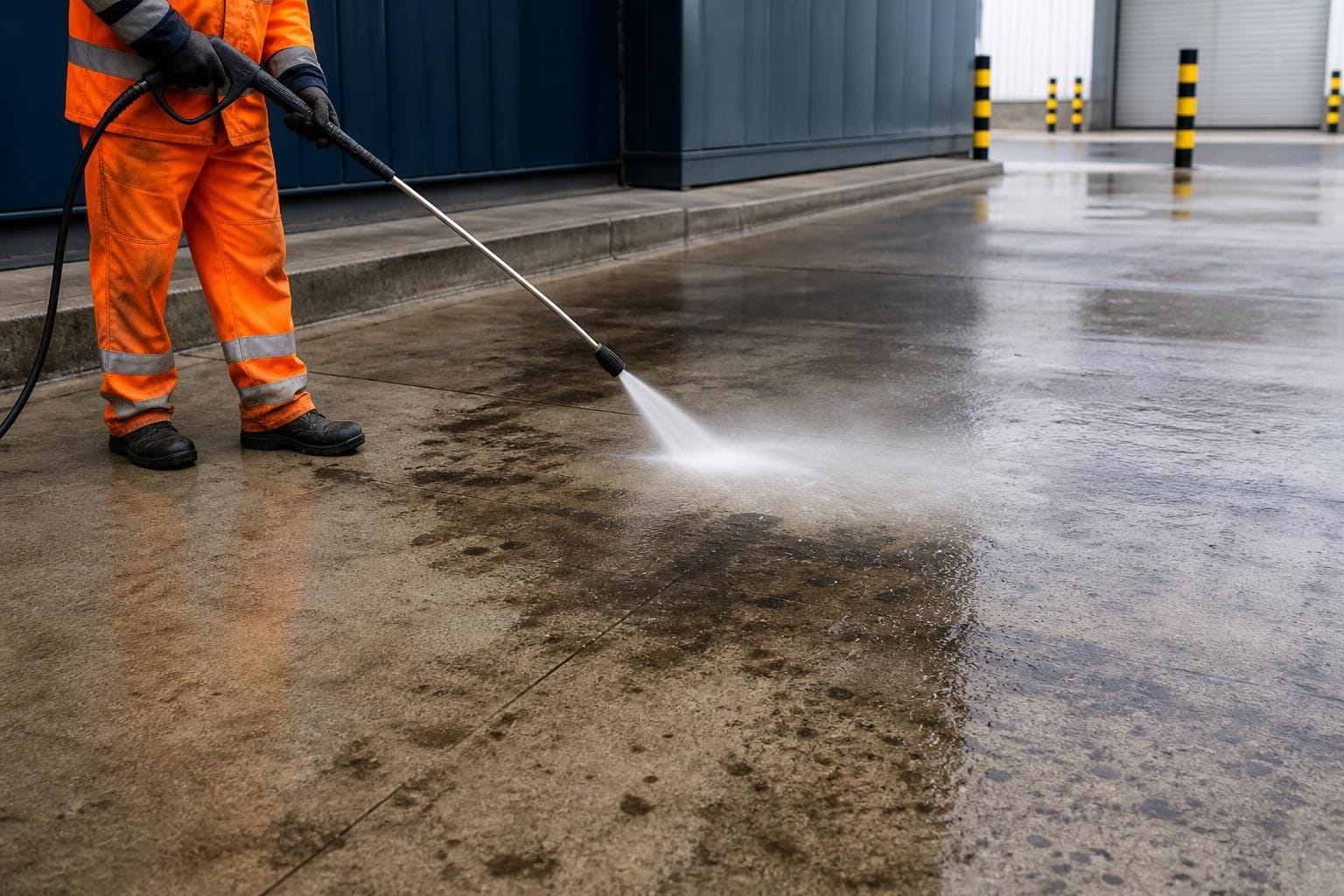
For established or extensive staining, hot-water pressure washing, steam cleaning, poultice treatment or other controlled extraction methods may be more effective than a single cold-water wash. The cleaning method should be matched to the concrete finish, joint condition and surrounding drainage arrangements. Excessive pressure or heat can damage weak, decorative or previously repaired concrete.
3. Rinse and recover the cleaning residue
Degreasing does not complete the process unless the loosened oil and detergent are removed. Rinse water should be managed so that it does not carry contamination into unprotected ground, surface-water drains or adjacent areas. Where required, wastewater should be contained, collected and disposed of in accordance with site procedures and applicable environmental requirements.
Leaving detergent or oily residue behind can attract dirt and create a film that appears to be a returning stain. The surface should be rinsed until it is free from visible product, slippery residue and cleaning foam.
4. Allow the concrete to dry fully
Concrete must be properly dry before applying any sealer. Moisture trapped below a coating can cause poor adhesion, clouding, blistering or premature failure. Drying time depends on weather, ventilation, the concrete’s porosity and how much water was used during cleaning.
Do not judge dryness solely by the appearance of the surface. Areas that look clean may still contain moisture or oil beneath the surface. A professional assessment can help determine whether the concrete is ready for treatment, particularly in enclosed car parks, shaded service yards and areas with repeated staining.
5. Apply a compatible concrete sealer
A suitable sealer reduces the absorbency of the concrete, making future oil easier to remove before it penetrates deeply. The correct product depends on the concrete’s age, porosity, finish, exposure to traffic and the type of oil likely to be present. Some sealers are designed to penetrate the concrete, while others create a more noticeable surface film.
Sealing is not a substitute for cleaning. Applying a sealer over oil or trapped moisture can lock in discolouration and lead to adhesion problems. The surface should be clean, sound and dry, and a small test area should be checked first for appearance, slip characteristics and compatibility.
High-traffic commercial areas may need a coating or sealer with appropriate resistance to abrasion, vehicle fluids and cleaning chemicals. Joints, cracks and damaged areas should also be assessed, as these can allow contamination to bypass the treated surface. Reapplication should follow the product manufacturer’s maintenance guidance and the level of use at the site.
6. Introduce a routine maintenance plan
Regular inspection is more effective than waiting for stains to become established. Check loading bays, workshops, car parks, plant areas and waste-storage locations for fresh drips, darkening or slippery patches. Remove absorbent materials once they have taken up the spill and clean the affected concrete using a method suitable for the sealer and surface.
A maintenance plan should specify who reports spills, which products may be used, how wastewater is controlled and when deeper cleaning is required. Using unsuitable solvents, aggressive acids or unapproved chemicals can damage the concrete, affect a sealer and create additional environmental or safety risks.
When professional treatment is appropriate
Professional cleaning is advisable where stains are deep-set, widespread, repeatedly returning or located in a busy operational area. It is also appropriate when wastewater must be controlled, access equipment is needed or the concrete has a specialist finish. The surface can be assessed before treatment so that pressure, temperature, detergent strength and extraction methods are selected without unnecessarily abrading the concrete.
In practice, the most reliable prevention programme combines source control, prompt spill response, periodic deep cleaning and a compatible sealer. If oil continues to reappear after these steps, the likely causes are untreated contamination beneath the surface, moisture movement, a concealed leak or a sealer that is unsuitable or failing. Those causes should be investigated before another coating or cleaning treatment is applied.