
How do you ensure minimal disruption to business operations during the cleaning process?
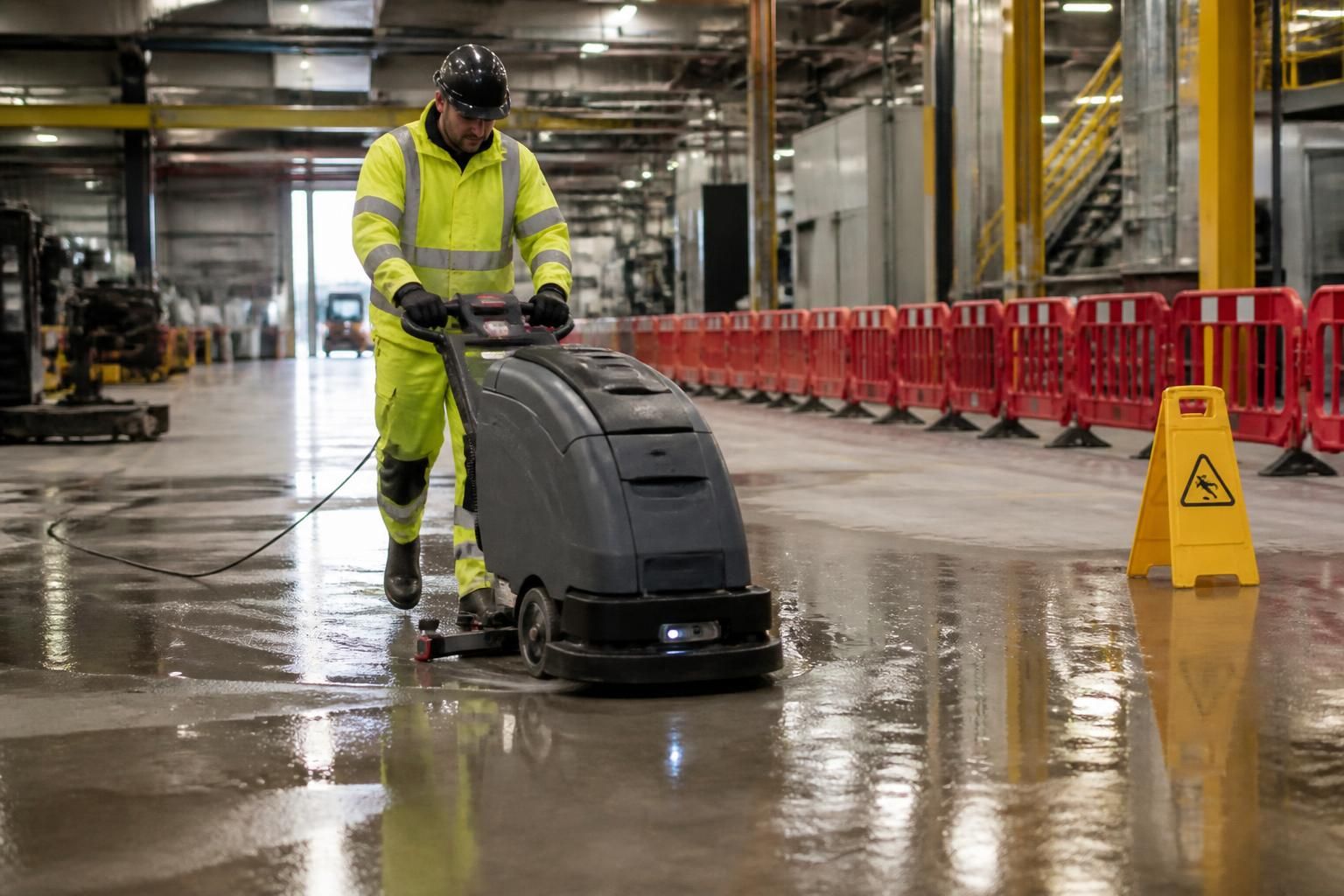
We minimise disruption by planning the work around your operating hours, agreeing access routes and cleaning zones in advance, and using equipment suited to the surface and site conditions. Work is carried out in controlled sections with appropriate signage, barriers and wastewater management so unaffected areas can remain safe and operational wherever practicable.
Minimal disruption is achieved through advance planning, phased cleaning and clear control of access. We agree the work schedule, cleaning areas, equipment, access routes and operational constraints with the site team before work begins, then clean in controlled sections so unaffected parts of the premises can continue operating wherever practicable.
Planning around your operation
Before attending, we establish how the floor is used, when deliveries and vehicle movements take place, which areas must remain available and whether there are production, storage or pedestrian access requirements. This allows us to schedule the most intrusive work during quieter periods, planned shutdowns, evenings or weekends where appropriate. For ongoing contracts, cleaning can be incorporated into an agreed maintenance schedule rather than arranged at short notice.
We also review the flooring, contamination and site conditions in advance. Selecting the correct method and equipment helps avoid unnecessary passes, excessive water use and extended drying times. Depending on the surface and contamination, this may include industrial scrubber-driers, pressure washing, steam cleaning, rotary cleaning or targeted treatment for oil, grease and other deposits.
Working in controlled zones
Large floors are normally divided into manageable work areas. We complete, recover and inspect one section before moving to the next, maintaining a practical route through the building wherever the layout and safety requirements allow. This approach is particularly useful in warehouses, factories, loading areas, car parks and commercial premises where closing the entire floor would affect staff, vehicles or customers.
Where a section cannot remain open during cleaning, we identify an alternative route or agree a short, clearly defined exclusion period. Cones, barriers and warning signs separate wet or treated surfaces from occupied areas. Access controls are adjusted as the floor progresses, rather than leaving the whole site restricted for the duration of the project.
Choosing efficient cleaning methods
Equipment is matched to the floor type, the level of soiling and the available working space. Mechanised scrubber-driers can clean and recover water in a single operation on suitable hard floors, reducing standing water and helping areas return to use sooner. Targeted pressure or steam cleaning can be more appropriate for stubborn contamination, edges, joints and areas where mechanical cleaning alone is insufficient.
We avoid using more pressure, chemical or water than the surface and contaminant require. Correct application reduces the risk of damage, limits repeat cleaning and prevents residue that could create a slip hazard or affect subsequent operations. Where cleaning agents are needed, their suitability, dwell time and required rinsing are considered as part of the method statement.
Protecting people, stock and equipment
Before cleaning starts, the site team should identify sensitive equipment, stored goods, electrical points, drains and areas that must not be exposed to water or cleaning products. We protect or isolate these where necessary and keep hoses, cables and equipment positioned to minimise obstruction. Staff and visitors are kept away from active cleaning zones through agreed barriers and site instructions.
Cleaning does not proceed through an area simply because it is accessible. Pedestrian and vehicle movements are coordinated with the responsible site contact, and plant or delivery routes are only reopened when the surface has been checked and is safe for use. This is especially important where residues, moisture or uneven deposits may affect traction.
Managing water and waste without interrupting the site
Wastewater is contained, recovered and managed in accordance with the site requirements and applicable environmental controls. We plan collection points and drainage arrangements before work begins, preventing dirty water from spreading into operational areas or entering unsuitable drainage systems. Where necessary, sections are cleaned using controlled water volumes or low-moisture methods to suit the premises.
Recovered water, removed sludge and contaminated residues are not left in traffic routes or working areas. The cleaning team keeps the work zone orderly throughout the operation and removes equipment, barriers and waste progressively rather than waiting until the entire project is complete.
Keeping communication clear
A named site contact helps coordinate access, operational changes and any unexpected conditions. We confirm the agreed sequence before starting and provide updates if contamination, traffic or site activity means that the method or timing needs to change. This gives the customer an opportunity to adjust deliveries, staff movements or access arrangements before they affect the cleaning zone.
At completion, each area is checked for cleanliness, remaining residue, slip risk, standing water and safe access. Any restrictions that need to remain temporarily are communicated clearly. The result is a planned cleaning process that protects normal business activity as far as site conditions permit, without compromising worker safety, cleaning quality or environmental controls.
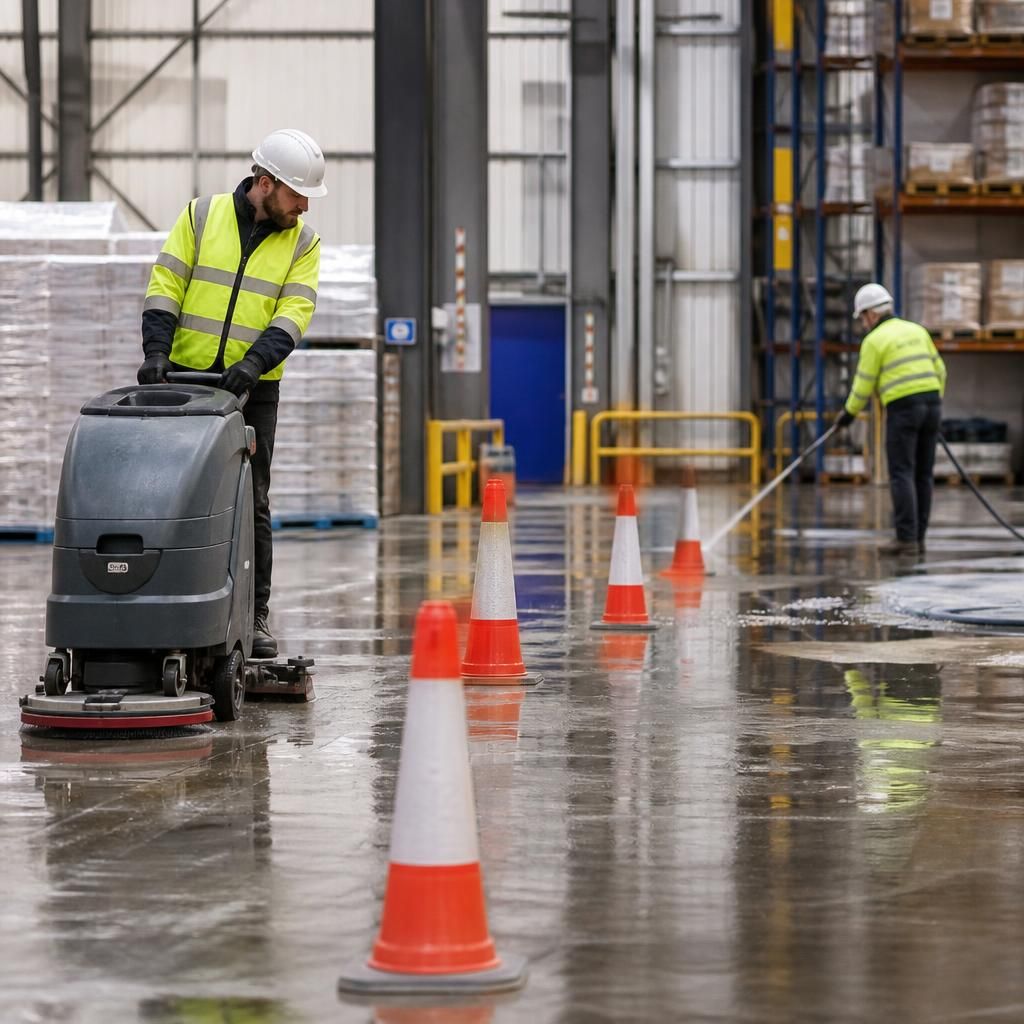
Phased cleaning keeps business areas operational by dividing the floor into controlled sections rather than closing the entire premises. Each section is cleaned, wastewater is recovered, and the surface is checked before the team moves on.
Agreed pedestrian and vehicle routes remain available wherever site conditions allow, while barriers and warning signs separate wet or treated areas from staff, visitors, stock and equipment. If a section must be temporarily closed, the restriction is limited to the time needed for cleaning, drying and safety checks. This approach is particularly suitable for warehouses, factories, loading areas and car parks where uninterrupted access is important.
Discuss Your Industrial Floor Cleaning Schedule
Discuss your industrial floor cleaning schedule with our team so we can coordinate access, working areas and suitable cleaning times around your operations. We can help plan a phased service that maintains safe access and limits disruption to your business.