
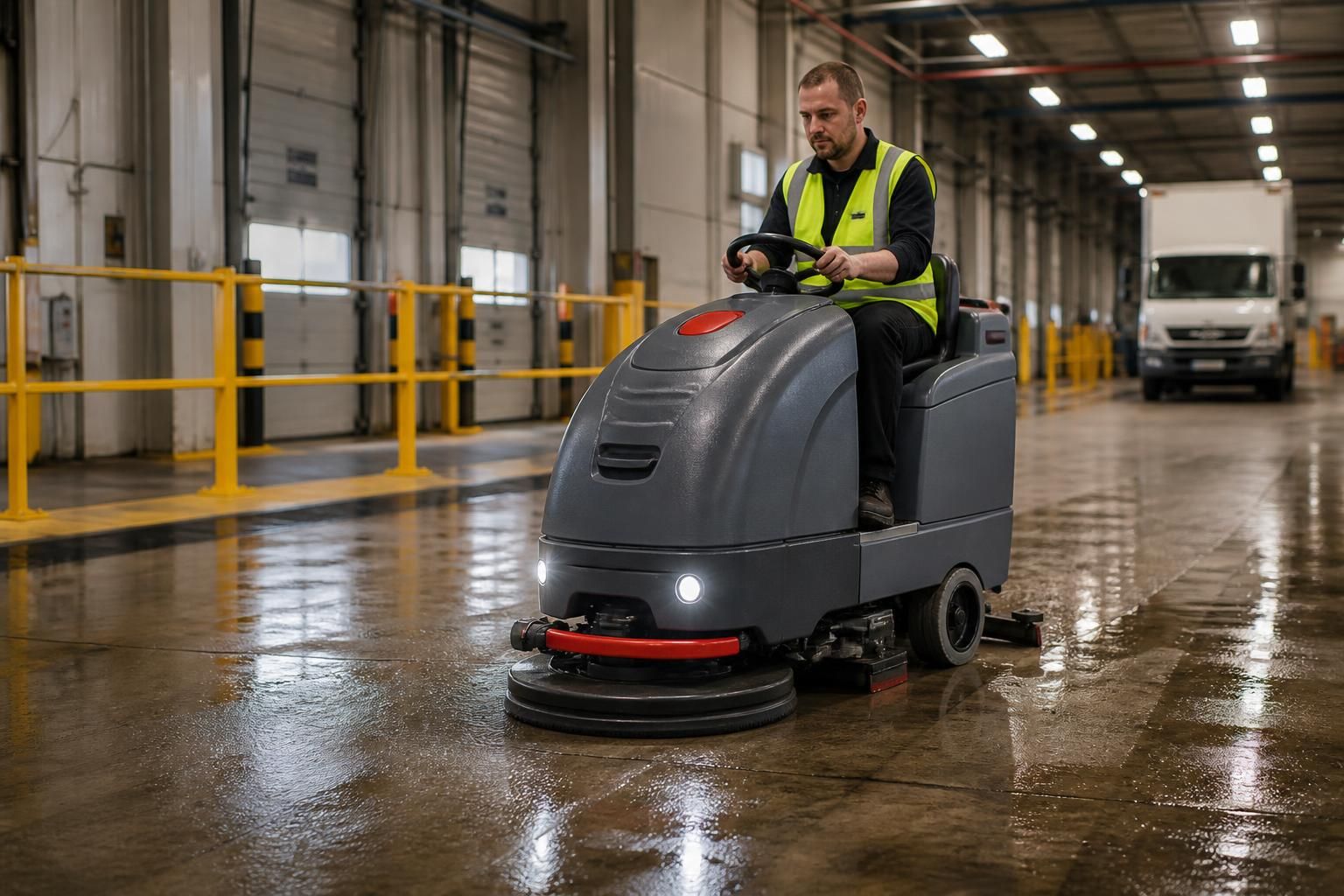
How do industrial floor cleaning machines work and what are their benefits?
Industrial floor cleaning machines combine powered brushes or pads with controlled water and cleaning solution to agitate dirt, lift contaminants and recover the resulting wastewater. They clean large areas faster and more consistently than manual methods, while improving hygiene, reducing slip risks and helping businesses return floors to service with less disruption.
Industrial floor cleaning machines are powered systems that use rotating brushes, pads or suction equipment to remove dirt from large hard-surface areas. A scrubber dryer applies a controlled amount of water and cleaning solution, agitates the surface to loosen embedded contamination, then collects the dirty liquid through a vacuum system so the floor is left substantially cleaner and drier. Other machines, including sweepers, rotary scrubbers and industrial vacuums, are selected where dry debris, heavy deposits or specific surface conditions require a different approach.
How industrial floor cleaning machines work
Most industrial cleaning machines combine several functions in one controlled process:
- Solution application: Clean water is mixed with an appropriate detergent and delivered to the floor through a controlled spray or distribution system. Using only the amount required helps prevent unnecessary flooding and reduces recovery requirements.
- Mechanical agitation: A powered brush or floor pad rotates against the surface. This action breaks the bond between the floor and contaminants such as dust, grease, tyre marks, tracked-in soil and general industrial residue.
- Debris collection: Loose dry debris may be collected using a sweeper or vacuum system before wet cleaning begins. Removing this material first prevents it becoming a slurry during scrubbing.
- Water recovery: On a scrubber dryer, a squeegee assembly gathers the used solution while a vacuum motor transfers it into a recovery tank. This limits standing water and helps the floor dry sooner than it would after uncontrolled washing.
- Controlled movement: Walk-behind machines are guided by an operator, while ride-on machines cover larger areas efficiently. Brush pressure, water flow, speed and suction can be adjusted to suit the floor and the level of soiling.
The machine does not replace the need for correct preparation. Operators still need to assess the surface, identify the contaminant, select compatible chemicals and use suitable pads or brushes. Oil, ingrained grease, cement residue, rubber transfer and graffiti may require pre-treatment, specialist agitation, pressure washing or steam cleaning before mechanical floor cleaning can achieve the required result.
Main types of industrial floor cleaning machine
- Walk-behind scrubber dryers: These are suitable for aisles, workshops, plant rooms, corridors and other areas where manoeuvrability is important. They allow the operator to work around racking, machinery and fixed obstacles.
- Ride-on scrubber dryers: These are designed for extensive warehouses, distribution facilities, production areas and car parks. They combine wide cleaning coverage with water recovery, reducing the time required to clean open floor areas.
- Rotary floor machines: A high-speed or low-speed rotary machine uses a pad or brush to agitate the floor. It is useful for localised heavy soiling, edge work, preparation before treatment and cleaning surfaces that need more concentrated mechanical action.
- Sweepers: Mechanical or vacuum sweepers collect dust, grit, packaging fragments and other dry debris. They are often used before scrubbing or as part of a regular maintenance programme.
- Industrial wet vacuums: These recover water and liquid contamination from areas that cannot be cleaned effectively with a standard scrubber dryer, including edges, recesses, spill zones and uneven surfaces.
Benefits for commercial and industrial premises
- Faster cleaning of large areas: Powered brushes and machine-assisted movement cover substantially more floor than hand scrubbing. This is particularly useful in warehouses, factories, retail units, loading areas and public facilities.
- More consistent results: Machines apply repeatable brush pressure, solution flow and suction. This helps reduce the variation that can occur when large floors are cleaned manually by different people.
- Improved removal of embedded dirt: Mechanical agitation is more effective than simple mopping for lifting compacted dust, traffic film, grease residue and rubber marks from suitable hard floors.
- Reduced slip risk: Removing oily films, loose dirt and residues can improve traction. Effective recovery also limits the amount of water left on the surface. A risk assessment is still needed because no cleaning process can remove every slip hazard, particularly where spills continue during operations.
- Shorter drying and recovery periods: A scrubber dryer collects used solution as it cleans, helping areas return to use sooner than methods that leave water on the floor. Actual drying time depends on ventilation, temperature, humidity, floor porosity and the amount of water used.
- Better hygiene and housekeeping: Removing soil and organic residue from floor surfaces supports cleaner working conditions. Machines can also reach broad areas that are difficult to maintain adequately with conventional mops.
- Lower physical demand on operatives: Powered equipment reduces the need for repetitive manual scrubbing and moving heavy quantities of water. Operators must still be trained in safe handling, machine control and chemical use.
- More controlled water and chemical use: Dosing systems and adjustable flow rates can deliver solution according to the floor and contamination level. This helps avoid excessive detergent, although the correct product and concentration remain essential.
Choosing the right machine for the floor
Machine selection depends on the floor material, its condition, the type of contamination, the available access and the required cleaning schedule. Smooth sealed concrete, resin flooring, quarry tiles and some coated floors may respond well to a scrubber dryer, provided the brush or pad is not too aggressive. Textured concrete, damaged coatings, porous surfaces and uneven external slabs may need a different combination of pre-treatment, pressure washing, steam cleaning, extraction or manual detailing.
Pad selection is equally important. Softer pads are generally used for light cleaning or delicate finishes, while stiffer brushes or more abrasive pads may be required for textured surfaces and stubborn deposits. Excessive pressure, an unsuitable pad or an incorrect chemical can dull a finish, damage a coating, drive contamination further into a porous surface or create additional cleaning problems.
For oil and grease, the normal process may include dry debris removal, application of a suitable degreaser, dwell time, mechanical agitation and controlled recovery. Cementitious deposits can require a compatible specialist treatment, while graffiti may need testing and targeted removal to avoid spreading the marking or damaging the substrate. Wastewater must be collected and managed in accordance with the site arrangements and applicable environmental requirements rather than allowed to enter surface-water drainage without approval.
Using machines safely and with minimal disruption
Before cleaning, the area should be inspected for pedestrians, vehicles, stock, electrical equipment, drainage points, floor damage and ongoing processes. Operators should isolate or segregate the work zone, use suitable personal protective equipment and follow the machine and chemical manufacturer’s instructions. Warning signage, controlled routes and staged cleaning can help maintain access where a facility cannot be closed completely.
Battery condition, brushes, squeegees, hoses, filters and recovery tanks should be checked before use. Dirty recovery water should be emptied through an approved route, and the machine should be cleaned after the task to prevent odour, blocked components and cross-contamination. Where the floor has heavy oil, hazardous residues or substantial loose debris, machine cleaning should form part of a wider method statement rather than being treated as a simple routine wash.
Industrial floor cleaning machines are most effective when the equipment, pad, chemical and operating settings match the surface and contaminant. A site assessment allows the cleaning method to be planned around access, working hours, drainage, drying requirements and business activity, helping achieve a cleanable, safer floor without unnecessary disruption.
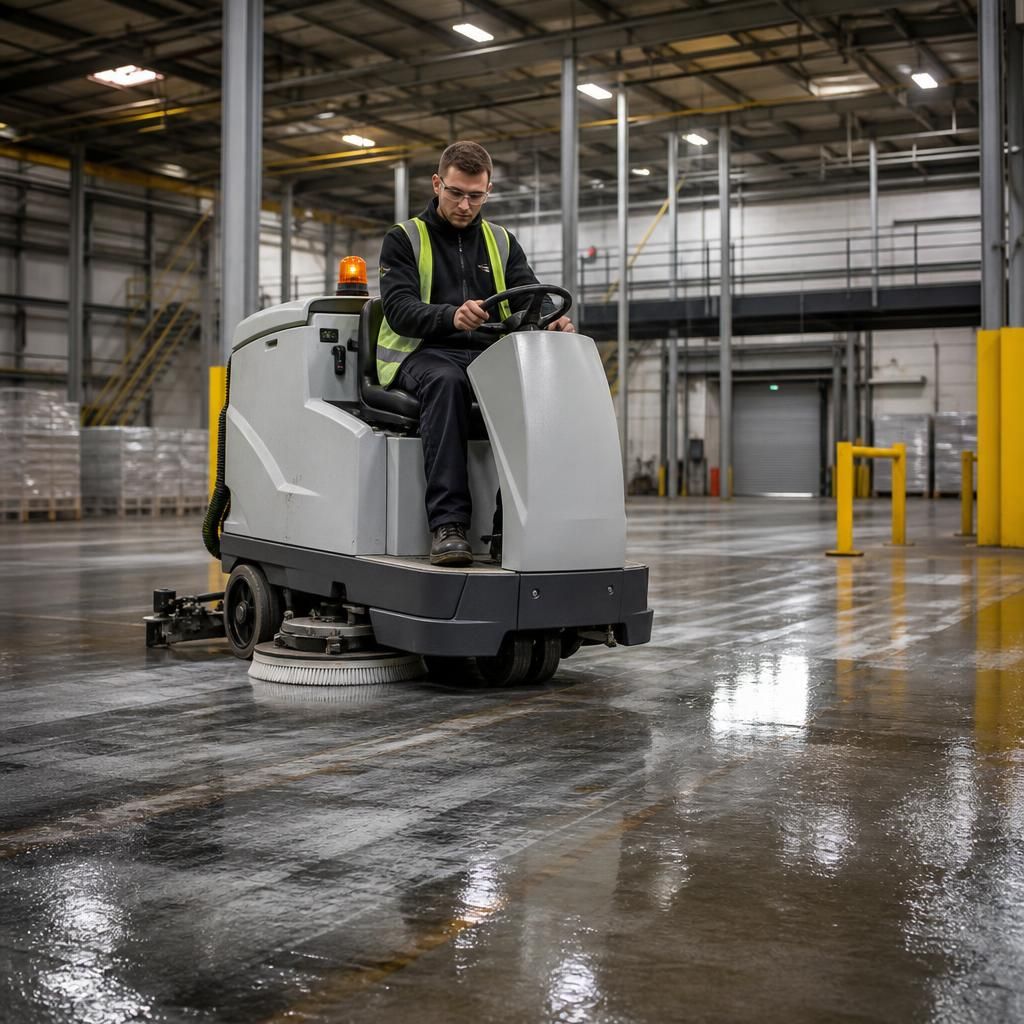
Industrial floor cleaning machines improve efficiency by combining mechanical scrubbing with controlled water recovery. A scrubber dryer applies cleaning solution through rotating brushes or pads, loosens embedded dirt and then removes the dirty liquid with a squeegee and vacuum system.
This leaves the floor substantially cleaner and drier than uncontrolled washing, helping reduce standing water, slip risks and downtime. Adjustable brush pressure, solution flow and machine speed allow the operator to match the cleaning process to the floor surface and level of contamination. Walk-behind machines provide precise control around equipment and racking, while ride-on models are suited to larger open areas such as warehouses, factories and distribution facilities.