
What is the best method for cleaning stubborn stains on concrete floors?
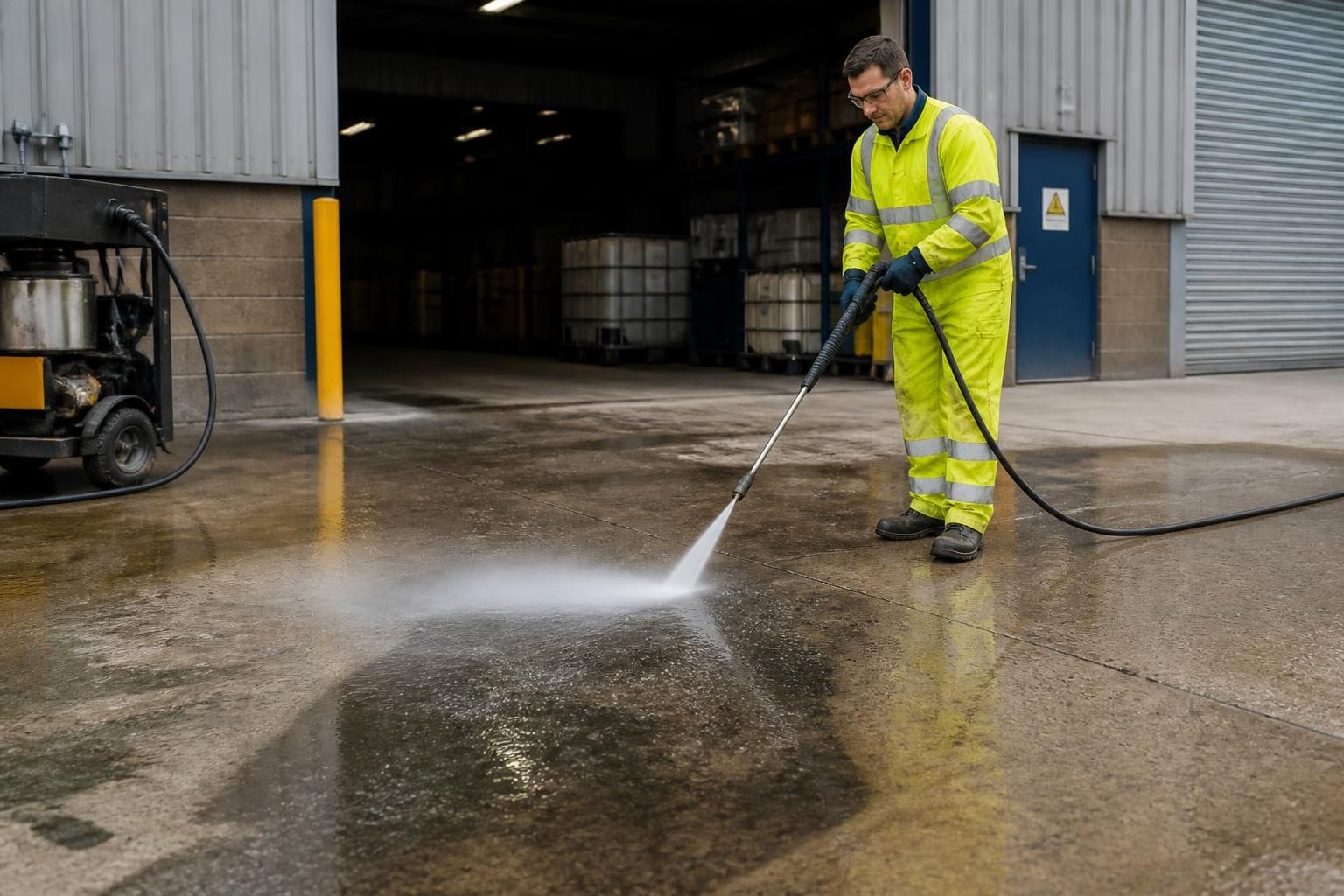
The best method for cleaning stubborn stains on concrete floors is usually hot-water pressure washing, often combined with a suitable detergent or degreaser. The technique should be selected according to the stain and concrete condition, with steam cleaning or targeted treatment used where pressure alone could damage the surface or fail to remove ingrained oil, grime, paint or biological growth.
Hot-water pressure washing is usually the best method for removing stubborn stains from concrete floors, particularly when oil, grease, ingrained dirt, tyre marks or general industrial grime are involved. Heated water softens oily residues and pressure lifts contamination from the textured surface. Where the concrete is delicate, heavily weathered, sealed or close to sensitive equipment, the treatment should be adjusted using steam cleaning, a suitable detergent, lower pressure or targeted stain treatment.
The correct method depends on the type of stain, the condition of the concrete and the surrounding site. A professional assessment should establish whether the floor is bare, painted, sealed, polished or damaged before cleaning begins. This prevents excessive pressure or unsuitable chemicals from causing etching, colour loss, surface dusting or damage to joints and coatings.
Oil and grease: Hot-water pressure washing, combined where necessary with a concrete-safe degreaser, is normally the most effective approach. The degreaser breaks down the oil film while the heated water flushes loosened residue from the pores and surface texture. Heavily contaminated areas may need pre-treatment, agitation and more than one cleaning pass. Fresh spills are generally easier to remove than old oil that has migrated deep into porous concrete, where some shadowing may remain.
Tyre marks and rubber deposits: These are commonly removed with controlled hot-water pressure washing and a suitable surface cleaner. The operator must balance cleaning power against the risk of marking painted lines, resin coatings or sealed floors. Targeted treatment is preferable to applying excessive pressure across the whole area.
Rust and mineral staining: Rust is not removed reliably by pressure washing alone. A specialist, concrete-compatible rust treatment may be required after loose dirt has been washed away. The product must be selected carefully because acidic treatments can damage cement-based surfaces, nearby metals, joint sealants and drainage systems if they are misused or left in contact for too long.
Paint, adhesive and other hard deposits: These may require scraping, a controlled mechanical treatment, steam cleaning or a specialist chemical process before rinsing. Graffiti and paint removal should be approached as a separate treatment because the wrong combination of pressure and solvent can spread the marking or strip the surrounding finish. A small test area helps confirm whether the method will remove the coating without scarring the concrete.
Mould, algae and organic growth: Steam cleaning or low-pressure washing with an appropriate biocidal treatment can remove biological contamination while reducing the risk of damaging the surface. The affected area should be rinsed thoroughly and the cause of recurring dampness, poor drainage or shade should be considered. Simply washing away visible growth may not prevent it returning.
General grime and embedded dirt: For loading bays, warehouses, workshops, car parks and other hard-wearing areas, hot-water pressure washing is usually efficient for broad surface cleaning. A rotary or surface-cleaning attachment can help produce a more even finish and reduce splash compared with a concentrated lance. Edges, joints, corners and areas beneath equipment may still need detailed treatment by hand.
A professional cleaning process normally includes:
- Inspecting the concrete, identifying the stains and checking for cracks, weak areas, coatings, drainage points and nearby sensitive surfaces.
- Removing loose debris and protecting doors, electrical equipment, vehicles, stock and adjacent finishes.
- Carrying out a discreet test patch to confirm the pressure, temperature, chemical and cleaning pattern are suitable.
- Applying a compatible pre-treatment where it will improve removal, allowing appropriate dwell time without letting the product dry on the surface.
- Cleaning with controlled hot-water pressure, steam or another selected technique rather than using maximum pressure by default.
- Recovering or directing dirty water responsibly where site conditions, drainage controls or environmental requirements make this necessary.
- Inspecting the result, rinsing away residues and identifying any remaining staining that may need a separate treatment.
Pressure washing is not automatically suitable for every concrete floor. Excessive pressure can expose aggregate, remove weak cement paste, worsen existing damage or strip protective coatings. Unsealed concrete can also absorb detergents and oil, while polished, painted and resin-coated floors may require low-pressure cleaning and neutral products. Cleaning chemicals should never be mixed without confirming their compatibility, and runoff must not be allowed to enter surface-water drains where it could cause pollution.
For the best result, arrange cleaning when the area can be isolated and allowed to dry properly. Removing stored items and identifying the location of drains, inspection covers and vulnerable equipment before the visit helps the work proceed safely. Where staining is recurring, the long-term solution may include spill control, improved housekeeping, prompt removal of leaks and periodic professional cleaning rather than increasingly aggressive treatment.
In summary, hot-water pressure washing with stain-specific pre-treatment is the most reliable general solution for stubborn concrete-floor stains. Steam cleaning is often preferable where lower moisture, more controlled treatment or reduced chemical use is important, while rust, paint, deeply absorbed oil and biological growth may need specialist products or additional processes. Selecting the method according to the stain and the concrete condition gives a cleaner result while protecting the floor and surrounding site.
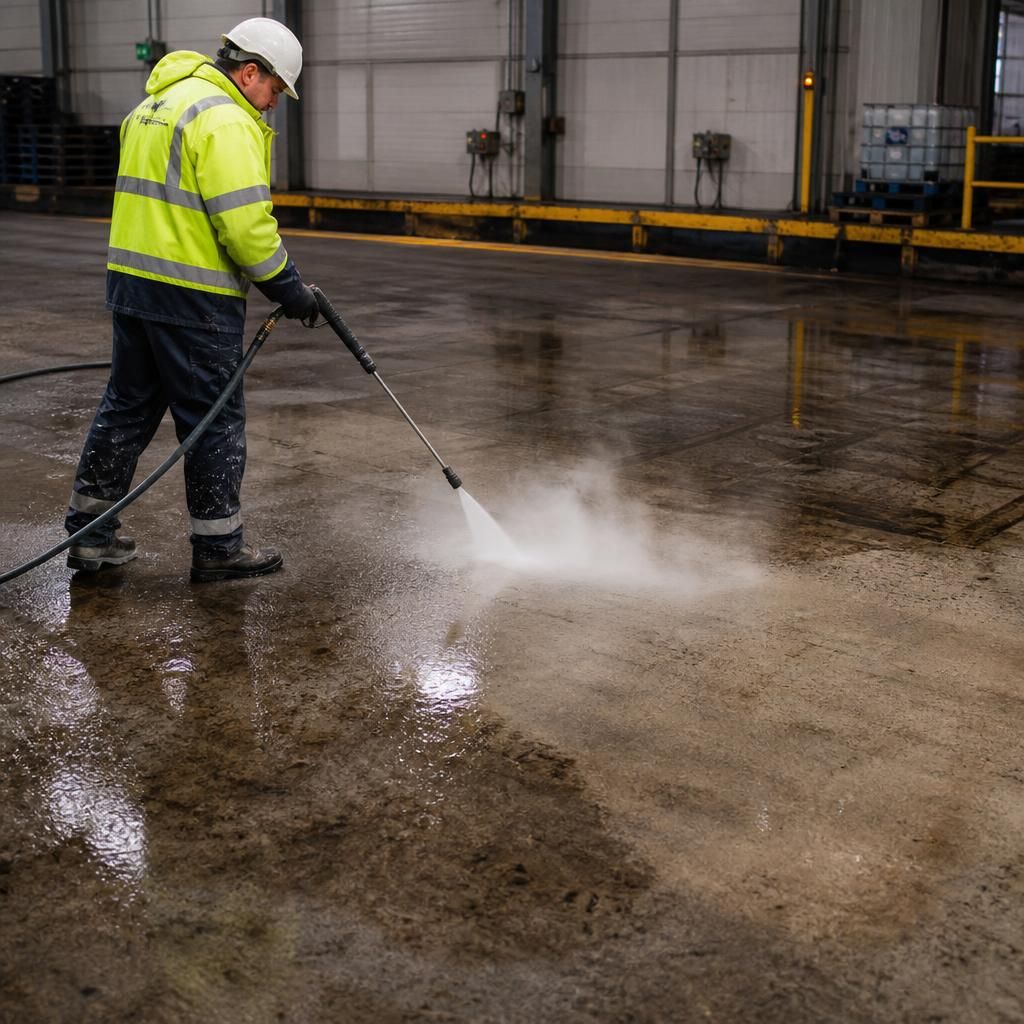
Hot-water pressure washing with a concrete-safe degreaser is usually the most effective method for stubborn oil, grease, tyre marks and ingrained industrial grime on concrete floors. Heat softens oily residues, while controlled pressure lifts contamination from the surface texture without relying on excessive force.
The treatment should be matched to the stain and the floor condition. A test patch confirms whether the concrete is bare, sealed, painted or coated, and helps set the correct pressure, temperature and detergent. Rust, paint, deeply absorbed oil and biological growth may require separate specialist treatments rather than repeated pressure washing.