
What equipment is essential for professional concrete floor cleaning?
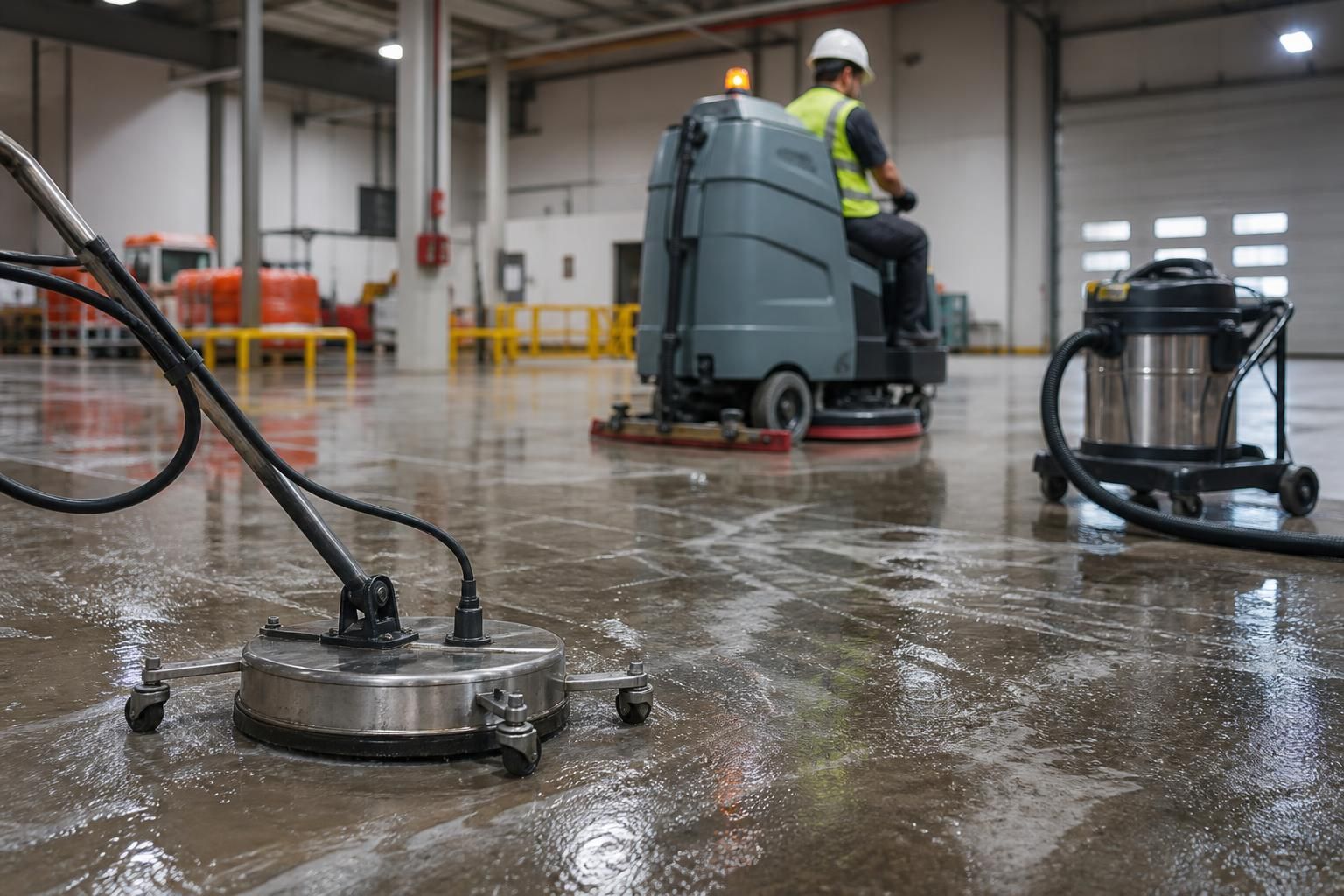
Professional concrete floor cleaning typically requires commercial pressure washers or steam cleaners, rotary surface cleaners, scrubber dryers, wet vacuums and suitable access or extraction equipment. The correct combination depends on the floor’s condition, surface type, contamination and drainage arrangements, with dust-control and wastewater recovery equipment used where safety or environmental requirements apply.
Professional concrete floor cleaning relies on a combination of commercial-grade cleaning, agitation, recovery and safety equipment rather than a single machine. The essential setup commonly includes a pressure washer or steam cleaner, rotary surface cleaner, scrubber dryer, wet vacuum, suitable detergents, wastewater recovery equipment and appropriate personal protective equipment. The correct combination depends on the concrete finish, floor area, type of contamination, available drainage and the risks associated with the site.
Commercial pressure washers provide the high-impact cleaning needed to remove ingrained dirt, traffic film, oil residues, mud, algae and other deposits from robust concrete surfaces. Professional machines allow the operator to control water pressure, flow and temperature so that cleaning power can be matched to the floor. Hot-water pressure washing is particularly useful for grease and oily contamination because heat helps soften residues before they are rinsed away.
Pressure must be selected carefully. Excessive pressure or an unsuitable nozzle can mark the surface, expose aggregate, damage weak joints or force water into cracks and porous areas. Fan jets and controlled working distances are generally more suitable for broad floor cleaning than concentrated jets. Operators should also protect nearby doors, expansion joints, drainage channels, electrical equipment and vulnerable coatings before work begins.
Steam cleaning equipment is useful where heat and reduced chemical use are important. Steam can loosen grease, food deposits, chewing gum, biological growth and other bonded contamination, while the lower water volume can be advantageous in areas with restricted drainage or sensitive surroundings. It is also valuable for detailed cleaning around edges, loading bays, plant rooms and textured concrete where a broad rinse alone may not remove embedded dirt.
Steam is not automatically suitable for every floor. Sudden temperature changes may affect some coatings, sealants or previously repaired areas, so the surface should be assessed before treatment. Steam cleaning may also need to be combined with mechanical agitation and extraction when contamination has penetrated the concrete.
Rotary surface cleaners use enclosed rotating jets to clean large areas more evenly than a handheld lance. The cover helps contain spray, reduces operator fatigue and limits the risk of streaking caused by inconsistent nozzle movement. They are especially effective on open concrete floors, yards, service areas, car parks and loading zones. Different heads and pressure settings may be selected for plain concrete, textured surfaces or coated floors.
A rotary surface cleaner is not a substitute for edge work. Corners, steps, joints, around fixed equipment and areas beneath low clearances normally require a lance, brush or other smaller tool. Pre-treatment may also be needed where oil, chewing gum, tyre marks or heavy biological growth is present.
Scrubber dryers are essential where the finished floor must be left clean, dry and ready for use. These machines apply cleaning solution, agitate the surface with brushes or pads and recover the dirty water in one operation. They are particularly suitable for warehouses, factories, distribution areas, retail premises, car parks and other locations where standing water would create a slip hazard or disrupt operations.
Brush and pad selection is important. Soft brushes may be appropriate for sealed or coated concrete, while more aggressive brushes or pads can be used on heavily soiled, textured surfaces when the finish can withstand them. The machine must be capable of reaching the floor profile and collecting water effectively; otherwise, residue can remain in pores, joints or uneven sections.
Wet vacuums and water recovery equipment remove slurry, cleaning solution and contaminated rinse water after pressure or steam cleaning. Recovery is particularly important where drainage is limited, internal cleaning is taking place, or wastewater may contain oil, chemicals, sediment or other pollutants. A suitable wet vacuum, recovery tank, pump or hose system helps prevent dirty water spreading to adjoining areas and reduces the risk of blocked drains.
Wastewater should be managed in accordance with the site’s drainage arrangements and applicable environmental requirements. It must not be allowed to enter surface-water drains where contamination could reach watercourses. On larger projects, bunding, drain covers, silt controls, filtration or collection tanks may be needed before water is discharged through an approved route.
Mechanical agitation tools improve the removal of deposits that washing alone cannot shift. These can include rotary scrubbers, stiff-bristled brushes, edge-cleaning tools and purpose-selected pads. Agitation is often needed for oil films, tyre marks, dried food residues, mineral deposits and dirt held in textured or broom-finished concrete. The tool should be matched to the surface to avoid unnecessary abrasion or damage to protective coatings.
Detergent and chemical dosing equipment allows cleaning products to be applied consistently and at an appropriate concentration. Degreasers can help break down oils, while alkaline or specialist products may be selected for particular industrial residues. Biological treatments may be suitable for algae and organic growth, and gum-removal products can help soften localised deposits. Product choice should account for the concrete condition, nearby materials, drainage controls, occupational exposure and the manufacturer’s instructions.
Chemicals are not always required. Using the least aggressive effective treatment can reduce residue, rinsing requirements and the risk of damaging concrete or coatings. Any pre-treatment should be given sufficient dwell time without being allowed to dry on the surface, then removed thoroughly with controlled rinsing or extraction.
Dust-control and dry-cleaning equipment is required for some internal or partially enclosed environments. Industrial vacuums fitted with suitable filtration can control airborne dust when dry debris is removed, joints are cleaned or surface preparation is carried out. Dust suppression may be needed around grinding, brushing or heavy traffic contamination, particularly where workers, stock or sensitive machinery are present.
Access equipment becomes essential when concrete floors extend beneath raised structures, into pits, around plant or across areas with restricted access. Long-reach lances, low-profile cleaning heads and wet vacuums may be sufficient for some locations. Larger or more complex sites may require approved platforms, powered access equipment or other controlled access arrangements. Access equipment must be suitable for the surface, floor loading, overhead obstructions and site traffic controls.
Inspection and safety equipment supports a controlled cleaning process. This may include moisture or surface-condition checks, lighting, drain covers, warning signs, barriers and equipment for isolating work areas. Operators also need suitable waterproof clothing, gloves, eye and hearing protection, slip-resistant footwear and respiratory protection where the risk assessment identifies airborne dust, aerosols or chemical vapour.
Before selecting equipment, the cleaning team should inspect the concrete for cracks, failing joints, coatings, repairs, exposed aggregate, drainage limitations and signs of previous chemical or pressure damage. They should identify the contamination, test the proposed method in an inconspicuous area and establish how water, slurry and residues will be contained. This assessment determines whether the job calls for pressure washing, steam cleaning, mechanical scrubbing, dry vacuuming, extraction or a staged combination of methods.
For large commercial and industrial floors, the most effective arrangement is often a staged process: remove loose debris, pre-treat specific stains, agitate the surface, clean with controlled pressure or steam, recover wastewater and finish with a scrubber dryer or wet vacuum. This approach produces a more consistent result while limiting overspray, downtime, surface wear and uncontrolled discharge.
The equipment should therefore be judged by suitability rather than size or headline power. A well-matched machine, correctly selected attachment and effective recovery system will normally provide safer and more thorough cleaning than excessive pressure used without surface control. Our team can assess the floor, contamination and site restrictions before recommending the equipment and cleaning method most appropriate for the premises.
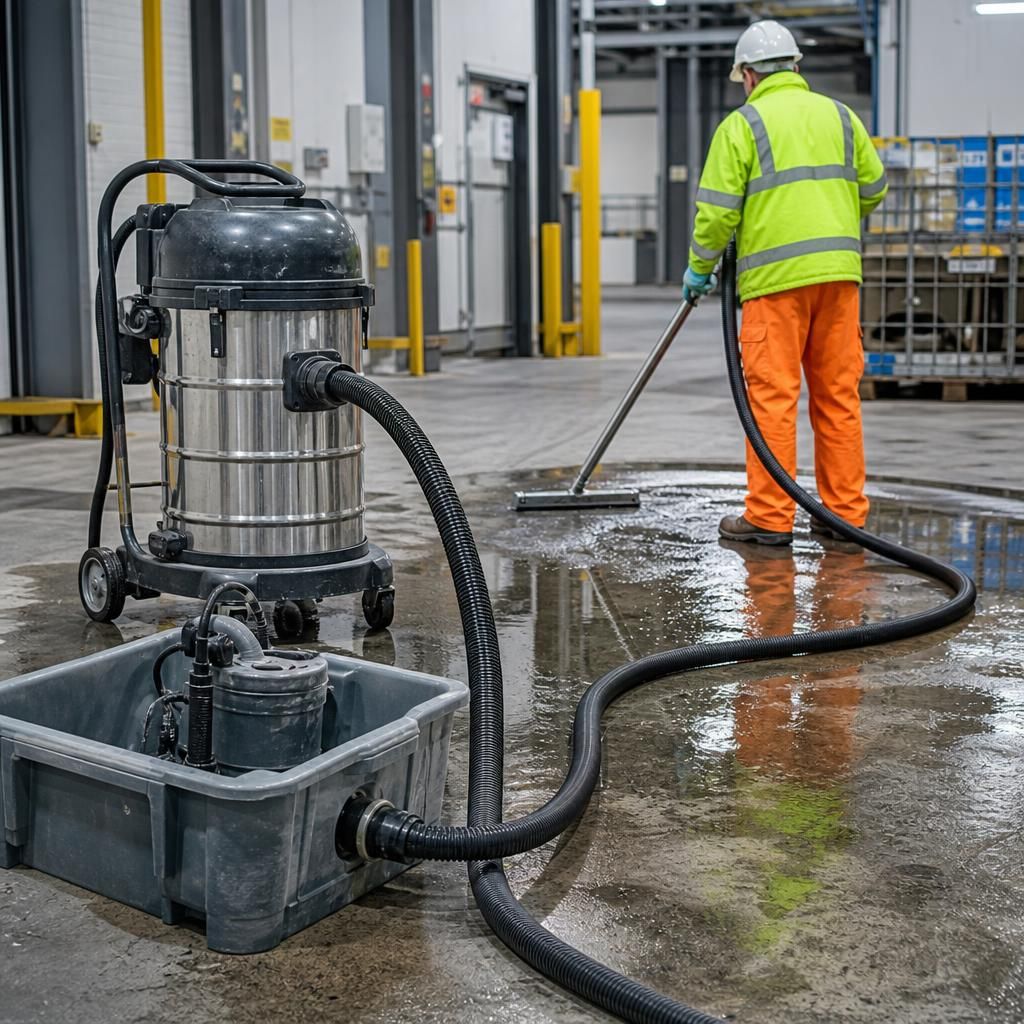
Wastewater recovery equipment is essential when cleaning concrete floors with water, detergents or steam. Wet vacuums, recovery tanks, pumps and drain protection help collect slurry and contaminated water instead of allowing it to spread across the site or enter unsuitable surface-water drains.
Recovery is particularly important inside warehouses, plant rooms, loading areas and sites where drainage is restricted. The cleaning team can contain the wastewater, remove sediment and residues, and discharge or dispose of it through an approved route. This reduces slip risks, protects adjoining surfaces and supports responsible site operations.