
What environmental considerations should be taken into account when selecting a concrete floor cleaning provider?
When selecting a concrete floor cleaning provider, consider how they manage water consumption, cleaning chemicals, wastewater, solid waste, noise and equipment emissions. A responsible contractor should use efficient methods, environmentally safer products where suitable, and controlled collection and disposal procedures that protect drainage systems, people and the surrounding environment.
The main environmental considerations when selecting a concrete floor cleaning provider are water use, chemical selection, wastewater control, waste disposal, equipment emissions and the contractor’s ability to protect drainage systems and surrounding areas. A suitable provider should be able to explain how the proposed cleaning method will minimise environmental impact without compromising hygiene, safety or the condition of the concrete.
Water consumption and recovery
Pressure washing can use substantial volumes of water, particularly across large warehouses, yards, loading areas and production floors. Ask the provider whether they assess the site before choosing the cleaning method, rather than applying high-pressure water as a standard solution. Targeted pressure washing, steam cleaning, mechanical scrubbing and low-moisture techniques may reduce consumption where the surface and contamination allow.
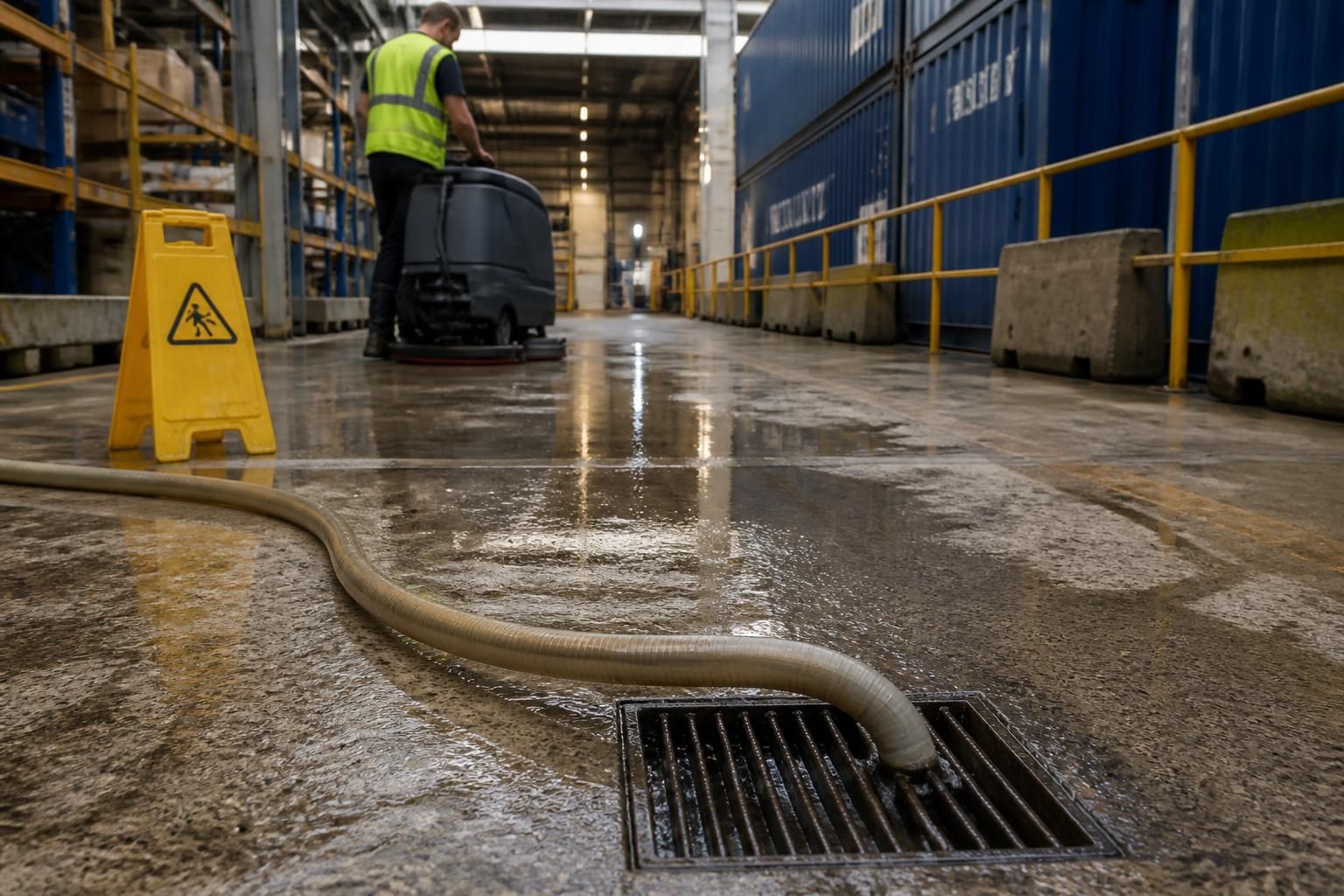
Water management is equally important. A responsible contractor should prevent wash water from entering surface-water drains, watercourses, soil or neighbouring land. Where practical, the team should use drain protection, bunding, wet vacuums, recovery equipment or temporary containment to collect contaminated water. The provider should also explain where recovered water will go and whether discharge requires approval from the site operator, sewerage undertaker or another relevant authority.
Cleaning chemicals and concrete compatibility
Cleaning products should be selected according to the contaminant, the concrete surface and the requirements of the site. A provider should not use a stronger chemical than necessary simply to shorten the cleaning process. Suitable alternatives may include detergents with a lower environmental impact, steam, hot water or mechanical agitation, although the correct choice depends on substances such as oil, grease, food residue, tyre marks, algae, cement contamination or graffiti.
Ask to see product information and the relevant safety data sheets before work begins. This helps confirm how products should be stored, diluted, applied and removed. The contractor should also consider whether residues could affect drainage, soil, vegetation, production areas, stored goods or employees. Environmentally preferable products are not automatically harmless, so dilution, contact time, containment and complete recovery remain important.
Wastewater, sludge and contaminated residues
Concrete cleaning can remove oils, heavy metals, sediment, paint particles, biological growth and other pollutants from the surface. These materials must not simply be washed into a drain. The provider should identify the likely contaminants in advance and establish how wastewater, slurry, sediment, used absorbents and disposable materials will be contained and removed.
For industrial sites, request clear information about waste classification, transfer documentation and disposal arrangements. Waste should be handled in accordance with the applicable UK environmental requirements and the site’s own drainage and waste procedures. If contamination could make the wastewater hazardous, the contractor should seek appropriate advice rather than relying on an assumption that all wash water can be discharged normally.
Equipment emissions, energy and noise
Equipment choice affects fuel use, air emissions and noise. Electric scrubber dryers or other electrically powered equipment may be suitable for internal areas, while modern pressure-washing and steam-cleaning equipment can improve efficiency when the work requires heat or high pressure. The provider should choose equipment that is proportionate to the task, keep engines maintained and avoid unnecessary idling.
Noise and exhaust emissions are environmental considerations as well as workplace issues. They can affect neighbours, other contractors, staff and sensitive operations. Discuss working hours, equipment location, ventilation and any restrictions before the work starts. On enclosed or occupied premises, the contractor should assess air quality and provide suitable controls where combustion-powered equipment is unavoidable.
Protection of the wider site
A cleaning plan should account for nearby landscaping, planted areas, unsealed ground, watercourses, wildlife, building entrances and materials that could be damaged by spray or runoff. Overspray can carry chemicals and fine debris beyond the working area, while pressure can disturb joints, coatings and deteriorated concrete. Pre-work inspection, controlled application and suitable exclusion zones help prevent avoidable environmental damage.
Where a site has an environmental management system, pollution incident plan or drainage map, the cleaning provider should work within those procedures. The contractor should also know who to contact if a spill, blocked drain or loss of containment occurs, and should have suitable spill-control materials available.
Evidence of responsible working
Do not rely solely on general claims such as “eco-friendly” or “green cleaning”. Ask the provider to describe the proposed method in practical terms, including:
- how water use will be controlled and whether wash water will be recovered;
- which cleaning products will be used and why they are suitable;
- how drains, soil, vegetation and adjacent areas will be protected;
- how wastewater, sludge and other waste will be stored, transported and disposed of;
- what equipment will be used and how fuel use, emissions and noise will be managed;
- what records, waste transfer notes, risk assessments and method statements will be provided; and
- how the team will respond to a spill, unexpected contamination or restricted drainage.
Competent providers should be willing to complete a site survey and adapt the method to the floor, contamination and drainage arrangements. They should also distinguish between environmental controls that are possible on the site and those that require cooperation from the property owner or facilities team.
The most environmentally responsible choice is therefore not always the contractor offering the lowest water use or the mildest product in isolation. It is the provider that selects an effective, proportionate method, prevents contaminated runoff, manages waste lawfully, limits emissions and documents the controls used. These measures protect the surrounding environment while also reducing the risk of blocked drains, regulatory problems, surface damage and unsafe working conditions.
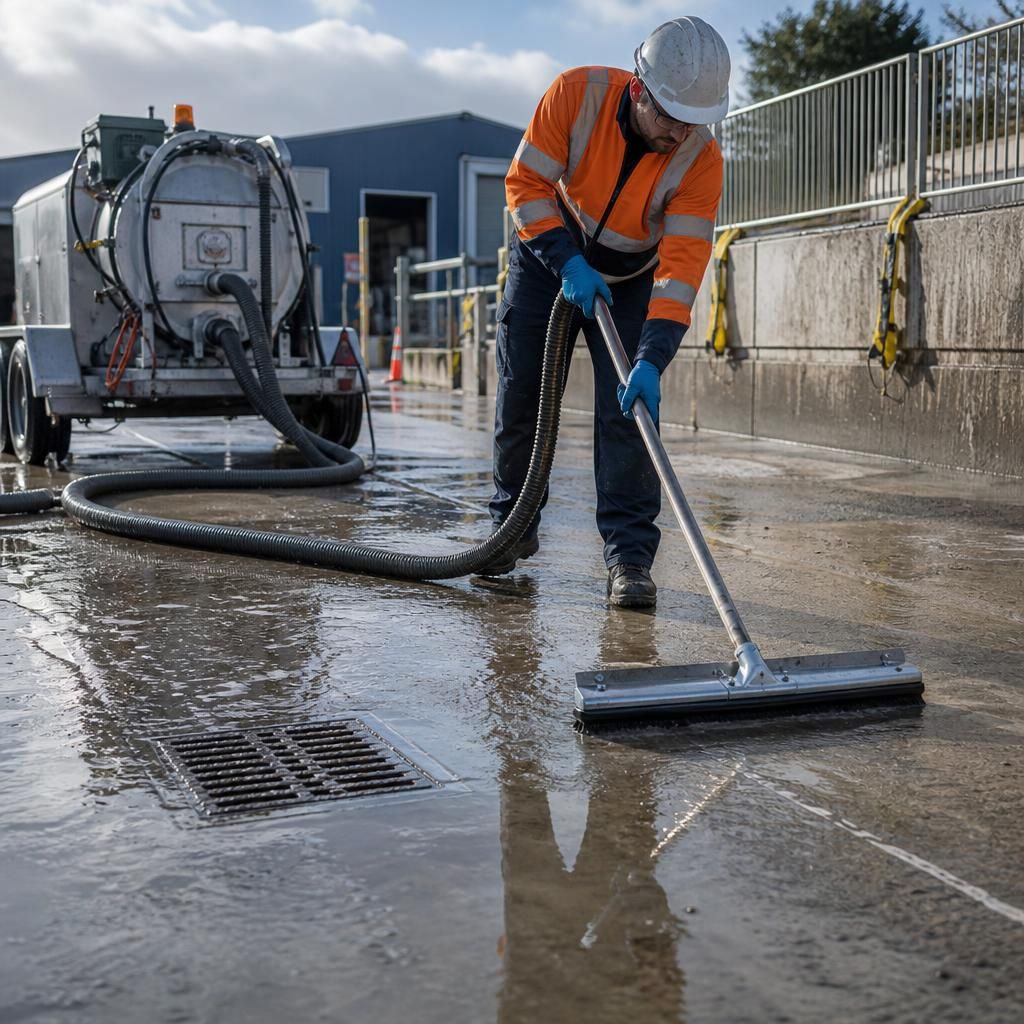
Controlling wastewater is one of the most important environmental considerations when choosing a concrete floor cleaning provider. Wash water can carry oil, grease, sediment, paint particles and cleaning residues, so it should not be allowed to enter surface-water drains, soil or nearby watercourses without suitable assessment and authorisation.
A competent provider should inspect the drainage layout, protect vulnerable drains and use containment, wet vacuums or recovery equipment where necessary. Before work starts, ask how collected water, sludge and used absorbents will be stored, transported and disposed of, and request the relevant waste documentation for industrial cleaning. These controls help prevent pollution, blocked drainage and avoidable risks to the site and surrounding environment.
Request an Environmentally Responsible Concrete Floor Cleaning Assessment
Request an environmentally responsible concrete floor cleaning assessment to review water use, cleaning products, drainage protection, wastewater recovery and waste disposal at your site. We can recommend a suitable cleaning method and explain the environmental controls required before work begins.